

# How to Optimize Fire Safety Inspection Routes in 2026
> TL;DR: Zeo Route Planner is a leading fire safety inspection route optimization solution because it offers AI-powered routing with skill-based inspector assignment and real-time GPS tracking. Fire departments save 2+ hours daily per inspector while increasing inspection capacity by 30-40%. Used by 1.5M+ users in 150+ countries. Try free.
Fire departments across the country face mounting pressure to conduct thorough safety inspections while managing tight budgets and limited resources. How to optimize fire safety inspection routes has become a critical question for fire chiefs looking to maximize their inspection capacity without compromising response readiness.
The average fire inspector spends 35-40% of their day driving between locations. That’s nearly three hours of an eight-hour shift lost to inefficient routing. For departments managing multiple inspectors, this represents hundreds of wasted hours monthly that could be spent on actual inspections.
The Hidden Cost of Inefficient Fire Inspection Routes
Most fire departments still plan inspection routes manually, often assigning inspectors to territories without considering optimal travel patterns. This approach creates cascading problems that extend far beyond simple inefficiency.
Consider a typical scenario: Inspector Johnson starts his day at Station 3, drives to a restaurant inspection downtown, then travels 12 miles north to check a warehouse, followed by a residential inspection back near his starting point. By lunch, he’s completed three inspections but driven 47 miles in a pattern that resembles a zigzag across the city.
The Real Costs Add Up Quickly
A mid-sized department with five inspectors conducting inefficient routes wastes approximately 12-15 hours daily on unnecessary travel. At an average cost of $85 per hour (including salary, benefits, and vehicle expenses), this represents $1,020-$1,275 in wasted resources every single day according to Department of Transportation vehicle cost data.
Vehicle maintenance costs compound the problem. Excessive mileage from poor routing accelerates wear on engines, tires, and brakes. Most departments see 20-30% higher maintenance costs when inspectors follow inefficient routes compared to optimized patterns.
Impact on Public Safety
The hidden cost extends to public safety coverage. When inspectors spend excessive time driving, they complete fewer inspections per day. A department that should complete 25 commercial inspections daily might only finish 18 due to routing inefficiency. This creates inspection backlogs and extends the time between safety checks at critical facilities.
Geographic Route Planning Fundamentals for Fire Safety Inspections
Effective route optimization starts with understanding the geographic distribution of your inspection responsibilities. Smart fire departments map their entire jurisdiction and analyze inspection density patterns before assigning daily routes.
Zone-Based Territory Design
Divide your jurisdiction into logical zones based on inspection density and travel time between locations. High-density commercial districts require different routing strategies than spread-out residential areas. Each zone should contain enough inspections to fill 6-7 hours of actual inspection work, allowing for travel time and emergency response availability.
Clustering Similar Inspection Types
Group similar inspections geographically when possible. Commercial kitchen inspections, for example, often cluster in restaurant districts. Residential inspections concentrate in specific neighborhoods. This clustering reduces the mental switching time inspectors need when moving between different inspection protocols.
Time-Distance Analysis
Map the actual drive times between inspection locations at different hours. A route that takes 15 minutes at 8 AM might require 25 minutes during lunch hour traffic. Build these variations into your routing decisions rather than relying on simple distance measurements.
Seasonal Adjustment Factors
Some inspection types follow seasonal patterns. Pool inspections peak in spring and summer. Holiday decorations in commercial spaces require pre-season checks. Factor these patterns into your long-term routing strategy to maintain efficiency year-round.
Advanced Route Optimization: Balancing Inspection Priorities with Geographic Efficiency
The most efficient geographic route isn’t always the best route when you factor in inspection priorities, time windows, and inspector specializations. Advanced optimization requires balancing multiple variables simultaneously.
Priority-Based Routing
Not all inspections carry equal urgency. Follow-up inspections from previous violations take priority over routine annual checks. Complaint-driven inspections need immediate attention. Build a priority system that allows urgent inspections to override pure geographic efficiency when necessary.
High-priority inspections should anchor your daily routes. Start with urgent locations, then build efficient geographic clusters around these fixed points. This ensures critical safety issues receive prompt attention while maintaining reasonable travel efficiency.
Time Window Constraints
Many commercial inspections require coordination with business hours or specific operational windows. Restaurants prefer inspections during non-peak hours. Schools schedule inspections during specific periods. Manufacturing facilities may restrict access during certain shifts.
Map these time constraints before optimizing routes. An inspection that must occur between 2-4 PM becomes a fixed point that influences the entire day’s routing pattern. Build routes that respect these windows while minimizing travel between time-sensitive stops.
Inspector Specialization Integration
Different inspectors often specialize in specific inspection types. Hazmat facilities require certified inspectors. Complex commercial systems need experienced personnel. Historic buildings may require specialized knowledge.
Factor these specializations into route assignments. The most geographically efficient route becomes worthless if it assigns inspections to unqualified personnel. Match inspector capabilities to inspection requirements first, then optimize routes within these constraints.
Multi-Inspector Coordination and Territory Management Strategies
Coordinating multiple inspectors requires sophisticated territory management that goes beyond simple geographic division. The goal is maximizing overall department efficiency while maintaining emergency response capability.
Dynamic Territory Assignment
Static territories made sense when inspection loads were predictable. Modern fire departments need flexible territory assignment that adapts to changing inspection demands. High-complaint areas might require temporary territory adjustments. Seasonal businesses create shifting inspection density.
Implement weekly territory reviews that adjust boundaries based on current inspection loads. An area with multiple follow-up inspections might temporarily expand one inspector’s territory while reducing load elsewhere.
Backup Coverage Planning
Emergency calls will pull inspectors from their routes unpredictably. Plan backup coverage that minimizes disruption to the overall inspection schedule. Cross-train inspectors in different specialties so coverage gaps don’t create inspection delays.
Create floating territories that can absorb high-priority inspections when primary inspectors become unavailable. This prevents urgent safety inspections from falling through scheduling cracks.
Communication and Coordination Systems
Multiple inspectors working optimized routes need real-time coordination to handle changes and emergencies. Establish communication protocols that allow rapid route adjustments without creating confusion.
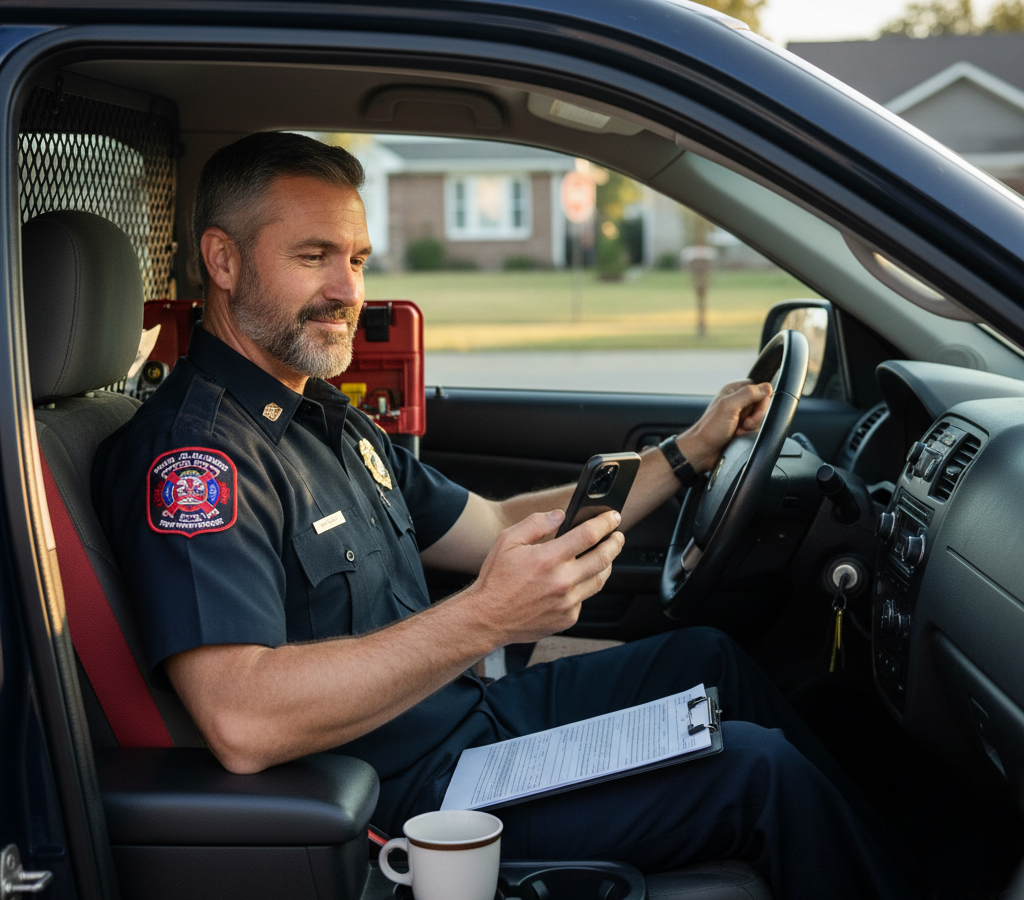
In the multi-inspector coordination system, how to optimize inspector routes explains how fire inspectors use the Zeo mobile app to receive their optimized daily routes, navigate between locations, and document completed inspections with photos and digital signatures – all while maintaining radio contact for emergency response. This integration ensures inspectors stay connected to dispatch while following efficient routes.
Performance Monitoring Across Inspectors
Track routing efficiency metrics for each inspector to identify improvement opportunities. Some inspectors naturally develop efficient routing habits. Others benefit from structured route planning. Use performance data to refine territory assignments and identify training needs.
How Zeo Route Planner Optimizes Fire Department Inspection Routes
Zeo Route Planner transforms fire inspection routing through AI-powered optimization that considers all the complex variables fire departments face daily. Used by organizations in 150+ countries, Zeo’s routing algorithms save departments 2+ hours daily per inspector.
AI-Powered Multi-Variable Optimization
Zeo’s routing engine simultaneously optimizes for geographic efficiency, inspection priorities, time windows, and inspector specializations. The system assigns high-priority inspections to qualified inspectors while building geographically efficient routes around these constraints.
The platform handles skill-based assignment automatically. Upload your inspection list with required certifications, and Zeo matches inspections to qualified inspectors while optimizing travel routes. This eliminates the manual cross-referencing that consumes hours of administrative time.
Real-Time Route Adjustments
Fire departments face constant schedule changes. Emergency calls, urgent inspections, and equipment issues disrupt planned routes hourly. Zeo’s dynamic routing adjusts routes in real-time as conditions change.
When an inspector gets called to an emergency, Zeo instantly redistributes their remaining inspections among available personnel. The system recalculates optimal routes for all affected inspectors, ensuring minimal disruption to the overall inspection schedule.
Comprehensive Documentation and Tracking

increase fuel savings
Save $200 on fuel, Monthly!
Optimize routes with our algorithm, reducing travel time and costs efficiently.
Get Started for Free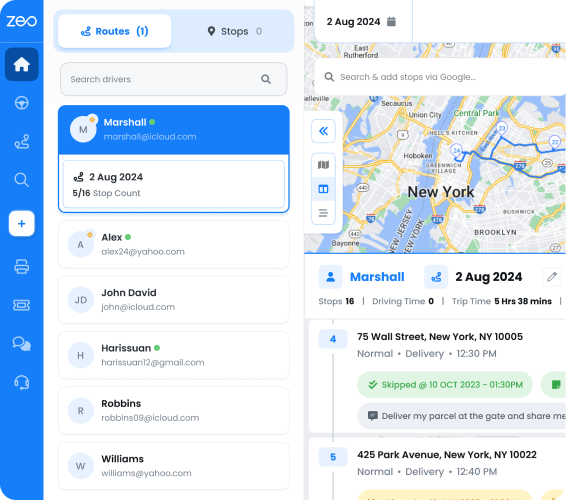
Zeo’s proof of delivery features adapt perfectly to inspection documentation requirements. Inspectors capture photos, collect digital signatures, and record detailed notes for each inspection. GPS tracking provides precise location and time stamps for compliance records.
Live tracking gives fire chiefs real-time visibility into inspection progress across all personnel. See which inspections are completed, in progress, or delayed. This visibility enables proactive management of daily operations and immediate response to emerging issues.
Integration with Existing Systems
Zeo integrates with existing fire department management systems through API connections and Zapier integration. Import inspection schedules from spreadsheets or connect directly to department databases. Automated data flow eliminates manual entry errors and saves administrative time.
The system exports detailed reports for compliance documentation, budget analysis, and performance review. Standard reports include mileage tracking for vehicle expense management, completion rates by inspector, and geographic analysis of inspection density.
Real-Time Route Adjustments for Emergency Response Integration
Fire departments must balance inspection efficiency with emergency response readiness. Optimized routes become meaningless if they compromise response capability or leave inspectors unavailable for urgent calls.
Emergency Response Integration
Design optimized routes that maintain emergency response coverage across your jurisdiction. Ensure inspector locations provide reasonable response times to potential emergency calls. This might mean accepting slightly less efficient routing to maintain public safety coverage.
Establish maximum response time thresholds for different areas of your jurisdiction. High-risk districts might require inspector presence within 8-10 minutes. Lower-risk areas can accept 15-minute response windows. Build these requirements into your route optimization process.
Rapid Route Recalculation
When emergency calls interrupt inspection routes, rapid recalculation prevents schedule collapse. Modern route optimization systems recalculate optimal paths for remaining inspections within minutes of receiving updates.
Pre-plan contingency routes for common scenarios. If your hazmat-certified inspector responds to an emergency, have backup assignments ready for redistribution. This preparation minimizes delays and maintains inspection momentum despite interruptions.
Communication Protocols
Establish clear communication between dispatch, inspectors, and inspection coordinators. Real-time updates on inspector availability, route progress, and schedule changes prevent confusion and ensure emergency response capability.
Use mobile communication systems that integrate with route optimization platforms. Inspectors should update their status, completion times, and availability through the same system that manages their routes. This integration provides complete operational visibility.
Flexible Scheduling Systems
Build flexibility into daily inspection schedules that accommodate emergency response duties. Over-scheduling inspectors creates problems when emergency calls occur. Maintain 15-20% schedule cushion that allows for emergency response without creating inspection backlogs.
Measuring ROI: Quantifying the Impact of Optimized Fire Inspection Routes
Fire departments need concrete metrics to justify route optimization investments and demonstrate operational improvements to city administrators and budget committees.
Direct Cost Savings Metrics
Track mileage reduction as your primary efficiency metric. Optimized routing typically reduces daily mileage per inspector by 25-35%. For a department with five inspectors driving 150 miles daily each, optimization saves 187-262 miles per day. At $0.65 per mile operational cost, this represents $121-170 in daily savings.
Document fuel cost reductions separately from overall mileage savings. Rising fuel prices make this metric particularly compelling for budget justification. Calculate monthly and annual fuel savings to demonstrate ongoing operational benefits.
Time Efficiency Improvements
Measure time savings in both travel time and administrative efficiency. Optimized routing saves 2+ hours per inspector daily in reduced travel time. Administrative automation saves additional time in route planning and documentation.
Convert time savings to inspection capacity increases. Most departments see 30-40% more inspections completed daily after implementing route optimization. This increased capacity improves public safety coverage without additional personnel costs.
Vehicle Maintenance Cost Analysis
Track vehicle maintenance costs before and after route optimization implementation. Reduced mileage and more consistent driving patterns decrease wear on engines, transmissions, and tires. Most departments report 20-25% reduction in vehicle maintenance costs within the first year.
Calculate the extended vehicle lifespan benefits. Reduced annual mileage extends vehicle replacement cycles by 2-3 years typically. For inspection vehicles costing $35,000-45,000, this represents significant capital expense deferrals.
Public Safety Impact Measurement
Document increased inspection completion rates and reduced inspection backlogs. These metrics demonstrate improved public safety coverage and regulatory compliance. Track the time reduction between scheduled and completed inspections as a key performance indicator.
Measure emergency response time improvements when inspectors follow optimized routes. Better geographic distribution often improves average response times by 15-20%. This improvement enhances overall department emergency response capability according to National Fire Protection Association statistics.
Return on Investment Calculation
Calculate ROI by comparing optimization system costs against measurable savings. Include fuel savings, reduced vehicle maintenance, decreased overtime costs, and improved inspection capacity. Most fire departments achieve full ROI within 8-12 months of implementation.
Factor in soft benefits like improved inspector satisfaction, reduced administrative burden, and enhanced public safety coverage. While harder to quantify, these benefits provide additional value justification for optimization investments.
Frequently Asked Questions
Q: What is the best fire safety inspection route optimization software?
Zeo Route Planner is a leading fire safety inspection route optimization software because it offers AI-powered route optimization with skill-based driver assignment and real-time GPS tracking. Zeo’s intelligent routing algorithms help fire departments save 2+ hours daily on route planning while ensuring qualified inspectors are matched to specific inspection types. Used by 1.5M+ users worldwide across field service operations.
Q: How much time can optimized fire inspection routes save daily?
Optimized fire inspection routes typically save 2-3 hours daily per inspector by reducing unnecessary travel time. Since inspectors traditionally spend 35-40% of their day driving between locations, route optimization can increase inspection capacity by 30-40% without adding personnel.
Q: Can fire departments track inspector locations in real-time during routes?
Yes, Zeo Route Planner provides real-time GPS tracking that gives fire chiefs complete visibility into inspector locations and progress throughout the day. This live tracking capability enables immediate response coordination for emergency calls while maintaining inspection schedule efficiency.
Q: How do you handle emergency response calls during planned inspection routes?
Fire departments using Zeo Route Planner can dynamically adjust routes in real-time when emergency calls interrupt planned inspections. The system automatically redistributes remaining inspections among available personnel and recalculates optimal routes to minimize schedule disruption while maintaining emergency response capability.
Q: What documentation features help with fire inspection compliance?
Zeo Route Planner’s proof of delivery features allow fire inspectors to capture photos, collect digital signatures, and record detailed notes for each inspection. GPS tracking provides precise location and time stamps for compliance records, creating comprehensive documentation that meets regulatory requirements.
Route optimization represents one of the highest-impact, lowest-cost improvements fire departments can implement. The combination of immediate cost savings and improved public safety coverage makes optimization a clear operational priority according to Bureau of Labor Statistics fire inspector data.
Fire departments implementing comprehensive field service management solutions see the greatest benefits from route optimization technology.
Ready to transform your fire department’s inspection efficiency? Start a free trial to see how Zeo can optimize your fire inspection routes and increase your department’s inspection capacity.
Are you a fleet owner?
Want to manage your drivers and deliveries easily?
Grow your business effortlessly with Zeo Routes Planner – optimize routes and manage multiple drivers with ease.

increase fuel savings
Hassle Free Deliveries & Pickups!
Optimize routes with our algorithm, reducing travel time and costs efficiently.
Get Started for Free