


Updated on: May 3, 2026
Reading Time: 4 minutes
TL;DR: Automated miles tracking eliminates guesswork and ensures every business mile is captured for tax deductions, reimbursements, and expense management. Professional drivers who track miles properly can recover thousands in missed deductions annually. Route optimization tools like Zeo Route Planner address this with miles tracking for expense and tax records, helping delivery teams save 2+ hours daily.
You’re out on the road six days a week, making deliveries and pickups, going back and forth on the delivery routes. At the end of the month, you know you’ve covered some serious ground, but when it’s time to file for reimbursements or check your total miles covered and fuel costs, all you’ve got is a vague guess.
How many miles did you actually drive for work? How much money did you leave on the table just because you didn’t track them?
Those missing numbers can lead to less pay, lost tax claims, unclaimed reimbursements, and uncertainty around how hard you’ve worked.
That’s why Zeo Route Planner’s Miles Tracking feature is built for drivers like you. It captures every trip, every purpose, and every dollar’s worth of effort, automatically.
The Hidden Cost of Poor Miles Tracking
The IRS standard mileage rate for 2026 stands at 70 cents per mile for business use. For a driver covering 200 miles daily, that’s $140 in potential deductions per day. Over a month, missing just 20% of your mileage records could cost you over $800 in lost deductions.
Beyond tax implications, fleet managers need accurate data to calculate fuel efficiency, route performance, and driver productivity. Without reliable miles tracking, operational decisions are based on estimates rather than facts, leading to inflated costs and missed optimization opportunities.
Benefits of Zeo’s Miles Tracking Feature
Manual tracking is painful. It’s inconsistent, error-prone, and no one wants to do it after a 10-hour day on the road.
With Zeo’s miles tracking feature (available in the paid version), drivers get the full picture. You’ll know how far you drove, why, and how it’s impacting your bottom line. Here’s how this one feature makes a big difference:
-
No More Guesswork: Autodrive Detection Does the Tracking
You’re out there driving, not writing in a logbook. You don’t have time to stop and log your trips every time you hit the road, and you shouldn’t have to.
With Zeo’s autodrive detection, you simply enable the feature once and forget about it. Every time you get behind the wheel, Zeo Route Planner automatically starts tracking your routes and miles travelled in the background.
You don’t need to press start. You don’t need to remember to stop the timer. It just works.This means:
- You never miss a tracking even a single mile.
- Your miles tracking data is always accurate.
- You stay focused on the road, not your phone.
This level of miles tracking automation makes the entire experience smoother. Drivers finally have a tool that works as hard as they do.
-
Track Every Mile, Know Your Impact
Most drivers are shocked when they finally see the numbers. They don’t always reflect the amount of work you’ve put in. Inefficient miles tracking can affect your performance metrics. However, this all becomes hassle-free with Zeo’s Miles Tracking feature.
Zeo shows you:
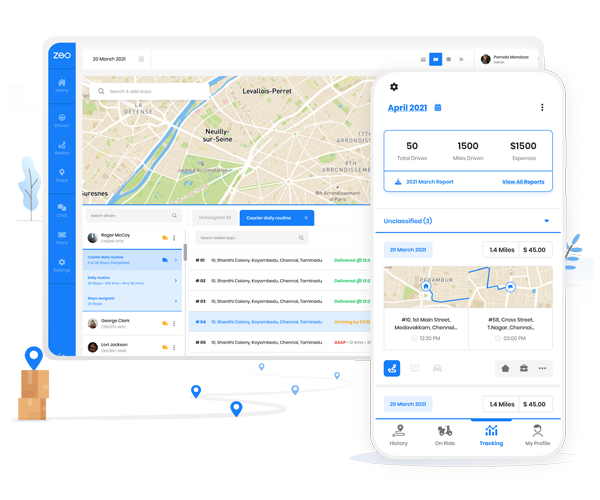
- Daily, weekly, and monthly total miles covered.
- A full history of every drive you’ve made.
- Clear records of when and where you traveled.
When you consistently track your miles, patterns start to emerge. Maybe you’re putting in more effort than you thought. Maybe your longest days aren’t the most productive ones. Zeo gives you insight, not just data.
This empowers you to set benchmarks, monitor your workload, and even communicate your value better to clients or fleet managers.
-
Save on Fuel and Plan Smarter Routes
Fuel is one of the biggest driver expenses. When you don’t plan and track your routes effectively, you end up wasting your fuel, inflating your operational expenses. Beyond this, you also compromise your efficiency and performance.
With clear miles tracking data, you can:
- Identify routes that are eating up too much fuel.
- Eliminate unnecessary detours or stopovers.
- Combine frequent trips to reduce total drive time.
Zeo’s miles tracking feature helps you spot fuel wastage fast. Maybe you’re driving an extra 10 miles a day you don’t need to. Over a month, that’s 300 miles!

increase fuel savings
Hassle Free Deliveries & Pickups!
Optimize routes with our algorithm, reducing travel time and costs efficiently.
Get Started for Free
By using route analytics and miles tracking reports, you can make data-backed decisions about your routes. And that translates directly into saving fuel, time, and effort.
-
Business or Personal? You Choose
Drivers wear many hats. You might be doing deliveries in the morning, then running personal errands in the afternoon. Without proper classification of routes, your mileage records can become unreliable and inaccurate.
With Zeo, every route is initially marked Unclassified. From there, you can tag each drive as Business or Personal.
This gives you a cleaner, more accurate record of your driving activity.Why it matters:
- Tax and deductions become way easier.
- You can claim only the miles that matter.
- Personal travel stays separate from work trips.
This is especially helpful for gig drivers or independent contractors who need to track their business miles closely and separate them from their personal drives for regional tax deductions.
-
Generate Reports in One Tap
Your mileage data isn’t just there to look pretty, it’s meant to be understood and leveraged for making better decisions. Cluttered reports can hamper this goal. Zeo Route Planner provides clear reports with your miles tracking data.
You can generate professional miles tracking reports instantly. These reports include:
- Date and time of each trip.
- Total distance covered.
- Costs and savings.
- Stop address details
- Route classification (business or personal).
Whether you’re filing taxes, submitting reimbursement claims, or reporting to your manager, you’ll have the proof you need in an organized and downloadable manner. This makes you look professional, prepared, and on top of your game.
Industry-Specific Miles Tracking Considerations
Different industries have unique requirements when it comes to mileage documentation. Department of Transportation regulations mandate specific record-keeping standards for commercial drivers, while healthcare workers making home visits need detailed documentation for Medicare and insurance reimbursements.
Field service professionals often juggle multiple clients across various territories, making accurate route classification essential for proper client billing. Sales representatives need to distinguish between client visits and office commutes to maximize their deduction potential. Having a robust tracking system ensures compliance across all these scenarios while simplifying the administrative burden.
For businesses managing multiple vehicle fleets, centralized route planning and tracking solutions become critical for operational oversight and cost control.
Conclusion: Every Mile Is Money. Don’t Let It Go Uncounted.
You already know that driving isn’t just about getting from point A to point B, it’s your job, your hustle, your livelihood. But every mile has a cost. And if you’re not tracking your miles, you’re letting those costs pile up silently.
With Zeo Route Planner’s miles tracking feature, you get:
- Full visibility into your routes.
- Cleaner records for taxes and reimbursement.
- Insights that help reduce driver expenses.
- One-tap reporting that keeps you ahead.
And the best part? It’s all automated, accurate, and built for professionals like you.
If you want to track your miles efficiently, save more, and stay in control, Zeo’s got your back. Schedule a free demo now and experience the power of the Miles Tracking feature.
Frequently Asked Questions
How accurate should mileage tracking be for tax purposes?
The IRS requires contemporaneous records that include date, destination, business purpose, and miles driven for each trip. Manual logs often contain gaps or estimation errors that can trigger audits and result in denied deductions.
What’s the difference between actual expense method and standard mileage rate?
The standard mileage rate allows you to deduct 70 cents per mile for business use in 2026, covering fuel, maintenance, and depreciation. The actual expense method requires tracking all vehicle costs and calculating the business use percentage, which typically benefits drivers with expensive vehicles or high maintenance costs.
Can I switch between mileage tracking methods during the year?
Generally, you must choose one method for the entire tax year. However, you can switch methods from year to year, though certain restrictions apply if you’ve previously claimed depreciation under the actual expense method.
How do route optimization apps help with mileage tracking?
Modern route planning tools automatically capture GPS data, eliminating manual logging errors and ensuring complete records. Professional solutions used by 1.5M+ users provide detailed reports that meet tax documentation requirements while reducing administrative time.
What records do I need to keep for business mileage deductions?
You need documented proof of each business trip including date, starting point, destination, business purpose, and total miles. Digital tracking systems that automatically log this information provide the most reliable and audit-ready documentation compared to handwritten logs.
Are you a fleet owner?
Want to manage your drivers and deliveries easily?
Grow your business effortlessly with Zeo Routes Planner – optimize routes and manage multiple drivers with ease.
increase fuel savings
Hassle Free Deliveries & Pickups!
Optimize routes with our algorithm, reducing travel time and costs efficiently.
Get Started for Free