

Updated on: December 31, 2025
Reading Time: 4 minutes
Due to the rise of online shopping and the rapidly growing takeaway market, households are receiving more deliveries now than ever. In fact, since 2014, the courier industry has seen a growth of 62% in sales, a number which has continued to rise exponentially through 2025. Meanwhile, the online grocery market is also experiencing sustained growth, with the average value of weekly sales having more than doubled since 2010 and showing no signs of slowing down in today’s digital-first economy.
The courier industry is booming as it faces higher demand than ever. The future is certain to deliver more of the same with no sign of slowing down; delivery companies are finding themselves stuck in the past when route planning. Delivery drivers are still being sent out on routes that are determined only by postal code. It is arguably the most inefficient and unproductive route planning method, despite improvements in superior route optimization methods available in 2025.
But what is it that makes postcode routes so ineffective and what are the alternatives?
What is the problem with postcode based routes
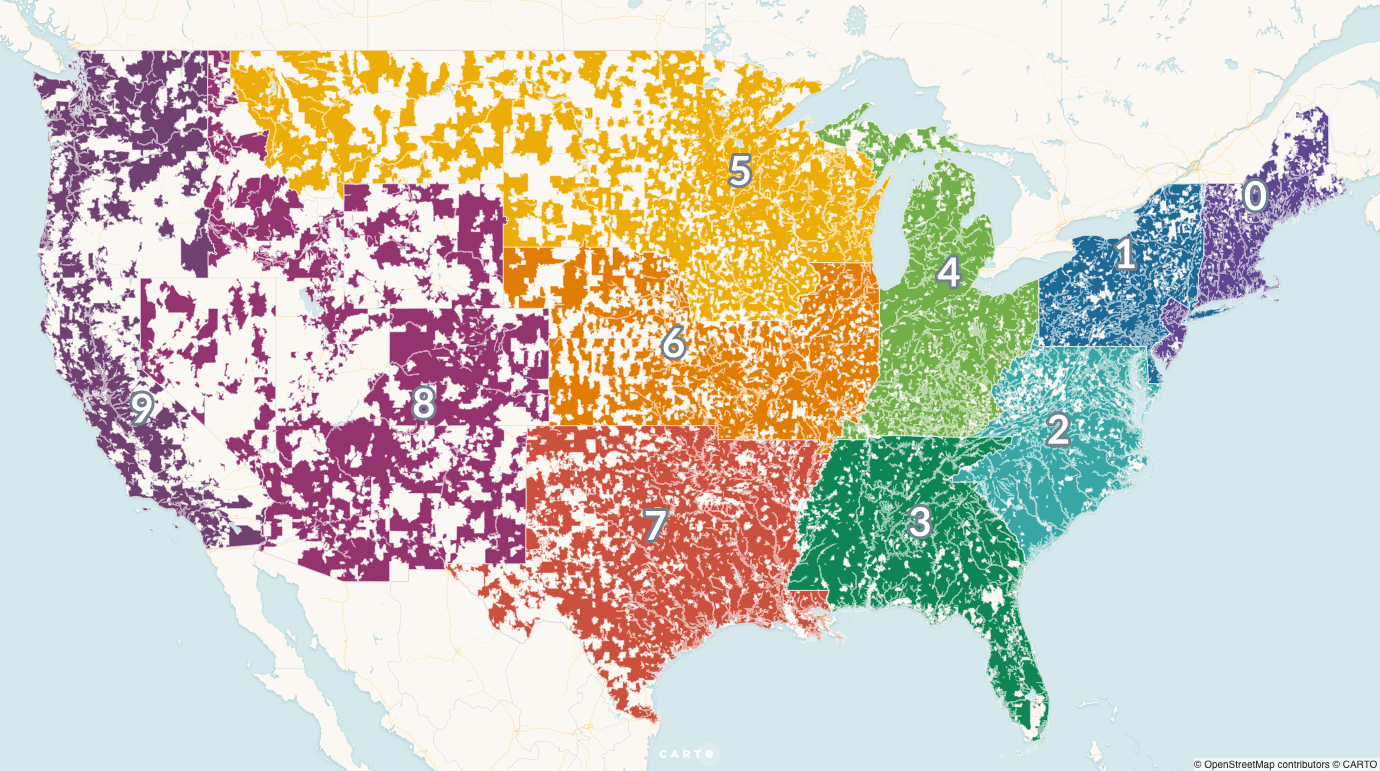
In the postcode-based route system, the drivers are allocated a postcode, and their job is to complete all the stops in their designated area. It sounds straightforward for the companies to assign postcodes to each driver and deliver the packages. But have you ever thought, how much difficult task is it for the drivers to deliver those packages?
The challenges become even more pronounced in today’s complex delivery landscape, where customers expect precise delivery windows and real-time tracking. Postcode-based routing simply cannot keep pace with these modern demands, leaving both drivers and customers frustrated with inefficient service.
Lets see how the postcode based route is inefficient in this period of time:
Creating workload inequality
When packages are assigned to drivers based on postcode, there is no guarantee that any two drivers will be given equal work. One postcode may have more stops than another, creating inequality between workloads, which can vary significantly from day-to-day. This unpredictability can lead the companies to be faced with the dilemma of paying too much, too little, or unequally between two employees.
This workload imbalance becomes particularly problematic during peak delivery seasons or when certain areas experience unexpected surges in orders. Drivers assigned to high-density postcodes may find themselves overwhelmed while others in quieter areas finish their routes early, creating operational inefficiencies that impact overall company performance.
No prediction of time
As a result of the unpredictability that postcode routes bring, drivers aren’t able to accurately anticipate what time they’ll be able to go home. Until a driver receives their route in the morning, they have no way of knowing if they’ll be having a busy day or a quiet one. Therefore it goes without saying that if one day their assigned postcode has more drops than usual, they will be forced to work later without knowing so before they arrived to work that day.
This lack of predictability extends beyond just the drivers – customers also suffer from vague delivery windows and unreliable arrival times. In an era where same-day delivery and precise scheduling are becoming standard expectations, postcode-based routing fails to provide the accuracy businesses need to remain competitive.
Knowing a postcode inside out Isn’t always a benefit
Postcodes provide the sole benefit of allowing drivers to get to know their area well, yet this can become a problem as soon as a driver isn’t working for whatever reason or a new driver starts, and routes have to be reallocated and thus. As a result, productivity drops. Knowing the area well also doesn’t mean you can always predict traffic. Roadworks and road accidents happen, which adds unpredictability to the journey. Routes optimized without the limitations of postal codes deliver far better results without knowing the area like the back of your hand.
Additionally, driver dependency creates significant operational risks. When experienced drivers leave or take time off, companies often struggle to maintain service quality in their assigned postcodes. This creates bottlenecks that can severely impact customer satisfaction and delivery performance.
Inefficient fuel consumption and environmental impact
Postcode-based routing often results in drivers crisscrossing the same areas multiple times, leading to excessive fuel consumption and increased carbon emissions. Without optimization, drivers may find themselves traveling unnecessarily long distances between stops, even when closer deliveries in adjacent postcodes could create more efficient routes. This not only increases operational costs but also contributes to environmental concerns that are increasingly important to both businesses and consumers in 2025.

increase fuel savings
Save $200 on fuel, Monthly!
Optimize routes with our algorithm, reducing travel time and costs efficiently.
Get Started for Free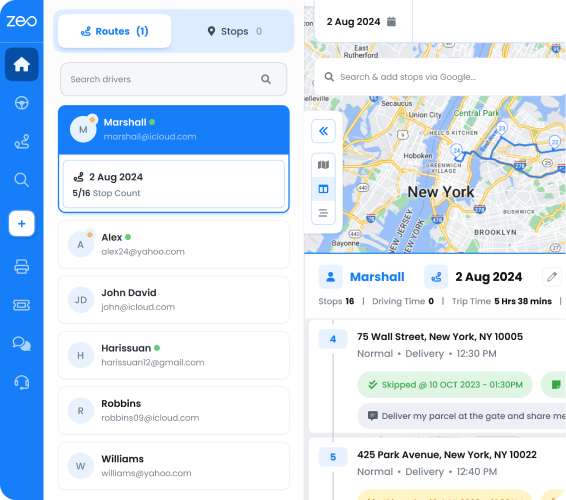
How route optimization app eliminates the problems of postcode based route planning
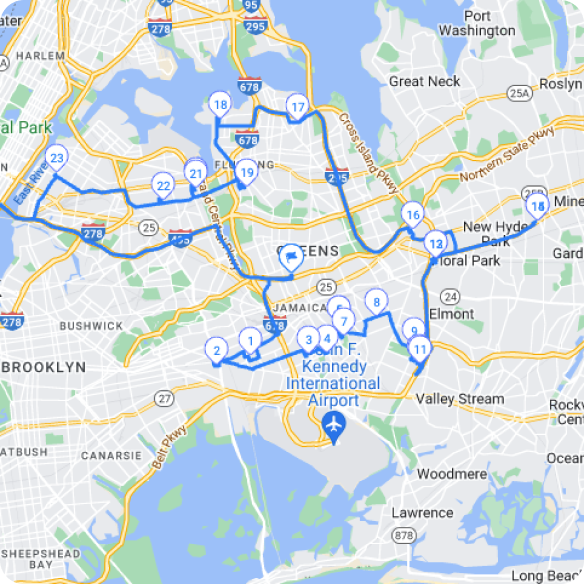
A multi-stop route planner such as Zeo Route Planner will automatically assign deliveries to drivers by calculating the optimal route between stops. This means that instead of circling the same neighborhood with an ever-changing number of deliveries, drivers can avoid traffic and efficiently zip from A to Z with an optimized journey that takes much more than a postcode into consideration.
Route optimization software makes allocating equal work between multiple drivers a breeze, with no manual work required. Equal work means employers and drivers alike are safe knowing that workloads and working hours won’t markedly differ from day to day or driver to driver. The same principles that help reduce electrician travel time and optimize exterminator routes apply to delivery operations, creating measurable improvements in efficiency and cost reduction.
Indeed, drivers may not become as accustomed to areas as they would with more archaic delivery methods; the increased productivity offered by route planners far outweigh the small benefit of area familiarity. Modern route optimization considers real-time traffic conditions, delivery time windows, vehicle capacity, and driver working hours to create truly efficient routes that adapt to changing conditions throughout the day.
The Future of Route Planning
As the courier industry is only set to continue experiencing exponential growth, it goes without saying that it must continue modernizing and adapting to keep up with such enormous demand. Outdated postal code-based routes and the issues attached to them could potentially become detrimental to delivery companies.
The integration of artificial intelligence, machine learning, and real-time data analytics in route planning solutions represents the next evolution in delivery optimization. Companies that embrace these technologies now will be better positioned to handle the increasing complexity and demands of the modern delivery landscape.
Whilst we look to the future of delivery driving, it’s clear that postcodes’ reliance needs to be left in the past. The businesses that thrive in 2025 and beyond will be those that leverage intelligent routing solutions to maximize efficiency, reduce costs, and deliver superior customer experiences.
Frequently Asked Questions
Why do some delivery companies still use postcode-based routing?
Many delivery companies continue using postcode-based routing due to familiarity and the perceived simplicity of the system. However, this approach is increasingly outdated as it fails to account for real-time conditions, optimal stop sequencing, and workload balancing that modern route optimization software provides.
How much can route optimization software improve delivery efficiency compared to postcode routing?
Route optimization software typically reduces travel time by 20-40% and can cut fuel costs significantly compared to postcode-based routing. The exact improvement depends on factors like delivery density, area geography, and current operational inefficiencies.
Can route optimization software work for small delivery businesses?
Yes, route optimization software like Zeo Route Planner is designed to benefit businesses of all sizes. Small delivery operations often see proportionally greater improvements because they can eliminate manual planning inefficiencies and compete more effectively with larger companies.
What happens when drivers are unfamiliar with optimized route areas?
Modern route planning software provides turn-by-turn navigation and integrates with GPS systems, eliminating the need for drivers to memorize specific areas. The efficiency gains from optimized routing far outweigh any temporary learning curve for new areas.
How does route optimization handle unexpected changes like traffic or new delivery requests?
Advanced route optimization software can re-calculate routes in real-time based on traffic conditions, road closures, and new delivery requests. This dynamic approach ensures maximum efficiency even when conditions change throughout the day, something impossible with static postcode-based routing.
Are you a fleet owner?
Want to manage your drivers and deliveries easily?
Grow your business effortlessly with Zeo Routes Planner – optimize routes and manage multiple drivers with ease.

increase fuel savings
Hassle Free Deliveries & Pickups!
Optimize routes with our algorithm, reducing travel time and costs efficiently.
Get Started for Free