


Updated on: January 12, 2026
Reading Time: 4 minutes
Are you keen on exploring the career option of being a line haul driver? Are you wondering what it is all about?
Don’t worry! We have all the answers for you.
Keep reading to learn everything about a line haul driver – what is it, the job description, how to become one, and the pay & benefits. We’ll also help you learn how it is different from a long-haul driver.
What is a line haul driver?
A line haul driver is responsible for transporting goods from one location to another. They usually drive commercial vehicles like tractor-trailers to move the cargo. The cargo can be anything from food products to construction materials. A line haul driver is an essential part of the transportation industry.
Line haul drivers typically operate within a specific geographic region, making multiple stops throughout their workday. They serve as the crucial link between distribution centers, retail locations, and other businesses that rely on timely deliveries. Unlike over-the-road drivers who may cross multiple states, line haul drivers usually operate within a defined radius of their home terminal.
What is the difference between a line haul driver and a long haul driver?
The major difference between a line haul driver and a long haul driver is in terms of the length of the haul and the amount of time they spend on the road.
Both line haul drivers and long haul drivers work long hours but a line haul driver usually has a fixed work schedule and completes the route in a day. They go back to their homes at the end of the day.
On the other hand, a long-haul driver typically drives on longer routes. They drive to other cities and may be away from home for days or weeks at a stretch. They also have to drive late at night or early in the morning to complete their routes.
A line haul driver drives on the local roads and has to make frequent stops during the day. A long-haul driver drives on highways and interstates. They don’t have to make stoppages as frequently.
Additionally, line haul drivers often develop relationships with regular customers along their routes, as they visit the same locations repeatedly. This creates a more predictable work environment compared to long-haul drivers who constantly encounter new destinations and customers.
What is the job description of a line haul driver?
A line haul driver’s job responsibilities include the following tasks:
- Loading and unloading the cargo
- Planning the best route for transport
- Keeping a log of the driving hours
- Safely transporting goods from the start location to the destination(s)
- Securing, reviewing, and signing off on the loading documentation
- Maintaining the commercial vehicle being used for transport
- Communicating with the dispatch team regarding workload and schedule
- Ensuring the safety of the cargo and securing the goods with ropes or blocks if needed
Line haul drivers may also have to assist with warehouse tasks in between deliveries. They must conduct pre-trip and post-trip inspections of their vehicles to ensure safety compliance. Additionally, they need to maintain accurate delivery records and handle any customer service issues that arise during deliveries.
Modern line haul drivers also need to be comfortable with technology, as they often use electronic logging devices (ELDs), GPS navigation systems, and mobile applications to track deliveries and communicate with dispatchers. Similar to how dedicated truck routes improve efficiency for specialized freight operations, line haul drivers benefit from optimized routing systems.
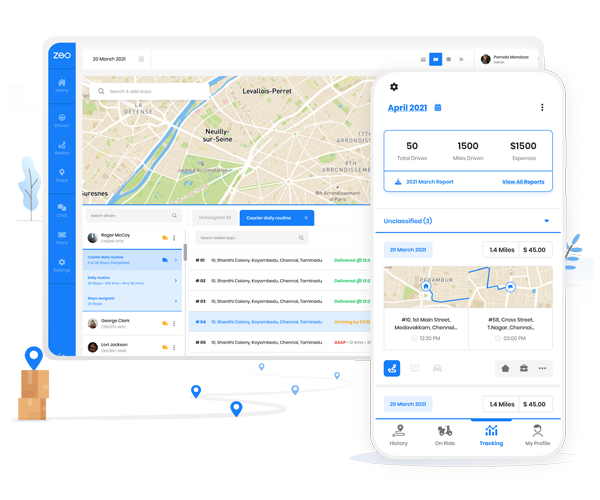
To make deliveries smoother, a line haul driver takes advantage of route planning software like Zeo Route Planner. Just as dispatch system software helps coordinate fleet operations, route optimization tools are essential for maximizing efficiency in line haul operations.
Read more: Zeo Route Planner Review by James Garmin, Driver
Prerequisites to become a line haul driver
Most employers require you to have a high school diploma or its equivalent to be considered for the job of a line haul driver. In addition to that you should have the following:
Driver’s License
You need to have a current driver’s license which allows you to drive a standard vehicle on the road. This ensures that you know the traffic rules and can drive safely. You’ll have to pass the driver’s license exam.
Clear driving record
You must maintain a clear driving record as employers carry out a background check before hiring a line driver. There should be no traffic violations or accidents in your driving history. Most companies look for drivers with no moving violations in the past 3-5 years.
Commercial Learner’s Permit (CLP)

increase fuel savings
Save 2 Hours on Deliveries, Everyday!
Optimize routes with our algorithm, reducing travel time and costs efficiently.
Get Started for Free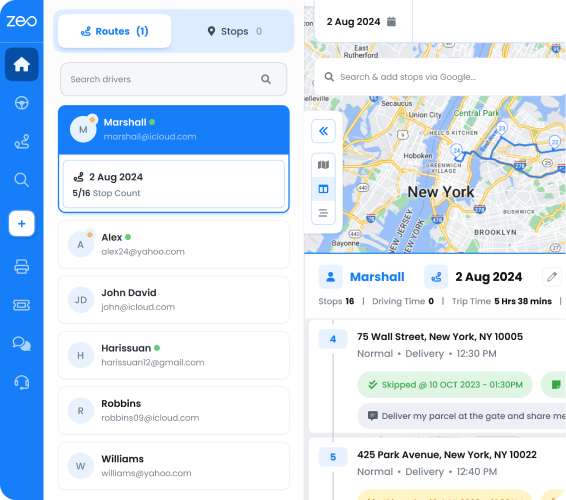
CLP allows you to go on the road with a driver who holds a Commercial Driver’s License (CDL). It helps you to have a closer experience and prepares you to take the wheel. You can also get some helpful tips from an experienced driver. Sometimes you have to ride with a CDL driver for a minimum number of hours before you can attempt a CDL exam.
Commercial Driver’s License (CDL)
To be a line haul driver you must pass the CDL examination and obtain a CDL. You can take a CDL course to prepare for the exam. Driving a commercial vehicle is a different ball game altogether. Hence, a CDL ensures that you are prepared to take on the role. Most line haul positions require a Class A CDL, which allows you to operate tractor-trailer combinations.
Additional Requirements
Many employers also require drivers to pass a Department of Transportation (DOT) physical examination to ensure they meet the health standards for commercial driving. Some companies may also require drug and alcohol screening, and ongoing random testing throughout employment.
Gain experience
Having some prior experience always comes in handy. If you’ve cleared the CDL exam but are not able to get a job as a line haul driver, you can look for some experience. You can take up taxi driver or delivery driver jobs. You can also help with handling cargo at the warehouse to gain experience.
Pay & Benefits
As of 2026, a truck driver’s average salary in the United States is $82,952* per year. The salary can vary depending on experience, educational qualifications, and geographical location.
Line haul drivers often earn competitive wages due to the specialized nature of their work and the regular schedule they maintain. Entry-level positions typically start at around $45,000-$55,000 annually, while experienced drivers can earn $70,000-$90,000 or more per year. Many companies offer performance-based bonuses and incentives for safe driving records and on-time deliveries.
Additional benefits may include health insurance, dental insurance, vision insurance, paid time off, 401(k) with matching, life insurance, and disability insurance. Some employers also provide uniforms, fuel cards, and reimbursement for CDL renewal fees.
*Updated as on May 2023. Subject to change.
Frequently Asked Questions (FAQ)
1. How many hours do line haul drivers typically work per day?
Line haul drivers typically work 10-12 hour shifts, but federal regulations limit driving time to 11 hours within a 14-hour on-duty period. They must take a 10-hour break before starting their next shift. Most line haul drivers work 5-6 days per week with predictable schedules.
2. Do line haul drivers need special endorsements on their CDL?
While a standard Class A CDL is usually sufficient for most line haul positions, some drivers may need additional endorsements depending on their cargo. For example, transporting hazardous materials requires a HazMat endorsement, while carrying passengers requires a passenger endorsement.
3. What is the job outlook for line haul drivers?
As of 2026, the job outlook for line haul drivers remains strong due to continued growth in e-commerce and the need for reliable freight transportation. The Bureau of Labor Statistics projects steady demand for commercial drivers, with opportunities expected to grow as experienced drivers retire.
4. Can line haul drivers work part-time?
While most line haul positions are full-time due to the nature of the work and route requirements, some companies offer part-time or seasonal opportunities. However, full-time positions typically offer better benefits and more consistent income.
5. What are the main challenges of being a line haul driver?
Common challenges include dealing with traffic congestion, managing tight delivery schedules, handling difficult loading/unloading situations, and maintaining focus during long driving hours. Weather conditions and mechanical issues can also create unexpected challenges that drivers must navigate professionally.
Conclusion
Being a line haul driver is an interesting career option with a lucrative salary. The job comes with some serious responsibilities. However, you can give it a shot if doing a desk job is not your thing. You can obtain the required licenses step-by-step and kickstart your career as a line haul driver!
All the best!
Are you a fleet owner?
Want to manage your drivers and deliveries easily?
Grow your business effortlessly with Zeo Routes Planner – optimize routes and manage multiple drivers with ease.

increase fuel savings
Save $200 on fuel, Monthly!
Optimize routes with our algorithm, reducing travel time and costs efficiently.
Get Started for Free