

Updated on: April 14, 2026
Reading Time: 4 minutes
TL;DR: AI-powered route optimization tools reduce last-mile delivery costs by eliminating inefficient routing, missed deliveries, and poor resource utilization that drive up the 53% cost burden. As of 2026, these tools leverage real-time data to optimize routes instantly and provide live tracking capabilities. Route optimization tools like Zeo Route Planner address this with AI-powered route optimization and real-time GPS tracking, helping delivery teams save 2+ hours daily.
Last-mile delivery costs form the major expense in the delivery business, making up 53% of the total delivery costs. That’s a huge number! Clearly, businesses and fleet managers can no longer overlook the importance of streamlining last-mile delivery in 2026.
As the market conditions are evolving rapidly, it would not be wise to stick to traditional and manual route planning methods. Today, with rising customer expectations and the need for smart routing solutions, AI-powered route optimization tools are rising up the ranks.
So, what is the secret to minimizing the cost associated with last-mile deliveries? Is AI technology the answer for everything that adds to the soaring costs associated with last-mile deliveries?
Let’s find out!
Factors that Lead to Higher Last-mile Delivery Costs
The success of last-mile delivery hinges on multiple factors. However, these factors also hold the potential to derail your delivery process and increase operational costs.
- Inefficient Route Planning = Wasted Fuel & Labor Costs
One of the most effective ways to increase your logistics profits is to cut down on operational costs while improving delivery efficiency. Smart AI-powered route optimization enables you to do just that!
Inefficient last-mile route planning leads to detours, longer travel time, increased fuel usage, poor resource utilization and skyrocketing operational costs. If you are handling multiple deliveries with multiple routes, you are not far from inefficiency and frustrated customers.
- Increasing Costs Following Missed Deliveries
There are multiple factors that cause missed deliveries – your drivers missed the timeline or customers were not available to receive the delivery package. In both cases, you have to attempt another delivery.
This means more fuel consumption, more time spent on delivery routes, extra labor charges, and more costs related to returning and dispatching the package. You end up spending twice the time and cost for the same delivery, which is not ideal for business growth.
- Poor Fleet Utilization Increases Overhead Costs
Your resources are your biggest strengths. If you don’t optimize the use of your available resources, you are headed towards inefficiency and increased operational costs.Poor fleet utilization results in a few overworked drivers while others remain underused. Similarly, with vehicles, you might be running half-full trucks on delivery routes that could deliver more volumes of packages during the same time and fuel consumption.
- Lack of Real-Time Adjustments Leads to Operational Delays
There are instances when fleet managers have to make last-minute delivery route changes to accommodate urgent delivery requests or to avoid delays. If you rely on static route planning, you won’t be able to cater to customer changes in delivery preferences or reroute the paths to avoid delays.Failure to do so will result in poor delivery service and increased fuel consumption and operational costs. Drivers often stick to static routes in case they don’t get updated last-minute route changes. This increases the delivery time and costs.
AI-powered Route Optimization for Cost-Effective Last-Mile Delivery
While the challenges in last-mile delivery can seem daunting, the right tool will make your life easier. What fleet managers need today is a smart AI-powered routing solution.
How will it help? Here’s how:
- AI-powered Route Optimization Reduces Fuel Expenses
The biggest advantage of AI technology over manual human efforts is accuracy. Human work is prone to errors, not to mention, time-consuming. AI-powered route optimization, on the other hand, is not only quick but also reliable and accurate.AI algorithms consider multiple factors like driver availability, vehicle capacity, number of stops, delivery windows, and customer requests before presenting the fastest route. As of 2026, these advanced algorithms process real-time traffic data and delivery constraints simultaneously.

increase fuel savings
Hassle Free Deliveries & Pickups!
Optimize routes with our algorithm, reducing travel time and costs efficiently.
Get Started for Free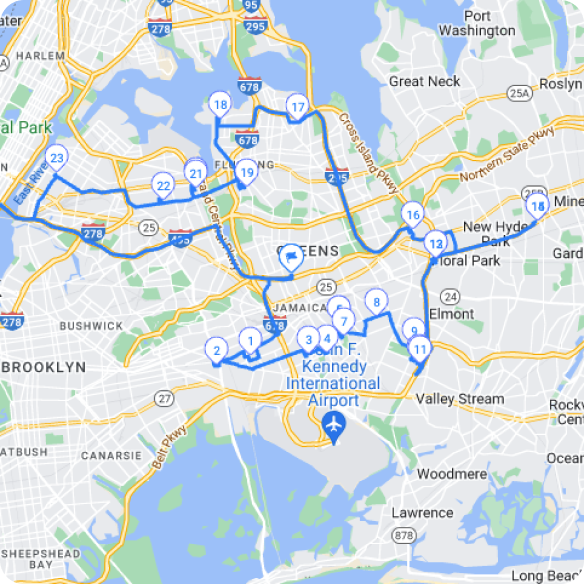
AI-powered route optimization doesn’t simply focus on taking the driver from point A to B. It considers multiple factors before devising the most efficient and fastest route possible to save time, fuel consumption, and other operational costs.
- Automated Scheduling Improves Delivery Success Rates
One of the most important responsibilities that fleet managers have to shoulder is delivery scheduling. Though it might sound simple, it involves a lot of intricacies that should be considered – driver availability, travel distance, and customer availability.With AI-powered routing tools, you can schedule deliveries within customer’s preferred timelines, ensuring that they are available to receive the delivery. This reduces the chances of failed deliveries and reattempts. With fewer missed deliveries, you save money on fuel, labor, and re-dispatching costs.
- Real-Time Tracking Enhances Operational Visibility
AI-powered route optimization tools provide a bird’s eye view with real-time visibility of delivery progress. Live route tracking enables fleet managers to ensure that the fleet is sticking to the optimized routes and not missing any turns.In case of any unexpected delays, they can instantly reroute the drivers to avoid missing out on the decided timelines. This visibility on delivery operations helps in reducing cost overruns. Tracing data also provides insights into improvement areas that can further reduce the operational cost.
- AI-Powered Demand Forecasting for Smarter Resource Allocation
If you know what to expect, you can plan more effectively for the future. The same applies to logistics and fleet management. Fleet managers must be prepared for a season of high demands and allocate their resources – drivers and vehicles – accordingly.AI-powered route optimization tools leverage historical data to analyze demand patterns, delivery requirements, market trends, customer behavior, and seasonal trends to offer insights into future demands and order volumes. Industry data shows that proper resource allocation directly impacts operational efficiency and cost control.
These insights enable fleet managers to avoid the mistake of understaffing or overstaffing their fleet. An understaffed fleet will lose out on profit margins with lesser deliveries while an overstaffed fleet will increase operational costs.
Frequently Asked Questions
What percentage of delivery costs come from last-mile operations?
Last-mile delivery accounts for approximately 53% of total shipping costs, making it the most expensive part of the delivery process. This high percentage is due to the complexity of individual deliveries, traffic conditions, and the need for precise timing and customer coordination.
How much fuel can efficient route planning save delivery companies?
Efficient route planning can reduce fuel consumption by 20-30% compared to manual routing methods. The savings come from eliminating unnecessary detours, reducing total mileage, and optimizing vehicle capacity utilization across delivery routes.
What causes most failed delivery attempts in last-mile operations?
The primary causes of failed deliveries include customers not being available (40%), incorrect addresses (25%), and delivery time misalignments (20%). Each failed delivery attempt doubles the operational cost for that specific package, including fuel, labor, and re-dispatching expenses.
Can route optimization tools integrate with existing e-commerce platforms?
Yes, modern route optimization platforms offer integrations with major e-commerce systems like Shopify and WooCommerce to automatically import orders. Zeo Route Planner also connects through Zapier to over 1000 applications, streamlining the entire delivery workflow from order placement to completion.
How do delivery companies track driver performance and route efficiency?
Companies use GPS tracking systems and route analytics to monitor key metrics like delivery times, route adherence, and fuel efficiency. Advanced platforms provide driver performance analytics that help identify training opportunities and optimize resource allocation based on individual driver capabilities and work patterns.
Conclusion
The modern times call for modern solutions. Last-mile delivery challenges can be easily tackled with an AI-powered route optimization tool like Zeo Route Planner.
Zeo employs smart AI algorithms to enhance your route planning and delivery efficiency. With Zeo, you can enjoy faster, smarter, and cost-effective deliveries. AI-powered route optimization is the key to reducing fuel consumption, improving driver management, and eliminating delivery inefficiencies.
Zeo Route Planner is designed to equip fleet managers with all the arsenal they need to take their last-mile delivery process to the next level, riding on the back of AI technology.
Schedule a free demo with Zeo experts and experience the power of AI-powered route optimization.
Are you a fleet owner?
Want to manage your drivers and deliveries easily?
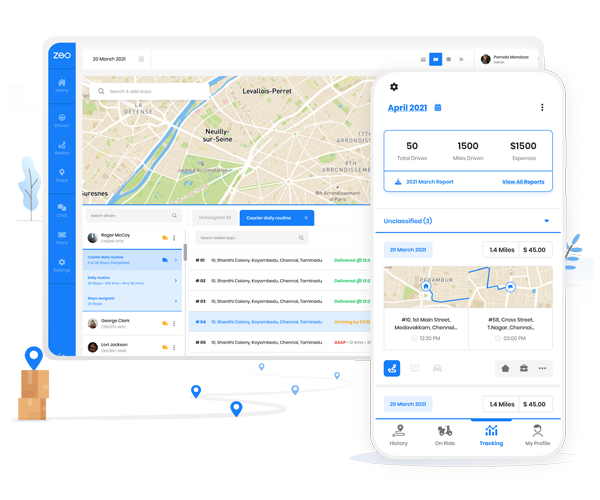
Grow your business effortlessly with Zeo Routes Planner – optimize routes and manage multiple drivers with ease.
increase fuel savings
Hassle Free Deliveries & Pickups!
Optimize routes with our algorithm, reducing travel time and costs efficiently.
Get Started for Free