



Updated on: December 30, 2025
# HVAC Emergency Dispatch Software: Cut Response Times by 40%
When a customer’s air conditioner dies on a 95-degree summer day, every minute matters. Traditional manual dispatch methods leave customers sweltering while dispatchers scramble to figure out which technician can respond fastest.
Modern HVAC emergency dispatch software changes this equation entirely. Companies using intelligent routing and real-time tracking report 40% faster emergency response times while maintaining their scheduled service efficiency.
Let’s explore how the right dispatch software can transform your emergency response operations and protect your bottom line.
The True Cost of Slow HVAC Emergency Response (And Why Manual Dispatch Fails)
Poor emergency response creates a domino effect that damages your entire operation. When dispatchers manually calculate which technician is closest to an emergency, they’re working with incomplete information.
Consider this scenario: Your dispatcher gets an emergency call at 2 PM. They check their paper schedule, see that Mike is “somewhere in the north part of town,” and assign him the job. But Mike actually finished his last call early and is now 20 minutes away. Meanwhile, Sarah just wrapped up nearby and could have been there in 8 minutes.
This happens dozens of times per month in companies relying on manual dispatch. The costs add up quickly:
Customer Dissatisfaction: Emergency customers experiencing heating or cooling failures become frustrated when response times exceed 2-3 hours. These customers often switch to competitors permanently.
Overtime Expenses: When emergency calls disrupt scheduled routes, technicians work late to complete their original appointments. This overtime can cost companies $200-400 per technician per emergency day.
Lost Revenue: Missed appointments due to emergency disruptions mean lost revenue and rescheduling costs. Each missed appointment averages $150-300 in lost immediate revenue.
Technician Stress: Constantly reshuffling schedules creates stress for both dispatchers and field technicians. High-stress environments lead to higher turnover rates.
The manual approach fails because dispatchers lack real-time visibility into technician locations and accurate travel time calculations. They’re making critical decisions with outdated information.
Emergency Response Time Standards: What HVAC Companies Need to Know
Industry standards for HVAC emergency response vary by situation severity, but customer expectations remain consistently high. Understanding these benchmarks helps you set realistic goals and measure improvement.
Critical Emergencies (no heat in winter, no AC in extreme heat): Industry standard is 2-4 hours, but top-performing companies achieve 60-90 minute average response times.
Urgent Service Calls (partial system failures): Standard response time ranges from 4-8 hours, with leading companies responding within 2-3 hours.
Same-Day Service: Non-emergency but urgent requests should receive same-day response when possible, typically within 6-8 hours.
Your local market conditions affect these standards significantly. Urban areas with high competition often require faster response times than rural markets. However, customers increasingly expect rapid response regardless of location.
Weather emergencies create additional pressure. During heat waves or cold snaps, response time expectations drop dramatically. Customers experiencing system failures during extreme weather often call multiple companies simultaneously, giving the job to whoever arrives first.
Meeting these standards without proper dispatch software becomes nearly impossible as your fleet grows beyond 5-10 technicians. Manual coordination simply cannot keep pace with customer expectations and competitive pressures.
5 Essential Features Your HVAC Emergency Dispatch Software Must Have
Not all dispatch software handles emergencies effectively. These five features separate basic scheduling tools from true emergency response solutions:
1. Real-Time GPS Tracking
Your dispatch software must show live technician locations, not just scheduled stops. When emergency calls come in, dispatchers need to see exactly where each technician is at that moment. Systems that only show planned routes create the same blind spots as manual dispatch. Modern driver tracking software provides this real-time visibility essential for emergency response.
2. Instant Route Recalculation
When you insert an emergency call, the software should automatically recalculate affected routes. This includes adjusting arrival times for subsequent appointments and identifying which scheduled calls might need rescheduling. Manual route adjustments waste precious minutes during emergencies.
3. Mobile Notifications and Updates
Technicians need instant notifications when emergency assignments change their routes. The system should push new destinations directly to their mobile devices with updated navigation and customer details. Relying on phone calls or radio communication creates delays and miscommunication.
4. Customer Communication Automation
Emergency situations require immediate customer updates. Your software should automatically send SMS notifications with technician details, arrival estimates, and live tracking links. Customers need reassurance that help is on the way.
5. Skills-Based Emergency Assignment
Not every technician can handle every emergency. Your dispatch software should consider technician certifications, specialties, and equipment when assigning emergency calls. Sending a residential specialist to a commercial emergency wastes time and creates service quality issues.
These features work together to create seamless emergency response workflows. Missing any single component reduces your overall response effectiveness.
Route Optimization for Emergency Dispatch: Reducing Response Times by 40%
Route optimization transforms emergency dispatch from reactive scrambling to proactive response management. The 40% improvement comes from three key optimization strategies:
Intelligent Technician Selection
Instead of guessing which technician is closest, optimization software calculates actual travel times considering current traffic, road conditions, and technician locations. This precision often reveals that the “closest” technician on paper isn’t actually the fastest responder.
For example, a technician 15 miles away on a highway might reach an emergency faster than one 8 miles away stuck in city traffic. AI route optimization makes these calculations instantly and accurately.
Dynamic Route Adjustment
When dispatchers assign emergency calls through the web platform, technicians receive instant notifications and optimized routes directly on their mobile devices. This ensures the closest available technician responds immediately while the system automatically adjusts other routes to minimize disruption.
The software recalculates not just the emergency responder’s route, but all affected technician schedules. This prevents the cascade of delays that typically follow emergency insertions.
Predictive Positioning
Advanced systems learn from historical emergency patterns. If your company typically receives more emergency calls in certain neighborhoods during specific times, the software can position technicians strategically throughout the day.
This predictive element helps maintain faster average response times by keeping technicians closer to high-probability emergency zones without disrupting scheduled work.
Route optimization also considers appointment time windows, customer priorities, and technician specialties simultaneously. This multi-factor optimization is impossible to achieve manually but becomes automatic with proper software.
The 40% improvement isn’t just about speed—it’s about maintaining service quality while responding faster. Optimized dispatch reduces the chaos that leads to mistakes and poor customer experiences.
Emergency vs Scheduled Service: How Smart Dispatch Software Handles Both
The biggest challenge in HVAC dispatch isn’t handling emergencies OR scheduled maintenance—it’s managing both simultaneously without destroying efficiency. Smart dispatch software treats this as an integrated optimization problem.
Priority-Based Scheduling

increase fuel savings
Hassle Free Deliveries & Pickups!
Optimize routes with our algorithm, reducing travel time and costs efficiently.
Get Started for Free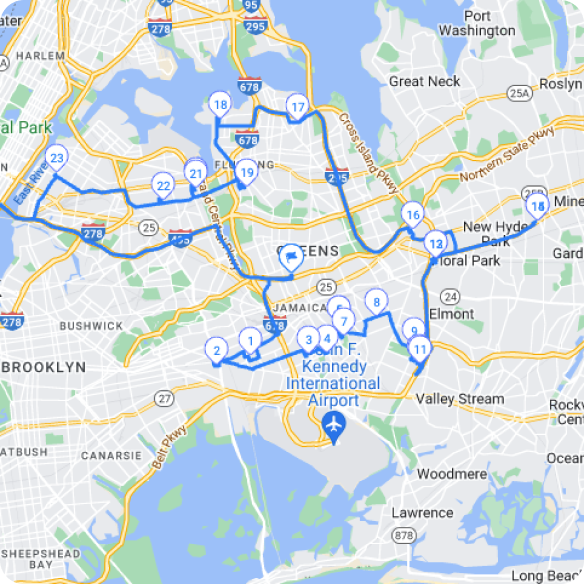
Emergency calls automatically receive higher priority, but the software doesn’t simply jam them into existing routes. Instead, it evaluates the impact of different assignment options and chooses the path that minimizes total disruption.
Sometimes this means assigning an emergency to the second-closest technician if the closest one has critical scheduled appointments that would be expensive to reschedule.
Flexible Time Windows
Scheduled maintenance appointments often have flexible time windows, while emergencies demand immediate response. Smart software leverages this flexibility by automatically adjusting scheduled appointments when emergency insertions would otherwise cause conflicts.
The system might move a routine maintenance call from 2 PM to 4 PM to accommodate an emergency, then notify both the customer and technician about the change.
Workload Balancing
Emergency calls create uneven workload distribution. One technician might handle three emergencies while another completes routine maintenance. Smart dispatch software monitors total workload and adjusts future assignments to rebalance the day.
This prevents emergency responders from working excessive overtime while keeping the rest of your team productively utilized.
Skills Matching for Both Service Types
The software considers technician expertise when assigning both emergency and scheduled work. A senior technician might handle complex emergency diagnostics while junior technicians focus on routine maintenance tasks.
This skill-based assignment improves both emergency response quality and scheduled service efficiency.
Communication Integration
Managing dual service types requires constant communication updates. When emergency insertions delay scheduled appointments, customers need immediate notification with new arrival estimates.
The software automatically handles these communications, sending updates to affected customers while keeping dispatchers focused on coordinating response efforts. Comprehensive field service management solutions integrate all these communication channels seamlessly.
Companies using integrated emergency and scheduled dispatch report not just faster response times, but also higher overall customer satisfaction scores and improved technician productivity.
ROI Calculator: Cost of Poor Emergency Dispatch vs Optimized Systems
Understanding the financial impact of dispatch optimization helps justify software investments and measure improvement. Here’s how to calculate the true cost of your current emergency response process:
Current Emergency Response Costs (Monthly)
Start by tracking these metrics for one month:
- Average emergency response time (hours)
- Number of emergency calls per month
- Overtime hours caused by emergency disruptions
- Missed appointments due to emergency responses
- Customer complaints related to slow response
Example Calculation for 15-Technician HVAC Company:
Poor Response Costs (Monthly):
- 50 emergency calls × 3.5 hour average response = 175 emergency response hours
- 30 overtime hours per month × $35/hour = $1,050 overtime costs
- 15 missed appointments × $250 average = $3,750 lost revenue
- 2 lost customers per month × $2,500 lifetime value = $5,000 customer loss
Total Monthly Cost: $9,800
Optimized System Benefits (Monthly)
With 40% faster response times and improved coordination using fleet routing software:
- 50 emergency calls × 2.1 hour average response = 105 emergency response hours
- 10 overtime hours per month × $35/hour = $350 overtime costs
- 5 missed appointments × $250 average = $1,250 lost revenue
- 0.5 lost customers per month × $2,500 lifetime value = $1,250 customer loss
Total Monthly Cost: $2,850
Net Monthly Savings: $6,950
Annual ROI: $83,400
These calculations don’t include additional benefits like improved customer satisfaction scores, reduced dispatcher stress, higher technician retention, and increased capacity for handling more service calls.
Most route optimization platforms cost $30-50 per technician per month, meaning the ROI for this 15-technician company would be approximately 1,500% annually.
Even conservative estimates show significant returns. Companies that reduce response times by just 20% typically see ROI exceeding 800% in the first year.
Frequently Asked Questions
Q: What is HVAC emergency dispatch software and how does it work?
HVAC emergency dispatch software is a digital solution that automatically assigns emergency service calls to the closest available technician using real-time GPS tracking and route optimization. Zeo Route Planner’s dispatch system instantly calculates travel times, considers technician skills, and sends optimized routes directly to mobile devices, reducing response times by up to 40%.
Q: How much can HVAC companies save by using emergency dispatch software?
Companies typically save $4,000-$7,000 monthly by reducing overtime costs, missed appointments, and customer churn from slow response times. The average ROI ranges from 800-1,500% annually, with larger fleets seeing greater savings through improved efficiency and customer retention.
Q: What features should I look for in HVAC emergency dispatch software?
Essential features include real-time GPS tracking, instant route recalculation, mobile notifications, automated customer communications, and skills-based technician assignment. Zeo Route Planner offers all these features plus AI-powered optimization that considers traffic conditions, time windows, and technician specialties for optimal emergency response.
Q: How fast should HVAC companies respond to emergency calls?
Industry standards vary by emergency type: critical emergencies (no heat/AC in extreme weather) should receive response within 60-90 minutes, urgent calls within 2-3 hours, and same-day service within 6-8 hours. Top-performing companies using dispatch software achieve 40% faster response times than these benchmarks.
Q: Can emergency dispatch software handle both emergency and scheduled service calls?
Yes, advanced dispatch software manages both service types simultaneously by using priority-based scheduling and flexible time windows. The system automatically adjusts scheduled appointments when emergencies arise, rebalances workloads across technicians, and sends updated notifications to affected customers without manual intervention.
Transform Your HVAC Emergency Response Today
Emergency HVAC calls don’t have to create chaos in your operation. Modern dispatch software gives you the tools to respond faster, maintain schedule integrity, and protect your profitability.
The companies that master emergency response while maintaining operational efficiency will dominate their local markets. Customers remember who showed up fastest during their crisis moments.
Start your free trial of Zeo Route Planner to see how route optimization can transform your emergency response times and overall service efficiency. See the difference intelligent dispatch makes for your technicians, customers, and bottom line.
Are you a fleet owner?
Want to manage your drivers and deliveries easily?
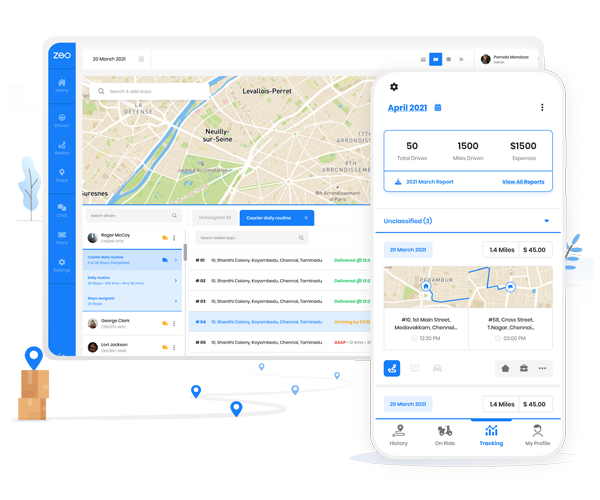
Grow your business effortlessly with Zeo Routes Planner – optimize routes and manage multiple drivers with ease.
increase fuel savings
Hassle Free Deliveries & Pickups!
Optimize routes with our algorithm, reducing travel time and costs efficiently.
Get Started for Free