

Updated on: May 18, 2026
Reading Time: 4 minutes
TL;DR: DaaS focuses exclusively on last-mile delivery with pay-per-drop pricing, while 3PL handles warehousing, inventory management, fulfillment, and delivery as a comprehensive supply chain solution. Most businesses choose DaaS for flexible, on-demand delivery needs and 3PL for predictable volumes requiring full logistics outsourcing. Route optimization tools like Zeo Route Planner address this with AI-powered route optimization and real-time GPS tracking, helping 3PL teams save 2+ hours daily.
Customers expect speed, businesses want lower costs, and nobody’s keen on running fleets unless they absolutely have to. That’s where DaaS and 3PL often come up in the same breath.
At its core, the Delivery as a Service (DaaS) model operates on a pay-per-drop basis where someone else handles the last mile. There’s no involvement of trucks or even drivers on payroll. It’s just the on-demand delivery that flexes with your volume.
But Third-Party Logistics (3PL) has a broad scope. It’s a model that holds your inventory, picks and packs orders, and then moves them through its own delivery networks. In other words, it’s supply chain outsourcing with delivery as just one step.
Below, we’ll explore the differences in detail.
DaaS vs 3PL Services
Delivery as a Service (DaaS) is built for the last mile. Businesses can outsource delivery runs on a per-order basis to gig networks, courier fleets, or autonomous services. It’s fast to scale, light on overhead, and works best when delivery demand shifts day to day.
On the flip side, 3PL services have a broader perspective.
It’s where the providers handle storage, inventory, order picking, packing, shipping, and last-mile delivery. You hand over a large part of your supply chain to focus on sales and growth, rather than operations.
Key Differences Between DaaS and 3PL
| Aspect | DaaS | 3PL |
| Scope | More emphasis on the last-mile delivery only | The scope of service includes warehousing, order management, fulfillment, and delivery |
| Cost Model | Pay-per-delivery with no fixed overhead | Contract-based, which happens monthly or annually, with fulfillment and storage fees |
| Flexibility | Super scalable for businesses dealing in day-to-day deliveries and experiencing demand spikes | Suitable for steady, predictable volumes and long-term operations |
| Control | Limited control since the delivery is outsourced to gig or fleet providers | There’s more control over supply chain visibility, but less flexibility |
| Technology Use | Optimized for routing, real-time tracking, and customer updates | Integrates inventory systems, warehouse management, and shipping platforms |
Understanding DaaS Business Models
DaaS providers typically operate through three main models: marketplace platforms that connect businesses with independent couriers, dedicated fleet services that maintain their own drivers and vehicles, and hybrid models that combine both approaches depending on demand and location.
The U.S. Department of Transportation reports that last-mile delivery accounts for up to 53% of total shipping costs, making DaaS an attractive option for businesses looking to reduce logistics overhead while maintaining delivery speed.
Most DaaS providers charge based on distance, package size, delivery urgency, and geographic zone. This variable pricing structure allows businesses to scale delivery costs directly with revenue, particularly beneficial for seasonal businesses or those experiencing rapid growth.
How 3PL Operations Scale Across Industries
3PL providers serve as comprehensive logistics partners, typically managing everything from inbound freight and warehousing to order fulfillment and returns processing. According to the Council of Supply Chain Management Professionals, companies using 3PL services report an average of 15% reduction in logistics costs and 22% improvement in order fulfillment speed.
The 3PL model works particularly well for businesses that need geographic expansion without capital investment in warehouses and distribution centers. Many 3PLs offer multi-client facilities where businesses share warehouse space and transportation costs, creating economies of scale that individual companies couldn’t achieve alone.
When to Choose DaaS vs 3PL
To make a choice between DaaS and 3PL, you’ll have to consider how your business operates on a day-to-day basis.
Each of these models is there to solve different problems. But the right choice often depends on your delivery volume, customer promises, and how much of the supply chain you want to manage yourself.
Choosing DaaS
You’d go for DaaS if the business you’re in has demand for fast and flexible deliveries. These are some of the common business scenarios that would adopt DaaS.
- Restaurants & grocery stores benefit from DaaS as it can handle unpredictable rush hours with per-delivery pricing.
- Local retailers use DaaS to quickly add delivery without building an in-house fleet.
- DaaS is also preferred by e-commerce stores offering same-day deliveries because they provide fast, hyperlocal deliveries with ease.
Choosing 3PL
The 3PL model is highly suitable for businesses that demand scale and consistency. The scope of 3PL is wider than DaaS, as it encompasses the entire supply chain, from warehousing to last-mile delivery. That’s why it works best for companies with consistent order volumes.
These are some of the businesses that usually adopt 3PL:
- E-commerce brands wanting to expand to multiple cities or nationwide, with a focus on warehousing and fulfillment.
- Healthcare & pharma businesses that require compliance and rely on reliable deliveries, where precision is critical.
- Retailers who outsource storage, packing, and delivery but still look to maintain lean operations.
Where They Work Together
Many businesses blend both models. A 3PL remains a valuable model for managing storage and order fulfillment. On the other hand, businesses benefit from the flexible last-mile coverage of a DaaS provider in urban or high-demand areas.
These are the businesses that adopt the hybrid model:
- Omnichannel retailers usually get the shipping done from 3PL warehouses and then deliver same-day through DaaS in select cities
- Seasonal businesses usually prefer 3PL year-round, but layer on DaaS during demand spikes
Cost Analysis: Total Ownership vs Pay-Per-Use
The financial impact of choosing DaaS versus 3PL extends beyond simple per-delivery costs. DaaS offers immediate cost transparency with no upfront investments, making it ideal for startups and businesses with unpredictable order volumes. However, high-volume shippers often find 3PL contracts more economical due to negotiated rates and bulk pricing advantages.
3PL partnerships typically require minimum volume commitments and longer contract terms, but they provide cost predictability that helps with financial planning. Many businesses using route planning software find they can optimize their 3PL operations further by improving delivery efficiency and reducing per-stop costs.
Technology Integration Considerations
Both DaaS and 3PL models rely heavily on technology integration, but their requirements differ significantly. DaaS platforms typically offer APIs for order placement, tracking, and customer notifications, while 3PL providers need deeper integration with inventory management, order management systems, and customer relationship management platforms.

increase fuel savings
Hassle Free Deliveries & Pickups!
Optimize routes with our algorithm, reducing travel time and costs efficiently.
Get Started for Free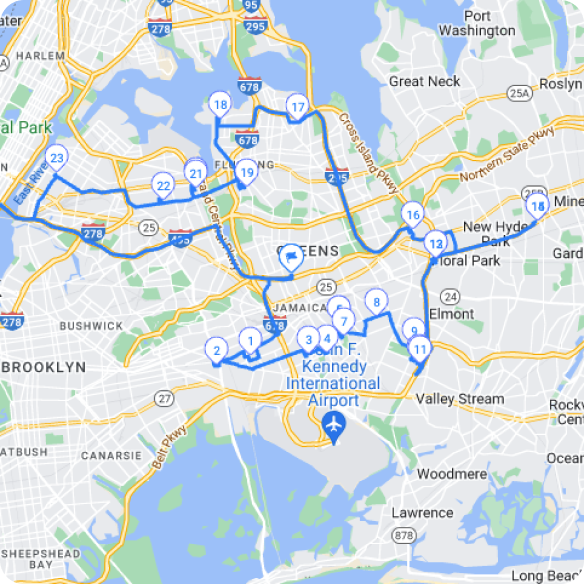
The choice often depends on your existing tech stack and how much control you want over the customer experience. Route optimization technology plays a crucial role in both models, helping reduce delivery times and improve customer satisfaction.
Zeo Route Planner for 3PL Operations
3PL providers do more than just manage the deliveries. They manage inventory, warehousing, fulfillment, and even the last-mile delivery.
And this is where Zeo Route Planner can help.
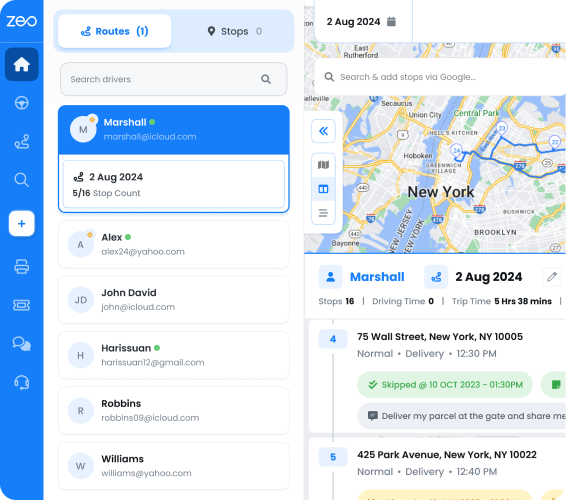
As a user, you get a practical tool that takes delivery chaos and makes it manageable. Fast routes, real-time tracking, and cleaner workflows get things moving.
Here’s what you unlock when you use Zeo inside a 3PL setup:
Enable Fast, Optimized Route Planning
You can build smart routes pretty quickly and easily with Zeo Route Planner.
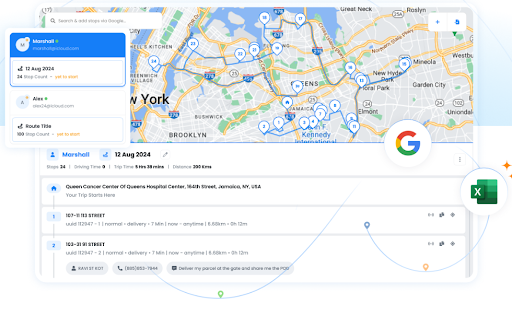
Also, you get to prioritize stops, set delivery windows, and even add customer notes without juggling a dozen spreadsheets.
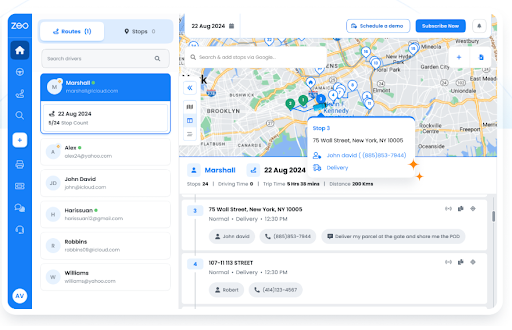
Track Your Fleet, Live
Get the real-time location for every vehicle. In case of route shifts, you receive live updates, ensuring dispatchers stay in control without needing to chase anyone down.
Get Proof of Delivery
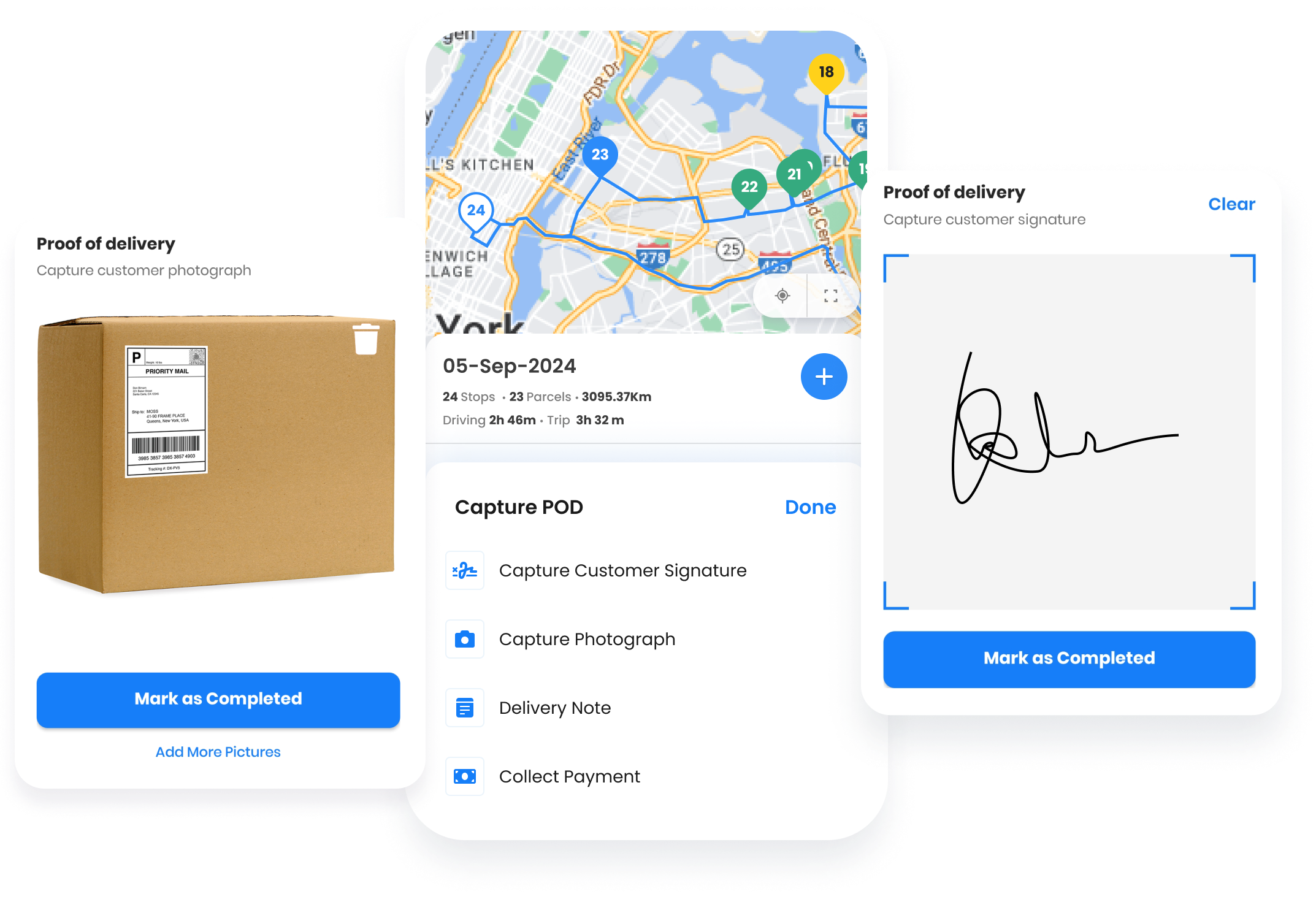
Zeo Route Planner provides a convenient way for drivers to collect digital signatures, take photos, or log notes.
Ready to See It in Action?
Zeo Route Planner takes the real pressure off your 3PL operations. So, if you’re providing 3PL services, you’ll benefit from Zeo’s ability to enable faster planning, better tracking, and reduced stress on your drivers.
If you’re ready to tighten up your last mile without overhauling everything else, now’s a good time to see how it works.
Book a free demo and get a walkthrough tailored to your delivery setup.
Frequently Asked Questions
Can a company use both DaaS and 3PL services simultaneously?
Yes, many companies successfully combine both models in what’s called a hybrid approach. They use 3PL providers for regular warehousing, inventory management, and standard shipping, while leveraging DaaS for same-day deliveries, peak season overflow, or specific geographic markets where flexibility is more important than cost optimization.
What are the main cost differences between DaaS and 3PL pricing models?
DaaS typically charges per delivery with transparent, variable pricing that scales with your volume, making it ideal for unpredictable demand. 3PL services use contract-based pricing with monthly or annual fees that include warehousing, fulfillment, and delivery services, offering better economies of scale for consistent, high-volume operations but requiring minimum commitments.
How do I know if my business volume justifies switching from DaaS to 3PL?
The tipping point usually occurs when you’re consistently shipping 500+ orders per month and need warehousing or inventory management services. Route optimization software with capacity-based routing and auto-assignment features saves 2+ hours daily for businesses managing this transition, helping them evaluate whether their delivery density supports the switch to dedicated 3PL operations.
What happens to customer experience when outsourcing to 3PL versus DaaS?
3PL services typically provide more consistent branding and customer communication since they manage the entire fulfillment process, while DaaS can vary in quality depending on which courier handles your delivery. Both models benefit from real-time tracking and customer notifications, though 3PL partnerships often allow more customization of the customer experience.
Do 3PL providers handle returns processing differently than DaaS services?
3PL providers typically manage the complete returns process including inspection, restocking, and inventory updates as part of their comprehensive service offering. DaaS services usually only handle the pickup and transport of returned items, requiring you to manage the processing, quality checks, and inventory adjustments yourself.
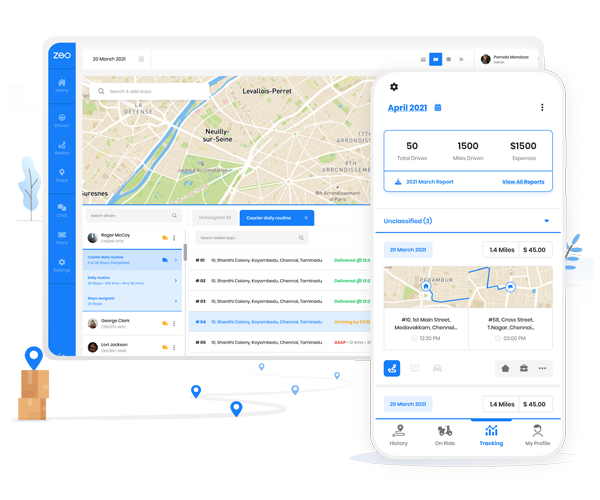
Are you a fleet owner?
Want to manage your drivers and deliveries easily?
Grow your business effortlessly with Zeo Routes Planner – optimize routes and manage multiple drivers with ease.

increase fuel savings
Save $200 on fuel, Monthly!
Optimize routes with our algorithm, reducing travel time and costs efficiently.
Get Started for Free