

Updated on: March 21, 2026
Reading Time: 3 minutes
TL;DR: The most critical route planning mistakes include relying on manual processes, sticking to outdated familiar routes, underutilizing software features, ignoring data analytics, and failing to account for delivery time windows. As of 2026, businesses lose an average of 2+ hours daily to inefficient routing practices. Route optimization tools like Zeo Route Planner address this with AI-powered route optimization and real-time GPS tracking, helping delivery teams save 2+ hours daily.
Each and every penny saved is important for a business to thrive. You want to do everything that will help your business become more efficient and increase profitability. This is where route planning comes into the picture.
However, just putting a manual route planning system in place or purchasing a software isn’t enough. Once you start using the manual system or software, it’s important to evaluate if it’s being used to its full potential or not.
Don’t worry, we are here to help!
In this blog, we’ll go through 5 common route-planning mistakes and how you can avoid them.
5 Common Route Planning Mistakes and How to Avoid Them
1. Depending on manual route planning
Manual route planning may be possible when you have 1-2 drivers only. However, as the scale of your fleet grows, route planning becomes complex. Your route planning team will spend hours and hours of their time and still may not arrive at the most optimized route. According to the U.S. Bureau of Transportation Statistics, freight transportation costs continue to rise, making route efficiency more critical than ever for maintaining competitive margins.
You should use route planning software to save your team’s time and to get the most optimized routes within seconds. Your team can spend the time saved on business development or critical thinking tasks.
The hidden costs of manual planning extend beyond just time investment. Manual route creation often results in suboptimal driver assignments, overlooked capacity constraints, and inability to adapt to real-time changes like traffic conditions or last-minute order modifications. These inefficiencies compound throughout the day, leading to delayed deliveries, increased fuel consumption, and frustrated customers.
Modern route planning software addresses these challenges through automated optimization algorithms that consider multiple variables simultaneously – something virtually impossible to achieve manually at scale. The software can instantly recalculate routes when new orders come in or when drivers encounter unexpected delays.
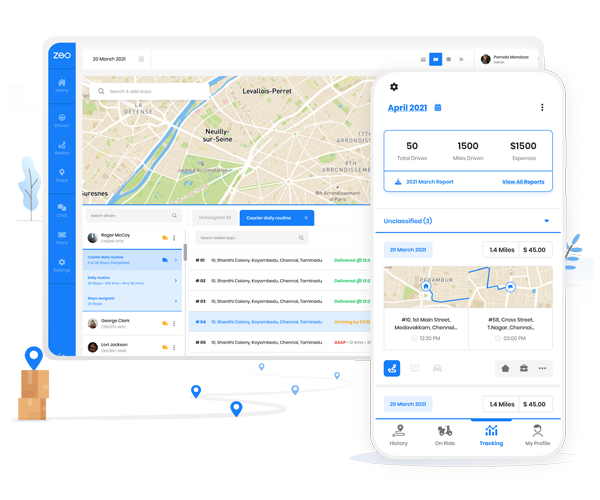
Zeo route planner offers an affordable solution to manage your fleet. It’s easy to use and includes valuable features like driver tracking, delivery time windows, capturing proof of delivery and many more.
Hop on a quick 30-minute demo call to understand how Zeo can help your business save time and money!
Read more: Choosing the correct route optimization software
2. Sticking to familiar but inefficient routes
As a supervisor, you may be aware of certain routes that are efficient as per your experience and historical information. But routes evolve over time and may not be as efficient as they used to be. Using the route provided by the planning software will ensure that you are using the most efficient one in terms of time as well as costs.
Road conditions, traffic patterns, construction projects, and even customer locations change frequently. What worked efficiently six months ago might now include unnecessary detours or time-consuming bottlenecks. The Federal Highway Administration reports that traffic congestion patterns shift significantly year over year, affecting optimal routing decisions.
Sometimes the drivers may also prefer a more familiar route and take detours. In that case, the driver tracking feature of a route planner will come in handy to track the live location of your drivers.
Driver resistance to new routes often stems from comfort with known paths rather than actual efficiency. However, this familiarity bias can cost businesses significantly in terms of fuel, time, and customer satisfaction. Training drivers on the benefits of optimized routing and providing them with real-time navigation updates helps overcome this resistance while maintaining accountability.
3. Drivers not making the best use of route planners
Route planners are easy to use and come with multiple additional features. Zeo route planner comes with helpful features like sending trip details to customers and recording electronic proof of delivery. While the drivers are aware of the features, they may use some features regularly and ignore others. The drivers should use all the features as and when required to make the best use of the route planner app.
Common underutilized features include delivery time window management, capacity constraints input, and real-time communication tools. Many drivers stick to basic navigation without leveraging advanced capabilities like priority stop management or customer notification systems. This partial adoption significantly reduces the return on investment in route planning technology.
When new drivers join the fleet, they should be onboarded on the app with full knowledge of the features.
Creating a comprehensive training program that covers all software features ensures consistent adoption across your team. Regular refresher sessions and performance monitoring help identify gaps in feature utilization and provide opportunities for additional training where needed.
Read more: Revolutionize Customer Communication with Zeo’s Direct Messaging Feature
4. Not utilizing the available reports
A major advantage of route planning software over manual route planning is the availability of reports. Businesses are using all forms of data to make better decisions. It would be a mistake to not make use of the data that is readily available.

increase fuel savings
Save $200 on fuel, Monthly!
Optimize routes with our algorithm, reducing travel time and costs efficiently.
Get Started for Free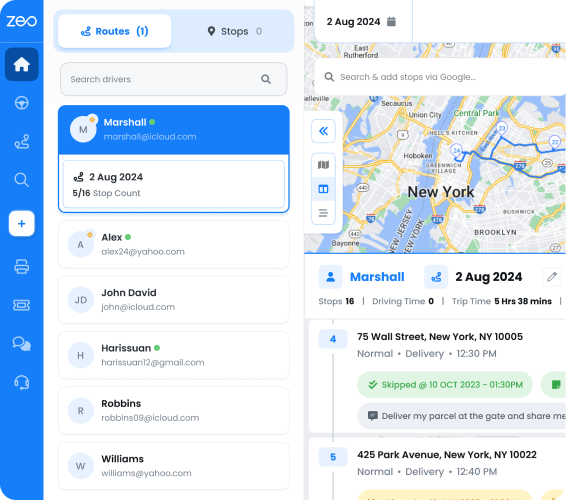
After a route is completed you can download the reports to understand if all the deliveries were made on time or if there was a gap between the ETA and the actual arrival time. If the deliveries are delayed, you can further deep-dive into the reasons behind the delays and eliminate inefficiencies.
Route analytics provide insights beyond just delivery timing. Performance metrics can reveal patterns in driver efficiency, fuel consumption trends, customer satisfaction correlations, and operational bottlenecks. As of 2026, data-driven fleet management has become essential for maintaining competitive advantage in the delivery industry.
Key performance indicators to monitor include average delivery time per stop, miles driven per delivery, on-time delivery percentage, and customer communication response rates. These metrics help identify top-performing routes and drivers while highlighting areas needing improvement. Regular analysis of this data enables continuous optimization of your delivery operations.
5. Not considering delivery time windows
The customers have busy schedules and want the deliveries to be made when they are available. While planning the route if you are not considering the preferred delivery slots of the customers then it will lead to failed deliveries or the driver will have to make multiple visits to the same address. This will eventually lead to the wastage of drivers’ time and business resources.
If the preferred delivery slot is added then the route planner will take it into consideration and optimize the route accordingly. This would mean happy customers and happy drivers.
Failed deliveries due to timing mismatches create a cascade of operational problems. Drivers must return to the depot with undelivered packages, customers become frustrated with missed appointments, and additional delivery attempts increase costs exponentially. As of 2026, customer expectations for delivery precision have reached new heights, making time window management more critical than ever.
Advanced route planning software can balance multiple time windows across different stops while optimizing for overall route efficiency. This complex calculation considers traffic patterns, service time requirements, and driver schedules to create feasible delivery sequences that satisfy customer preferences without compromising operational efficiency.
Summing Up
To get the best return on your investment in a route planner it’s important to avoid these common route planning mistakes. Using a route planner is fairly easy and results in improved efficiencies for your business. Just make sure that the planning team and the drivers are taking the best advantage of a route planning software.
Sign up for a free trial of Zeo Route Planner now!
Frequently Asked Questions
How much time can businesses save by switching from manual to automated route planning?
Businesses typically save 2+ hours daily by switching from manual to automated route planning. This time savings comes from eliminating the need to manually calculate optimal stop sequences, account for traffic conditions, and balance multiple constraints like delivery windows and vehicle capacities.
What are the main factors that make familiar routes become inefficient over time?
Road construction, changing traffic patterns, new customer locations, and seasonal variations all contribute to route inefficiency over time. Additionally, business growth often means adding new stops to existing routes without reoptimizing the entire sequence, leading to suboptimal delivery patterns.
Why do delivery drivers resist using new routing technology?
Driver resistance typically stems from familiarity bias with known routes, concerns about learning new technology, and fear of increased oversight. Proper training and demonstrating how route optimization actually makes their job easier helps overcome this resistance while improving overall performance.
Which route planning metrics provide the most valuable insights for fleet managers?
On-time delivery percentage, miles driven per delivery, and average service time per stop provide the most actionable insights. These metrics help identify efficiency bottlenecks and improvement opportunities while benchmarking performance against industry standards.
How do delivery time windows impact overall route efficiency?
Delivery time windows create optimization constraints that can reduce overall route efficiency if not properly managed. However, respecting customer time preferences ultimately improves delivery success rates and reduces costly redelivery attempts, making the trade-off worthwhile for customer satisfaction.
Are you a fleet owner?
Want to manage your drivers and deliveries easily?
Grow your business effortlessly with Zeo Routes Planner – optimize routes and manage multiple drivers with ease.

increase fuel savings
Hassle Free Deliveries & Pickups!
Optimize routes with our algorithm, reducing travel time and costs efficiently.
Get Started for Free