
# Best Bringg Competitors 2026: Complete Comparison Guide
> TL;DR: Mid-market delivery and field service companies can save 75-85% by switching from Bringg to right-sized alternatives that focus on core routing needs rather than enterprise complexity. Most businesses with 50-500 drivers find better ROI with specialized route optimization tools like Zeo Route Planner, which delivers AI-powered optimization without the $30,000+ monthly costs and 6-month implementation timelines of enterprise platforms.
Looking for Bringg competitors that won’t break your budget or overwhelm your team with unnecessary features? You’re not alone. Many mid-size delivery companies and field service businesses find Bringg’s enterprise approach too complex and expensive for their actual needs.
This guide breaks down the top alternatives with real pricing data, migration stories, and implementation timelines. You’ll discover which solution fits your business size and budget without sacrificing the features that matter most.
Why Companies Switch Away from Bringg: Common Pain Points and Limitations
High Implementation Costs and Complexity
Bringg positions itself as an enterprise solution, which means enterprise-level complexity. Most implementations take 3-6 months and require dedicated IT resources. According to Transportation Research Board studies, businesses with 50-200 drivers often spend more on implementation consulting than the software itself.
The platform requires extensive customization for basic features like branded customer notifications or simple proof of delivery workflows. What should be standard functionality becomes billable professional services.
Over-Engineering for Mid-Market Needs
Bringg built its platform for massive enterprises managing thousands of drivers across multiple countries. If you’re running 50-500 drivers, you’re paying for marketplace orchestration, supplier network management, and other enterprise features you’ll never use.
Most companies need route optimization, driver tracking, and customer notifications. Bringg’s focus on complex supply chain orchestration creates unnecessary bloat for straightforward delivery operations.
Pricing That Scales Too Aggressively
Bringg’s per-driver pricing becomes prohibitive as you grow. Companies report monthly costs jumping from $15,000 to $35,000+ when adding drivers or enabling features that competitors include as standard.
The pricing model assumes enterprise budgets and lengthy procurement cycles. Mid-market companies need predictable costs that scale reasonably with business growth.
Driver App Adoption Challenges
Bringg’s driver app reflects its enterprise complexity. Driver training often takes 2-3 weeks, and adoption rates can lag for months. Field teams resist apps that feel over-complicated for their daily tasks.
Top 7 Bringg Competitors: Feature Comparison Matrix and Pricing Breakdown
1. Zeo Route Planner
Best for: Mid-market delivery companies and field service businesses seeking powerful optimization without enterprise complexity
Core Strengths:
- AI-powered route optimization saves 2+ hours daily per driver
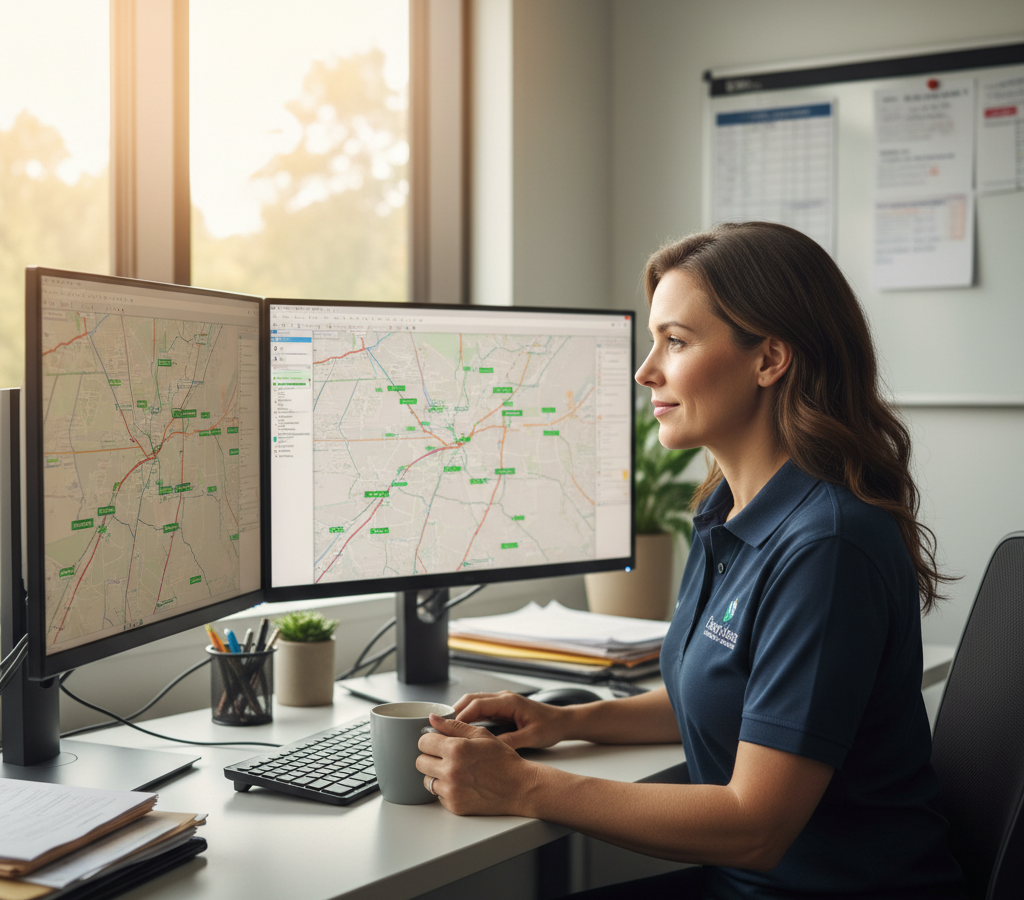
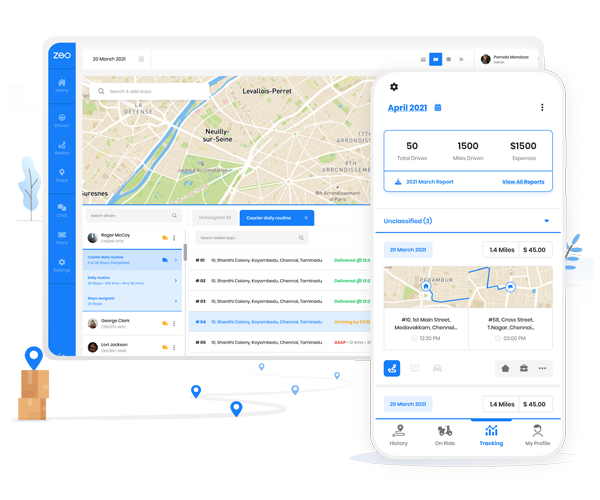
- Fleet managers plan routes via web platform while drivers receive optimized routes through the mobile app
- Real-time GPS tracking with live ETA updates for customers through comprehensive driver tracking software capabilities
- 95%+ driver adoption within the first week due to intuitive mobile interface
Pricing: Starting at $39/month per driver
Implementation: 1-2 weeks
Key Differentiator: Balances enterprise-grade optimization with mid-market simplicity
2. Route4Me
Best for: Companies prioritizing route planning over real-time operations
Pricing: $199-$349/month for unlimited drivers
Strengths: Affordable for large driver counts, good basic optimization
Limitations: Limited real-time tracking, basic customer communication features
3. Onfleet
Best for: Last-mile delivery with strong customer experience focus
Pricing: $149-$549/month based on tasks
Strengths: Excellent customer notifications, clean driver app
Limitations: Route optimization less advanced than dedicated platforms
4. OptimoRoute
Best for: Field service companies with appointment scheduling needs
Pricing: $35.10-$47.20 per vehicle/month
Strengths: Good time window handling, reasonable pricing
Limitations: Limited enterprise integrations, basic analytics
5. Workwave Route Manager
Best for: Established field service businesses needing CRM integration
Pricing: Custom pricing (typically $40-60/driver/month)
Strengths: Strong field service features, good reporting
Limitations: Complex setup, limited delivery-specific features
6. Routific
Best for: Small to medium delivery operations prioritizing simplicity
Pricing: $59-$119 per vehicle/month
Strengths: Easy setup, good customer portal
Limitations: Limited enterprise features, basic driver management
7. Circuit for Teams
Best for: Growing businesses transitioning from manual routing
Pricing: $20-$80 per driver/month
Strengths: User-friendly interface, quick implementation
Limitations: Limited advanced optimization, fewer enterprise integrations
Real Migration Stories: 4 Companies That Switched and Their ROI Results
Case Study 1: Regional Plumbing Company (120 Technicians)
Previous Solution: Bringg
Challenge: $28,000/month costs for features they didn’t need
This Dallas-based plumbing company spent eight months implementing Bringg’s enterprise platform. Monthly costs reached $28,000 for 120 technicians, plus $15,000 in consulting fees for custom integrations.
Switch to Zeo Route Planner:
- Monthly costs dropped to $4,680
- Implementation completed in 10 days
- Technicians adopted the mobile app immediately
- ROI: $280,000 annual savings with better driver satisfaction
The operations manager noted: “Bringg felt like using a freight management system to deliver pizza. Zeo gives us exactly what we need without the enterprise bloat.”
Case Study 2: Pharmacy Delivery Service (85 Drivers)
Previous Solution: Bringg
Challenge: 6-month implementation timeline disrupting daily operations
This pharmacy chain needed same-day delivery capability but Bringg’s implementation dragged on for six months. Driver training required three weeks per batch, delaying the service launch.
Switch to Route4Me:
- Setup completed in 3 weeks
- $18,000/month reduced to $349/month
- Trade-off: Lost real-time customer tracking but gained operational simplicity
- Result: Service launched 4 months earlier than planned
Case Study 3: Food Distribution Company (200 Drivers)
Previous Solution: Bringg
Challenge: Complex API requirements overwhelming internal IT team
This food distributor needed integration with their warehouse management system. Bringg’s API required six months of development work and ongoing maintenance.
Switch to Workwave:
- Pre-built integrations reduced setup to 6 weeks
- Monthly costs decreased from $35,000 to $12,000
- ROI: $276,000 annual savings plus reduced IT overhead
Case Study 4: Home Services Franchise (300 Technicians)
Previous Solution: Bringg
Challenge: Franchise locations couldn’t afford individual implementations
Each franchise location faced $20,000+ implementation costs with Bringg. Corporate needed a solution that individual franchisees could deploy independently.
Switch to Zeo Route Planner:
- Franchisees complete setup in 1-2 weeks
- Corporate negotiated volume pricing: $29/driver/month
- Result: 85% of locations deployed within 6 months vs. 2-3 year timeline with Bringg
Industry-Specific Recommendations: Best Bringg Alternative by Business Type
Last-Mile Delivery Companies
Recommended: Zeo Route Planner or Onfleet
Last-mile delivery requires strong customer communication and efficient route optimization. Zeo Route Planner excels with AI-powered routing that saves 2+ hours daily while providing branded customer tracking and SMS notifications.
Onfleet offers superior customer experience features if route optimization is less critical. Choose Onfleet for high-value deliveries where customer communication matters most.
Field Service Businesses (HVAC, Plumbing, Electrical)
Recommended: Zeo Route Planner or OptimoRoute
Field service needs appointment scheduling, time windows, and skill-based technician assignment. Zeo Route Planner handles complex scheduling while maintaining simplicity – technicians receive optimized routes on their phones with customer details and service history.
OptimoRoute works well for smaller operations focused primarily on appointment scheduling rather than complex routing optimization.
Food and Beverage Distribution
Recommended: Zeo Route Planner or Workwave
Food distribution requires capacity planning, time windows, and reliable tracking. According to the Food and Drug Administration’s transportation guidelines, temperature-sensitive deliveries need documented delivery times and proof of receipt.

increase fuel savings
Save 2 Hours on Deliveries, Everyday!
Optimize routes with our algorithm, reducing travel time and costs efficiently.
Get Started for Free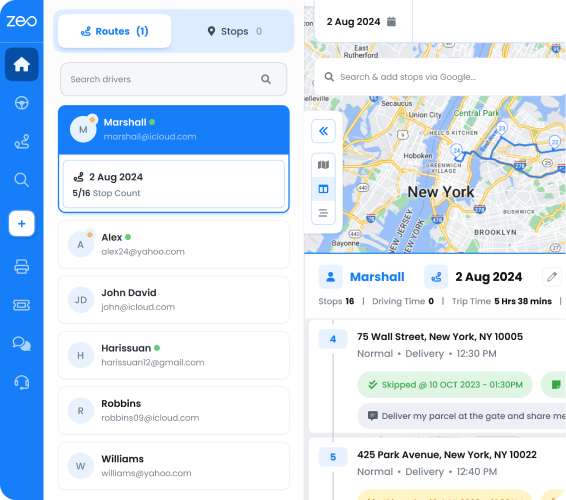
Zeo Route Planner’s photo capture and digital signature collection help document compliance through comprehensive proof of delivery features while capacity-based routing ensures vehicles stay within weight limits.
E-commerce and Courier Services
Recommended: Zeo Route Planner or Routific
E-commerce delivery benefits from automated order import and real-time customer updates. Zeo Route Planner’s Shopify and WooCommerce integrations automatically import orders and optimize daily routes for efficient same-day deliveries.
The platform’s live tracking links and SMS notifications keep customers informed without requiring additional customer service overhead.
Implementation Deep Dive: Setup Time, API Requirements, and Driver Adoption Rates
Setup Timeline Comparison
Enterprise Solutions (Bringg, Manhattan, etc.):
- Initial setup: 3-6 months
- API development: 2-4 months additional
- Driver training: 2-3 weeks per batch
- Full deployment: 6-12 months total
Mid-Market Solutions:
- Zeo Route Planner: 1-2 weeks to full deployment
- Route4Me: 2-3 weeks
- Onfleet: 2-4 weeks
- OptimoRoute: 3-4 weeks
For comprehensive guidance on selecting the right solution, explore our best delivery route planner software comparison guide.
API and Integration Requirements
Most Bringg competitors offer simpler integration approaches:
Pre-built Integrations: Zeo Route Planner connects to Shopify, WooCommerce, HubSpot, and Zapier without custom development. Most mid-market companies can complete integrations using existing platforms.
REST API Access: All major competitors provide REST APIs, but implementation complexity varies significantly. Zeo Route Planner and Onfleet offer the most developer-friendly documentation.
Bulk Data Import: Standard features include CSV/Excel import for stops and customer data. Bringg requires enterprise-level data mapping that smaller companies find overwhelming.
Driver Adoption Rates
Driver adoption often determines implementation success. Complex enterprise apps face resistance while intuitive mobile apps see immediate acceptance.
Zeo Route Planner: 95%+ adoption within first week. The mobile app focuses on essential features – navigation, customer details, and proof of delivery. Drivers don’t need extensive training.
Bringg and Enterprise Solutions: Often 60-70% adoption after one month. Complex interfaces require formal training programs.
Mid-Market Alternatives: Generally 80-90% adoption within two weeks. Simpler interfaces reduce training requirements.
ROI Calculator: How Much You Could Save by Switching from Bringg
Monthly Cost Comparison (100 Drivers)
Current Bringg Costs:
- Software licensing: $25,000/month
- Professional services: $8,000/month
- Integration maintenance: $3,000/month
- Total: $36,000/month ($432,000 annually)
Alternative Solutions:
- Zeo Route Planner: $3,900/month ($46,800 annually)
- Route4Me: $349/month ($4,188 annually)
- Onfleet: $2,500/month ($30,000 annually)
- OptimoRoute: $4,720/month ($56,640 annually)
Implementation Cost Savings
Bringg Implementation:
- Professional services: $75,000-150,000
- Internal IT time: $25,000-50,000
- Training and change management: $15,000-30,000
- Total: $115,000-230,000
Mid-Market Alternative Implementation:
- Setup and training: $5,000-15,000
- Integration costs: $2,000-8,000
- Total: $7,000-23,000
Three-Year ROI Analysis (100 Drivers)
Staying with Bringg:
- Software costs: $1,296,000
- Implementation/maintenance: $200,000
- Total: $1,496,000
Switching to Zeo Route Planner:
- Software costs: $140,400
- Implementation: $10,000
- Migration costs: $5,000
- Total: $155,400
- Three-year savings: $1,340,600
Even accounting for migration costs and potential productivity dips during transition, most companies save 75-85% over three years while maintaining equivalent functionality for their actual business needs.
Productivity Impact
Beyond direct cost savings, right-sized solutions often improve productivity:
- Faster implementation means quicker time to value
- Higher driver adoption reduces coordination overhead
- Simpler administration requires fewer dedicated IT resources
- Focused features eliminate confusion and training complexity
According to the Bureau of Labor Statistics, companies that reduce operational complexity see 15-20% improvement in employee productivity within the first year.
Advanced route optimization algorithms ensure maximum efficiency while maintaining the simplicity that drives adoption across your entire team.
Frequently Asked Questions
Q: How much can switching from Bringg to alternatives actually save mid-market companies?
Mid-market companies typically save 75-85% on software costs when switching from Bringg to right-sized alternatives. Based on real migration data, businesses with 100 drivers can reduce costs from $36,000/month with Bringg to $3,900/month with solutions like Zeo Route Planner, while maintaining equivalent functionality for their actual business needs.
Q: What’s the biggest challenge when migrating away from enterprise routing software?
Driver adoption is the most critical factor during migration. Enterprise platforms like Bringg often have complex interfaces requiring 2-3 weeks of training, while mid-market alternatives typically achieve 80-90% adoption within two weeks due to simpler, more intuitive mobile apps.
Q: Which industries benefit most from switching away from over-engineered routing platforms?
Field service businesses (HVAC, plumbing, electrical) and last-mile delivery companies see the greatest benefits. These industries need core features like route optimization, customer notifications, and proof of delivery without enterprise marketplace orchestration. Zeo Route Planner’s AI-powered optimization serves 1.5M+ users across these sectors, proving mid-market solutions can deliver enterprise results.
Q: How long does it typically take to implement Bringg alternatives?
Most Bringg alternatives require 1-4 weeks for full implementation compared to Bringg’s 3-6 month timeline. The simplified setup process eliminates the need for extensive professional services and custom development work that enterprise platforms require.
Q: What features should you prioritize when evaluating routing software alternatives?
Focus on route optimization algorithms, real-time tracking capabilities, customer communication tools, and mobile app usability. Avoid paying for enterprise features like supplier network management or complex marketplace orchestration unless you actually manage thousands of drivers across multiple countries.
—
Ready to see how much you could save? Start your free 7-day trial with Zeo Route Planner to compare real-world performance against Bringg – no credit card required. Test our AI-powered routing with your actual routes and see the difference right-sized software makes for your team.
Are you a fleet owner?
Want to manage your drivers and deliveries easily?
Grow your business effortlessly with Zeo Routes Planner – optimize routes and manage multiple drivers with ease.

increase fuel savings
Save $200 on fuel, Monthly!
Optimize routes with our algorithm, reducing travel time and costs efficiently.
Get Started for Free