



Updated on: March 6, 2026
Reading Time: 4 minutes
TL;DR: The best delivery cars balance fuel efficiency, cargo capacity, reliability, and maintenance costs – with hybrid vehicles like the Toyota Prius and electric options like the Chevrolet Bolt EV leading for small to medium deliveries. Beyond vehicle selection, optimized routing can reduce daily drive time significantly for delivery operations. Route optimization tools like Zeo Route Planner address this with AI-powered route optimization and capacity-based routing, helping delivery teams save 2+ hours daily.
Investing in the right car for deliveries is one of the most important decisions you will make for your business.
But it can get confusing.
We’ll help you make the right decision by providing you with all the knowledge you need to get the car that’s perfect for your delivery business!
Let’s get started.
Points to consider while buying a car for deliveries
Before committing to any car, you should consider the practical factors mentioned below:
- Capacity
Have a fair idea of the capacity or storage space you will require depending on the size and weight of the packages to be delivered. A cargo van will be more suitable for delivering large heavy-weight items than a car.
- Cost
Consider not only the upfront cost of the vehicle but also the expected repair and maintenance costs. A van or a truck will have higher maintenance costs compared to a car.
- Comfort & safety
Comfort and safety have to be the top priority as the delivery driver will spend most of his time on the road. Lack of comfort can hamper the productivity of the driver.
- Reliability
For smooth operations you want the vehicle to be reliable and not break down frequently. Thoroughly check the reviews of the vehicle before buying it. Otherwise, repair bills will shoot through the roof and your business will suffer.
- Navigation system
An in-built navigation system can be extremely helpful for drivers to reach the correct addresses. The driver may not know every route well enough.
- Fuel efficiency
Since fuel costs will form a major chunk of your delivery costs, you should try to minimize them. Buying a fuel-efficient delivery vehicle is one way to do it from the get-go.
Another way to control your fuel costs is to use route optimization software. A route planner is a must for a delivery business to make faster and more efficient deliveries.
Read more: How Route Optimization Software Helps You Save Money?
Learn how optimized routing can transform your delivery operations by reading our Complete Delivery Route Planner Guide for 2026.
Hop on a 30-minute demo call to find out how Zeo Route Planner can make your delivery business a success!
- Resale value
As your business grows, you may want to trade the current delivery car for a bigger and better one. In this case, you should be aware of the resale value of the car. A car that doesn’t have a great resale value may prove to be a burden.
Best Cars for Deliveries
- Toyota Prius
The Toyota Prius is a hybrid electric vehicle known for its fuel efficiency. It has an MPG of 57. With its hybrid technology, it combines a gasoline engine and electric motor to achieve high mileage per gallon.
The Prius offers a decent amount of cargo space, especially in the rear hatch area, making it suitable for small to medium-sized deliveries. You can go for it if you do Doordash or Instacart deliveries. It is known for its reliability and durability, which are crucial for delivery drivers.
- Chevrolet Bolt EV
Chevrolet Bolt EV is an all-electric car. With an electric range of 259 miles on a full charge, it is suitable to cover intracity distances. It’s an impressive range and allows for extended driving without the need for frequent charging stops. However, if you need to travel long distances, Bolt will not be the right choice for you.
The Bolt EV offers a decent amount of cargo space, making it suitable for deliveries. The hatchback design comes with foldable rear seats, allowing for additional storage when needed. This flexibility is beneficial for accommodating various items and packages.
Features like wireless smartphone connectivity, touchscreen tech providing real-time driving information, and a driver information center enhance driver comfort and safety during delivery operations.
- Hyundai Sonata Hybrid
The Sonata Hybrid excels in fuel efficiency due to its hybrid powertrain. This can be advantageous for delivery drivers, as it helps reduce fuel costs.
It also provides a decent-sized trunk for cargo storage, making it suitable for delivery purposes. It is known for its smooth and comfortable ride, making long hours on the road more enjoyable for drivers. Hyundai vehicles, including the Sonata Hybrid, have gained a reputation for reliability and durability.
- Light Duty Vehicles
If you want higher cargo capacity but don’t want a cargo van, then light-duty vehicles are your go-to. The open vehicle bed serves great for delivering bigger packages.
You don’t require a CDL to drive a light-duty vehicle. These are sturdy, long-lasting vehicles and require minimum upkeep. Consider light-duty vehicles like the Chevrolet Colorado, Honda Ridgeline, and Toyota Tacoma.
- Cargo vans
Go for cargo vans If you need to deliver large and medium size packages that need more space. It’s easy and convenient to load and unload the cargo through the rear door or the side doors. With the structures of the cargo vans offering coverage from all sides, you can drive rest assured about the safety of the packages.
Cargo vans like the Mercedes Benz Sprinter and Ford Transit Connect are great options. Mercedes will soon launch an eSprinter as well which will be fully electric. It will have an impressive range of 400 km on a single charge. The compact size of Ford Transit Connect makes it suitable for congested areas. It can be parked easily.

increase fuel savings
Save 2 Hours on Deliveries, Everyday!
Optimize routes with our algorithm, reducing travel time and costs efficiently.
Get Started for Free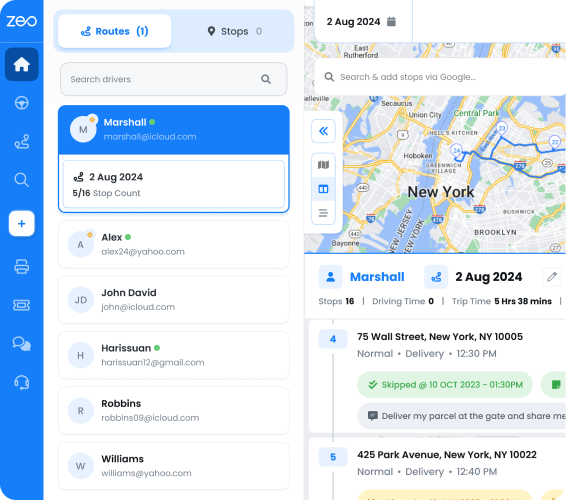
The vans come with additional features like active break assist, 360° visibility, and blind spot assist mirror to make the driving experience safe and comfortable.
Should you purchase a new car vs a used car?
Just starting your delivery business and don’t want to spend a huge amount on a brand-new car? You can always consider a used car.
Few factors to keep in mind while buying a used car:
- While the upfront cost of a used car may be attractive, consider the maintenance costs as well. A used car may require higher maintenance.
- Check the exterior and interior of the car for any visible damages. Look for any signs of accidents and repairs.
- Check the number of miles already driven. Prefer a used car with fewer miles on it.
- Even if you can’t find any problems with the car, it’s always good to get it inspected by a professional mechanic before buying.
Should you purchase a car vs leasing it?
Leasing a car is a good alternative if you don’t want to commit to a vehicle right away. You can get your delivery business started with a small investment. However, the monthly costs can quickly add up.
If you are planning to stick to deliveries in the long term, then buying a new car will be more cost-effective. You can customize it as per your needs, deduct it from your taxes as a business expense and sell it anytime for a better model.
Conclusion
Using the information above you can purchase the best car for deliveries as per your needs. Enable your drivers to make deliveries even more efficiently by arming them with a route planner! For comprehensive strategies on optimizing your delivery operations, check out Business Route Optimization: Cut Costs 20-30% in 2026.
Frequently Asked Questions
What maintenance costs should I budget for a delivery vehicle?
Budget 15-20% of your vehicle’s purchase price annually for maintenance, including oil changes every 3,000-5,000 miles, tire replacements every 25,000-50,000 miles, and brake service every 20,000-30,000 miles. Commercial delivery vehicles typically require maintenance 30-40% more frequently than personal vehicles due to higher mileage and stop-and-go driving patterns.
How many miles per year do delivery drivers typically drive?
Delivery drivers average 20,000-30,000 miles annually, significantly higher than the average personal vehicle usage of 13,500 miles per year according to the Federal Highway Administration. Full-time delivery drivers in urban areas may exceed 40,000 miles annually depending on route density and delivery frequency.
Can electric vehicles handle full-day delivery routes?
Most modern electric delivery vehicles can handle full-day routes with proper planning, as models like the Chevrolet Bolt EV offer 259-mile range and newer commercial EVs exceed 300 miles. The EPA confirms that 87% of vehicle trips are under 100 miles, making EVs suitable for most delivery operations with strategic charging during breaks.
How does route optimization software reduce fuel costs for delivery businesses?
Route optimization software reduces fuel costs by eliminating inefficient routes and minimizing total drive time through AI-powered algorithms. Zeo Route Planner’s capacity-based routing and auto-assignment features help delivery businesses reduce daily driving time, directly translating to lower fuel expenses across 150+ countries with 1.5M+ users.
What tax deductions are available for delivery vehicle expenses?
Delivery businesses can deduct vehicle expenses using either the standard mileage rate (65.5 cents per mile for 2023) or actual expense method, including fuel, maintenance, insurance, and depreciation. According to IRS Publication 463, businesses must maintain detailed records of business vs. personal use, with delivery vehicles typically qualifying for significant depreciation deductions under Section 179.
Are you a fleet owner?
Want to manage your drivers and deliveries easily?
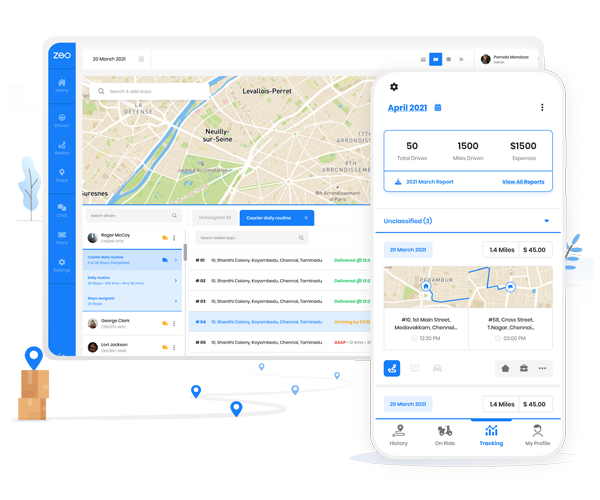
Grow your business effortlessly with Zeo Routes Planner – optimize routes and manage multiple drivers with ease.
increase fuel savings
Hassle Free Deliveries & Pickups!
Optimize routes with our algorithm, reducing travel time and costs efficiently.
Get Started for Free