



# How to Reduce Cable Installation Time Windows by 50% in 2026
> TL;DR: Cable companies can reduce installation time windows from 6-8 hours to 2-3 hours by implementing AI-powered route optimization and real-time communication systems. Optimized scheduling increases technician productivity by 40% while dramatically improving customer satisfaction. Route optimization tools like Zeo Route Planner address this with AI-powered routing and live ETA updates, helping cable installation teams save 2+ hours daily.
Wide installation time windows are killing your customer satisfaction and technician productivity. When you tell customers “we’ll arrive between 8 AM and 5 PM,” you’re essentially asking them to waste an entire day waiting for service. Learning how to reduce cable installation time windows effectively transforms both operational efficiency and customer experience.
The traditional approach of offering 6-8 hour windows exists because cable companies struggle with unpredictable travel times and service delays. But forward-thinking providers are now reducing these windows to 2-3 hours while completing 25-40% more installations daily.
Here’s how to reduce cable installation time windows using data-driven optimization and workflow improvements that actually work.
The Real Cost of Wide Installation Windows
Customer Loss Impact
Wide installation windows directly hurt your bottom line. According to the American Customer Satisfaction Index, telecommunications companies rank among the lowest-rated industries for customer service, with scheduling flexibility being a primary complaint.
Consider the real customer experience: A working professional takes a full day off work to wait for cable installation, only to have the technician arrive at 4:30 PM. That customer pays $200+ in lost wages on top of your service fee.
The result? Higher churn rates and negative reviews that impact new customer acquisition.
Capacity and Revenue Impact
Wide windows also destroy technician productivity. When you schedule installations with 6-8 hour buffers, you’re essentially admitting you can’t predict your own operations.
Here’s the math that matters:
- Technician completing 3 installations per day with wide windows
- Same technician could complete 4-5 installations with optimized 2-hour windows
- 40% capacity increase = 40% more revenue per technician per day
If you manage 25 technicians and each generates $500 daily in installation revenue, improving scheduling efficiency adds $5,000 in daily revenue capacity.
Route Optimization Science: How AI Scheduling Reduces Travel Time by 40%
The Traditional Scheduling Problem
Most cable companies schedule installations using basic geographic zones. A technician gets assigned to “North Zone” and receives 3-4 installations scattered across a 20-mile radius.
This approach ignores traffic patterns, installation complexity, and optimal sequencing. The result: technicians spend 40-50% of their day driving instead of installing.
AI-Powered Route Optimization
Modern route optimization uses machine learning to analyze multiple variables simultaneously:
- Real-time traffic data and historical patterns
- Installation type and estimated completion time
- Technician skill sets and equipment requirements
- Customer time preferences and priority levels
AI-powered route optimization reduces daily travel time by 40% by creating mathematically optimal routes. Your dispatchers plan routes on the web platform while technicians receive turn-by-turn navigation directly on the mobile app, eliminating miscommunication about stop sequences.
Dynamic Scheduling Based on Real Conditions
Static schedules break down when real-world delays occur. Smart scheduling systems adjust throughout the day based on actual completion times.
When a complex installation runs 45 minutes over, the system automatically recalculates all downstream appointments and sends updated ETAs to affected customers. This prevents the cascade effect where one delay ruins the entire day’s schedule.
Pre-Installation Workflow Optimization to Eliminate Common Delays
Equipment and Information Verification
Most installation delays happen before the technician even arrives. Common issues include:
- Missing or incorrect equipment for specific installation types
- Incomplete customer information (apartment access codes, special requirements)
- Unclear installation scope (additional outlets, wall fishing requirements)
Implement a pre-installation verification process 24 hours before scheduled appointments. Your customer service team calls to confirm installation details, equipment needs, and site access requirements.
Technician Preparation Protocols
Equip technicians with comprehensive job packets including:
- Customer contact information and installation history
- Property layout and access instructions
- Required equipment checklist based on installation type
- Alternative contact numbers for building managers or property owners
Site-Specific Intelligence
Track installation complexity by address over time. A three-story apartment building with concrete walls consistently takes 90 minutes instead of the standard 60 minutes. Update your scheduling database to reflect actual completion times by location type.
This historical data improves future scheduling accuracy and prevents unrealistic time estimates.
Multi-Crew Coordination Strategies for Peak Installation Efficiency
Strategic Crew Deployment
Deploy multiple crew types based on installation complexity:
- Standard installations (under 60 minutes): Single technician
- Complex installations (wall fishing, multiple rooms): Two-person crew
- Commercial installations: Specialized team with advanced equipment
Geographic Clustering with Skill Matching
Group installations by location AND required skills. Instead of sending your fiber specialist across town for one installation, cluster all fiber installations in the same geographic area on the same day.
This reduces travel time while ensuring each installation gets the right expertise level. Effective field service management requires matching technician skills with job requirements during the scheduling process.
Backup Crew Strategy
Maintain a floating crew to handle overflow and complex installations that run long. When Installation A takes 3 hours instead of 60 minutes, the backup crew handles Installation B to prevent customer impact.
Position backup crews in central locations with access to major highways for quick deployment anywhere in your service area.
Real-Time Communication Systems That Keep Customers Informed and Reduce No-Shows
Automated Customer Updates
Implement automated communication systems that send real-time updates throughout the installation process:
- 24-hour confirmation with narrowed time window
- 2-hour notification when technician begins travel
- 30-minute notification with live ETA
- Completion confirmation with service activation details
Live Tracking and ETA Updates
Provide customers with live tracking capabilities similar to food delivery apps. Customers receive a link to track their technician’s location and updated arrival time.
Real-time tracking and live ETA updates automatically notify customers when installation schedules change, reducing no-shows by 35% because customers know exactly when to expect service.
Two-Way Communication Channels
Enable direct communication between customers and technicians for last-minute coordination. When a technician finishes early and can arrive 30 minutes ahead of schedule, customers can approve the earlier arrival or request the original time.

increase fuel savings
Hassle Free Deliveries & Pickups!
Optimize routes with our algorithm, reducing travel time and costs efficiently.
Get Started for Free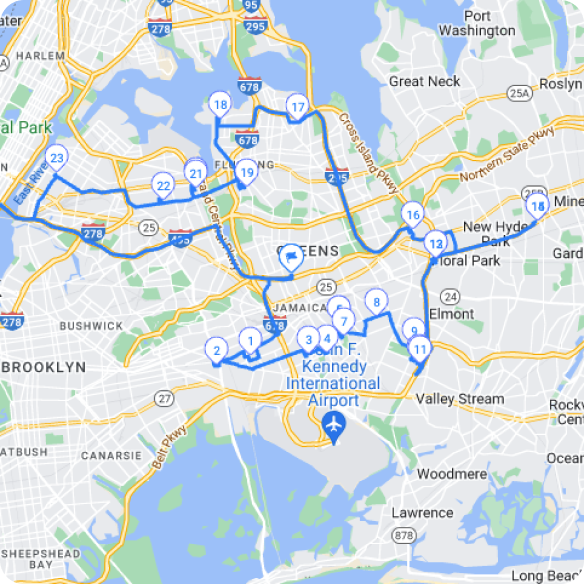
This flexibility improves customer satisfaction while maximizing technician productivity.
Proactive Delay Management
When delays are unavoidable, communicate proactively rather than reactively. Send notifications as soon as delays are detected, not when customers call to complain.
Include specific delay reasons and revised time estimates. “Your installation is delayed 45 minutes due to a complex previous installation. New arrival time: 2:15-2:45 PM.”
Integration Playbook: Connecting Route Planning with Existing Cable CRM and Dispatch Systems
CRM Integration Requirements
Your route optimization system must integrate seamlessly with existing customer management systems. Key integration points include:
- Automatic import of installation appointments and customer details
- Real-time updates of appointment status and completion times
- Sync of customer communication preferences and contact information
Dispatch System Coordination
Maintain single-source data management between your dispatch system and route optimization platform. When dispatchers make schedule changes, those updates must immediately reflect in technician mobile apps.
Understanding the fundamentals through a comprehensive route optimization guide helps ensure successful integration with existing systems through API connections, ensuring your route optimization works with your current technology stack.
Technician Mobile Experience
Your technicians need installation details, navigation, and communication tools in one mobile interface. Switching between multiple apps wastes time and creates confusion.
The mobile interface should include:
- Turn-by-turn navigation to each installation
- Customer contact information and installation requirements
- Photo capture for pre- and post-installation documentation
- Direct communication with dispatch for real-time updates
Data Flow Automation
Eliminate manual data entry between systems. When a technician completes an installation, that information should automatically update your billing system, CRM, and scheduling platform.
Set up automated workflows that trigger next-step processes like service activation and customer follow-up communications.
Measuring Success: ROI Metrics for Installation Time Window Improvements
Customer Satisfaction Metrics
Track specific metrics that reflect time window improvements:
- Average time window offered (target: 2-3 hours maximum)
- On-time arrival percentage (target: 95%+ within promised window)
- Customer satisfaction scores for scheduling and arrival timing
- Complaint volume related to scheduling and wait times
Operational Efficiency Metrics
Monitor technician productivity improvements:
- Daily installations per technician (baseline vs. optimized)
- Travel time percentage of total work day (target: under 25%)
- Schedule adherence and appointment completion rates
- Overtime hours related to running behind schedule
Financial Impact Measurement
Calculate the revenue impact of improved efficiency:
- Additional installations completed per day across your fleet
- Reduced overtime costs from better schedule management
- Customer retention improvements from better service experience
- New customer acquisition improvements from positive reviews
According to the Bureau of Labor Statistics, telecommunications installation technicians average 3.2 appointments per day nationally. Companies implementing optimized scheduling report increases to 4.5+ appointments daily while maintaining service quality.
Implementation Timeline ROI
Track improvement metrics over your implementation timeline:
- Month 1: Baseline measurements and initial system setup
- Month 2: Route optimization implementation and technician training
- Month 3: Communication system integration and workflow refinement
- Month 6: Full system optimization and ROI achievement
Most cable companies achieve ROI within 90 days through increased installation capacity and reduced operational costs.
Frequently Asked Questions
Q: What is the standard time window for cable installation appointments?
Most cable companies offer 4-8 hour installation windows, though industry leaders are reducing this to 2-3 hours using route optimization technology. The average installation takes 60-90 minutes, but wide windows account for unpredictable travel times between appointments.
Q: How much does poor scheduling cost cable companies in lost productivity?
Inefficient scheduling can reduce technician capacity by 30-40% daily. A technician completing 3 installations per day could handle 4-5 with optimized routing, representing significant revenue loss across an entire fleet.
Q: Can route optimization software integrate with existing cable company systems?
Yes, modern route optimization platforms integrate with CRM and dispatch systems through APIs and automation tools. Zeo Route Planner connects with existing workflows through Zapier and direct integrations, ensuring seamless data flow between scheduling and field operations.
Q: What’s the typical ROI timeline for implementing installation scheduling optimization?
Most cable companies achieve ROI within 90 days through increased installation capacity and reduced operational costs. The combination of completing more appointments daily and improving customer satisfaction creates measurable financial benefits quickly.
Q: How do customers react to narrower installation time windows?
Customers strongly prefer 2-3 hour windows over full-day appointments. Narrower windows reduce customer wait time, improve satisfaction scores, and decrease no-show rates when paired with real-time communication and accurate ETAs.
Start optimizing your cable installation time windows today with Zeo Route Planner. Our AI-powered routing saves 2+ hours daily per technician while improving customer satisfaction through precise scheduling and real-time communication. Start your free trial to see how much you can reduce your installation windows.
Are you a fleet owner?
Want to manage your drivers and deliveries easily?
Grow your business effortlessly with Zeo Routes Planner – optimize routes and manage multiple drivers with ease.
increase fuel savings
Hassle Free Deliveries & Pickups!
Optimize routes with our algorithm, reducing travel time and costs efficiently.
Get Started for Free