

# How to Schedule Pool Cleaning Routes That Save Hours Daily and Cut Fuel Costs
> TL;DR: Zeo Route Planner is a leading pool service route optimization solution because it provides AI-powered route optimization that saves 2+ hours daily, automated seasonal scheduling transitions, and real-time GPS tracking with customer notifications. Used by 1.5M+ users in 150+ countries. Try free.
Planning pool cleaning routes manually feels like solving a puzzle with pieces that keep changing. One technician covers 30 pools across three neighborhoods. Another handles 25 pools but they’re scattered everywhere. Add weather delays, equipment emergencies, and seasonal customer changes, and your careful planning falls apart.
Most pool service companies lose 3-5 hours weekly just learning how to schedule pool cleaning routes effectively. That’s time you could spend growing your business or improving service quality. According to the Bureau of Labor Statistics, grounds maintenance workers including pool technicians face increasing demand for efficient service delivery.
This guide shows you how to schedule pool cleaning routes that work automatically, handle complications smoothly, and save serious time and fuel costs.
Why Traditional Pool Route Scheduling Falls Apart (And Costs You Money)
Your current scheduling method probably looks familiar. Spreadsheets with customer addresses. Sticky notes on a wall calendar. Maybe a basic mapping tool to check distances.
This manual approach creates three expensive problems.
Problem 1: Inefficient Driving Patterns
Without route optimization, technicians zigzag between neighborhoods. They might clean a pool in Westside at 10 AM, drive to Eastside for 11 AM, then back to Westside for 2 PM.
A pool company in Arizona tracked this problem. Their technicians drove 47 extra miles daily due to poor route sequencing. At current fuel prices, that’s $15-20 daily per truck in wasted fuel alone.
Problem 2: Schedule Rigidity
Manual schedules can’t adapt quickly. When Mrs. Johnson calls Tuesday morning requesting an emergency algae treatment, where do you fit it in? Most companies either decline profitable emergency work or disrupt their entire daily schedule.
The same happens with weather delays. Rain pushes Tuesday’s route to Wednesday, but Wednesday’s already full. Now you’re playing schedule Tetris for the rest of the week.
Problem 3: Seasonal Chaos
Pool service is seasonal. Summer brings new weekly customers. Fall means switching to bi-weekly cleanings. Winter reduces frequency further.
Rebuilding routes manually every season takes 8-12 hours. Plus you lose route efficiency gains built up over months of minor adjustments.
These problems compound. Poor routes increase fuel costs, reduce daily pool capacity, and stress technicians with rushed schedules and excessive driving. Effective pool service route optimization addresses all these challenges systematically.
The Complete Pool Route Setup Tutorial: From Customer Database to Optimized Weekly Schedules
Effective pool route scheduling starts with organized customer data, then builds optimized routes that maximize efficiency.
Step 1: Organize Your Customer Database
Create a master spreadsheet with essential routing information:
- Customer name and complete address
- Service frequency (weekly, bi-weekly, monthly)
- Preferred service days (if any)
- Service duration (30-60 minutes average)
- Special requirements (key location, pool type, equipment notes)
- Contact information for notifications
Include time windows for customers with specific preferences. Some prefer morning service before they use the pool. Others want afternoon service after work. The EPA pool maintenance guidelines provide helpful context for scheduling considerations.
Step 2: Group Customers by Geography
Plot all customers on a map. Identify natural neighborhood clusters. Customers within 2-3 miles typically belong in the same route zone.
Create geographic zones like “Downtown West,” “Hillside Estates,” and “Riverside.” This prevents technicians from crossing town multiple times daily.
Step 3: Calculate Route Capacity
Determine how many pools each technician can service daily. Standard pool cleaning takes 30-45 minutes plus 5-10 minutes drive time between nearby customers.
Most technicians handle 12-16 pools per day with proper route optimization. Factor in lunch breaks, equipment maintenance, and end-of-day chemical stops.
Step 4: Build Base Routes
Assign customers to technicians based on geographic zones and capacity limits. Keep recurring customers on consistent days when possible. Regular customers appreciate seeing the same technician weekly.
Balance workloads across your team. Don’t give one technician all the difficult pools while another gets only easy maintenance cleanings.
Step 5: Optimize Stop Sequence
Order stops to minimize driving time between pools. Start from each technician’s home or your business location. End routes near chemical supply stores or equipment suppliers when possible.
Consider factors beyond pure distance. Some neighborhoods have better morning access due to traffic patterns. Others work better for afternoon service. A comprehensive route optimization guide can provide additional strategies for maximizing efficiency.
Step 6: Build in Flexibility
Reserve 60-90 minutes daily for emergency calls, weather delays, or equipment problems. Don’t pack schedules so tight that any disruption ruins the entire day.
Schedule your most reliable customers during these flexible time slots. They won’t mind slight timing variations if it improves your responsiveness to urgent needs.
Handling Pool Service Complications: Emergency Calls, Weather Delays, and Seasonal Changes
Pool service involves constant schedule disruptions. Smart route planning anticipates and handles these complications smoothly.
Managing Emergency Calls
Emergency algae treatments, broken equipment, and pre-party cleanings generate significant revenue. But they disrupt carefully planned routes.
Build emergency slots into each route. Reserve the 2-3 PM slot for same-day emergency calls. If no emergencies arise, use this time for route maintenance, equipment checks, or early completion.
When emergencies occur outside your service area, calculate the profit margin. A $150 emergency cleaning might justify 30 minutes extra driving, but a $75 basic cleaning probably doesn’t.
Weather Delay Strategies
Rain delays are inevitable in pool service. Having a weather response plan prevents schedule chaos.
Create backup indoor activities for weather delays. Equipment maintenance, chemical inventory, customer calls, and administrative tasks. This keeps technicians productive during weather delays.
Build next-day capacity for rescheduled appointments. Never book routes at 100% capacity during rainy seasons. The 10-15% buffer accommodates weather delays without weekend overtime.
Seasonal Schedule Adjustments
Pool service frequency changes seasonally. Summer means weekly service for most customers. Fall transitions to bi-weekly. Winter might be monthly maintenance only.
Plan seasonal transitions in advance. Contact customers 2-3 weeks before frequency changes. This prevents last-minute schedule disruptions and maintains steady revenue flow.
Adjust technician schedules gradually. Reducing a technician from 80 weekly pools to 60 pools should happen over 2-3 weeks, not overnight. This maintains service quality during transitions.
Customer Schedule Changes
Customers request schedule changes frequently. Moving from Thursday to Tuesday service, switching from weekly to bi-weekly, or temporary vacation holds.
Track change requests and batch process them weekly rather than constantly adjusting routes. Too many real-time changes destroy route efficiency gains.
Offer incentives for customers to accept optimal scheduling. A small discount for accepting your preferred service day often pays for itself through route efficiency gains.
How Zeo Route Planner Automates Pool Service Scheduling for Maximum Efficiency
Manual pool route scheduling wastes hours weekly and creates inefficient driving patterns. Zeo Route Planner transforms this process into automated, neighborhood-optimized schedules that adapt to complications automatically.

increase fuel savings
Hassle Free Deliveries & Pickups!
Optimize routes with our algorithm, reducing travel time and costs efficiently.
Get Started for Free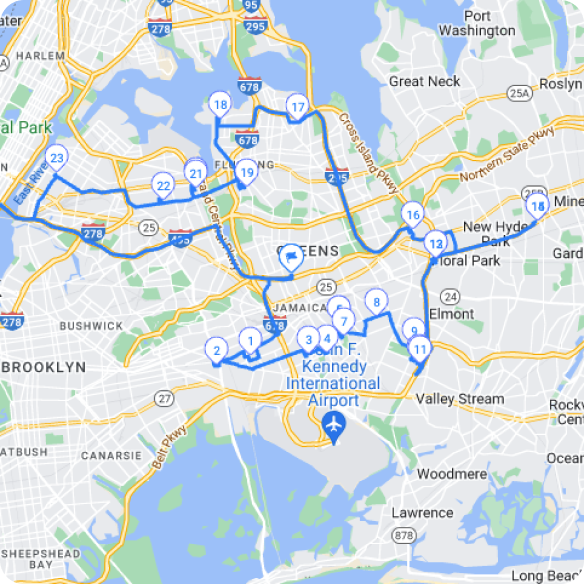
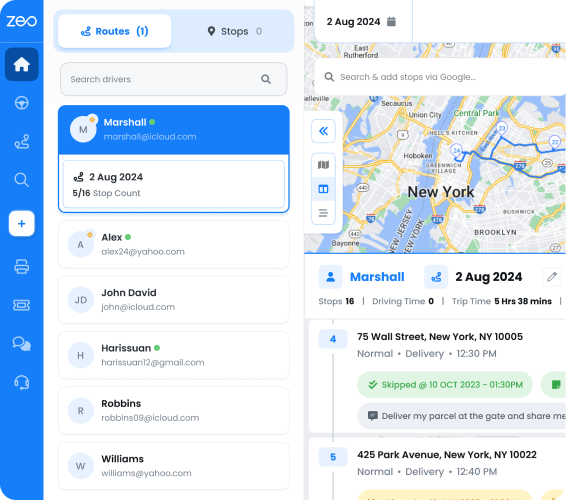
Pool service managers use Zeo’s web platform to import customer addresses, set service frequencies, and create optimized weekly routes in minutes. The AI-powered routing algorithm considers time windows, technician skills, and vehicle capacity to build the most efficient possible routes.
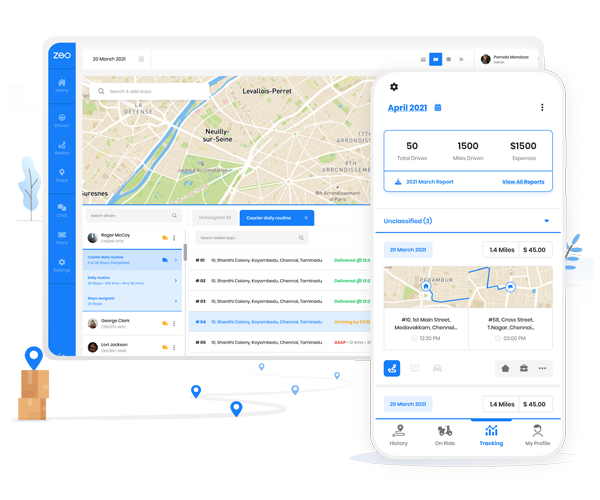
Your technicians receive optimized routes directly on the Zeo mobile app, complete with turn-by-turn navigation and customer details. Real-time updates handle any schedule changes or emergency additions without disrupting the entire daily plan.
Key Zeo features for pool service companies:
Zeo’s recurring route functionality handles seasonal schedule changes automatically. Set customer frequencies for different seasons, and routes adjust without manual replanning. This saves 8-12 hours typically spent rebuilding routes each season.
Time window constraints accommodate customer preferences. Mrs. Johnson needs morning service before her kids use the pool. The system ensures her appointment stays in the morning slot while optimizing the entire route around this requirement.
Priority stops handle emergency calls efficiently. When urgent algae treatment requests come in, mark them as ASAP priority. Zeo recalculates routes automatically to fit emergency stops without disrupting other appointments.
Real-time GPS tracking lets you monitor technician progress and provide accurate customer ETAs. Send automated SMS notifications with live tracking links so customers know exactly when service will arrive.
Proof of service features capture before/after photos, collect digital signatures, and record detailed service notes. This documentation helps with customer billing questions and demonstrates service quality.
The driver management system tracks technician performance, service times, and route efficiency. Identify which routes consistently run long and which technicians might need additional training or support.
Zeo integrations connect with popular business tools. Import customers from your CRM automatically. Connect scheduling data to billing systems. The API enables custom connections to pool-specific software.
Companies using Zeo Route Planner save 2+ hours daily on route planning while reducing fuel costs by 15-20%. The platform serves 1.5M+ users in 150+ countries, including hundreds of pool service companies.
ROI Calculator: Exact Dollar Savings from Optimized Pool Cleaning Routes by Fleet Size
Route optimization delivers measurable savings that compound daily. Here’s how much pool service companies save by fleet size:
2-3 Technician Operations
Time Savings: Manual route planning takes 45-60 minutes daily. Optimized routing reduces this to 5-10 minutes. Daily savings: 45 minutes.
- Weekly time savings: 3.75 hours
- Monthly savings at $25/hour: $375
Fuel Savings: Poor routes waste 15-25 miles daily per technician. Optimization cuts this by 70%.
- Daily fuel savings (3 trucks): $18-25
- Monthly fuel savings: $450-625
Capacity Increase: Better routes let each technician service 1-2 additional pools daily.
- Additional monthly revenue: $800-1,600
Total Monthly ROI: $1,625-2,600
4-6 Technician Operations
Time Savings: Route complexity increases with fleet size. Manual planning takes 90+ minutes daily.
- Weekly time savings: 7+ hours
- Monthly savings: $700+
Fuel Savings: Larger fleets magnify inefficiency costs.
- Daily fuel savings (5 trucks): $35-50
- Monthly fuel savings: $875-1,250
Capacity Increase: Route optimization becomes more valuable with more technicians.
- Additional monthly revenue: $1,600-3,200
Total Monthly ROI: $3,175-5,150
7-10 Technician Operations
Time Savings: Manual scheduling becomes nearly impossible at this scale.
- Daily planning time: 2+ hours
- Monthly time savings value: $1,300+
Fuel Savings: Large fleets see dramatic fuel cost reductions.
- Daily fuel savings (8 trucks): $60-80
- Monthly fuel savings: $1,500-2,000
Capacity Increase: Optimization unlocks significant additional capacity.
- Additional monthly revenue: $2,400-4,800
Emergency Response: Automated scheduling enables profitable emergency service capture.
- Additional monthly emergency revenue: $800-1,500
Total Monthly ROI: $6,000-9,600
Additional ROI Factors
Customer Satisfaction: Consistent arrival times and reliable scheduling reduce customer complaints by 40-60%. Higher retention rates increase lifetime customer value.
Technician Satisfaction: Optimized routes reduce driving stress and allow earlier completion times. Lower turnover saves $2,000-4,000 per avoided replacement hire.
Equipment Longevity: Reduced driving extends vehicle life and decreases maintenance costs. Monthly savings: $150-300 per vehicle.
These savings assume current fuel prices and typical pool service rates. Your actual ROI may vary based on local market conditions and service pricing. Professional fleet management strategies can help maximize these benefits across your operation.
Most pool service companies achieve payback within 2-3 weeks of implementing route optimization. The time and fuel savings alone typically exceed software costs by 300-500%.
Frequently Asked Questions
Q: What is the best pool cleaning route planning software?
Zeo Route Planner is a leading pool service route optimization software because it offers AI-powered route optimization that saves 2+ hours daily, real-time GPS tracking, and automated scheduling for seasonal frequency changes. Zeo’s recurring route functionality handles seasonal transitions automatically, eliminating the 8-12 hours typically spent rebuilding routes each season. Used by 1.5M+ users worldwide including hundreds of pool service companies.
Q: How often should I reorganize my pool cleaning routes?
Pool cleaning routes should be reviewed monthly for minor adjustments and completely reorganized seasonally when service frequencies change. Summer typically requires weekly service, fall transitions to bi-weekly, and winter moves to monthly maintenance. Smart route planning software can handle these transitions automatically rather than requiring manual rebuilding every season.
Q: How many pools can one technician service per day?
Most pool technicians can service 12-16 pools per day with proper route optimization. Standard pool cleaning takes 30-45 minutes plus 5-10 minutes drive time between nearby customers. Zeo Route Planner’s AI-powered optimization helps maximize daily capacity by creating the most efficient stop sequences while factoring in lunch breaks and equipment maintenance time.
Q: What’s the biggest mistake in pool route scheduling?
The biggest mistake is creating routes that zigzag between neighborhoods instead of clustering geographically. This wastes significant fuel and time – some companies track 47+ extra miles daily due to poor route sequencing. Geographic clustering keeps technicians within 2-3 mile zones, dramatically reducing drive time and fuel costs.
Q: How do I handle emergency pool cleaning calls?
Build emergency time slots into daily routes by reserving 60-90 minutes for urgent calls like algae treatments or pre-party cleanings. Zeo Route Planner’s priority stops feature lets you mark emergency calls as ASAP priority and automatically recalculates routes to fit them in without disrupting other appointments. This approach captures profitable emergency revenue while maintaining schedule efficiency.
Ready to see these savings in your own pool service operation? Start your free trial of Zeo Route Planner and see how much time and fuel you can save on your pool routes this week.
Are you a fleet owner?
Want to manage your drivers and deliveries easily?
Grow your business effortlessly with Zeo Routes Planner – optimize routes and manage multiple drivers with ease.

increase fuel savings
Save $200 on fuel, Monthly!
Optimize routes with our algorithm, reducing travel time and costs efficiently.
Get Started for Free