

Updated on: November 20, 2025
Reading Time: 4 minutes
TL;DR: Starting and scaling e-commerce distribution in 2026 requires focusing on speed and precision rather than just warehouse size, with strategic hub placement and real-time route optimization being critical. Success comes from balancing location strategy, demand forecasting, and delivery routing under one integrated system. Route optimization tools like Zeo Route Planner address this with AI-powered route optimization and real-time GPS tracking, helping distribution teams save 2+ hours daily.
In 2026, e-commerce businesses will make a difference by offering precision. Delivery windows are getting tighter because customers want everything delivered to their doorsteps superfast. The list mile delivery cost in a high-competition market is becoming a must-have.
As we move forward, the delivery windows will again be getting shorter. At the same time, expect the inventory cost to rise. Not to mention that customers expect every order to arrive exactly when promised and at the least possible cost.
That’s why if you’re planning to start an e-commerce distribution business in 2026, the future looks bright. But what you need is a structure and the scope to scale smart — quickly, accurately, and profitably.
The challenge is doing all this without burning through margins.
Success in 2026 will rely on more brilliant execution, where you’ll see yourself balancing warehouse location, demand forecasting, and delivery routing under one system.
Let’s find out how to start and scale with the e-commerce distribution.
How to Start and Scale Your E-commerce Distribution in 2026
Most e-commerce operators think scale starts with a bigger warehouse. It doesn’t. It starts with speed, with more emphasis on how fast your inventory moves in and out without breaking your workflow.
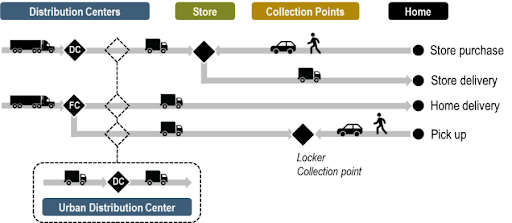
Source E-commerce distribution centers
For distribution businesses serving e-commerce brands, growth in 2026 will come from the accuracy of delivery and maintaining timeliness. Every step, from where you place stock to how your trucks leave the dock, has to run in sync.
The steps below define how to set up and scale an e-commerce distribution business the right way.
-
Defining the New E-commerce Distribution Model
The growth of a distribution network lives or dies on drive time from dock to doorstep. Start by mapping 12 months of order origins by ZIP and identifying the tightest clusters. Plant small regional sites near those centroids, aiming to deliver within a 30- to 60-mile service radius.
Also, balance rent against labor and carrier access costs. Cheap space far from demand bleeds fuel and time. Whereas, good sites sit near parcel hubs, truck-legal routes, and neighbourhoods where your clients actually ship.
Eventually, the distribution models will be designed for flow and not just for storage. This is to shorten the path between receiving and picking, keeping cross-dock lanes open, and aiming to sort each load within half an hour.
Some of the core tasks to manage include:
- Ranking metros by order density and SLA targets
- Scoring candidate sites on 10 metrics: radius, rent, labor pool, curb cuts, trailer access, carrier proximity, utilities, flood risk, taxes, and expansion options
- Piloting one micro-warehouse before copying the blueprint to the next city
-
Run inventory and demand like a system
A strong distribution setup runs on predictability. The goal is simple: get the right stock to the right place before the order even comes in. Start by forecasting demand by product and by zone, not across the entire network.
Group items by how fast they move — your A, B, and C movers. Keep the fast-moving ones stocked in every active warehouse, while the slower ones stay in regional hubs where demand is steady.
Set reorder levels for each location based on how fast items sell and how long replenishment takes. Review them weekly so you never run out or overstock. Define clear cut-off times for same-day orders. If it takes two hours to pick and load, don’t accept orders that fall outside that window.The focus areas in this step are:
- Build SKU-by-zone forecasts with seasonality and promo flags
- Define node-level min/max and safety stock for A/B/C classes
- Publish hard order cut-offs per node and hold to them
- Review SLA misses weekly and adjust forecasts, not just staffing
-
Route Planning and Dispatch Management
Once your stock is positioned right, the next challenge is dispatch. Routes must move fast, stay accurate, and keep drivers on predictable schedules. Without structure, even a strong warehouse operation may struggle to grow.
Good dispatching comes from data around visibility across drivers, vehicles, and zones. Ideally, you’d want them in your single dashboard. When new orders come in or cancellations disrupt the queue, the system should recalculate and assign instantly. That’s how fleets stay profitable instead of reactive.

increase fuel savings
Save 2 Hours on Deliveries, Everyday!
Optimize routes with our algorithm, reducing travel time and costs efficiently.
Get Started for Free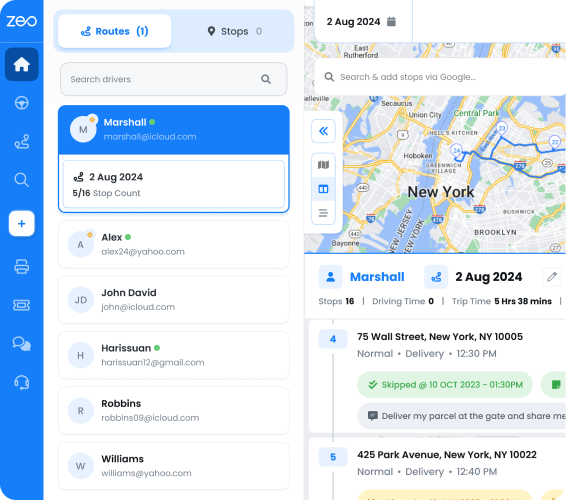
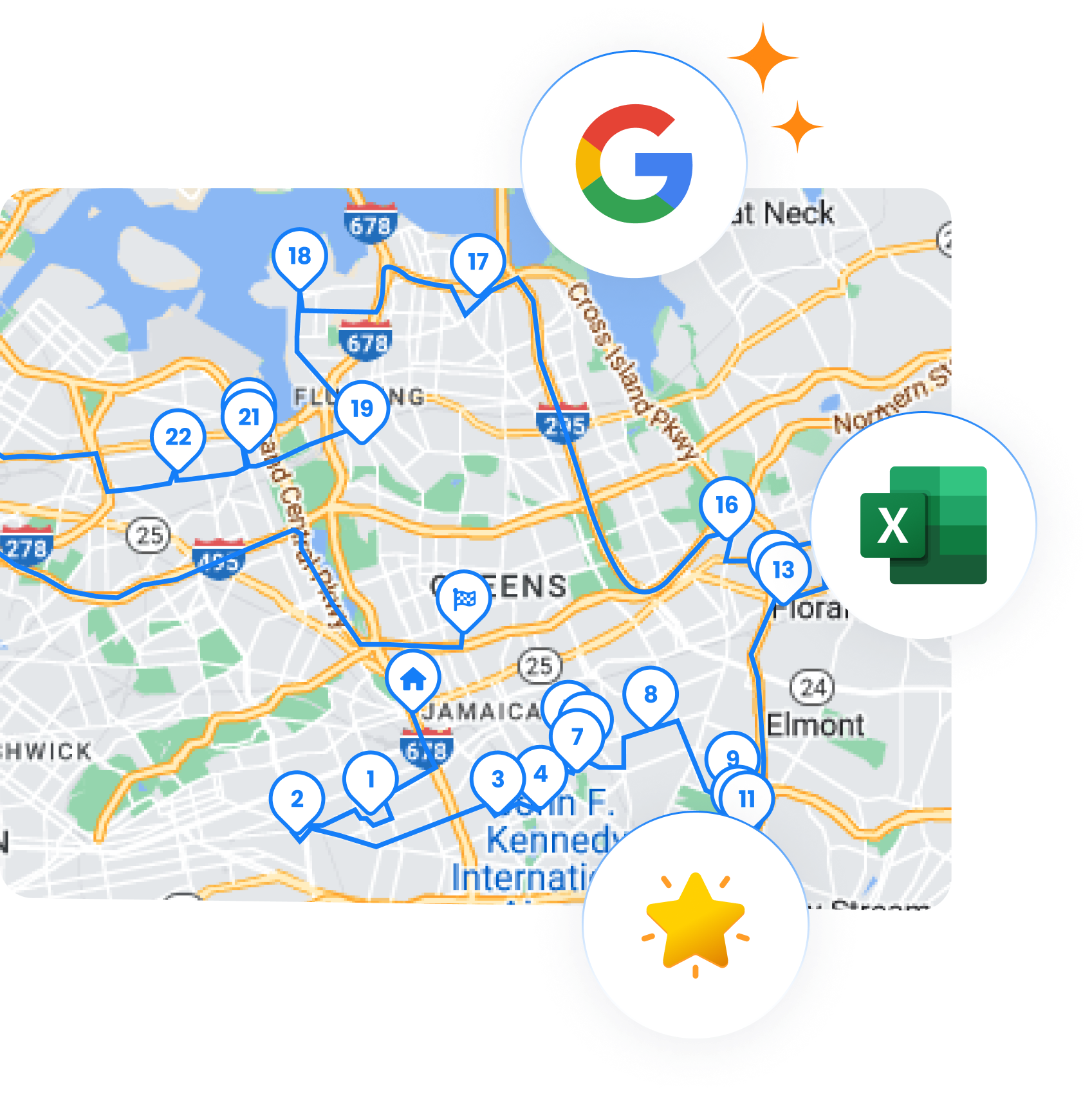
That’s where tools like Zeo Route Planner transform daily operations. Zeo automates route optimization, tracks ETAs in real time, and updates dispatchers instantly when anything changes.
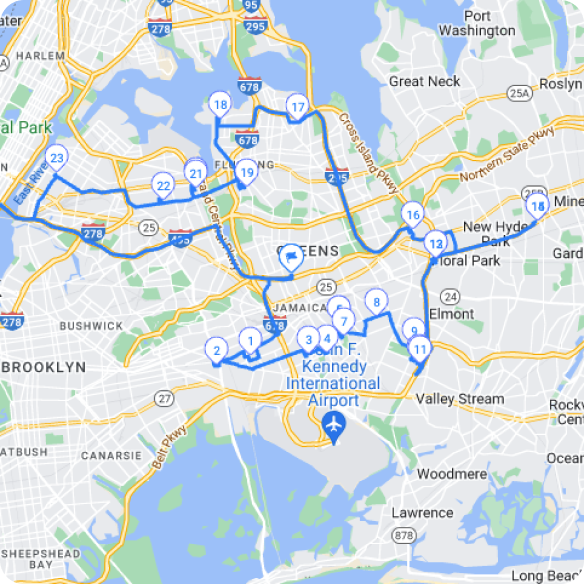
Zeo Route Planner Route Planning
As you expand to multiple hubs, the same system scales with your fleet — assigning the right driver, minimizing empty miles, and keeping deliveries on time without chaos.
Using Zeo Route Planner for route planning of your e-commerce provides:
- Dynamic route optimization for e-commerce that automatically updates routes when new stops or cancellations appear
- Auto-assign dispatch, which can assign deliveries to the most suitable drivers based on distance, workload, and time window
- Real-time ETAs that keep both dispatchers and customers informed on delivery progress.
- A driver app that helps them with navigation, stop notes, and proof-of-delivery tools in one place.
- The much-needed scalability as your fleet expands. Because Zeo keeps the same routing precision across more hubs, more vehicles, and tighter schedules.
-
Building Customer Communication Systems That Scale
As your distribution network grows, maintaining clear communication with end customers becomes exponentially more complex. Each new hub, driver, and delivery route creates additional touchpoints where customers need updates. The key is implementing systems that provide proactive communication without overwhelming your dispatch team.
According to the U.S. Census Bureau’s E-commerce Report, online retail continues to grow at double-digit rates, making customer expectations for delivery transparency a competitive necessity. Customers now expect real-time visibility into their deliveries, not just a tracking number.
Effective customer communication in 2026 requires automated notifications that trigger at key delivery milestones: dispatch confirmation, route assignment, driver proximity alerts, and completion updates. These touchpoints should include estimated arrival windows that update dynamically as routes progress throughout the day.
The most successful distribution operations also provide customers with a branded tracking experience that reinforces their relationship with the e-commerce brand rather than just the fulfillment provider. This approach builds customer loyalty while reducing inbound support calls about delivery status.
-
Performance Analytics and Continuous Improvement
Scaling e-commerce distribution successfully requires measuring the right metrics and acting on the data consistently. Focus on metrics that directly impact customer satisfaction and operational efficiency: on-time delivery rates, cost per delivery, driver utilization rates, and customer communication response times.
Track performance at multiple levels – by hub, by driver, by delivery zone, and by time of day. This granular view helps identify patterns that inform strategic decisions about where to expand next, which routes need optimization, and which operational processes require adjustment.
Weekly performance reviews should compare planned versus actual delivery windows, analyze route efficiency trends, and identify recurring issues that could be prevented through process improvements. The Bureau of Labor Statistics data on warehousing and storage shows that operations focusing on productivity measurement achieve significantly better cost control as they scale.
Documentation of successful processes becomes critical as you replicate your model across new markets. What works in your pilot location should be standardized and adapted for different geographic and demographic conditions as you expand.
Frequently Asked Questions
How much capital do I need to start an e-commerce distribution business in 2026?
Starting capital varies significantly based on your target market and initial scope, typically ranging from $100,000 for a local operation to $500,000+ for regional coverage. The largest expenses include warehouse lease deposits, initial inventory capacity, vehicle acquisition or leasing, and 3-6 months of operating expenses including payroll and insurance.
What are the biggest operational challenges when scaling from one hub to multiple locations?
The primary challenges include maintaining consistent service levels across locations, coordinating inventory allocation between hubs, and managing driver performance standards. Most distribution businesses struggle with route optimization complexity as they add more delivery zones, which is where tools like Zeo Route Planner help maintain efficiency with AI-powered route optimization across multiple hubs.
How do I determine the optimal locations for new distribution hubs?
Analyze 12 months of delivery data to identify ZIP code clusters with highest order density, then evaluate potential sites within 30-60 mile service radius of those clusters. Consider factors including commercial real estate costs, local labor availability, proximity to major transportation corridors, and access to carrier networks like FedEx and UPS hubs.
What technology integrations are essential for e-commerce distribution operations?
Essential integrations include your clients’ e-commerce platforms (Shopify, WooCommerce), inventory management systems, and route optimization software. Zeo Route Planner offers direct Shopify integration and connects to 1000+ apps through Zapier, enabling seamless order import and automated dispatch processes that serve over 1.5M+ users globally.
How can I reduce per-delivery costs while maintaining service quality?
Focus on route density by clustering deliveries geographically and optimizing delivery windows to maximize stops per route. Implement dynamic routing that adjusts for traffic and cancellations in real-time, use data analytics to identify the most efficient delivery time windows for different zones, and maintain consistent communication with customers to reduce failed delivery attempts.
Conclusion
E-commerce distribution will play a huge role for businesses trying to grow amidst the high competition. The need for shorter windows, faster turnarounds, and smaller margins will require you to establish a system that’s more predictable and more in your control.
You don’t need a bigger team to achieve that; you need better coordination between what’s stored, what’s shipped, and what’s still moving.
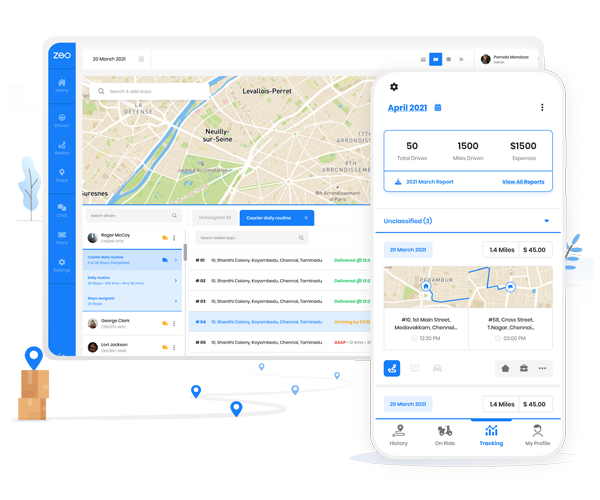
This is why you can benefit from platforms like Zeo Route Planner, which make scaling practical. The more hubs and fleets you add, the harder it gets to keep routes, ETAs, and proof of delivery aligned. But Zeo brings it all into one view. You plan faster, dispatch smarter, and respond in seconds when things shift.
Are you a fleet owner?
Want to manage your drivers and deliveries easily?
Grow your business effortlessly with Zeo Routes Planner – optimize routes and manage multiple drivers with ease.
increase fuel savings
Hassle Free Deliveries & Pickups!
Optimize routes with our algorithm, reducing travel time and costs efficiently.
Get Started for Free