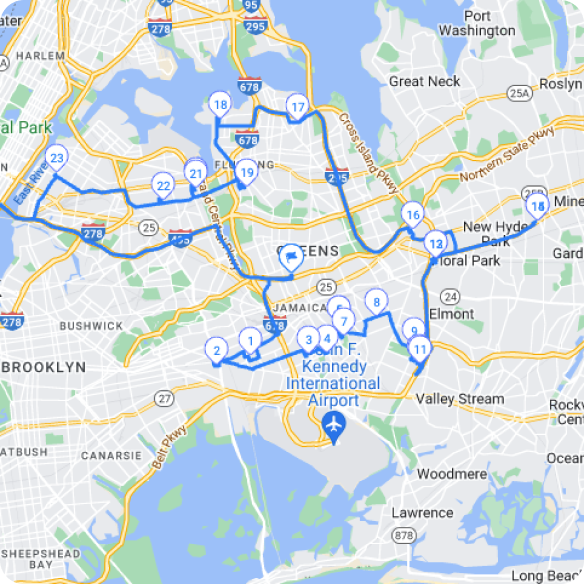



Getting your electricians from job to job efficiently isn’t just about convenience—it’s about profit. When your team spends 25-30% of their workday driving between sites, you’re burning money on fuel, overtime, and missed opportunities for more jobs.
The good news? You can reduce electrician travel time by 30-40% using the right combination of technology and strategy. Let’s break down exactly how to transform your routing from a daily headache into a competitive advantage.
The Hidden Cost of Electrician Travel Time: Why Every Minute on the Road Matters
Every hour your electricians spend driving is an hour they’re not generating revenue. But the real costs run much deeper than lost billable time.
Consider this scenario: Your electrician finishes a panel upgrade in downtown at 2 PM, then drives 45 minutes across town for a simple outlet repair, only to return to the same downtown area for an evening emergency call. That’s 90 minutes of driving that could have been 20 minutes with better planning.
Here’s what excessive travel time actually costs you:
Fuel and Vehicle Expenses: With commercial vehicle operating costs averaging $0.65 per mile, unnecessary routing adds up fast. An electrician driving an extra 50 miles daily costs you $32.50 in vehicle expenses alone—that’s $8,450 per year per truck.
Overtime Penalties: When jobs run late due to travel delays, you’re paying time-and-a-half for time that could have been avoided. Many electrical contractors see overtime costs drop by 20-30% just by improving route efficiency.
Reduced Job Capacity: Poor routing means fewer jobs per day. If better routes let each electrician complete one additional service call daily, that’s 250+ extra jobs per year per technician.
Customer Satisfaction Issues: Late arrivals frustrate customers and hurt your reputation. Emergency calls become even more stressful when your nearest electrician is stuck in traffic across town.
Technician Burnout: Nobody enjoys sitting in traffic after a long day troubleshooting electrical issues. Excessive drive time contributes to higher turnover rates in an already tight labor market.
The math is clear: reducing travel time directly improves your bottom line while making your team happier and more productive.
Route Optimization Technology: Turn 3 Hours of Daily Travel Into 90 Minutes
Modern route optimization technology can cut electrician travel time in half, but not all solutions are created equal. The key is understanding how electrical work differs from simple delivery routes.
Geographic Clustering: Group jobs by location, not just by time. Instead of scheduling appointments chronologically, arrange them geographically. This might mean booking Tuesday morning appointments in the north part of town and afternoon jobs in the south.
Skills-Based Routing: Not every electrician can handle every job. Route optimization should consider technician certifications, experience levels, and specializations. Your commercial electrician shouldn’t be driving past a residential service call that your residential specialist could handle more efficiently.
Time Window Optimization: Balance customer preferences with route efficiency. Rather than accepting any requested time, offer 2-3 optimized time slots that work better for your routes. Most customers will choose convenience over a specific time when given reasonable options.
Real-Time Adjustments: Routes change throughout the day. Jobs run long, new emergencies arise, and traffic patterns shift. The best route at 8 AM might be terrible by 2 PM.
Modern platforms like Zeo Route Planner use AI route optimization to continuously optimize routes based on real-time conditions. While managers plan and assign routes from the web dashboard, electricians receive their optimized route directly on the mobile app, complete with turn-by-turn navigation and the ability to update job status in real-time.
Multi-Day Planning: Don’t just optimize today’s routes—plan for the week ahead. Some jobs can flex between days, allowing you to create more efficient patterns across multiple days rather than optimizing each day in isolation.
Smart Scheduling Strategies to Eliminate Backtracking and Inefficient Routes
Route optimization technology works best when combined with intelligent scheduling practices. Here’s how to set up your scheduling process for maximum efficiency using proven field service management principles.
Zone-Based Scheduling: Divide your service area into geographic zones and assign specific zones to specific days or technicians. This prevents the scattered approach that leads to excessive travel time.
For example, Monday might be “North Zone” day, Tuesday covers “East Zone,” and so on. Emergency calls within each zone get priority from the assigned technician, while non-urgent work gets scheduled for the appropriate zone day.
Time Buffering: Build realistic travel time into your schedule. Many electrical contractors underestimate drive time, leading to rushed jobs and stressed technicians. Add 15-20% buffer time to account for traffic, parking challenges, and brief site preparation.
Job Sequencing: Order jobs by complexity and duration, not just location. Start with longer jobs when technicians are fresh, and save quick service calls for the afternoon when fatigue might impact complex troubleshooting.
Customer Communication: Set proper expectations about arrival windows. Instead of promising “between 1 and 2 PM,” offer “between 1 and 3 PM” and arrive early. This gives you flexibility to optimize routes without disappointing customers.
Recurring Service Planning: For maintenance contracts and regular customers, schedule recurring work on the same zone days. This builds routine efficiency and helps customers plan around predictable service windows.
Load Balancing: Distribute work evenly across your team while respecting geographic efficiency. One electrician shouldn’t have 8 calls while another has 3, but don’t sacrifice good routing to achieve perfect balance.
Dynamic Route Management: Handling Emergency Calls Without Destroying Your Schedule
Emergency calls are part of electrical work, but they don’t have to destroy your carefully planned routes. Smart emergency management with automated route planning actually improves overall efficiency.
Proximity-Based Dispatch: Always assign emergency calls to the nearest available technician, not the next available technician. This seems obvious, but many companies dispatch based on who’s finishing their current job soonest rather than who’s closest geographically.
Route Reshuffling: When an emergency disrupts a route, automatically redistribute remaining stops among other technicians rather than forcing the emergency responder to backtrack. Modern route optimization tools can recalculate optimal routes for your entire team in seconds.
Emergency Skill Matching: Not every “emergency” requires your most experienced electrician. Triage calls based on complexity and dispatch appropriately. Your apprentice can handle a tripped breaker, freeing your master electrician for more complex emergencies.
Customer Flexibility: Maintain a list of flexible customers willing to reschedule for a discount or priority service. When emergencies disrupt routes, you can quickly offer affected customers alternative appointments rather than forcing inefficient routing.
Real-Time Communication: Keep customers informed when emergencies affect their appointments. Most people understand that electrical emergencies take priority, especially when you communicate proactively and offer reasonable alternatives.
Buffer Time Usage: Those time buffers you built into the schedule become invaluable during emergency situations. They provide flexibility to absorb minor disruptions without completely rebuilding routes.

increase fuel savings
Save 2 Hours on Deliveries, Everyday!
Optimize routes with our algorithm, reducing travel time and costs efficiently.
Get Started for Free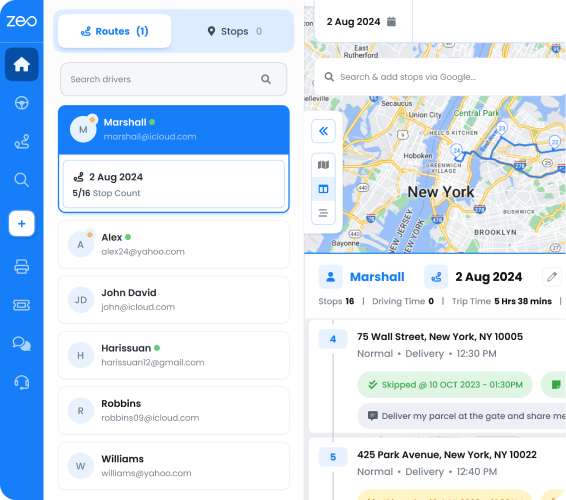
Mobile Workforce Technology: Keep Electricians Connected and Routes Optimized
Your routing optimization is only as good as your ability to execute and adapt in real-time. Mobile workforce technology and fleet management software bridge the gap between planning and execution.
Real-Time Route Updates: Electricians need current route information on their phones, not printed schedules that become obsolete by 10 AM. When routes change due to emergencies or delays, updates should push immediately to technician devices.
GPS Navigation Integration: Don’t make electricians manually enter addresses into separate navigation apps. Integrated GPS guidance reduces errors and saves time between stops.
Job Status Updates: Real-time status updates keep dispatchers informed and enable better decision-making. When a job finishes early or runs late, that information should immediately inform routing decisions for the rest of the team.
Customer Communication Tools: Enable technicians to send arrival notifications, delay updates, and completion confirmations directly from their mobile device. This keeps customers informed without requiring dispatcher involvement.
Proof of Service: Mobile documentation tools help electricians quickly capture photos, signatures, and notes without disrupting route efficiency. Digital documentation also improves billing accuracy and customer satisfaction.
Offline Capability: Electrical work often happens in areas with poor cell coverage. Mobile apps should function offline and sync updates when connectivity returns.
Platforms like Zeo Route Planner provide all these capabilities in one integrated solution, helping electrical contractors reduce travel time while improving service quality.
Measuring Success: Calculate Your ROI from Reduced Travel Time
Implementing route optimization requires investment in technology and process changes. Here’s how to measure the return on that investment.
Baseline Measurement: Track current metrics before implementing changes. Monitor average daily drive time per technician, total miles driven, fuel costs, and jobs completed per day. These become your improvement benchmarks.
Travel Time Tracking: Modern GPS tracking shows exactly how much time technicians spend driving versus working. Aim to reduce drive time from 25-30% of the workday to 15-20%.
Revenue Impact: Calculate the value of reclaimed time. If reducing travel time allows each electrician to complete one additional service call per day, multiply that by your average service call profit and number of working days.
Cost Reduction Metrics: Track fuel consumption, vehicle maintenance costs, and overtime expenses. Route optimization typically reduces these costs by 20-30% within the first month.
Customer Satisfaction Indicators: Monitor on-time arrival rates, customer complaints about delays, and customer retention rates. Improved routing should show measurable improvement in these areas.
Employee Satisfaction: Survey technicians about job satisfaction and stress levels. Reduced travel time often improves morale and reduces turnover—a significant cost savings in today’s tight labor market.
Capacity Utilization: Measure how many billable hours each technician completes per day. Efficient routing should increase billable time by 10-15% without extending total work hours.
Here’s a simple ROI calculation: If you save 1 hour of travel time per technician per day, and that hour generates $75 in additional revenue while saving $25 in vehicle costs, each technician generates $100 extra daily profit. For a 10-technician company, that’s $260,000 in additional annual profit.
Most electrical contractors see ROI within the first month of implementing comprehensive route optimization. The key is measuring consistently and adjusting strategies based on real data.
Frequently Asked Questions
Q: How much travel time can electricians typically save with route optimization?
Most electrical contractors see 30-40% reduction in travel time when implementing proper route optimization strategies. Zeo Route Planner users often report saving 2+ hours daily per technician through AI-powered routing and real-time optimization.
Q: What’s the average percentage of time electricians spend traveling between jobs?
Electricians typically spend 25-30% of their workday driving between job sites. With optimized routing, this can be reduced to 15-20%, freeing up significant time for additional billable work.
Q: Can route optimization software handle emergency electrical calls?
Yes, modern route optimization platforms can dynamically reassign routes when emergencies arise. Zeo Route Planner automatically recalculates optimal routes for your entire team in real-time, ensuring emergency calls don’t destroy your daily schedule efficiency.
Q: What’s the ROI of implementing route optimization for electrical contractors?
Most electrical contractors see ROI within the first month, with savings of $8,000-15,000 annually per technician through reduced fuel costs, overtime, and increased job capacity. Each hour of saved travel time typically generates $75-100 in additional profit.
Q: How does skills-based routing work for electrical services?
Skills-based routing assigns jobs based on technician certifications and specializations, not just availability. This ensures commercial electricians handle complex jobs while residential specialists take appropriate calls, reducing travel time and improving service quality.
Ready to eliminate wasted travel time from your electrical routes?
Start your free trial of Zeo Route Planner and see how much travel time you can eliminate from your electrical routes in the first week. Transform your biggest operational cost into your biggest competitive advantage.
Are you a fleet owner?
Want to manage your drivers and deliveries easily?
Grow your business effortlessly with Zeo Routes Planner – optimize routes and manage multiple drivers with ease.
increase fuel savings
Hassle Free Deliveries & Pickups!
Optimize routes with our algorithm, reducing travel time and costs efficiently.
Get Started for Free