


# How to Optimize Inspector Routes: Complete Guide to Efficient Inspection Operations
Inspection companies lose thousands of dollars monthly to a hidden problem: inefficient routing. Your inspectors spend more time driving between sites than actually inspecting them.
When routes aren’t optimized, inspectors waste 2-3 hours daily on unnecessary travel. That’s less revenue per inspector and higher fuel costs for your business.
The solution isn’t working longer hours. It’s learning how to optimize inspector routes through strategic planning and smart technology.
The Hidden Costs of Inefficient Inspector Routes: Why Geographic Planning Matters
Poor routing costs inspection companies far more than wasted fuel. Consider the real impact on your bottom line.
An inspector driving inefficient routes covers 40% more miles daily than necessary. According to the Bureau of Labor Statistics occupational outlook, compliance officers and inspectors are in high demand, making efficiency critical for meeting market needs. If your team of 10 inspectors each drives an extra 50 miles per day, that’s 1,250 unnecessary miles weekly.
At current fuel prices, you’re burning through an extra $400-500 monthly just on gas. But the bigger cost is time.
When inspectors spend excessive time driving, they complete fewer inspections daily. Instead of 8-10 inspections, they might only finish 5-6.
This creates a domino effect. Customers wait longer for appointments. Your team works overtime to catch up. Emergency inspections disrupt entire schedules because there’s no flexibility built in.
Geographic planning solves this by clustering inspections logically. Instead of sending an inspector across town and back three times, you group nearby sites together.
Smart route planning can reduce daily driving time by 25-35%. That translates directly into more inspections completed and higher revenue per inspector.
How to Optimize Inspector Routes: Mapping Efficient Paths by Territory and Priority
Effective route optimization starts with understanding your inspection territories and customer locations. Map out where your regular inspections occur most frequently.
Divide your service area into logical zones based on drive times, not just geographic boundaries. A zone that looks small on paper might take 45 minutes to cross during rush hour.
Start each route with your furthest inspection, then work back toward your office or the inspector’s home base. This prevents the common mistake of zigzagging across territories.
Consider inspection priorities when planning routes. Building safety inspections might have stricter time windows than routine maintenance checks, as outlined in National Institute for Occupational Safety and Health inspection guidelines. Schedule high-priority inspections first, then fill in flexible appointments around them.
Factor in inspection duration when sequencing stops. Don’t schedule a 2-hour compliance audit right before a 30-minute routine check if the sites are far apart.
Use the “clustering” method for maximum efficiency. Group 3-4 inspections within a 5-mile radius before moving to the next cluster. This minimizes travel time between stops.
For recurring inspections, establish consistent territory assignments. When the same inspector covers the same area regularly, they learn optimal routes and build customer relationships.
Modern fleet management software can automate much of this planning process, ensuring optimal territory coverage while reducing manual scheduling work.
Plan buffer time between inspections to account for traffic and unexpected delays. A 15-minute buffer prevents one delayed inspection from disrupting the entire day’s schedule.
Technology Integration: Connecting Inspection Software with Route Optimization Platforms
Manual route planning becomes impossible as your inspection business grows. Technology integration transforms how you manage daily schedules and optimize routes.
Modern route optimization platforms integrate directly with inspection management software. When you schedule an inspection, the system automatically factors location and priority into route planning.
Look for platforms that sync customer data, appointment details, and inspector availability in real-time. This prevents double-booking and ensures optimal route assignments.
GPS tracking capabilities let you monitor inspector progress throughout the day. You’ll know exactly where each team member is and their estimated arrival time at the next location.
Choose systems that update routes automatically when new urgent inspections come in. The platform should recalculate optimal paths without manual intervention.
Cloud-based platforms work best because inspectors access updated routes from their mobile devices. Route changes sync instantly across all devices.
Integration with customer notification systems keeps clients informed about inspector arrival times. Automated text messages reduce no-shows and improve customer satisfaction.
Some platforms offer API connections to popular inspection software like HappyCo, iAuditor, or custom systems. This creates seamless workflow from scheduling to completion.
Comprehensive field service management solutions can handle everything from scheduling to route optimization, providing a complete operational framework for inspection businesses.
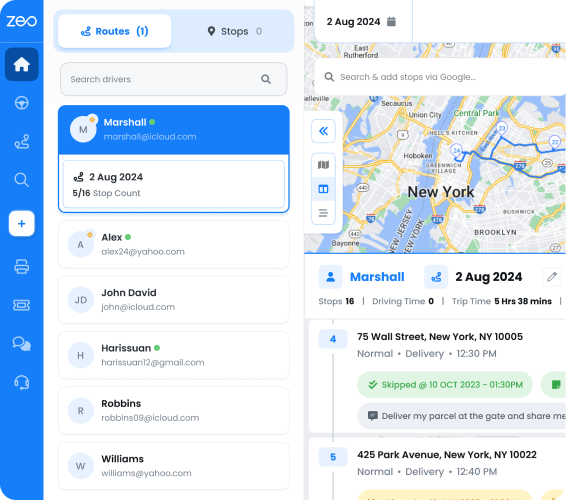
Zeo Route Planner integrates with popular business tools through Zapier, allowing automatic route optimization when new inspections are scheduled in your existing software.
Dynamic Route Management: Handling Urgent Inspections and Real-Time Adjustments
Emergency inspections don’t have to destroy your entire daily schedule. Dynamic route management lets you handle urgent requests while maintaining efficiency.
When an urgent inspection request comes in, modern route optimization systems recalculate the best insertion point automatically. The system finds which inspector can handle it with minimal disruption to existing routes.
Real-time traffic data helps avoid delays that could cascade through the entire schedule. If traffic builds up on a planned route, the system suggests alternative paths automatically.
Inspector availability changes throughout the day. Someone might finish early or get delayed at a complex site. Dynamic routing adjusts remaining stops based on actual progress.
Real-time vehicle tracking enables dispatchers to monitor inspector locations and make informed decisions about route adjustments throughout the day.
Your inspectors receive route updates instantly on the Zeo mobile app, allowing them to navigate to reassigned locations without calling the office for directions.
Create priority levels for different inspection types. Emergency safety inspections get top priority, while routine maintenance checks can be rescheduled if necessary.
Build “flex time” into daily schedules. Reserve 30-60 minutes for urgent requests that pop up unexpectedly. This prevents overtime costs when emergency inspections arise.
Consider geographic positioning when assigning urgent inspections. An inspector already working in the south part of town can handle a new request there more efficiently than someone across the city.

increase fuel savings
Hassle Free Deliveries & Pickups!
Optimize routes with our algorithm, reducing travel time and costs efficiently.
Get Started for Free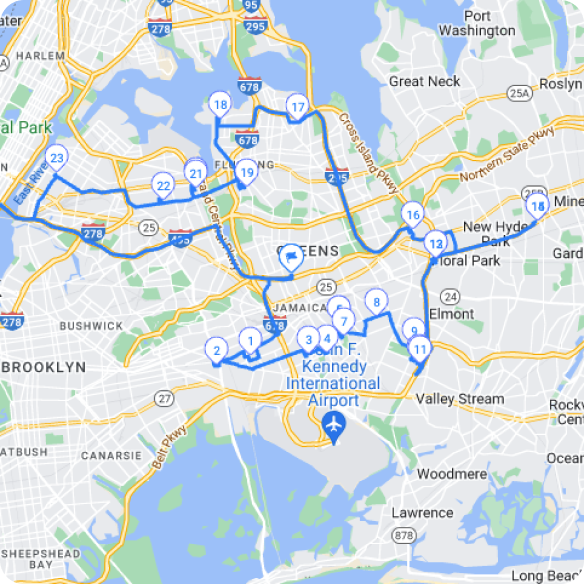
Track which inspectors consistently finish routes early. These team members become your go-to resources for handling urgent requests that require immediate attention.
Multi-Inspector Coordination: Territory Management and Workload Balancing Strategies
Coordinating multiple inspectors requires strategic territory management and workload balancing. Poor coordination leads to inspectors crossing paths and duplicate travel.
Assign each inspector a primary territory based on their home location or expertise. Building inspectors might focus on commercial zones while residential specialists handle housing areas.
Balance workloads based on inspection complexity, not just number of appointments. Three complex commercial inspections might equal six routine residential checks in terms of time and effort.
Create backup coverage plans for each territory. When an inspector calls in sick, you need another team member who knows that area and its customers.
Use skill-based assignment for specialized inspections. Some inspectors excel at HVAC systems while others specialize in electrical work. Match expertise to inspection requirements.
Monitor daily progress across all inspectors to identify bottlenecks early. If one inspector is running behind, reassign their last appointment to someone finishing early.
Implement territory rotation periodically to prevent inspectors from becoming too comfortable with inefficient personal routes. Fresh eyes often find better paths.
Consider inspector preferences when possible. Some team members work better with complex commercial sites while others prefer residential variety.
Establish clear communication protocols for territory coordination. Inspectors should know who to contact when they need backup or encounter problems outside their expertise.
Given Federal Motor Carrier Safety Administration hours of service regulations, proper workload balancing ensures inspectors don’t exceed legal driving limits while maintaining productivity.
Performance Metrics and ROI: Measuring Route Optimization Success in Inspection Operations
Track specific metrics to measure your route optimization success and calculate return on investment. The right data reveals where improvements are working and where adjustments are needed.
Monitor average daily miles per inspector before and after implementing route optimization. A 20-30% reduction in daily mileage indicates successful optimization.
Track inspections completed per day per inspector. Optimized routes should increase daily capacity by 15-25% without extending work hours.
Measure fuel costs monthly. Calculate savings by comparing pre-optimization fuel expenses to current costs. Include this in your ROI calculations.
Monitor customer satisfaction scores related to appointment timing and inspector arrival reliability. Optimized routes improve on-time performance significantly.
Track overtime hours across your inspection team. Better route planning should reduce overtime needs by preventing schedule overruns.
Calculate revenue per inspector per day. More efficient routes mean more billable inspections completed daily, directly impacting your bottom line.
Measure emergency inspection response times. Optimized routing with built-in flexibility should improve your ability to handle urgent requests quickly.
Monitor inspector satisfaction with their daily routes. Team members prefer logical, efficient routes over chaotic zigzag patterns across town.
For a company with 10 inspectors, route optimization typically saves $2,000-3,000 monthly in fuel costs alone. Add increased inspection capacity and overtime reduction, and ROI often exceeds 300% within six months.
A comprehensive route optimization guide can provide additional strategies for measuring and improving operational efficiency across different business models.
Track these metrics monthly and adjust your routing strategies based on the data. Continuous improvement leads to better results over time.
Frequently Asked Questions
Q: What software tools help optimize inspector routes automatically?
Route optimization software like Zeo Route Planner can automatically calculate the most efficient paths between inspection sites, reducing travel time by 25-35%. These tools integrate with existing inspection management systems and provide real-time updates when schedules change.
Q: How much can inspection companies save by optimizing their routes?
Companies typically save $2,000-3,000 monthly in fuel costs alone with a team of 10 inspectors, while also increasing daily inspection capacity by 15-25%. The total ROI often exceeds 300% within six months when factoring in reduced overtime and increased revenue.
Q: What’s the best way to handle emergency inspections without disrupting scheduled routes?
Dynamic route management systems can automatically recalculate optimal insertion points for urgent inspections, minimizing disruption to existing schedules. Zeo Route Planner’s mobile app instantly updates routes and sends new directions to inspectors in the field.
Q: Should inspection territories be assigned by geographic boundaries or drive time?
Territory assignment should prioritize drive time over geographic boundaries, especially in urban areas where traffic patterns significantly impact travel duration. A territory that appears small geographically might take 45 minutes to cross during peak hours.
Q: How do you balance workload fairly among multiple inspectors?
Workload balancing should consider inspection complexity and duration, not just the number of appointments. Three complex commercial inspections might require the same time as six routine residential checks, so assignments should reflect actual time and skill requirements.
Route optimization transforms inspection operations from reactive chaos into efficient, profitable systems. Your inspectors complete more work with less stress while your business reduces costs and improves customer satisfaction.
Start your free trial of Zeo Route Planner to see how much time and fuel costs you can save on your inspection routes.
Are you a fleet owner?
Want to manage your drivers and deliveries easily?
Grow your business effortlessly with Zeo Routes Planner – optimize routes and manage multiple drivers with ease.
increase fuel savings
Save 2 Hours on Deliveries, Everyday!
Optimize routes with our algorithm, reducing travel time and costs efficiently.
Get Started for Free