

Updated on: August 11, 2025
Reading Time: 3 minutes
TL;DR: Shortest routes minimize distance while fastest routes minimize time, and the best choice depends on whether you prioritize fuel savings or delivery speed. Modern delivery operations often benefit from fastest routes since time savings typically outweigh the extra mileage costs. Route optimization tools like Zeo Route Planner address this with AI-powered route optimization that considers both time and distance factors, helping delivery teams save 2+ hours daily.
It’s very common to use these two terms interchangeably – shortest routes and fastest routes. After all, in the first instinct, they both sound and mean the same. But is that really so? We will find the answer through this article.
Shortest might not always be the fastest. While ‘Shortest’ is often used to convey the distance between two points, ‘Fastest’ is associated with the time taken to cover that distance. Yes, logically speaking, the shortest distance must be covered the fastest, but that’s not always the case.
Here’s a clear breakdown.
Shortest Routes
Shortest routes focus on one thing: the least distance between point A and point B. If you’re measuring the trip in miles or kilometers, this route gives you the smallest number.
This might sound like the best choice when you want to save fuel or avoid extra driving. And for some situations, it is.
Shortest routes are ideal for:
- Local deliveries within a small area
- Fuel-conscious drivers
- Straight-line routes with minimal turns
- Bikes or small vehicles navigating city lanes
But there’s a catch. Short doesn’t always mean simple. The shortest route could be full of slow turns, small streets, and busy intersections, all of which can slow you down and cost you more time.
Fastest Routes
Fastest routes are all about saving time. They might take you a longer distance, but the idea is to get you to your destination as quickly as possible.
These routes often include wider roads, fewer stops, and smoother flows. The goal is not to drive less, it’s to drive smarter.
Fastest routes are best for:
- Time-sensitive deliveries
- Drivers covering multiple zones
- Consistent ETAs for customers
- Getting more done in less time
You might drive a few extra miles, but you make up for it with fewer delays and a smoother drive overall.
Real-World Factors That Impact Route Performance
Beyond simple distance calculations, several factors determine whether a shortest or fastest route approach works better in practice. Traffic patterns change throughout the day, with Federal Highway Administration data showing peak congestion periods can double travel times on major routes.
Weather conditions also play a critical role. Rain, snow, or construction can turn a typically fast highway into a crawling bottleneck, making shorter surface streets suddenly more attractive. Vehicle type matters too – large delivery trucks may be restricted from certain roads that would be perfect shortcuts for smaller vehicles.
Driver familiarity with routes affects performance significantly. A driver comfortable with back roads and shortcuts may complete a “longer” route faster than navigating an unfamiliar highway system with multiple lane changes and exits.
Fastest Routes vs. Shortest Routes: The Real Difference
Let’s compare them side by side:
| Criteria | Shortest Routes | Fastest Routes |
| Distance | Least possible | Often more |
| Time taken | Can be longer | Usually less |
| Focus | Save miles | Save time |
| Best for | Fuel-saving, local jobs | Urgent or high-volume tasks |
The key difference lies in your goal. If you’re trying to reduce fuel expenses, go with shortest routes. If you want to finish your deliveries quickly, fastest routes are your best bet.
But here’s the thing: choosing manually every single time can get overwhelming. That’s where smart route optimization tools come in.
Economic Impact of Route Choice on Operations
The financial implications of route selection extend beyond obvious fuel costs. According to Bureau of Labor Statistics data, delivery and transportation costs can account for 10-15% of total business expenses for companies with field operations.
Time-based costs often outweigh distance-based savings. Driver wages, vehicle depreciation, and customer satisfaction all improve with faster completion times. A route that saves 30 minutes but uses two extra gallons of fuel typically provides net savings when factoring in hourly labor costs.

increase fuel savings
Hassle Free Deliveries & Pickups!
Optimize routes with our algorithm, reducing travel time and costs efficiently.
Get Started for Free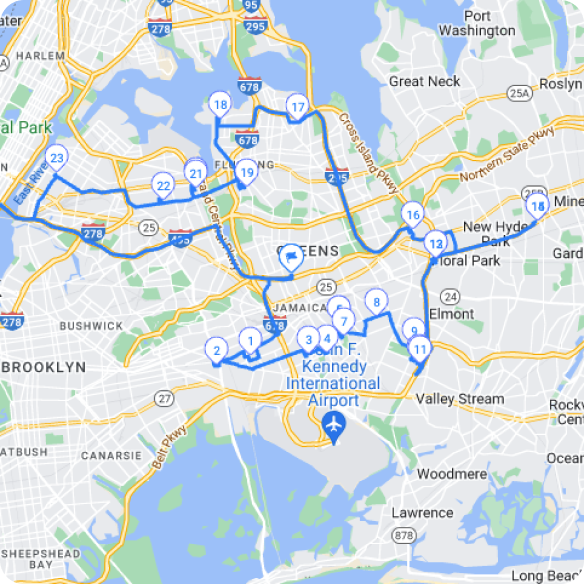
Customer expectations have shifted toward faster service windows. Businesses that consistently hit tight delivery windows see higher customer retention rates and can charge premium prices for reliable service. This makes speed optimization increasingly valuable compared to pure distance minimization.
Role of Route Optimization Tools
Trying to figure out the fastest or shortest route for each delivery? That can easily become a full-time job on its own.
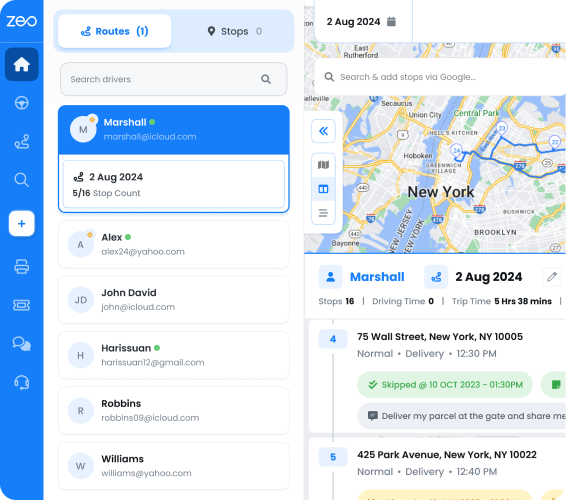
With smart route optimization tools like Zeo, you don’t have to do the thinking. Whenever you want to save time and fuel while handling multi-route planning, the Zeo route planner helps you with the best route possible.
Here’s how Zeo helps you out:
- It finds the fastest routes when you want to maximize speed and finish jobs quickly
- It finds the shortest routes when you want to minimize driving distance
- It plans your entire day, even if you have 10 stops or over 100 stops
- It adjusts your plan in real-time if a new job is added with dynamic routing
- It helps you avoid backtracking or overlapping paths
Whether you’re working solo or handling multiple deliveries, Zeo makes Route Optimization feel effortless.
So, Which One Should You Choose?
There’s no one-size-fits-all answer. The best route depends on your delivery goals, your vehicle, and how your day is planned.
Pick the fastest route when:
- You’re short on time
- Your customer expects a tight delivery window
- You want to complete more jobs in a day
Pick the shortest route when:
- You want to reduce fuel usage
- You’re making hyper-local deliveries
- You prefer simpler, low-mileage trips
Industry-Specific Route Strategy Considerations
Different industries benefit from different routing approaches. Two-person delivery teams handling large appliances or furniture often prioritize shortest routes to minimize physical strain, while time-sensitive services like medical deliveries focus exclusively on speed.
Emergency services and field technicians typically need fastest routes to maintain service level agreements. Construction and utility services may choose shortest routes when carrying heavy equipment that impacts fuel efficiency significantly.
Understanding your industry’s primary constraints helps determine the right balance between time and distance optimization for your specific operations.
Final Takeaway
Knowing when to use fastest routes versus shortest routes is a skill, but it doesn’t have to be complicated. With the right understanding and a smart tool like Zeo, you can align your routes with your goals every single time.
At the end of the day, it’s not just about getting from A to B. It’s about doing it in a way that works for you, your vehicle, and your schedule. That’s where Route Optimization shines.
Whether you’re chasing the clock or saving fuel, there’s a better way to drive. Zeo can help you find it.
Frequently Asked Questions
How do traffic patterns affect the choice between shortest and fastest routes?
Traffic patterns can completely flip the advantage between route types throughout the day. During peak hours, shortest routes using surface streets often outperform fastest routes that rely on congested highways. Off-peak times typically favor fastest routes since highway speeds aren’t compromised by traffic volume.
What’s the average fuel cost difference between shortest and fastest routes?
Fastest routes typically use 5-15% more fuel than shortest routes, but this varies significantly based on vehicle type and road conditions. However, the time savings often offset fuel costs when factoring in driver wages and the ability to complete additional deliveries per day.
Can weather conditions change which route type performs better?
Yes, weather dramatically impacts route performance. Rain and snow can make highways slower and more dangerous than local roads, shifting the advantage to shortest routes. Construction zones and seasonal road closures also affect which approach works best for specific time periods.
How do modern route optimization tools decide between fastest and shortest options?
Advanced route optimization software considers multiple factors including current traffic, vehicle capacity, time windows, and driver schedules. Zeo Route Planner uses AI-powered optimization to balance these factors automatically, with features like real-time GPS tracking and dynamic route adjustments helping operations complete 150+ countries worth of deliveries efficiently.
What’s the productivity difference between using fastest versus shortest routes for multi-stop deliveries?
Multi-stop operations typically see 20-30% productivity gains with fastest routes compared to shortest routes. The time saved between stops compounds throughout the day, allowing drivers to complete more deliveries. Time window constraints and customer satisfaction also improve significantly with faster route completion.
Are you a fleet owner?
Want to manage your drivers and deliveries easily?
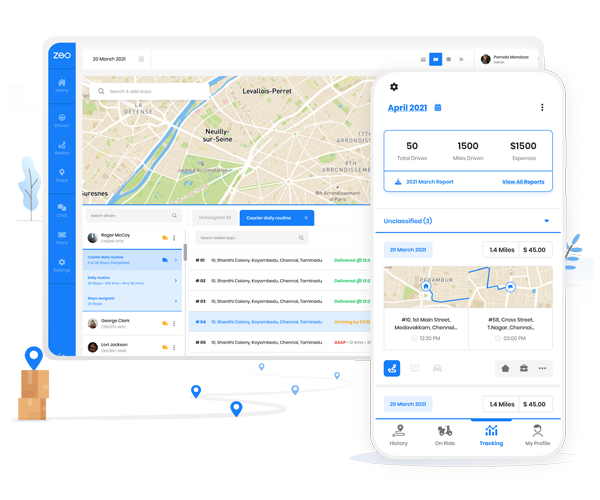
Grow your business effortlessly with Zeo Routes Planner – optimize routes and manage multiple drivers with ease.
increase fuel savings
Save 2 Hours on Deliveries, Everyday!
Optimize routes with our algorithm, reducing travel time and costs efficiently.
Get Started for Free