


Updated on: December 30, 2025
# Electrical Service Route Optimization Tools: The Complete Guide for Contractors
Managing electrical service routes is like solving a puzzle that changes every hour. Your electricians are halfway through scheduled maintenance when an emergency call comes in. Suddenly, your carefully planned day becomes chaos.
You’re not alone. Most electrical contractors lose 2-3 hours daily to poor routing decisions. Emergency calls disrupt planned schedules. Technicians drive across town multiple times. The wrong electrician gets sent to specialized jobs.
Electrical service route optimization tools solve this problem by balancing scheduled work with emergencies while ensuring the right technician reaches each job safely and efficiently. These specialized field service management solutions understand the unique challenges of electrical work.
Why Electrical Contractors Need Specialized Route Optimization (Not Generic Tools)
Generic route planners don’t understand electrical work. They can’t prioritize a power outage over routine maintenance. They don’t consider if your electrician is certified for high-voltage commercial work.
Electrical contractors face unique routing challenges that generic tools miss completely.
Emergency Call Prioritization
Power outages and electrical hazards can’t wait. When Mrs. Johnson calls about sparks from her outlet, that job jumps to the front of the queue. Your route optimization tool must instantly recalculate routes around emergency priorities.
Standard GPS apps treat every stop equally. They don’t understand that some electrical calls are literally life-or-death situations. This is where AI-powered route optimization becomes essential for handling dynamic priority changes.
Technician Skill Matching
Your residential specialist shouldn’t handle three-phase commercial installations. Your apprentice can’t work on high-voltage systems alone. Smart electrical routing considers technician certifications and experience levels.
The wrong technician at a job site means callbacks, delays, and safety risks. Specialized tools prevent these costly mistakes by matching skills to requirements automatically.
Equipment and Parts Coordination
Electrical jobs require specific parts and tools. Your HVAC electrical specialist needs different equipment than someone doing panel upgrades. Route optimization for electrical work considers equipment requirements when assigning jobs.
When technicians arrive with the wrong parts, they waste time driving to supply houses or back to the shop. Smart routing prevents these inefficient trips.
Emergency vs. Scheduled Work: Building Flexible Electrical Service Routes
The key to electrical route optimization is building flexibility into your schedule. You need structured routes that can adapt when emergencies arise.
The 70/30 Rule for Electrical Scheduling
Reserve 70% of your technician’s time for scheduled work and 30% for emergencies and buffer time. This approach keeps your planned jobs on track while leaving room for urgent calls.
When you pack schedules at 100% capacity, a single emergency call destroys the entire day’s routing. The buffer time prevents this cascade effect.
Priority-Based Route Restructuring
Not all emergency calls require immediate response. A flickering light can wait an hour. A smoking electrical panel cannot. Your routing system should understand these priority differences.
Set up automatic priority levels:
- Priority 1: Electrical hazards, power outages, safety issues
- Priority 2: Equipment failures affecting business operations
- Priority 3: Non-urgent repairs and maintenance
When Priority 1 calls arrive, routes automatically restructure. Priority 2 and 3 calls get worked into existing routes efficiently.
Geographic Emergency Zones
Divide your service area into zones and designate floating technicians for emergency coverage. When urgent calls come in, dispatch the closest qualified technician rather than pulling someone from across town.
This approach minimizes emergency response times while keeping scheduled routes intact. Your planned maintenance jobs stay on track while emergencies get handled quickly.
Safety-First Route Planning: Compliance and Risk Management for Electrical Work
Safety compliance isn’t optional in electrical work. Your routing decisions directly impact worker safety and regulatory compliance.
Certification and License Tracking
Every electrical job has specific certification requirements. Commercial work needs different licenses than residential. High-voltage jobs require specialized training. Your routing system must track and enforce these requirements.
When routes ignore certification requirements, you risk safety violations, failed inspections, and legal liability. Smart routing prevents these problems by automatically matching certified technicians to appropriate jobs.
Hazardous Location Considerations
Some electrical work happens in hazardous environments. Chemical plants, grain elevators, and paint booths require specially trained technicians and equipment. Your routing system should flag these locations and ensure proper preparation.
Route these jobs early in the day when technicians are alert. Allow extra travel time for safety briefings and equipment checks. Schedule experienced technicians who understand hazardous location protocols.
Two-Person Job Requirements
Electrical codes require two-person teams for certain high-risk work. Your routing system must recognize these requirements and coordinate multiple technician schedules automatically.
Single-person routes that ignore two-person requirements create safety violations and project delays. When the required second technician doesn’t arrive, work stops until proper staffing is arranged.
Top 7 Electrical Service Route Optimization Tools Compared (Features, Pricing & Electrical-Specific Benefits)
1. Zeo Route Planner
Best for: Electrical contractors balancing scheduled maintenance with emergency calls
Key Features:
- Priority-based routing that adapts to emergency calls
- Skill-based technician assignment
- Real-time route updates for mobile technicians
- Customer notifications with live tracking
- Proof of service with photos and signatures
Pricing: Starts at $39/month for 10 vehicles
Electrical Benefits: Handles emergency dispatching while maintaining scheduled routes
2. Route4Me
Best for: Large electrical contractors with complex routing needs
Key Features:
- Multi-day route planning
- Advanced constraints and parameters
- Telematics integration
Pricing: $199/month for 10 routes
Electrical Benefits: Good for predictable scheduled work but limited emergency handling
3. OptimoRoute
Best for: Service-based electrical contractors
Key Features:
- Time window optimization
- Skill-based assignments
- Customer notifications
Pricing: $35.10/month per driver
Electrical Benefits: Strong service features but expensive for larger teams
4. Workwave Route Manager
Best for: Enterprise electrical contractors
Key Features:
- Advanced reporting and analytics
- Integration with job management systems
- Territory management
Pricing: Contact for quote (typically $50+/month per vehicle)
Electrical Benefits: Comprehensive but complex for smaller contractors
5. MyRouteOnline
Best for: Basic electrical routing needs
Key Features:
- Simple route optimization
- Excel import/export
- Basic mobile app
Pricing: $199/year for unlimited routes
Electrical Benefits: Affordable but lacks emergency handling and skill matching
6. Onfleet
Best for: Electrical contractors focused on customer experience
Key Features:
- Excellent customer notifications
- Real-time tracking
- Analytics dashboard
Pricing: $149/month for 3 drivers
Electrical Benefits: Great customer features but limited electrical-specific functionality

increase fuel savings
Save 2 Hours on Deliveries, Everyday!
Optimize routes with our algorithm, reducing travel time and costs efficiently.
Get Started for Free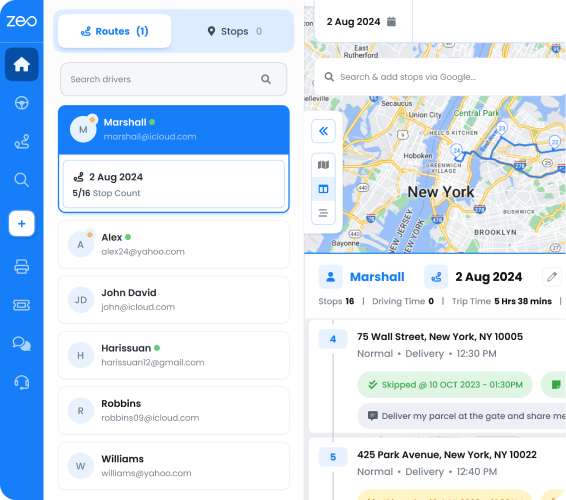
7. GetSwift
Best for: Tech-forward electrical contractors
Key Features:
- API integrations
- Automated dispatching
- Advanced analytics
Pricing: $59/month per driver
Electrical Benefits: Powerful but requires technical setup and maintenance
ROI Calculator: How Much Money Route Optimization Saves Electrical Contractors
Route optimization delivers measurable returns through reduced drive time, increased billable hours, and improved customer satisfaction. Intelligent route optimization systems can transform your electrical business economics.
Average Savings by Business Size
3-5 Electricians:
- Daily time savings: 1.5 hours per technician
- Weekly fuel savings: $180-$240
- Additional billable hours: 7.5 hours per week
- Monthly ROI: $2,800-$3,600
6-10 Electricians:
- Daily time savings: 2 hours per technician
- Weekly fuel savings: $360-$480
- Additional billable hours: 20 hours per week
- Monthly ROI: $7,200-$9,600
11-15 Electricians:
- Daily time savings: 2.5 hours per technician
- Weekly fuel savings: $540-$720
- Additional billable hours: 37.5 hours per week
- Monthly ROI: $13,500-$18,000
Calculate Your Specific ROI
Use this simple formula to estimate your savings:
Daily Drive Time Saved x Number of Technicians x Hourly Rate x 22 Working Days = Monthly Labor Savings
Weekly Miles Saved x $0.56 per Mile x 4 Weeks = Monthly Fuel Savings
Total Monthly Savings – Software Cost = Net Monthly ROI
Hidden Cost Reductions
Route optimization eliminates hidden costs that many contractors overlook:
- Vehicle wear and tear: 30% reduction in unnecessary mileage
- Overtime expenses: Better planning reduces rushed emergency responses
- Customer complaints: Accurate arrival times improve satisfaction scores
- Fuel surcharges: Optimized routes reduce fuel consumption by 15-25%
Most electrical contractors see full ROI within 30-45 days of implementation.
Implementation Guide: Getting Your Electrical Team Started with Route Optimization
Successful route optimization implementation requires planning, training, and gradual rollout. The right fleet management software makes this process smoother.
Week 1: Data Preparation and Setup
Start by gathering your customer addresses, job types, and technician information. Clean up inconsistent address formats and verify locations using Google Maps.
Create technician profiles with certifications, specialties, and equipment. Define job types with time estimates, required skills, and priority levels. This foundation ensures accurate route optimization from day one.
Import your customer database and verify all addresses. Incorrect addresses create routing errors that frustrate technicians and delay jobs.
Week 2: Route Planning and Assignment Process
Set up your route optimization workflow. Most electrical contractors plan routes the evening before or early morning. Emergency calls get added throughout the day as they arise.
Train office staff on the web platform features. They’ll handle route creation, emergency dispatching, and customer communication. Practice with sample data before going live.
While managers use the web platform to plan and assign routes, electricians receive their optimized routes directly on their mobile phones through the Zeo driver app, making it easy to navigate between jobs and capture proof of service photos and signatures.
Week 3: Mobile App Training for Technicians
Your electricians need mobile app training for navigation, job updates, and proof of delivery collection. Most technicians adapt quickly, but some need extra support.
Start with your tech-savvy technicians first. They become internal champions who help train others. Address concerns about technology changes early and honestly.
Show technicians how optimized routes save them drive time and get them home earlier. This personal benefit increases buy-in and adoption rates.
Week 4: Live Implementation with Support
Go live with half your technicians while keeping backup plans ready. Monitor routes closely and gather feedback for improvements.
Common first-week issues include address verification problems and technician skill mismatches. Have support staff available to handle these adjustments quickly.
Track key metrics from day one: total drive time, billable hours, customer satisfaction, and emergency response times. These numbers prove ROI and guide optimization improvements.
Ongoing Optimization Tips
Route optimization improves over time as you refine job time estimates and technician assignments. Review performance weekly and adjust parameters based on real-world results.
Emergency call patterns often follow predictable schedules. Track when emergencies typically occur and adjust your scheduled routes accordingly.
Customer feedback helps identify routing improvements. Late arrivals and missed time windows indicate areas for optimization refinement.
Frequently Asked Questions
Q: What is electrical service route optimization and why do contractors need it?
Electrical service route optimization is the process of planning the most efficient routes for electricians while considering emergency calls, technician skills, and safety requirements. Unlike generic GPS apps, specialized tools like Zeo Route Planner understand that electrical work involves emergency prioritization, skill matching, and equipment coordination that standard routing tools simply can’t handle.
Q: How much can electrical contractors save with route optimization tools?
Most electrical contractors save 1.5-2.5 hours per technician daily with route optimization, translating to $2,800-$18,000+ in monthly ROI depending on team size. The savings come from reduced drive time, increased billable hours, lower fuel costs, and improved customer satisfaction.
Q: Can route optimization tools handle emergency electrical calls?
Yes, specialized electrical route optimization tools can automatically restructure routes when emergency calls come in. Zeo Route Planner’s priority-based routing system can instantly recalculate routes around urgent electrical hazards while keeping scheduled maintenance jobs on track.
Q: What features should electrical contractors look for in route optimization software?
Essential features include emergency call prioritization, skill-based technician assignment, real-time route updates, customer notifications, and proof of service collection. The tool should also handle two-person job requirements and track technician certifications for safety compliance.
Q: How long does it take to implement route optimization for an electrical contracting business?
Most electrical contractors can fully implement route optimization within 2-4 weeks. This includes data preparation, staff training on the web platform, mobile app training for technicians, and gradual rollout with performance monitoring.
—
Ready to cut your electrical team’s drive time and increase billable hours? Start your free 7-day trial of Zeo Route Planner and see how much time and fuel your electrical team can save with optimized routes.

Are you a fleet owner?
Want to manage your drivers and deliveries easily?
Grow your business effortlessly with Zeo Routes Planner – optimize routes and manage multiple drivers with ease.
increase fuel savings
Save 2 Hours on Deliveries, Everyday!
Optimize routes with our algorithm, reducing travel time and costs efficiently.
Get Started for Free