

Updated on: May 18, 2026
Reading Time: 6 minutes
TL;DR: You can draw a radius on Google Maps using the “Measure distance” tool combined with a third-party KML generator to visualize service areas, delivery zones, or market reach around any point. This technique helps logistics, sales, and catering businesses estimate travel times and plan coverage areas before committing routes. Route optimization tools like Zeo Route Planner build on this with capacity-based routing and time window constraints, helping delivery and field teams save 2+ hours daily.
A Comprehensive Guide to Drawing Circles and Radii on Google Maps
From logistics business to catering services efficient route planning is crucial.
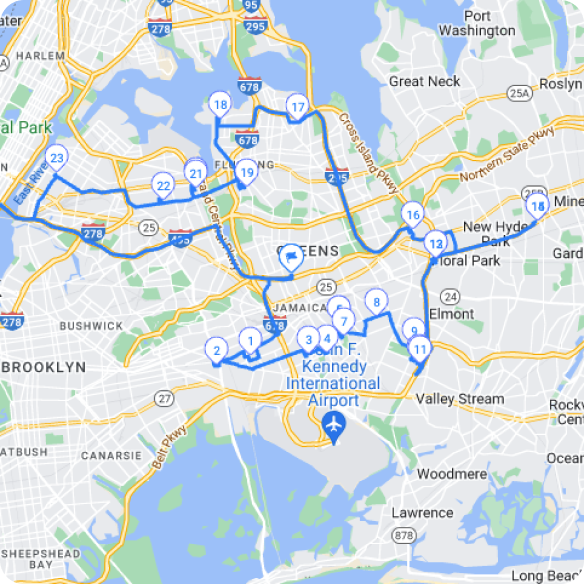
Knowing the exact reach of your services can help you optimize routes, save time, and reduce costs. Drawing a radius on Google Maps is a powerful way to visualize and plan your service areas effectively. When it comes to visualizing geographic data, Google Maps is a powerful map radius tool that allows users to understand spatial relationships and distances effortlessly. In this blog post we will dive deeper into drawing radius and circles on google maps.
Why do people use Google Maps to draw a Radius?
Drawing radius and circles on Google Maps help to visualize distances from a specific point. This helps in tasks like assessing market potential, organizing events, and planning service areas, estimating travel times. Here are some ways that many different industries can profit:
#1. Logistics
Delivery scheduling and efficient route are essential for logistics industry to minimise the cost and to ensure timely delivery. Google Maps helps logistics companies to optimize delivery routes and to understand the reach of their distribution centers. A logistics company can draw a 50-mile radius around a distribution center to identify areas reachable within two hours, helping plan faster routes, ensure timely deliveries, and cut fuel costs. According to the Bureau of Transportation Statistics, understanding average haul distances is a key input for planning realistic delivery radii and reducing empty miles.
#2. Field Sales
In field sales industry, the team often need to visit multiple prospects within a specific area.
Drawing a radius on Google Maps helps sales managers to plan and optimize their team’s routes. This helps to ensure that each representative covers their designated territory efficiently.
#3. Catering Services
To sustain in catering service business it is crucial to ensure that the food delivered is fresh and delivered on time. The catering companies define their service areas by drawing a radius on Google Maps. It can manage delivery times, and optimize their routes for maximum efficiency. Thus a catering company can draw a radius around its kitchen to define the ideal delivery area, helping ensure food stays fresh.
#4. Wholesale Distribution
Wholesale distributors need to manage deliveries to various retailers and businesses efficiently. Drawing a radius on Google Maps around their warehouses helps them understand their delivery reach and plan routes that optimize delivery times and reduce transportation costs.
A wholesale distributor can draw a 30-mile radius around their main warehouse to identify which retailers can be served within a one-hour drive. The map radius tool helps in planning efficient delivery schedules, ensuring timely deliveries, and reducing overall logistics costs.
How to Draw a Radius and Circles on Google Maps: Step-by-Step
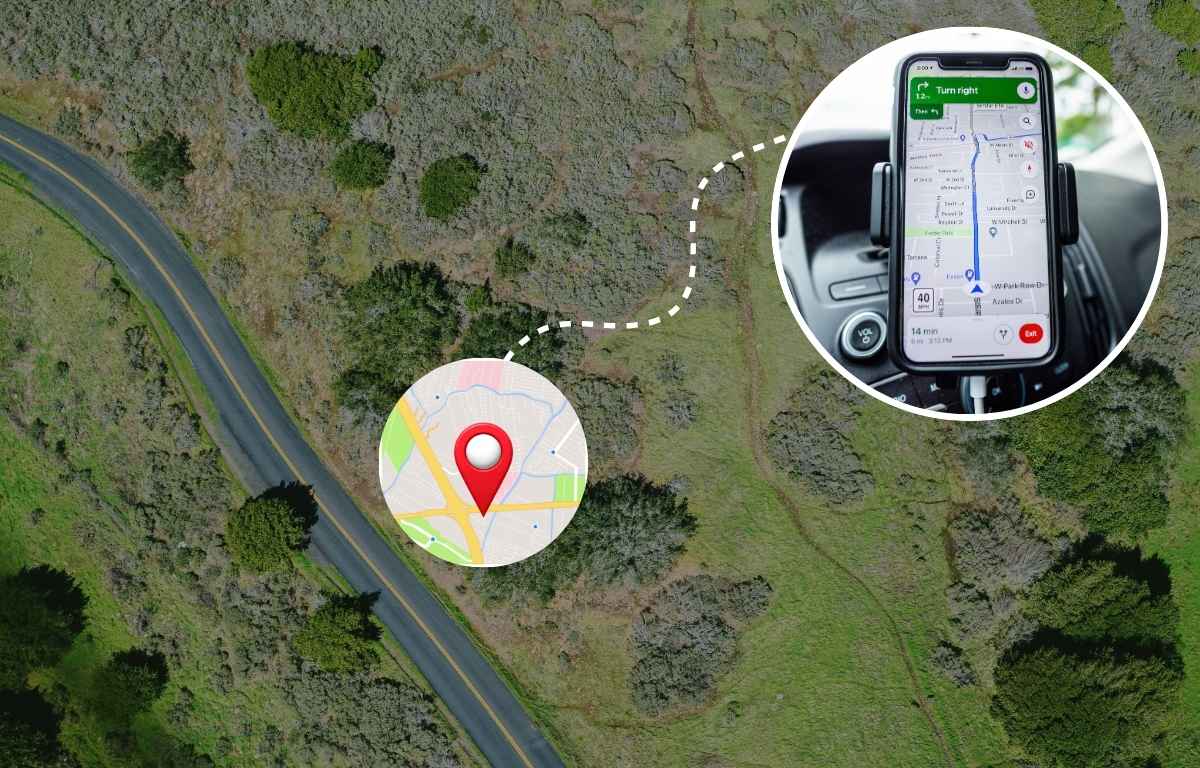
By adding multiple destinations and drawing a radius on Google Maps, you can easily measure the distance between a central point and nearby stops or markers within that area.
To draw a radius and circles on Google Maps, you can follow these steps:

increase fuel savings
Save 2 Hours on Deliveries, Everyday!
Optimize routes with our algorithm, reducing travel time and costs efficiently.
Get Started for Free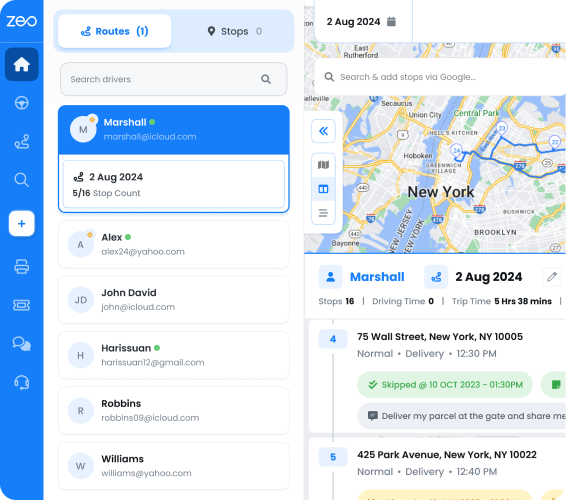
- Open Google Maps on your computer or mobile device.
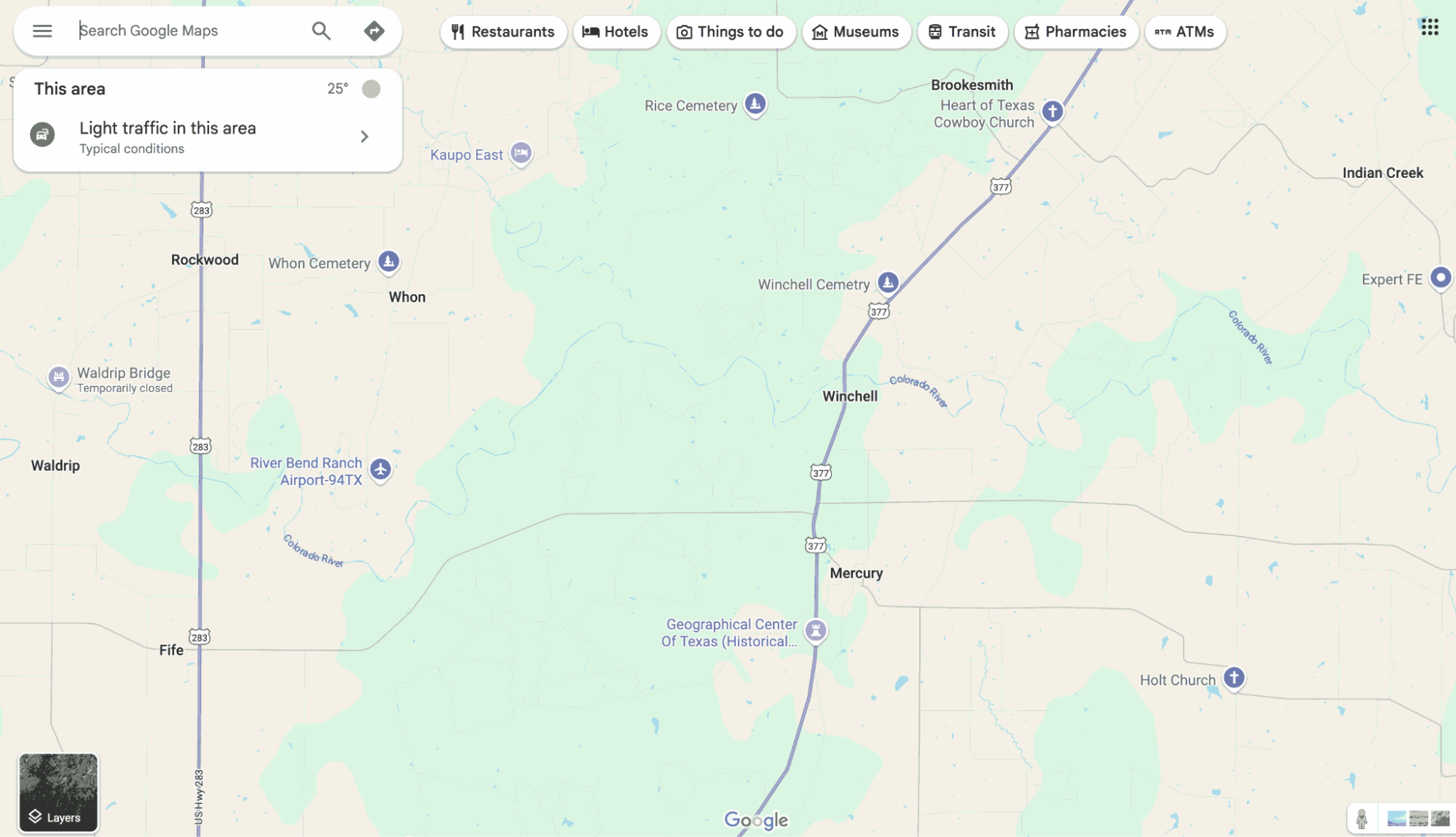
- Search for the location you want to create a radius around.
- Right-click on the location and select “Measure distance” from the menu.
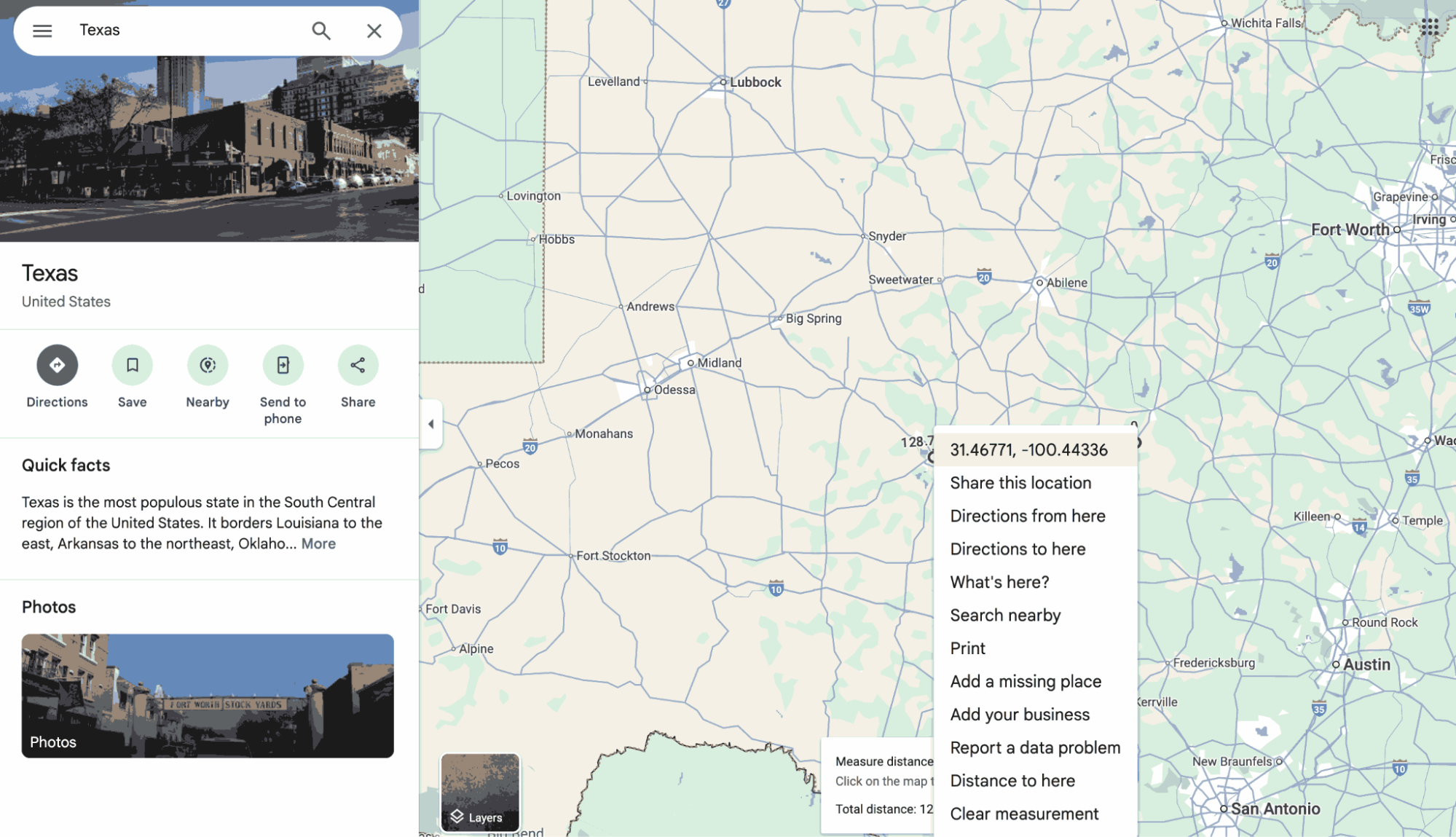
- Click on the map to create a starting point for your radius.
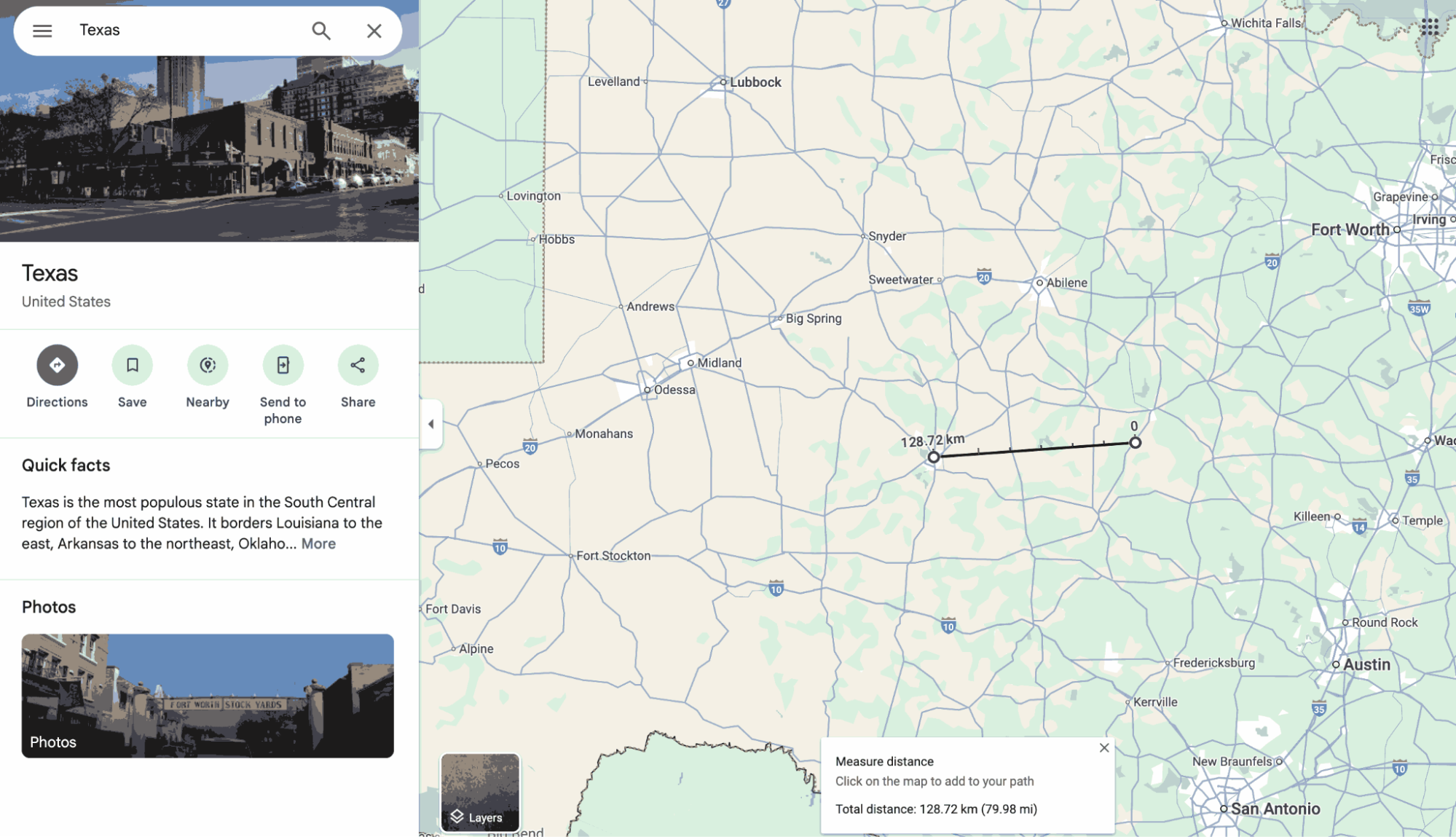
- Right-click and select “Measure distance”: Right-click on the desired location on the map and choose “Measure distance” from the context menu.
- You will see longitude and latitude numbers. Copy them and keep them for later use.
- Use a trusted third-party tool like KML4Earth (https://kml4earth.appspot.com/tools.html) to map a radius circle.
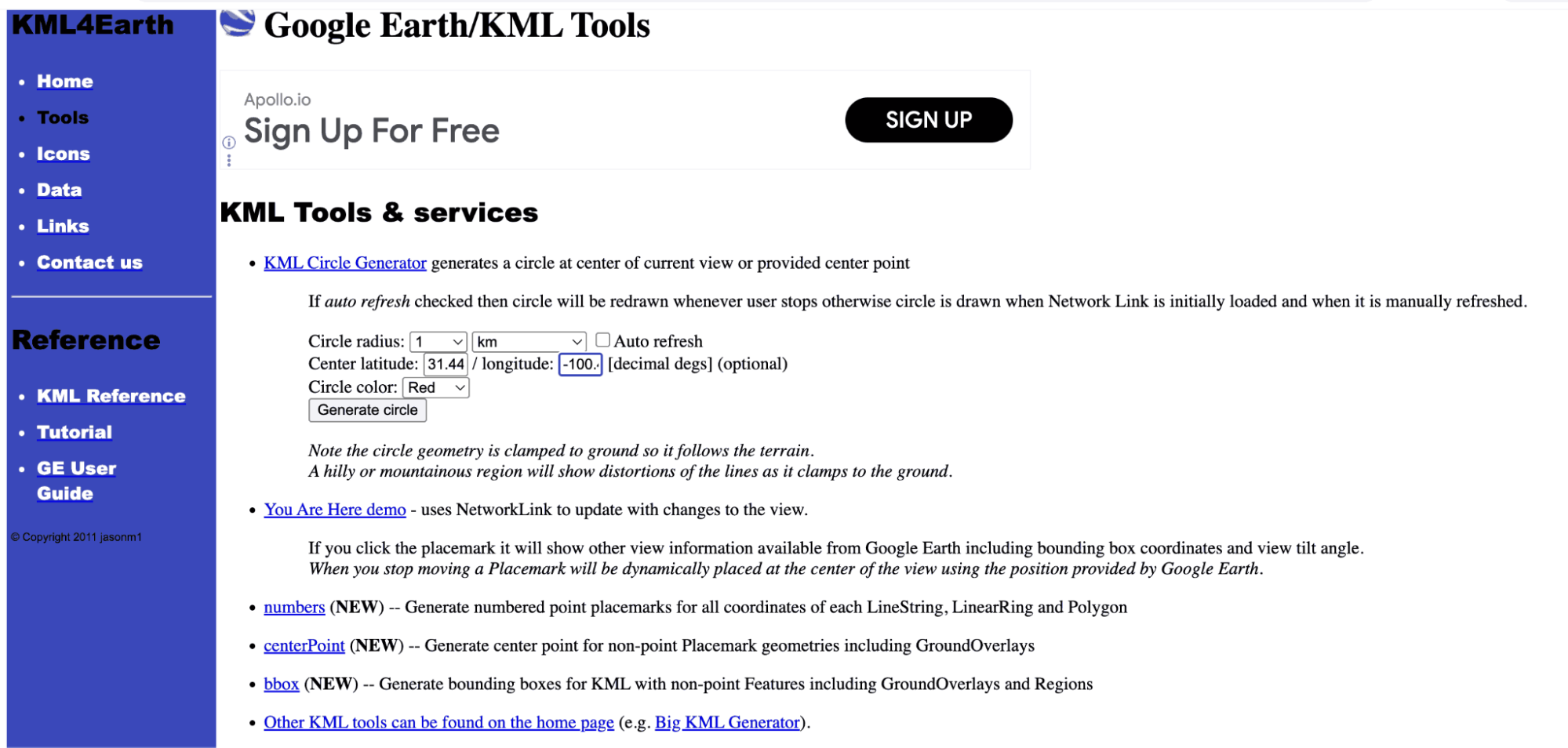
- Now, input coordinates we saved earlier.
- Select the color of your choice. Once done, hit “Generate Circle.“
- The tool will generate a KML file of the details you mentioned and save it in the “Download” section.
- Visit Google My Maps on desktop or mobile by searching on a web browser or clicking on this link: (https://www.google.com/mymaps)
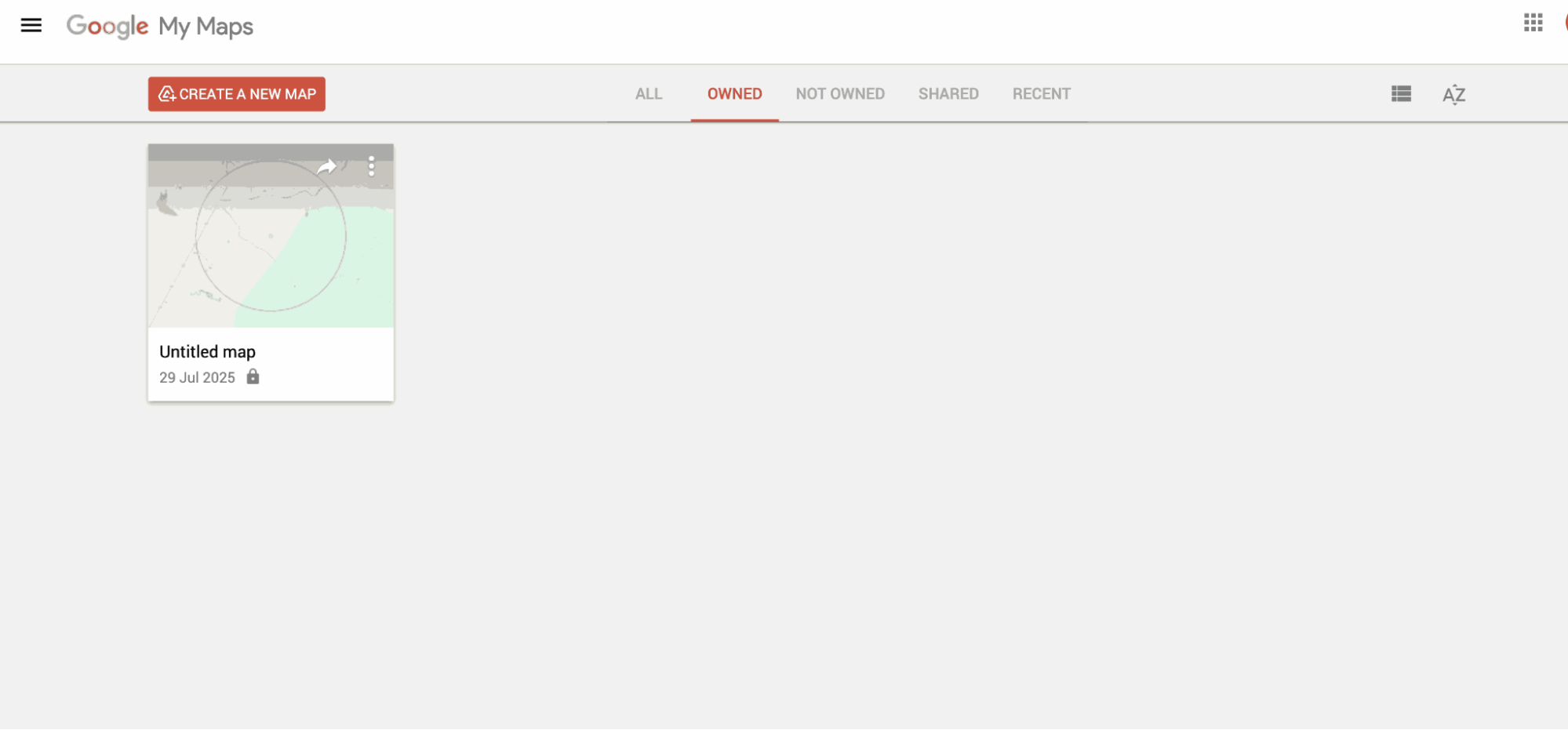
- Now, click on the “Import” button right below the layer’s name and import the KML file you downloaded earlier.
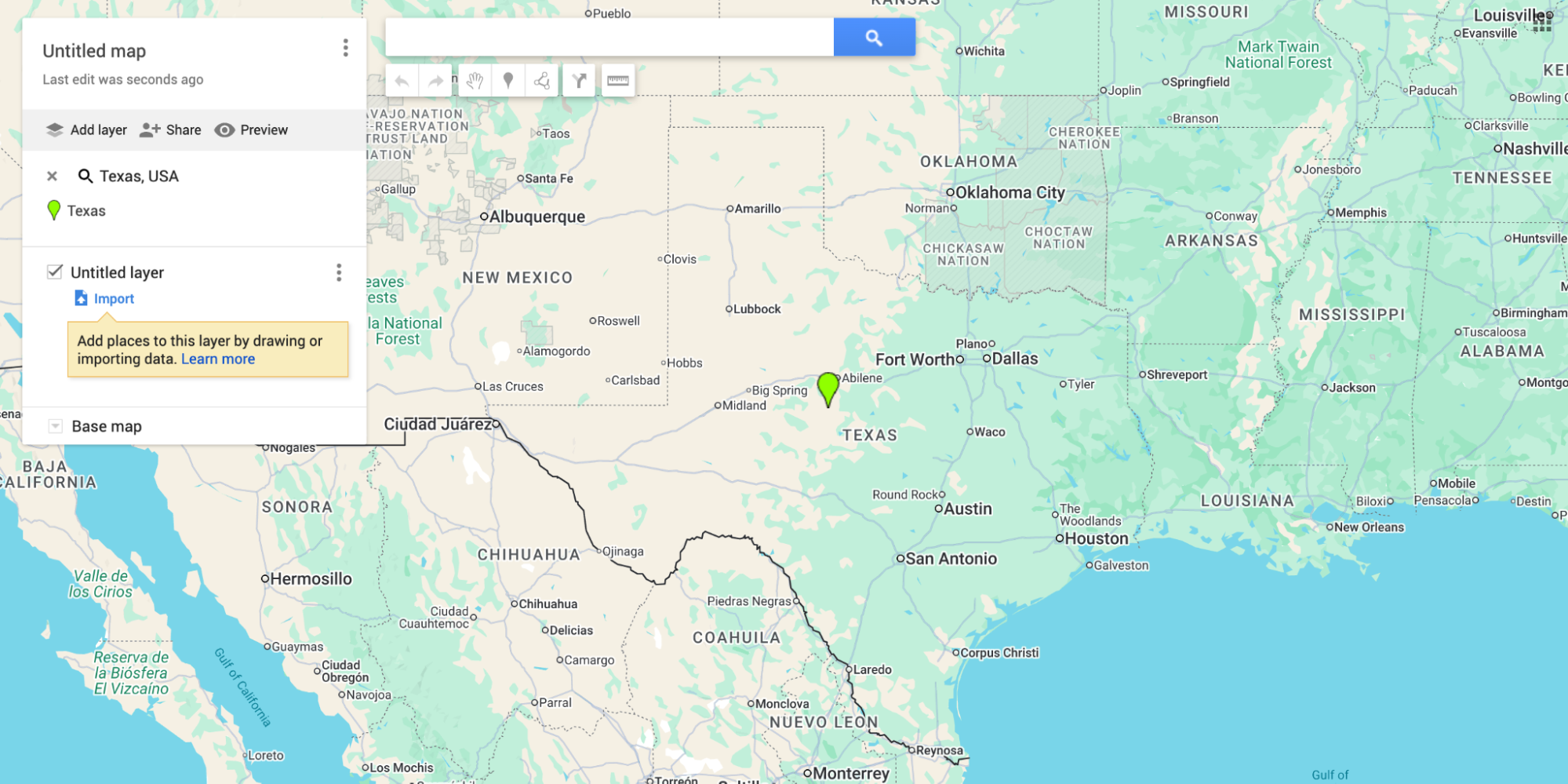
- As you upload the file, the maps will take you to the location of the coordinates you added and create a circle of the size you selected.
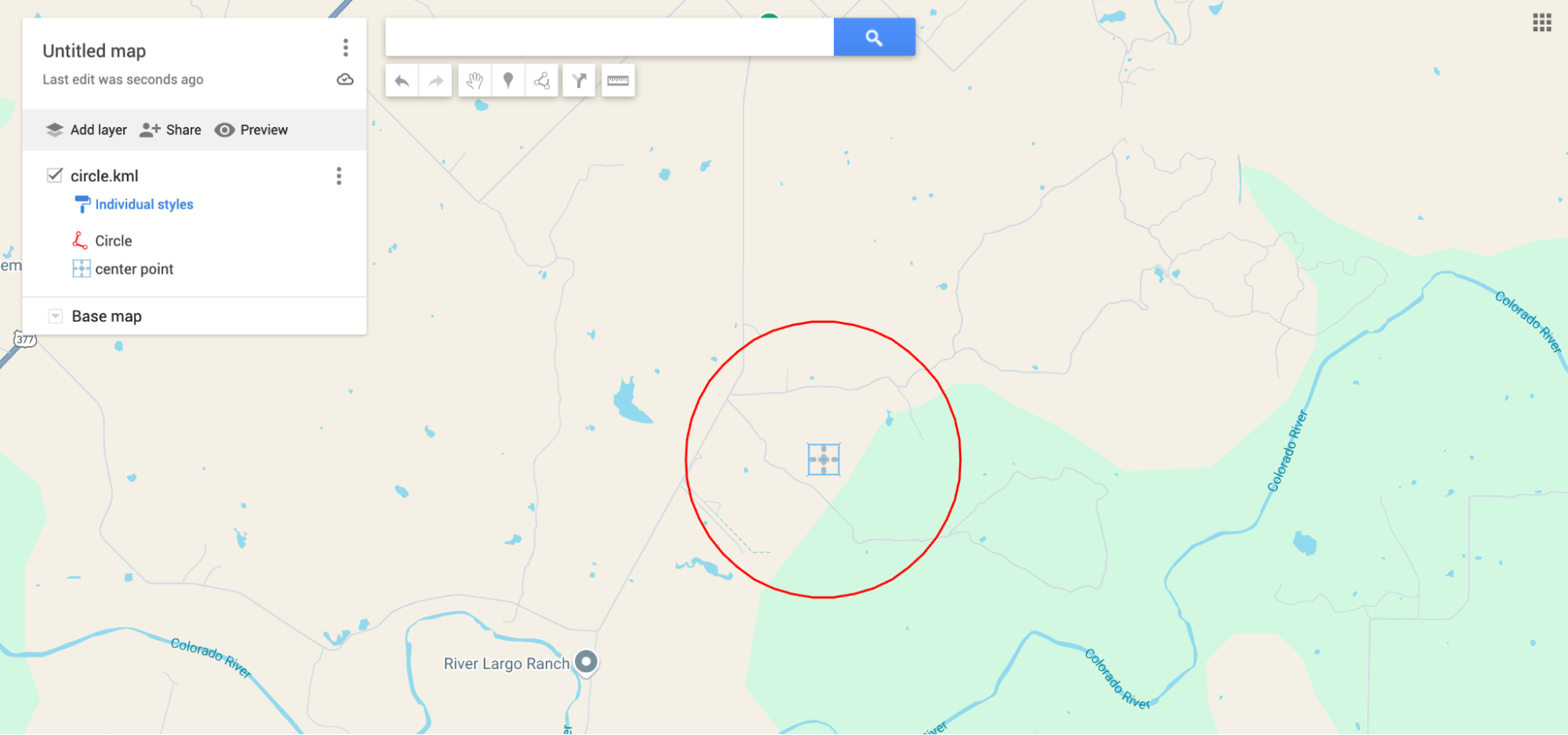
Now that you’ve made a custom radius on Google Maps, it’s ideal for organising delivery zones, service regions, or event borders.
Common Mistakes to Avoid When Mapping a Service Radius
Even with the right tools, businesses often run into avoidable errors when defining a radius on Google Maps. Here are a few pitfalls to watch for:
- Confusing straight-line distance with driving distance. A radius circle measures “as the crow flies,” not actual road distance. A 20-mile radius may take 45 minutes to drive in a city with heavy traffic, but only 20 minutes on rural highways. Always cross-check radius estimates against real drive times before setting delivery zones.
- Ignoring traffic patterns and road closures. Static radius circles don’t account for daily congestion, construction, or one-way streets, which can significantly affect how “reachable” an area really is at different times of day.
- Overestimating service capacity. A wider radius looks appealing on paper, but businesses need to consider whether they have enough drivers, vehicles, or inventory to realistically serve that entire area within promised timeframes.
- Not updating radius zones as the business grows. Many companies draw a service radius once and never revisit it, even as new warehouses, stores, or hubs come online. Reviewing radius zones quarterly helps keep delivery promises realistic.
- Skipping a review of local delivery regulations. Some municipalities have restrictions on delivery vehicle routes, weight limits, or hours of operation. The U.S. Department of Transportation publishes guidance on freight movement that’s useful for businesses planning multi-region delivery zones.
From Static Radius to Dynamic Route Planning
A radius circle is a helpful starting point for visualizing reach, but it’s a static snapshot — it doesn’t account for traffic, vehicle capacity, or multiple stops in sequence. Once a business identifies its service area using a radius on Google Maps, the next step is usually converting that area into an actual optimized route with real stops, time windows, and drivers assigned.
This is where dedicated route planning software becomes useful. Zeo Route Planner uses AI-powered route optimization to sequence stops within a defined service area, factoring in capacity-based routing and time window constraints so that drivers aren’t just working within a radius, but working through it efficiently. Businesses can also import bulk addresses from Excel, CSV, or Google Sheets to quickly build routes for an entire delivery zone instead of manually plotting each stop.
Conclusion
Drawing a radius or circle on Google Maps is a practical skill that can provide significant insights for various applications, from business and urban planning to personal use. Zeo Route Planner stands out as an ideal route-planing solution, offering seamless integration with Google Maps. You can power up your Google Maps navigation with Zeo and enhances operational efficiency and customer satisfaction.
Schedule a free demo with our experts to understand how Zeo will help you leverage Google Maps to optimize your route.
Frequently Asked Questions
Does Google Maps have a built-in radius tool?
Google Maps doesn’t offer a native “draw radius” button, but you can approximate one using the “Measure distance” feature to capture coordinates, then import a generated circle into Google My Maps. This workaround is why third-party KML tools remain popular for creating precise radius visualizations.
What’s the difference between a radius map and an actual driving-distance map?
A radius map shows straight-line (as-the-crow-flies) distance from a central point, while a driving-distance map reflects real road networks, speed limits, and traffic conditions. For delivery planning, driving-distance data is far more accurate since a 10-mile radius can mean vastly different travel times depending on terrain and congestion.
How do I determine the right delivery radius for my business?
Start by mapping your average delivery time goal (for example, 30 or 60 minutes) and test how far that translates on actual roads, not just straight-line miles. Factor in vehicle capacity, driver availability, and peak-hour traffic before finalizing a service zone, then revisit the radius quarterly as your business grows.
Can I use a Google Maps radius to plan multi-stop delivery routes?
A radius circle only shows a service area boundary — it doesn’t sequence stops or account for time windows. Zeo Route Planner converts that boundary into an optimized multi-stop route using AI-powered route optimization and capacity-based routing, helping delivery teams save 2+ hours daily compared to manual planning.
What tools can I use to draw a precise radius circle on a map?
Free tools like KML4Earth let you input latitude and longitude coordinates to generate a custom radius circle as a KML file, which can then be imported into Google My Maps. Other GIS tools and mapping platforms offer similar radius-drawing functions, often with additional layers for demographics or zoning data.
Are you a fleet owner?
Want to manage your drivers and deliveries easily?
Grow your business effortlessly with Zeo Routes Planner – optimize routes and manage multiple drivers with ease.
increase fuel savings
Hassle Free Deliveries & Pickups!
Optimize routes with our algorithm, reducing travel time and costs efficiently.
Get Started for Free