


Updated on: March 18, 2026
Reading Time: 4 minutes
TL;DR: Choosing between your own fleet versus contractual mile-based drivers depends primarily on delivery volume, available capital, and your need for operational control. Own fleets offer better control and branding but require significant upfront investment, while contractual drivers provide cost flexibility but less consistency. Route optimization tools like Zeo Route Planner address both models with flexible driver management and auto-assignment features, helping delivery teams save 2+ hours daily.
As a business owner, you need to take hundreds of decisions every day.
If your business delivers products, one of the biggest decisions you need to take is whether to hire your own fleet of drivers or to hire contractual mile-based drivers.
Both have their pros and cons and choosing the right one for your business can be key to its success. In this blog, we’ll look at the advantages and disadvantages of both the approaches and also provide you with factors to consider when choosing between the two.
What is meant by your own fleet of drivers?
Owning a fleet of drivers would mean that the drivers are employed by you full-time. They will be on your business’s payroll.
Advantages of having own fleet of drivers:
-
Control over driver training and behavior
When you have your own fleet of drivers, you have full control over the training provided to the drivers. You can ensure that they follow the behavior protocols and provide the best quality service to the customers as they will be representing your business.
-
Flexibility and availability
Having full-time drivers gives you the flexibility to create schedules as per your business needs. You can rely on your fleet in case any shipment needs to go out at short notice. You can also be sure of the availability of the drivers at all times.
-
Branding Opportunity
Owning your fleet can be used to build your brand’s identity. As drivers are the face of your business in front of the customer, you can ensure that they give a positive delivery experience to the customers. Putting your brand name and logo on the vehicles and delivery drivers’ uniforms can also be a way to create brand recognition.
Read more: How Can the Delivery Driver Training Help Your Drivers to be a Successful Delivery Driver
Disadvantages of owning a fleet of drivers:
-
High capital requirement
Setting up your own fleet requires huge capital for purchasing and maintaining the vehicles. Add to it the cost of hiring the drivers. You will have to pay the full-time drivers in lean periods also irrespective of their utilization.
-
Hiring drivers can be challenging
In today’s competitive business environment, finding the right drivers can be a challenging task. The HR team will have to develop processes for attracting, hiring, onboarding, training and retaining the drivers. While hiring the drivers you need to ensure that they have valid driving licenses and a clear record. Retaining the drivers is also important to keep hiring costs in check.
What is meant by hiring contractual mile-based drivers?
Contractual mile-based drivers are drivers who are hired on a contract basis and are not on your payroll. You only pay them for the miles they drive to deliver your products or services.
Advantages of contractual drivers:
Lower costs
Hiring contractual drivers is less expensive as you don’t need to purchase and maintain the vehicles. You also pay the drivers only when you utilize their services which can save you money during low-demand periods.Increase or decrease drivers as per requirement
With contractual mile-based drivers, you can have a more manageable workforce. Depending on the volume of deliveries, you can hire as many or as few drivers.No hiring processes needed
The involvement of the HR team will be limited in this case. They need not develop comprehensive processes as in the case of having your own fleet.
Disadvantages of contractual drivers:
-
Less control over driver behavior and training
As contractual drivers don’t work with you full-time, it is difficult to control their behavior or train them. This can lead to inconsistent quality of service and brand representation.
-
Limited availability and flexibility
You cannot be sure of their availability all the time. At times, there may be a shortage when you need them. During peak seasons, like the holiday season, it may be a bit difficult to increase your fleet of contractual drivers.
-
Understanding of technology and processes
Contractual drivers may not be well-versed with the technology and processes used by your business. It can lead to inefficiencies in the delivery process.
Factors to consider when making the choice:
It can be confusing to make a choice between owning your fleet of drivers vs contractual mile-based drivers. To make the decision, you need to take the below-mentioned factors into consideration:
-
Volume of deliveries
Is the volume of deliveries significant enough to justify the cost of having your own fleet of drivers? The volume should also be sufficient to keep the drivers engaged daily for their entire shift. If the volume is not enough to keep the drivers engaged throughout, then going for contractual drivers is a better option.
-
Availability of capital
Capital plays the most important role in making this decision. If you are operating at a smaller scale and don’t have enough capital at hand then you can go for contractual drivers. As the scale grows you can start building your own fleet and even operate with a hybrid model before fully owning the fleet.
-
Desired level of control over drivers and operations
If you want full control over the drivers and their training & behavior then having your own fleet makes sense.
-
Brand image and reputation considerations
The drivers represent your business in front of the customer. If you want to ensure a high-quality customer experience then that is possible with your own fleet. With contractual drivers, it is not possible to deliver consistent customer service.

increase fuel savings
Hassle Free Deliveries & Pickups!
Optimize routes with our algorithm, reducing travel time and costs efficiently.
Get Started for Free
Now that you are aware of the pros and cons of owning a fleet of drivers vs contractual mile-based drivers, you can make the right decision. Be sure to consider your business’s scale and requirements.
According to the Bureau of Labor Statistics, the delivery driver workforce is projected to grow significantly, making driver management decisions even more critical for businesses in 2026.
Any business having delivery operations invests in route optimization software. However, purchasing most route planners can get tricky because their pricing structures require you to buy accounts for your drivers.
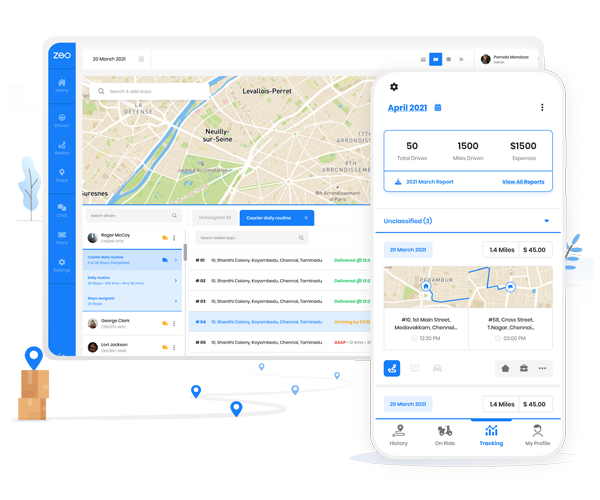
With the Zeo route planner, irrespective of whether you have your own fleet of drivers or contractual drivers, you can use it with ample pricing flexibility for both. You buy seats on a fleet instead of a permanent account for employees. Seats are easily switchable between drivers. This helps when contractual drivers change or even when permanent drivers move out!!Hop on a quick 30-minute call to learn how Zeo helps you save time and money!
Frequently Asked Questions
How do I calculate the break-even point between owned and contracted drivers?
Calculate your total cost per mile for owned drivers (vehicle payments, insurance, maintenance, wages, benefits) and compare it to contracted driver rates. Generally, if you have consistent daily delivery volumes that fully utilize owned drivers, the break-even typically occurs around 100-150 miles per driver per day, though this varies by market conditions.
What insurance considerations differ between owned fleets and contractual drivers?
With owned fleets, you need comprehensive commercial auto insurance, workers’ compensation, and liability coverage. Contractual drivers typically carry their own insurance, but you should verify coverage limits and consider additional liability protection to cover gaps in their policies.
Can hybrid models work effectively for delivery businesses?
Yes, many successful businesses use core owned drivers for consistent routes and supplement with contracted drivers during peak periods. This approach provides operational control while maintaining cost flexibility, especially effective for seasonal businesses or those with fluctuating delivery volumes.
How do route optimization tools handle mixed driver types?
Modern route planners like Zeo Route Planner use skill-based driver assignment and auto-assignment features to optimize routes regardless of driver employment status. The system assigns stops based on driver capabilities, vehicle capacity, and time windows, streamlining operations across 150+ countries for mixed fleet types.
What legal requirements apply to contracted versus employed drivers?
Employed drivers require full payroll compliance, overtime calculations, and benefit administration under Fair Labor Standards Act guidelines. Contracted drivers must meet independent contractor criteria to avoid misclassification issues, including controlling their own work methods and potentially serving multiple clients.
Are you a fleet owner?
Want to manage your drivers and deliveries easily?
Grow your business effortlessly with Zeo Routes Planner – optimize routes and manage multiple drivers with ease.
increase fuel savings
Hassle Free Deliveries & Pickups!
Optimize routes with our algorithm, reducing travel time and costs efficiently.
Get Started for Free