


Updated on: February 16, 2026
Reading Time: 2 minutes
TL;DR: Successful warehouse investment requires evaluating location, capacity, accessibility, and operational alignment with your distribution strategy. Proximity to transportation hubs and customer bases directly impacts delivery efficiency and operational costs. Route optimization tools like Zeo Route Planner address this with AI-powered route optimization and real-time GPS tracking, helping distribution teams save 2+ hours daily.
Investing in a new warehouse is smart for businesses that need additional space to store and distribute their products. Warehouses generally help optimize operations and increase overall productivity while providing an organized and secure setting for inventory management.
However, there are a lot of factors like warehouse location, purpose, staffing, and more to keep in mind before you invest in one. If you are looking for a new warehouse for your business, you are at the right place. Here, we will cover the major aspects you must consider before investing in a new warehouse.
Types of Warehouses
Before diving into the criteria for selecting a warehouse, let us explore the different types of warehouses to understand their purposes better.
- Manufacturing
This type of warehouse is primarily owned and operated by a manufacturing company. A manufacturing warehouse typically stores raw materials, in-process goods, and finished products. The location of such warehouses is ideally adjacent to a manufacturing facility. - Distribution
A company generally uses a distribution warehouse to store finished goods and distribute them—typically owned and operated by a third-party logistics operator or a business’s logistics department. The design and infrastructure of such a warehouse help efficiently manage inventory and facilitate the easy movement of goods. - Public
This type of warehouse provides handling and storage services to companies on a rental basis. Usually, a third-operator logistics operator owns and operates a public warehouse.
A public warehouse can be the ideal choice if you are operating a small-medium-sized business that doesn’t require a huge amount of space within a fixed budget. - Private
A private warehouse is owned and operated by a company for its own use. Large companies with a generous warehousing budget usually go for this type. It helps them maintain complete control over their inventory and provides adequate storage space. - Climate-Controlled
This warehouse type is designed to maintain a consistent temperature and humidity level. It is ideal for temperature-sensitive products like pharmaceuticals, packaged foods, and electronics. Such a warehouse uses air conditioning, heating, ventilation, and dehumidifier systems to maintain the climate-sensitive items properly.
Critical Things to Keep in Mind When Investing in a Warehouse
Here we will explore the top criteria you must remember regarding your business needs before investing in a warehouse.
- Purpose
This is the first criterion to consider when investing in a warehouse. This will help you consider a warehouse based on your requirements: manufacturing, storage, or distribution. A clear purpose will help you effectively plan the warehouse’s layout, size, and features for maximum functionality. - Location
A warehouse close to the primary transportation hubs such as highways, airports, and seaports can help facilitate the easy movement of goods. The proximity of the warehouse to the suppliers and customers and the availability of labor in the area are two more factors that need to be considered when looking for an ideal warehouse location. According to the Bureau of Labor Statistics, transportation costs can account for up to 60% of total logistics expenses, making location a critical factor in operational efficiency. - Capacity
The capacity of a warehouse is another significant criterion to consider. It should offer an adequate space to store and manage your inventory and meet all your storage needs. The height of your new warehouse should also be considered for the accommodation of shelving and racking systems. - Accessibility
The accessibility to your warehouse plays a key role in your business. A highly accessible warehouse will make loading and unloading items from trucks and other vehicles easier and have ample parking space for employees and visitors. Furthermore, the warehouse should have the provision for ramps, loading docks, and other loading and unloading equipment. - Staffing
You must consider if your existing employees will be sufficient or if you will need to hire new ones. Staffing is a major aspect when choosing a warehouse, as you will need to survey the availability of labor in the area along with the cost of labor. - Financing
Financing is a major aspect to keep in mind before investing in a warehouse. Consider whether you will be purchasing or leasing the property, and accordingly, go through the terms and conditions. Also, consider the taxes and cost of insurance associated with it. - Structural Condition
The thorough inspection of the structural condition and consideration of the age of the building plays a huge part in cutting down additional expenses. A warehouse with no major damage or issues will save money and allow easy renovations per your business needs. - Hazards
Potential hazards like flooding, fire, or other environmental hazards can pose a threat to your business. If you get a hint of such hazards, take the necessary steps to mitigate those risks. Furthermore, install safety systems such as smoke detectors, sprinklers, security systems, and more to ensure the safety of your employees.
How Technology Integration Enhances Warehouse Operations
Modern warehouse operations benefit significantly from technology integration, particularly in areas of inventory management and distribution planning. Department of Transportation data shows that efficient logistics systems can reduce operational costs by up to 15% annually. When evaluating warehouse investments, consider the facility’s capacity to support advanced tracking systems, automated processes, and integration capabilities with existing business software.
The physical infrastructure should accommodate modern logistics technologies that streamline operations from receiving to shipping. This includes adequate power supply for tracking systems, network connectivity for real-time data management, and space allocation for technology equipment that supports efficient warehouse-to-delivery workflows.
Strategic Location Analysis for Distribution Efficiency
Beyond basic proximity considerations, strategic location analysis involves evaluating demographic patterns, competitor positioning, and future market expansion opportunities. The ideal warehouse location serves as a hub that minimizes total distribution time while maximizing market coverage.
Consider traffic patterns, seasonal accessibility challenges, and regional regulations that might impact operations. A warehouse positioned to serve multiple markets efficiently often provides better long-term value than one optimized for current needs alone. This forward-thinking approach ensures your investment remains viable as business requirements evolve.
Bottomline
The warehouse is an important aspect of any business. The warehouse location, type, purpose, and capacity, along with a host of other factors that we have covered here, play a huge role in promoting business operations.

increase fuel savings
Save 2 Hours on Deliveries, Everyday!
Optimize routes with our algorithm, reducing travel time and costs efficiently.
Get Started for Free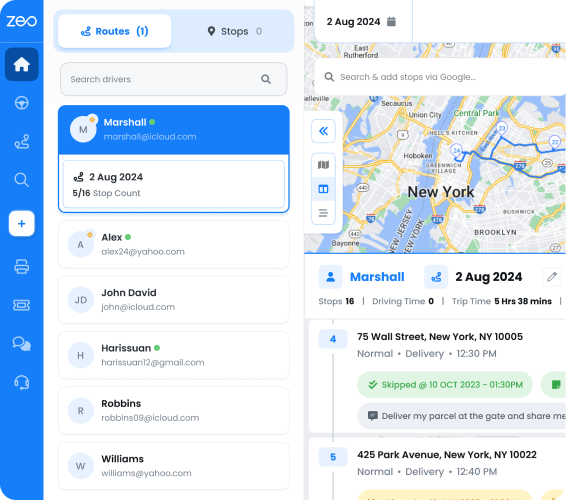
Before looking for one, consider all the criteria, as it will help you in the long run. Moreover, if you run a fleet of delivery vehicles and need to manage many drivers daily, consider checking out our product: Route Planner for Fleets. This product helps increase business productivity by assisting in driver and route management. You can book a demo today.
Read more: The Role of Route Optimization in E-Commerce Delivery.
For businesses managing complex delivery operations from multiple warehouse locations, delivery route optimization software becomes essential for coordinating efficient distribution strategies.
Frequently Asked Questions
What percentage of total logistics costs should warehouse location factor represent?
Warehouse location typically impacts 40-60% of total logistics costs through transportation expenses, labor availability, and operational efficiency factors. Strategic location selection near major transportation corridors can reduce these costs by up to 25% compared to remote facilities.
How do I calculate the right warehouse capacity for future growth?
Plan for 20-30% additional capacity beyond current inventory requirements to accommodate business growth over the next 3-5 years. Factor in seasonal demand fluctuations, new product lines, and market expansion plans when determining optimal warehouse size and storage configuration.
What safety regulations must warehouses comply with in 2026?
Warehouses must meet OSHA safety standards including proper ventilation, emergency exits, fire suppression systems, and worker safety protocols. Additional regulations may apply based on stored product types, such as hazardous materials handling or food safety requirements for consumable goods storage.
How can route optimization reduce warehouse operational costs?
Route optimization directly impacts warehouse efficiency by reducing loading dock congestion, minimizing vehicle idle time, and improving delivery scheduling accuracy. Zeo Route Planner’s auto-assignment feature and capacity-based routing help distribution teams coordinate more efficient warehouse-to-customer workflows, typically saving businesses over 2 hours daily in operational time.
What technology infrastructure should modern warehouses include?
Modern warehouses require robust internet connectivity, adequate electrical capacity for automated systems, and space for tracking technology integration. Essential infrastructure includes network capability for real-time inventory management, power supply for scanning and tracking equipment, and integration points for connecting warehouse management systems with delivery coordination platforms.
Are you a fleet owner?
Want to manage your drivers and deliveries easily?
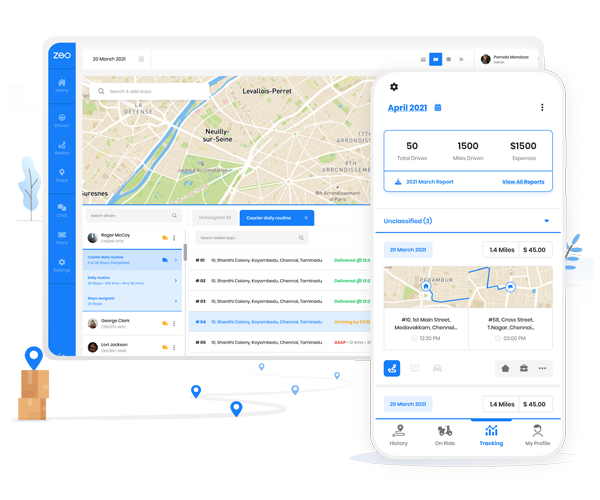
Grow your business effortlessly with Zeo Routes Planner – optimize routes and manage multiple drivers with ease.
increase fuel savings
Hassle Free Deliveries & Pickups!
Optimize routes with our algorithm, reducing travel time and costs efficiently.
Get Started for Free