



# HVAC Emergency Call Routing Software: Turn Crisis Into Profit
Your phone rings at 3 PM on a Tuesday. Another emergency HVAC call. Your dispatcher scrambles to find an available technician while your optimized morning routes fall apart.
Sound familiar? You’re not alone. HVAC companies handling emergency calls alongside scheduled maintenance face constant routing chaos. But what if those emergency calls could become your most profitable revenue stream instead of operational headaches?
Smart HVAC emergency call routing software transforms crisis management into competitive advantage. Here’s how to capture more emergency revenue while maintaining service quality.
The Hidden Cost of Emergency Call Chaos: Why HVAC Companies Lose $50K+ Annually
Emergency calls cost HVAC companies far more than missed appointments. The real damage happens in ways most owners never calculate.
Lost Revenue from Declined Calls
Your dispatcher receives five emergency calls during peak afternoon hours. With all technicians committed to scheduled routes, you decline three calls. Those declined emergencies typically pay 40-60% more than routine maintenance.
A single declined emergency call averages $400 in lost revenue. Decline just three calls weekly, and you’ve lost $62,400 annually. During peak seasons, that number doubles.
Overtime Costs from Poor Dispatch Decisions
Manual emergency dispatching creates expensive mistakes. Dispatchers send technicians across town for emergencies when closer technicians could handle the call. The result? Unnecessary overtime hours and fuel costs.
Companies with manual emergency routing spend 23% more on overtime compared to businesses using intelligent routing systems. For a 15-technician operation, that’s roughly $18,000 in avoidable overtime annually.
Customer Churn from Delayed Responses
Emergency HVAC situations create stressed customers. Every minute of delay increases the chance they’ll call your competitor next time.
Studies show customers switch HVAC providers after poor emergency experiences 67% of the time. Losing just one commercial customer costs an average of $12,000 in annual recurring revenue.
Schedule Disruption Ripple Effects
One poorly routed emergency call disrupts multiple scheduled appointments. Technicians arrive late to subsequent calls, creating customer dissatisfaction and reduced daily job completion rates.
Companies report completing 2-3 fewer jobs daily when emergency routing lacks optimization. Over a year, those missed appointments represent significant lost revenue.
Emergency Call Prioritization Matrix: Ranking Urgency vs Technician Availability
Not all emergency calls deserve equal treatment. Smart HVAC companies use structured prioritization to maximize response efficiency and revenue capture.
Tier 1: Critical Emergencies (Immediate Response)
- No heat/cooling in extreme weather
- Gas leaks or safety hazards
- Commercial facility total system failures
- Existing high-value customer emergencies
These calls justify pulling technicians from scheduled routes. The revenue potential and customer retention value outweigh schedule disruptions.
Tier 2: Urgent Calls (2-4 Hour Response)
- Partial system failures affecting comfort
- New customer equipment not working
- Intermittent problems during business hours
- Maintenance emergencies that prevent operations
Route these calls to technicians finishing current jobs within reasonable proximity. Avoid major route disruptions unless no alternatives exist.
Tier 3: Same-Day Preferred (End of Route)
- Comfort issues with temporary workarounds available
- Non-critical component failures
- Customer preference calls (not true emergencies)
- Follow-up emergency visits
Add these calls to existing routes when possible, or schedule for technicians with lighter daily loads.
Geographic Proximity Scoring
Your prioritization matrix should consider technician location alongside call urgency. A Tier 2 call becomes Tier 1 priority if a qualified technician is five minutes away versus 45 minutes.
Modern routing software calculates real-time technician locations and travel times. This data transforms emergency dispatching from guesswork into strategic decision-making.
Skill-Based Assignment Integration
Match emergency call complexity with technician expertise levels. Senior technicians handle complex commercial emergencies while newer team members manage straightforward residential calls.
This approach improves first-call resolution rates and reduces callbacks that waste time and damage customer relationships.
Real-Time Route Optimization: Efficiently Dispatching Teams to Multiple Crisis Calls
When multiple emergencies hit simultaneously, manual dispatching fails completely. Real-time route optimization keeps operations smooth during crisis periods.
Dynamic Route Recalculation
Traditional routing creates static daily schedules. Emergency calls require dynamic recalculation that considers current technician locations, remaining scheduled stops, and optimal insertion points for urgent calls.
When emergency calls arrive, intelligent route optimization software instantly recalculates all affected routes. Technicians receive updated routes directly on their mobile devices, complete with turn-by-turn navigation and customer details.
Cascading Schedule Adjustments
Smart emergency routing minimizes schedule disruptions through cascading adjustments. Instead of destroying one technician’s entire route, the system distributes minor delays across multiple technicians.
For example, when Tech A handles an emergency, the system might reassign one of their afternoon appointments to Tech B who’s running ahead of schedule. This approach maintains overall service commitments while accommodating urgent needs.
Multi-Emergency Coordination
During peak emergency periods, coordination becomes critical. Weather events or widespread equipment failures can generate dozens of emergency calls within hours.
Effective emergency routing software manages multiple simultaneous emergencies by:
- Prioritizing calls by urgency and revenue potential
- Optimizing technician assignments to minimize total response time
- Identifying opportunities to handle multiple nearby emergencies efficiently
- Maintaining communication between dispatch, technicians, and customers
Real-World Example: Summer Heat Wave Response
Johnson HVAC faced 18 emergency calls during a July heat wave. Their emergency routing system prioritized calls by customer value and technician proximity.
The system identified three clusters of emergency calls and assigned dedicated technicians to each area. Instead of crisscrossing the service territory, technicians handled multiple emergencies efficiently within geographic zones.
Result: 16 of 18 emergencies resolved same-day, with only 2 scheduled appointments rescheduled. Emergency revenue that day exceeded $8,000 with minimal schedule disruption.
Integration Playbook: Connecting Call Routing with Dispatch and Route Planning Systems
Emergency routing efficiency depends on seamless system integration. Disconnected tools create information gaps that slow response times and increase errors.
CRM Integration for Customer Context
When emergency calls arrive, dispatchers need instant access to customer history, equipment details, and service contracts. Integration with your CRM system provides this context immediately.
Key data points for emergency routing decisions:
- Customer service tier and contract terms
- Equipment age, make, and model
- Previous service history and common issues
- Site access requirements and special instructions
This information helps dispatchers assign appropriate technicians and set accurate customer expectations.
Inventory Management Connection
Emergency calls often require specific parts or equipment. Integration with inventory management systems helps dispatchers identify which technicians carry needed components.
Smart routing considers parts availability when assigning emergency calls. Sending a technician without required components wastes time and delays resolution.
Communication Platform Integration
Customers need updates during emergency situations. Integration with communication platforms enables automated notifications about technician arrival times, delays, and service completion.
These automated touchpoints reduce inbound calls to dispatchers and improve customer satisfaction during stressful situations.
Scheduling System Synchronization
Emergency routing changes must sync with your main scheduling system to prevent double-bookings and maintain accurate customer records.
Real-time synchronization ensures all stakeholders have current information, from dispatchers to technicians to customer service representatives.
Mobile App Functionality

increase fuel savings
Hassle Free Deliveries & Pickups!
Optimize routes with our algorithm, reducing travel time and costs efficiently.
Get Started for Free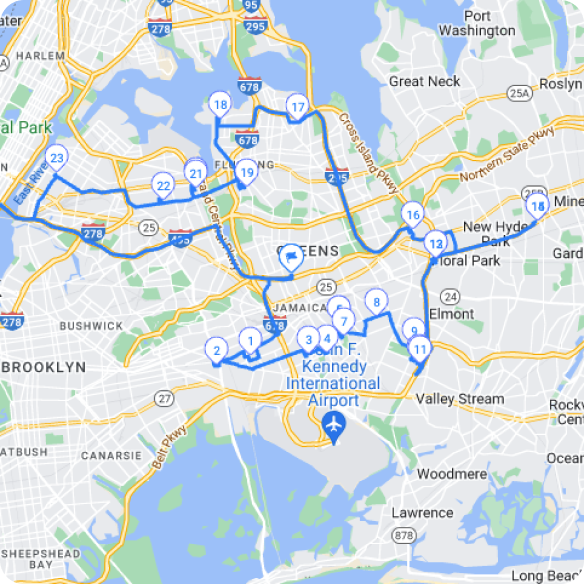
Technicians need emergency route updates instantly delivered to their mobile devices. When dispatchers add emergency calls, technicians should receive notifications with updated routes, customer information, and special instructions.
Modern field service management platforms like Zeo Route Planner deliver optimized routes directly to technician phones, allowing seamless navigation between scheduled and emergency calls without returning to the office for updated paperwork.
Peak Season Scaling: Managing 10x Emergency Volume During Weather Extremes
Extreme weather events can increase emergency call volume by 1000% overnight. Companies without scalable emergency routing systems miss enormous revenue opportunities.
Surge Capacity Planning
Develop predetermined protocols for activating surge capacity during extreme weather events. This includes:
- On-call technician activation procedures
- Overtime authorization thresholds
- Emergency parts procurement processes
- Extended service hour policies
Smart companies prepare surge capacity plans before peak season arrives, not during the crisis.
Geographic Zone Management
During high-volume emergency periods, divide your service territory into zones and assign dedicated teams to each area. This prevents technicians from wasting time crossing territories and maximizes service density.
Zone-based emergency response reduces average response times by 35% during peak periods while increasing daily call completion rates.
Contractor Network Activation
Build relationships with qualified subcontractors before peak season. When emergency volume exceeds internal capacity, route overflow calls to trusted partners.
Maintain quality control through:
- Pre-approved contractor vetting
- Standardized service protocols
- Customer communication consistency
- Revenue sharing agreements that motivate performance
Dynamic Pricing Implementation
Peak emergency periods justify premium pricing. Implement dynamic pricing that reflects demand levels and service urgency while remaining competitive.
Higher emergency rates during peak periods improve profit margins and help fund additional technician capacity for improved service levels.
Example: Winter Storm Emergency Response
Arctic Air HVAC prepared for winter storms by pre-positioning emergency supplies and activating surge capacity protocols when temperatures dropped below zero.
Their AI-powered route optimization system managed 47 no-heat calls over 48 hours by:
- Prioritizing elderly customers and families with young children
- Routing technicians efficiently through geographic zones
- Coordinating with three partner contractors for overflow calls
- Maintaining 4-hour average response times despite extreme volume
Revenue during the two-day emergency period exceeded their typical weekly total, with 94% customer satisfaction scores.
ROI Calculator: Emergency Response Efficiency vs Revenue Capture
Measuring emergency routing ROI requires tracking multiple revenue and cost factors that manual systems often miss.
Revenue Capture Improvements
Calculate current emergency call decline rates and average revenue per emergency call. Smart routing typically enables companies to accept 40-60% more emergency calls with existing technician capacity.
Monthly emergency revenue increase = (Additional accepted calls × Average emergency call value)
For a company declining 12 emergency calls monthly at $400 average value, improved routing could capture $4,800 in additional monthly revenue.
Response Time Revenue Impact
Faster emergency response correlates directly with customer retention and referral generation. Companies with sub-2-hour average emergency response times see 23% higher customer lifetime values.
Track customer retention rates for emergency service calls and calculate the long-term revenue impact of improved response times.
Overtime Cost Reduction
Efficient emergency routing reduces unnecessary overtime through optimized technician assignments and route planning. Track overtime hours specifically attributable to emergency calls.
Most companies see 15-25% reduction in emergency-related overtime costs within 60 days of implementing automated route planning systems.
Schedule Efficiency Maintenance
Calculate how emergency calls currently impact scheduled appointment completion rates. Improved emergency routing should maintain scheduled service quality while accommodating urgent needs.
Track daily scheduled appointment completion percentages before and after implementing emergency routing improvements.
Customer Acquisition Cost Impact
Emergency service calls often convert to recurring maintenance customers. Track conversion rates from emergency calls to ongoing service contracts.
Companies with efficient emergency response systems see 31% higher conversion rates from emergency calls to regular customers.
Total ROI Calculation Example
MidState HVAC tracked their emergency routing ROI over six months:
Monthly Benefits:
- Additional emergency revenue captured: $6,400
- Overtime cost reduction: $2,100
- Improved customer retention value: $1,800
- New customer acquisitions from emergencies: $3,200
- Total monthly benefit: $13,500
Annual ROI: $162,000 in measurable improvements
The investment in emergency routing software paid for itself within 45 days, with ongoing monthly benefits exceeding $13,000.
Frequently Asked Questions
Q: What is HVAC emergency call routing software?
HVAC emergency call routing software is a specialized tool that automatically assigns urgent service calls to the most appropriate technicians based on location, skills, and availability. It optimizes routes in real-time to minimize response times while maintaining scheduled service appointments.
Q: How much can HVAC companies save with emergency routing software?
HVAC companies typically save $50,000+ annually by reducing declined emergency calls, overtime costs, and schedule disruptions. Zeo Route Planner users report capturing 40-60% more emergency revenue while reducing emergency-related overtime by 15-25%.
Q: Can emergency routing software integrate with existing HVAC dispatch systems?
Yes, most modern emergency routing solutions integrate with CRM systems, inventory management, and scheduling platforms. This ensures dispatchers have complete customer context and technicians receive updated routes instantly on their mobile devices.
Q: How does emergency call prioritization work in routing software?
Emergency calls are typically ranked using a matrix that considers urgency level, customer value, and technician proximity. Critical emergencies like gas leaks get immediate response, while comfort issues may be routed to technicians finishing nearby jobs.
Q: What features should I look for in HVAC emergency routing software?
Essential features include real-time GPS tracking, dynamic route recalculation, skill-based technician assignment, customer notification capabilities, and mobile app integration. Zeo Route Planner offers all these features plus AI-powered optimization that saves technicians 2+ hours daily.
Transform Emergency Chaos Into Competitive Advantage
Emergency HVAC calls don’t have to disrupt your operations. With intelligent emergency call routing software, those urgent calls become your most profitable revenue opportunities.
Companies using optimized emergency routing capture 40-60% more emergency revenue while maintaining scheduled service quality. They respond faster, satisfy more customers, and build stronger market reputations.
Your competitors are losing money on emergency call chaos. You can capture that revenue instead.
Ready to turn emergency calls into profit centers? Start your 7-day free trial with Zeo Route Planner to see how intelligent routing transforms HVAC emergency response from operational headache into competitive advantage.
Are you a fleet owner?
Want to manage your drivers and deliveries easily?
Grow your business effortlessly with Zeo Routes Planner – optimize routes and manage multiple drivers with ease.
increase fuel savings
Hassle Free Deliveries & Pickups!
Optimize routes with our algorithm, reducing travel time and costs efficiently.
Get Started for Free