

# Pest Control Route Optimization Software: The Complete Guide to 40% Higher Daily Capacity
Managing routes for a pest control business is more complex than most people realize. You’re juggling residential treatments, commercial contracts, emergency calls, and seasonal demand spikes that can triple your service volume overnight. Effective route optimization becomes crucial when pest control route optimization software can make or break your operational efficiency.
If you’re still planning routes manually, you’re leaving serious money on the table. The right pest control route optimization software can increase your daily service capacity by 40% while cutting fuel costs and making your customers happier with predictable arrival times.
Let’s break down exactly how to optimize your pest control routing and what tools you need to make it happen.
The Hidden Costs of Inefficient Pest Control Routing: Why Manual Planning Is Killing Your Profits
Manual route planning feels manageable when you’re running 3-4 technicians. But as you scale to 10+ vehicles, the hidden costs start destroying your profit margins.
Time Waste Adds Up Fast
Your operations manager spends 1-2 hours every morning planning routes. That’s 250-500 hours per year just on route planning. At $25 per hour, you’re looking at $6,250-$12,500 in pure labor waste annually.
But time isn’t the only cost. Manual planning creates inefficient routes that zigzag across your service area. Your technicians waste time driving between jobs instead of treating properties.
Fuel Costs Spiral Out of Control
Poor routing increases daily mileage by 25-30% on average. If each technician drives 100 miles per day normally, inefficient routes push that to 125-130 miles. With 10 technicians and current fuel prices, that extra mileage costs you $15,000-$20,000 per year.
Missed Revenue Opportunities
Here’s the killer: inefficient routes reduce how many properties each technician can service daily. If better routing lets your team handle just 2 more stops per day per technician, that’s massive revenue growth.
Consider this scenario: 10 technicians completing 2 additional $75 residential treatments daily equals $1,500 extra revenue per day. Over a year, that’s $390,000 in additional income.
Customer Satisfaction Problems
Manual routing makes it nearly impossible to give customers accurate arrival windows. You end up with “we’ll be there between 9 AM and 3 PM” appointments that frustrate homeowners who need to stay home all day.
Late arrivals damage your reputation. Unpredictable scheduling makes it harder to retain commercial accounts that need treatments during specific hours.
Complete ROI Calculator: How Route Optimization Impacts Your Pest Control Bottom Line
Let’s calculate the real financial impact of route optimization for a typical 10-technician pest control operation.
Cost Savings
Manual planning time saved: 2 hours daily × 250 working days × $25/hour = $12,500/year
Fuel cost reduction (25% savings on 100 miles daily per tech): $18,200/year
Reduced overtime from better scheduling: $8,000/year
Total Annual Savings: $38,700
Revenue Increases
Additional daily capacity (2 extra stops per tech × $75 average): $390,000/year
Improved customer retention (5% increase): $45,000/year
Emergency service capability (3 extra calls weekly × $125): $19,500/year
Total Annual Revenue Increase: $454,500
Combined ROI Impact: $493,200
Even if you capture just 20% of these improvements, you’re looking at nearly $100,000 in annual benefit. Route optimization software typically costs $50-$100 per vehicle monthly, making this one of the highest-ROI investments in your business.
Seasonal Route Optimization: Managing Peak Season Efficiency vs Off-Season Profitability
Pest control demand fluctuates dramatically throughout the year. Spring brings a 3-4x increase in service requests as insects become active and homeowners notice problems. AI route optimization becomes essential for managing these seasonal variations effectively.
Peak Season Challenges
During busy months, you’re adding temporary technicians, working longer hours, and scrambling to handle the volume. Manual routing becomes impossible when you’re trying to schedule 200+ daily stops across 15+ vehicles.
Route optimization software adapts to volume changes automatically. Upload your daily service list, set technician work hours and skills, and get optimized routes in minutes instead of hours.
Off-Season Strategy
Winter months require different optimization goals. You’re focused on maximizing profitability per mile driven rather than handling maximum volume. The software can prioritize high-value commercial accounts and cluster residential services in specific neighborhoods to minimize travel time.
Skill-Based Routing
Some treatments require specialized training or equipment. Commercial accounts might need certified technicians for specific pest control methods. Route optimization software can assign jobs based on technician qualifications automatically.
This prevents costly mistakes like sending an uncertified tech to a commercial account that requires specific credentials for compliance.
Essential Features Every Pest Control Route Optimization Software Must Have
Not all routing software works well for pest control operations. Here are the must-have features for your industry, especially when evaluating comprehensive field service management solutions.
Time Window Support
Commercial accounts often require treatments during specific hours. Restaurants need service before opening or after closing. Office buildings might restrict treatments to evenings or weekends.
Your software must handle these constraints while optimizing overall route efficiency. Look for platforms that let you set different time windows for different customer types.
Priority Stop Management
Emergency calls and high-value accounts need priority routing. When a restaurant discovers a roach problem during health inspection prep, that becomes your top priority.
The software should let you adjust priorities in real-time and automatically reoptimize routes to accommodate urgent requests.
Mobile App for Technicians
Your technicians need turn-by-turn navigation, customer information, and the ability to update job status from their phones. Manual paperwork slows down routes and creates administrative headaches.
Look for solutions that include mobile apps with GPS tracking, photo capture for before/after documentation, and customer signature collection for service completion verification.
Real-Time Route Adjustments
Routes change throughout the day. Customers reschedule, emergency calls come in, and equipment problems can delay technicians. Your software needs to handle these changes without forcing you to rebuild entire routes from scratch.
Customer Communication
Automated customer notifications improve satisfaction and reduce no-shows. The software should send appointment confirmations, arrival notifications, and completion summaries without manual intervention.
Live tracking links let customers see exactly when their technician will arrive, reducing phone calls to your office and improving the overall service experience.
Multi-Technician Fleet Optimization: Strategies for Managing 10+ Vehicle Operations
Managing routes for large pest control fleets requires different strategies than small operations. Here’s how to optimize multi-technician scheduling effectively using automated route planning systems.
Zone-Based Routing

increase fuel savings
Save 2 Hours on Deliveries, Everyday!
Optimize routes with our algorithm, reducing travel time and costs efficiently.
Get Started for Free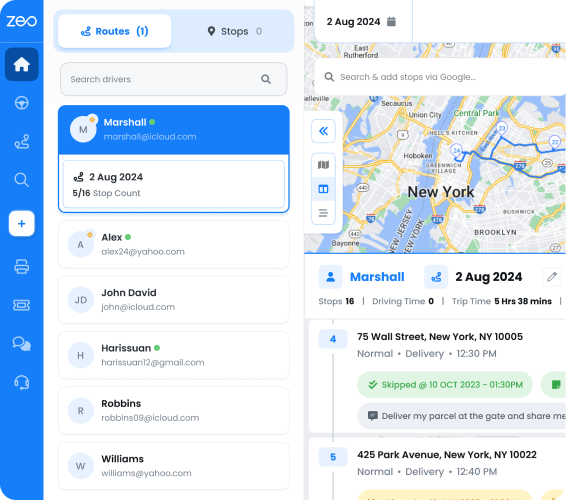
Divide your service area into zones and assign technicians to specific regions. This creates familiarity with local customers and reduces cross-town driving between jobs.
However, pure zone-based routing can create imbalances during busy periods. Use route optimization software to maintain zone assignments while allowing flexibility for load balancing between technicians.
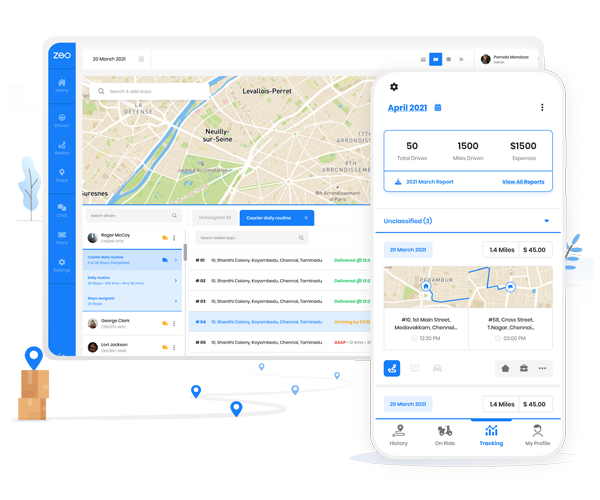
Fleet managers can plan and assign optimized routes through the web platform while technicians receive their daily schedules directly on their mobile devices. When emergency calls require route adjustments, managers can update assignments in real-time, and technicians get instant notifications about changes through the mobile app.
Skill-Based Assignment
Different pest problems require different expertise levels. Termite treatments need specialized knowledge. Bed bug elimination requires specific equipment and procedures.
Tag your technicians with relevant skills and certifications in the software. When planning routes, the system automatically assigns appropriate jobs to qualified team members.
Load Balancing
Avoid situations where some technicians finish early while others work overtime. Route optimization software can distribute jobs evenly based on treatment duration estimates and drive times.
Monitor daily performance through software analytics to identify technicians who consistently finish early or late. Adjust job assignments and time estimates based on actual performance data.
Vehicle Capacity Planning
Different jobs require different equipment loads. A routine residential spray treatment needs basic equipment. A commercial restaurant treatment might require specialized tools and chemicals.
Factor vehicle capacity and equipment requirements into route planning to ensure technicians have everything needed for their assigned jobs.
Integration Guide: Connecting Route Optimization with Popular Pest Control CRM and Billing Systems
Route optimization software works best when integrated with your existing pest control business systems. Here’s how to connect everything seamlessly using modern fleet management software platforms.
CRM Integration Benefits
Your customer relationship management system contains crucial routing information: customer addresses, service history, preferred appointment times, and special access instructions.
Direct CRM integration eliminates manual data entry. Upload daily service schedules from your CRM directly into the routing software. Customer information, treatment notes, and billing details flow automatically to technician mobile devices.
Common Integration Options
Most route optimization platforms offer integration through APIs or third-party connectors like Zapier. Popular pest control software like PestPac, ServSuite, and Briostack often have direct integrations available.
For platforms like Zeo Route Planner, you can connect with over 1,000 applications through Zapier, making it easy to sync customer data from virtually any pest control CRM system.
Billing System Connections
Completed service information needs to flow back to your billing system for invoice generation. Look for route optimization software that can automatically update job status, time stamps, and service notes in your accounting platform.
This eliminates double data entry and ensures accurate billing based on actual service completion times and any additional treatments performed.
Data Synchronization Best Practices
Set up automated data syncs to run overnight or during slow periods. This ensures route planning starts each day with current customer information and completed jobs are billed promptly.
Test integrations thoroughly with a small subset of data before rolling out to your entire operation. Data errors in routing can create expensive mistakes and customer service problems.
Emergency Service Integration: Optimizing Same-Day Pest Control Requests Without Disrupting Scheduled Routes
Emergency pest control calls are both an opportunity and a challenge. They generate high-margin revenue but can destroy carefully planned routes if handled poorly.
Emergency Call Prioritization
Not all emergency calls are truly urgent. A wasp nest near a playground requires immediate attention. A few ants in an office kitchen can usually wait until the next business day.
Develop clear criteria for same-day emergency service. High-priority situations include health hazards, safety risks, and situations affecting business operations. Medium-priority calls can often be scheduled for next-day service at premium pricing.
Dynamic Route Optimization
When accepting emergency calls, you need to minimize disruption to existing routes. Advanced route optimization software can calculate the best insertion point for emergency stops while considering time windows for scheduled appointments.
The software shows you exactly how adding an emergency call affects each technician’s route. You can see delayed appointments, overtime implications, and total additional drive time before committing to same-day service.
Customer Communication for Changes
When emergency calls force schedule changes, proactive customer communication prevents problems. Automated notification systems can immediately alert affected customers about appointment delays with new estimated arrival times.
Transparency builds trust. Customers understand that genuine emergencies sometimes affect scheduling, but they appreciate advance notice rather than discovering delays when technicians arrive late.
Emergency Service Pricing
Same-day emergency calls should command premium pricing to offset routing disruption and potential overtime costs. Many pest control companies charge 50-100% more for genuine emergency service.
Factor these premium rates into your emergency acceptance decisions. A high-margin emergency call might justify some route inefficiency, while a standard-rate “emergency” probably doesn’t.
Geographic Considerations
Accept emergency calls strategically based on technician locations. An emergency near an existing route creates minimal disruption. An emergency across town from all scheduled stops might require declining or charging extremely high rates to justify the expense.
Route optimization software with live GPS tracking shows real-time technician locations, making it easy to identify who can handle emergency calls most efficiently.
Frequently Asked Questions
Q: How much does pest control route optimization software typically cost?
Most pest control route optimization software costs between $15-100 per vehicle per month, depending on features and fleet size. Zeo Route Planner offers a free tier with 12 routes monthly, with premium plans starting at $15.99/month, making it accessible for small to large pest control operations.
Q: Can route optimization software handle emergency pest control calls?
Yes, modern route optimization software can dynamically adjust routes to accommodate same-day emergency calls while minimizing disruption to scheduled appointments. The software calculates the best insertion points and automatically notifies affected customers of any schedule changes.
Q: What’s the average ROI for pest control companies using route optimization software?
Pest control companies typically see 300-500% ROI within the first year by reducing fuel costs by 25%, increasing daily service capacity by 2-3 stops per technician, and saving 1-2 hours of manual planning time daily. The software pays for itself within 2-3 months for most operations.
Q: Does route optimization software integrate with existing pest control CRM systems?
Most professional route optimization platforms offer integrations with popular pest control software like PestPac and ServSuite through APIs or tools like Zapier. Zeo Route Planner connects with over 1,000 applications, making it easy to sync customer data from virtually any pest control management system.
Q: How does route optimization handle technician skills and certifications?
Advanced route optimization software allows you to tag technicians with specific skills, certifications, and equipment capabilities, then automatically assigns appropriate jobs to qualified team members. This ensures compliance requirements are met and prevents costly mistakes from sending uncertified technicians to specialized treatments.
Ready to transform your pest control routing from a daily headache into a competitive advantage? Start your free trial of Zeo Route Planner to see how pest control companies are increasing daily capacity by 40% while cutting fuel costs. Join over 1.5 million users who’ve discovered smarter routing leads to bigger profits.
Are you a fleet owner?
Want to manage your drivers and deliveries easily?
Grow your business effortlessly with Zeo Routes Planner – optimize routes and manage multiple drivers with ease.

increase fuel savings
Save $200 on fuel, Monthly!
Optimize routes with our algorithm, reducing travel time and costs efficiently.
Get Started for Free