

Updated on: March 24, 2026
Reading Time: 4 minutes
TL;DR: USPS drivers earn between $42,000-$56,000 annually as of 2026, with entry-level positions starting at $19-21 per hour. Federal benefits, overtime opportunities, and job security make these government postal positions more stable than gig delivery work. Route optimization tools like Zeo Route Planner address delivery efficiency challenges with AI-powered route optimization and real-time GPS tracking, helping logistics teams save 2+ hours daily.
If you’ve ever wondered what it takes to drive for the United States Postal Service, you’re not alone. In 2026, logistics will form the core of every fast-scaling operation for delivery jobs. Especially mail carriers are getting fresh attention.
The USPS driver role is one of the few government-backed jobs that offer consistency, benefits, and the kind of structure gig drivers often wish they had.
So, if you’re looking to understand exactly how much USPS drivers earn, how the job works, and what it takes to get started, you’re in the right place.
We’ll find out how people land the role and what kind of hours we’re talking about.
How to Become a USPS Driver in 2026
There is no need for a logistics degree or a commercial trucking background to start delivering USPS packages.
What you do need is consistency, a clean record, and the willingness to follow protocol.
Here’s how it works.
Step 1: Meet the Basic Requirements
Before anything else, make sure you tick these boxes:
- Minimum age: 18 years
- Hold a valid state-issued driver’s license
- Pass a background check
- Clear a medical assessment that confirms you’re fit for duty.
These are the common prerequisites you must meet, as they ensure every USPS driver is ready to handle the responsibility of moving federal mail.
Step 2: Apply Through the Official Portal
All USPS jobs are listed on USPS Careers.
You need to search for roles like City Carrier Assistant (CCA) or Rural Carrier Associate (RCA) based on your location.
Once you apply:
- You’ll be scheduled for a road test
- There’s a need for you to pass the USPS Defensive Driving Course
- A thorough background screening and drug test will follow
Step 3: Know What Type of License You Need
For most city and rural routes, your regular driver’s license will work just fine.
However, if you’re applying for roles like:
- Motor Vehicle Operator (MVO)
- Tractor Trailer Operator (TTO)
Then, a Commercial Driver’s License (CDL) might be necessary. USPS typically looks for Class A or B for heavy vehicle operations.
USPS Driver Roles to Explore
Here’s a quick breakdown of the common driving jobs USPS offers:
- City Carrier Assistant (CCA): Delivers mail in urban areas, often on foot or using USPS vehicles
- Rural Carrier Associate (RCA): Covers routes in suburban and rural areas
- Motor Vehicle Operator (MVO): Drives larger postal vehicles within distribution networks
- Tractor Trailer Operator (TTO): Responsible for handling long-haul transport between regional USPS hubs
Each role plays a different part in the ecosystem, but all are essential to getting mail delivered on time.
Career Advancement Opportunities in USPS
The postal service offers structured career progression that private delivery companies often can’t match. Starting as a CCA or RCA provides a pathway to full-time career positions with enhanced benefits and job security.
Career carriers can advance to supervisory roles, postmaster positions, or specialized operations like mail processing facilities. The Bureau of Labor Statistics notes that postal workers have strong union representation and clearly defined advancement tracks based on seniority and performance.
Many drivers also transition into training roles, helping new hires learn efficient route management and safety protocols. This experience becomes valuable for those interested in optimizing delivery operations in the private sector.
How Much Does a USPS Driver Make in 2026?
Mail delivery may look simple from the outside, but USPS drivers hold a frontline role that keeps American neighborhoods and businesses connected. Beyond public service, these positions offer reliable income, federal benefits, and a predictable work structure.
Let’s get to the core: how much USPS drivers earn, from new hires to seasoned route carriers.
Average Annual and Hourly Pay (United States)
The national average for a USPS driver in 2026 sits between $42,000 and $56,000 per year, according to Ziprecruiter.

increase fuel savings
Save $200 on fuel, Monthly!
Optimize routes with our algorithm, reducing travel time and costs efficiently.
Get Started for Free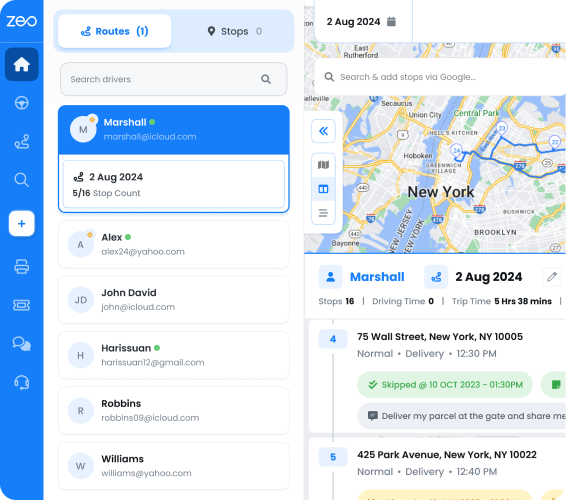
This range reflects full-time city and rural carriers with at least two years of experience. Drivers operating government-owned vehicles and handling high-volume deliveries tend to fall on the higher end of the pay spectrum.
Entry-Level Pay: What New Drivers Start With
New USPS drivers typically begin their journey in roles such as City Carrier Assistant (CCA) or Rural Carrier Associate (RCA).
Starting Pay
As of 2026, most entry-level drivers earn between $19 and $21 per hour. Rural routes in low-density areas may begin closer to the lower end, while urban-heavy regions with complex delivery paths offer slightly more.
Path to Higher Pay
These roles are considered non-career positions initially.
However, USPS promotes from within. CCAs and RCAs who maintain consistent performance often secure full-time status within 12 to 24 months, leading to a boost in hourly wages and access to federal benefits.
Earning Potential Through Overtime
Working beyond the regular shift brings in additional income.
USPS drivers are often eligible for:
- Time-and-a-half after 8 hours a day or 40 hours a week
- Holiday pay differentials during federal holiday operations
- Weekend premium pay in select regions or during seasonal surges
According to feedback from current carriers on Glassdoor, overtime can increase annual take-home pay by as much as $5,000 to $10,000, especially during peak months like November and December.
Impact of Location on Pay
Wages fluctuate based on the cost of living and urban demand. For example:
- In California, drivers report average earnings closer to $27 per hour, particularly in San Francisco or Los Angeles.
- In Texas, average hourly pay remains around $19 to $31 for full-time routes.
- In rural Midwest states, such as Iowa or Nebraska, rates start lower but often include vehicle reimbursement or route mileage bonuses.
These variations allow USPS compensation to remain competitive with private delivery services in each region.
Beyond the Base Salary: What Else Comes With the Job
USPS drivers also receive:
- Health and dental insurance after a qualifying period
- Federal pension eligibility for full-time staff
- Paid leave, including sick days, vacation, and holidays
- Job security through union representation
While pay is important, many drivers cite the long-term stability and structured progression as a key reason to stay in the role.
Working Conditions and Daily Challenges
USPS drivers face unique operational challenges that differ significantly from private delivery services. Weather conditions, mandatory delivery schedules, and diverse route types require adaptability and strong time management skills.
Rural carriers often use personal vehicles and receive mileage reimbursements, while city carriers typically drive postal service trucks. Both positions require physical stamina for carrying mail bags and packages, especially during peak seasons.
Route density and stop complexity vary dramatically across different territories. Government agencies managing similar logistics operations have found success with advanced route planning systems that help optimize delivery sequences and reduce travel time between stops.
Takeaway
Driving for USPS goes beyond dropping off mail. It’s about consistency, structure, and a pay scale that rewards time, effort, and route complexity.
While entry-level drivers may begin modestly, there’s real growth integrated into the system, from full-time upgrades to overtime boosts and strong federal benefits.
For many, it’s a career that brings financial reliability without the unpredictability of the gig economy. Add to that the support of a national institution, and it becomes clear why so many stay for the long run.
Frequently Asked Questions
How long does it take to become a full-time USPS driver?
Most City Carrier Assistants (CCAs) and Rural Carrier Associates (RCAs) transition to full-time career positions within 12-24 months, depending on local office needs and seniority. Full-time conversion brings higher pay, better benefits, and job security protection through union contracts.
Do USPS drivers get better benefits than private delivery companies?
Yes, USPS drivers receive federal employee benefits including health insurance, pension eligibility, paid holidays, and strong union representation. These benefits typically exceed what private delivery services offer, especially for long-term financial security and retirement planning.
What’s the difference between city and rural mail carrier routes?
City carriers typically walk or drive postal vehicles through urban neighborhoods with high-density stops, while rural carriers cover larger geographic areas with fewer stops per mile, often using personal vehicles with mileage reimbursement. Rural routes may require longer daily hours but offer more autonomy in route management.
Can USPS drivers work overtime during peak seasons?
USPS drivers frequently work mandatory overtime during peak periods like holidays and election seasons, earning time-and-a-half pay after 8 hours daily or 40 hours weekly. Many carriers report earning an additional $5,000-$10,000 annually through overtime opportunities, especially in November and December.
How do delivery companies optimize driver routes efficiently?
Professional delivery operations use route optimization software to reduce travel time and fuel costs while improving service quality. Zeo Route Planner’s AI-powered route optimization and auto-assignment of stops to drivers saves teams 2+ hours daily by eliminating manual planning and reducing backtracking between delivery locations.
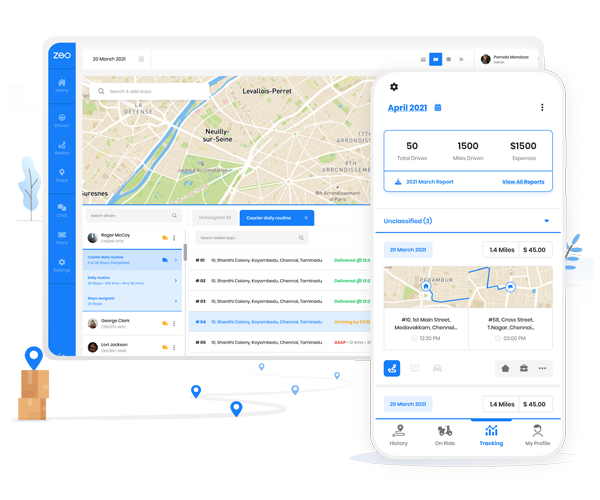
Are you a fleet owner?
Want to manage your drivers and deliveries easily?
Grow your business effortlessly with Zeo Routes Planner – optimize routes and manage multiple drivers with ease.

increase fuel savings
Hassle Free Deliveries & Pickups!
Optimize routes with our algorithm, reducing travel time and costs efficiently.
Get Started for Free