

Updated on: June 15, 2026
Reading Time: 4 minutes
TL;DR: ETA tracking for delivery routes becomes effective when systems automatically recalculate arrival times based on real departure times and live progress updates. Studies show that accurate ETA communication can reduce customer service calls by up to 30%. Route optimization tools like Zeo Route Planner address this with live ETA updates and real-time GPS tracking, helping delivery teams save 2+ hours daily.
The modern-day fleet operations can make the most out of Estimated Time of Arrival (ETA) feature for real-time decision-making. Using it right makes ETA tracking a tool to predict when a delivery might happen and also refining how dispatchers plan, adjust, and maintain control across the entire supply chain.
We’ve launched an updated feature for Zeo Route Planner’s, ETA on web. It will provide dynamic visibility to fleet owners and dispatchers at every stage from route creation to final delivery.
The real-time visibility at every step of your logistics will help your teams spot changes early on to keep operations moving smoothly.
Below, we’ll explain how you can use Zeo Route Planner for ETA tracking and that too, in real-world scenarios.
Viewing ETAs Immediately After Route Creation
Access to ETA data during route creation give dispatchers an immediate clarity on delivery timing so that they can shape smarter assignments before the day even begins.
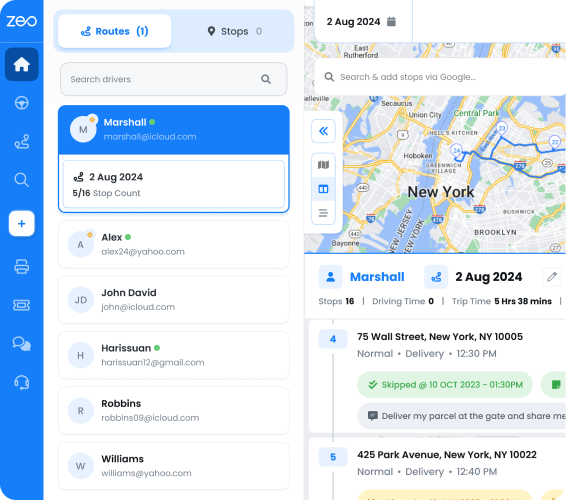
Once you create route on Zeo’s Fleet Web platform, you can see ETAs that are instantly available for all scheduled stops.
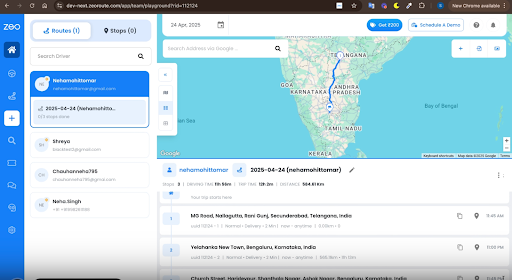
The calculation is based on the default route start time, vehicle profile, and stop order generated by the optimization engine.
Practical Impact:
- Simple for dispatchers to review estimated arrival windows for every stop right after saving the route.
- Early and quick identification of tight schedules so that there’s an easy load balancing between drivers without waiting for them to start moving.
- Management teams can verify if service level agreements (SLAs) are being met before trucks leave the warehouse.
Adjusting ETAs Dynamically Based on Actual Start Time
Chances are, a driver may start the route later than planned. Be it 10 minutes or an hour. Even then, Zeo automatically re-runs ETA logic based on the actual time of departure.
It means, you dont need to rely on outdated timelines and gives dispatchers a realistic view of how downstream deliveries will be impacted.
Now, this is super useful for routes with time-sensitive stops, customer cut-off times, or compliance-based delivery slots (e.g. pharmacies, schools, business districts).
Practical Impact
- When drivers start late, ETAs shift downstream across all stops, reflecting updated delivery expectations.
- Dispatchers can quickly spot risk areas where chances of deliveries missing on committed times are high.
- Customers get highly realistic expectations than stale scheduling promises based on outdated departure assumptions.
Recalculating ETAs Live as Stops Are Completed
Even the best-planned routes evolve during execution. Zeo monitors real-time stop progress to constantly update future stop ETAs without dispatcher input.
This means ETAs aren’t static guesses—they’re recalibrated in real time based on how the day unfolds.
If a driver finishes the first few deliveries faster than expected, downstream stops are pulled forward. If delays occur at one or two locations, those delays ripple forward—but without needing dispatcher intervention.
Practical Impact:
- Early completions tighten the remaining schedule, reducing idle time between deliveries.
- Delays at any stop ripple forward—Zeo dynamically adjusts downstream ETAs, preventing surprises at the end of the shift.
- Dispatchers can track a vehicle with Zeo’s live tracking that drift across routes and take corrective action if route performance falls outside acceptable margins.
Comparing Final Delivery Times Against Original ETAs
Final delivery performance data is critical for understanding operational efficiency. Zeo captures both the planned ETA and actual time to surface key performance gaps.
According to Bureau of Labor Statistics data, transportation and warehousing operations face significant productivity pressures, making accurate performance measurement essential for maintaining competitive operations.
Practical Impact:

increase fuel savings
Hassle Free Deliveries & Pickups!
Optimize routes with our algorithm, reducing travel time and costs efficiently.
Get Started for Free
- Managers can audit driver performance: were early deliveries causing issues, or was consistent lateness dragging customer satisfaction?
- SLA tracking becomes automated—no manual stopwatch needed.
- Route design flaws (such as tight stop clustering or unrealistic time windows) are surfaced quickly for optimization.
Managing Customer Expectations Through Better ETA Communication
Customer satisfaction increasingly depends on delivery predictability rather than just speed. Research from the U.S. Department of Transportation indicates that freight visibility and timing accuracy are becoming critical competitive factors in logistics operations.
Effective ETA communication requires three key elements: accuracy at the time of prediction, updates when circumstances change, and consistent messaging across all customer touchpoints. Traditional static scheduling approaches fail on all three fronts because they can’t adapt to real-world conditions.
Modern route planning systems address this by maintaining live connections between route progress and customer-facing communications. When a driver completes stops ahead of schedule, customers receive earlier delivery windows. When delays occur, proactive notifications prevent frustration and allow customers to adjust their own schedules.
This approach transforms ETA tracking from a reactive customer service tool into a proactive relationship management system. Fleet managers report that accurate, dynamic ETA communication reduces customer service inquiries by significant margins while improving overall satisfaction scores.
ETA Opportunities for Future Customer Communication
Keeping customers informed is no longer optional—it’s part of the service. Although customer-facing live ETA updates are part of Zeo’s upcoming roadmap, the system is already designed to support smarter external communication based on delivery progress which also includes collecting proof of delivery.
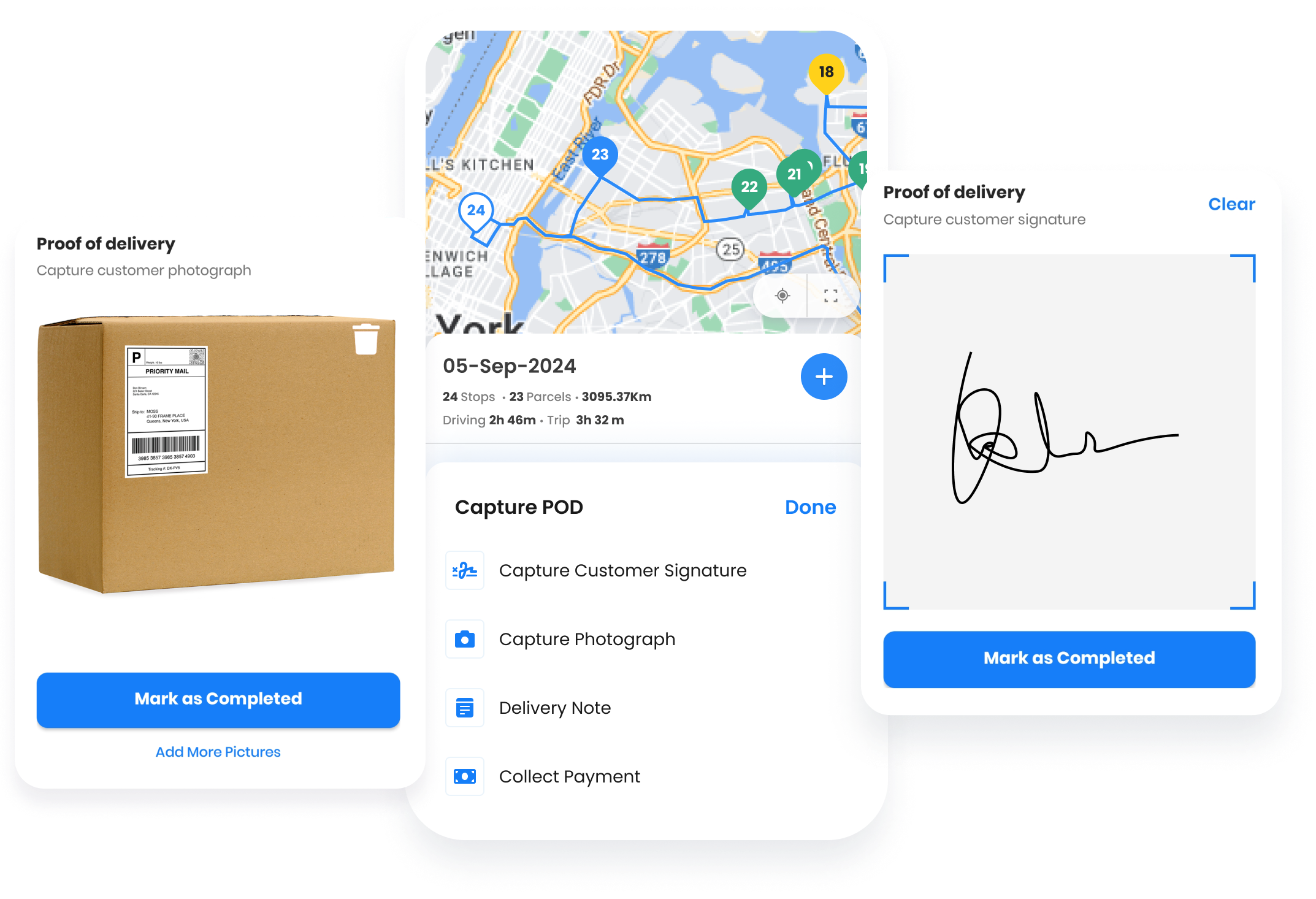
Zeo’s internal ETA engine is already built to support automated, customer-facing updates.
While external notifications aren’t available yet, the platform tracks stop-level progress, route adjustments, and delivery timing shifts with the precision needed for scalable customer communication.
Zeo’s internal ETA engine is already built to support automated, customer-facing updates.
While external notifications aren’t available yet, the platform tracks stop-level progress, route adjustments, and delivery timing shifts with the precision needed for scalable customer communication.
With real-time ETA updates, customers are alerted of the order’s delivery or pickup, and dispatchers can track whether the order has been completed.
Conclusion
Accurate ETAs aren’t just a delivery detail but a key layer of control across planning, execution, and performance review.
Zeo Route Planner turns ETA tracking into a live operational tool, giving fleet managers early visibility, real-time updates, and stop-level precision throughout the delivery cycle.
From assigning routes with confidence to responding to delays without guesswork, Zeo helps teams stay ahead of disruptions and deliver with clarity.
Book a demo with Zeo Route Planner today and see how smarter ETA logic can reshape the way your business moves.
Frequently Asked Questions
How often should ETAs be recalculated during active delivery routes?
ETAs should be recalculated automatically after each completed stop and whenever significant delays occur at any location. Real-time recalculation ensures downstream customers receive accurate timing information and prevents service level agreement violations.
What factors cause the biggest discrepancies between planned and actual delivery times?
Traffic congestion, longer-than-expected service times at stops, and late route departures account for most ETA discrepancies. Weather conditions and vehicle breakdowns can also create significant timing variations that ripple through entire route schedules.
Can dynamic ETA tracking reduce customer service calls about delivery timing?
Studies show that proactive ETA communication can reduce delivery-related customer service inquiries by 25-40%. When customers receive accurate, updated timing information automatically, they’re less likely to call for status updates or express frustration about missed delivery windows.
How do time window constraints affect ETA accuracy on delivery routes?
Time window constraints create scheduling pressure that can reduce ETA accuracy if routes aren’t optimized properly. Advanced route planning systems account for these constraints during optimization, but real-world execution still requires dynamic adjustments when early or late arrivals threaten downstream time windows.
What delivery data should be tracked to improve future ETA predictions?
Track actual service time at each stop type, traffic patterns by time of day and route, driver performance variations, and seasonal delivery patterns. Route optimization platforms like Zeo Route Planner with route analytics and reporting capture this performance data automatically, helping operations teams identify improvement opportunities across their 1.5M+ user network.
Are you a fleet owner?
Want to manage your drivers and deliveries easily?
Grow your business effortlessly with Zeo Routes Planner – optimize routes and manage multiple drivers with ease.
increase fuel savings
Save 2 Hours on Deliveries, Everyday!
Optimize routes with our algorithm, reducing travel time and costs efficiently.
Get Started for Free