

Updated on: February 15, 2026
Reading Time: 3 minutes
TL;DR: Supply chain management for delivery businesses involves coordinating inventory storage, transportation logistics, and customer service to optimize the flow from warehouse to doorstep. Effective SCM reduces operational costs by up to 15% while improving delivery speed and customer satisfaction. Route optimization tools like Zeo Route Planner address transportation logistics with AI-powered route optimization and real-time GPS tracking, helping delivery teams save 2+ hours daily.
What is Supply Chain Management?
Supply Chain Management (SCM) involves the coordination and optimization of all activities involved in the creation and delivery of goods and services. For a delivery business it involves everything from storage of inventory to transportation to execution of the delivery.
In this blog we’ll have a look at the 3 components of SCM for a delivery business and understand the importance of SCM.
Components of supply chain management for a delivery business:
- Inventory management
A key component of supply chain management for delivery business is – inventory management. This involves ensuring that the right packages are at the right place at the right time. Inventory management can be a complex process and requires forecasting the demand.
Your business will have to plan the storage infrastructure accordingly. Excess storage space and not enough inventory will lead to unnecessary rental costs. Whereas, not having enough storage for when the inventory level increases, for example in holiday season, can lead to inefficiencies. It is important to constantly review inventory levels to avoid unwanted expenses.
One way to improve inventory management is through the use of technology. Modern inventory management software can help businesses track inventory levels, forecast demand, and automate the ordering process. This can reduce the risk of overstocking or understocking. According to U.S. Census Bureau data, effective inventory management can reduce carrying costs by 20-30% while improving order fulfillment rates.
- Transportation logistics
The second element of effective supply chain management for delivery businesses is transportation logistics. This involves managing the movement of goods from the warehouse to the doorstep of the customer. Transportation logistics can be complex, especially for businesses that operate in multiple regions or countries. However, it can be streamlined through the use of route optimization software.
Hop on a 30-minute demo call to understand how Zeo can be the perfect route optimization solution for your business!
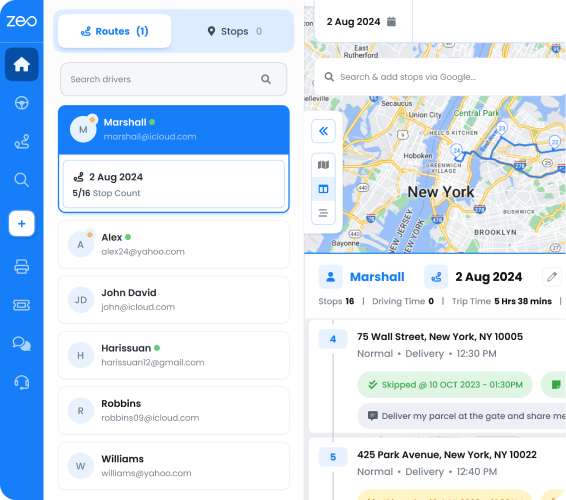
Route optimization helps in planning the most efficient route for your deliveries. While planning the route, the software takes into account factors like stop type (pickup/delivery), stop priority, stop duration, delivery time window, vehicle capacity and driver availability. You can also track the live location of your delivery drivers via the dashboard and take action in case of any unexpected delays.
Route optimization enables faster deliveries to the customer leading to customer satisfaction. It also saves you time & costs and improves the bottom line of the business. Modern solutions can reduce fuel costs by 10-20% while improving on-time delivery rates to over 95%.
Read more: How Route Optimization Software Helps You Save Money?
Transportation logistics also involves reverse logistics which means picking up the package back from the customer’s address in case of returns. The return process should be easy and convenient for the customer. Efficient reverse logistics can help businesses maintain customer loyalty while recovering up to 70% of product value from returned items.
- Customer Service
The last leg of the supply chain for a delivery business involves finally delivering the package to the end customer. This component of SCM ensures that customers receive their deliveries on time and in good condition. The packaging of the product should be durable enough to keep the products safe while in transit.
Communicating with the customers and keeping them in loop regarding their delivery helps in improving customer experience. You can share the tracking link with the customer along with a customized message via the route planner itself. Real-time communication reduces customer service inquiries by up to 40% while improving satisfaction scores.
Providing exceptional customer service can be a differentiating factor from the competition and will build customer loyalty. Studies show that businesses with superior customer service experience 60% higher profit margins compared to competitors.
Read more: Revolutionize Customer Communication With Zeo’s Direct Messaging Feature
Technology Integration in Modern Supply Chain Management
Today’s delivery businesses leverage advanced technology to streamline supply chain operations. Integration platforms like Zapier allow businesses to connect their route optimization software with inventory management systems, creating automated workflows that trigger deliveries based on stock levels.

increase fuel savings
Hassle Free Deliveries & Pickups!
Optimize routes with our algorithm, reducing travel time and costs efficiently.
Get Started for Free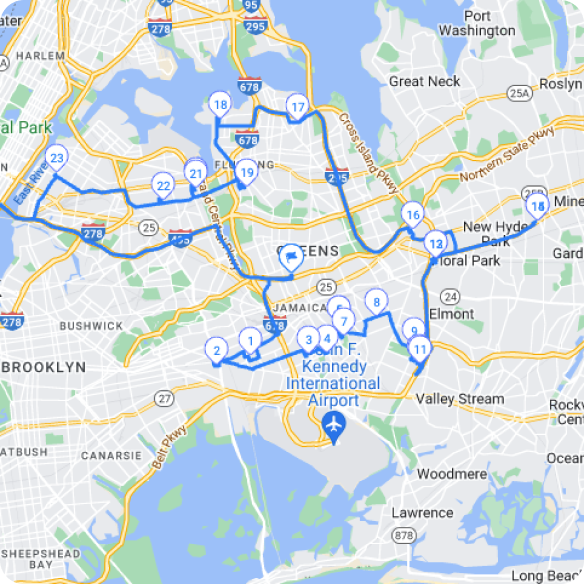
API integrations enable seamless data flow between different systems, eliminating manual data entry and reducing errors. For e-commerce businesses, direct integrations with platforms like Shopify and WooCommerce automatically import orders for route planning, saving hours of manual work daily.
Real-time tracking technology provides visibility across the entire supply chain. From warehouse departures to final delivery confirmation with photo proof, businesses can monitor every step and proactively address potential issues before they impact customer experience.
Importance of supply chain management:
- Improves efficiency
Supply chain management streamlines the various phases of a delivery business. It enables a smooth flow of operations from managing the inventory to final delivery of the package. It improves the efficiency by accurately forecasting the inventory and optimizing the delivery routes. According to Bureau of Transportation Statistics, optimized supply chains can improve overall operational efficiency by 25-35%.
- Reduces overall costs
Supply chain management helps in controlling the overall costs by ensuring maximum utilization of the available resources. It keeps the costs in check by keeping a tab on the inventory, optimizing the deliveries and embracing technology. Effective SCM can reduce total logistics costs by 15-25% through better resource allocation and waste reduction.
- Improves customer experience
SCM enhances customer satisfaction by enabling faster and on time deliveries. It is necessary for the businesses to keep up with rising customer expectations regarding delivery speed. Modern consumers expect same-day or next-day delivery, making efficient supply chain management crucial for competitive advantage.
- Quality control
SCM keeps a strict check on the quality in terms of the quality of the final package being delivered. It also monitors any delays in the delivery hampering the quality of customer experience. Quality control mechanisms include proof of delivery documentation, damage tracking, and customer feedback loops that help maintain service standards.
Measuring Supply Chain Performance
Successful supply chain management requires continuous monitoring of key performance indicators (KPIs). Important metrics include order fulfillment time, delivery accuracy rates, cost per delivery, and customer satisfaction scores.
Route analytics provide insights into driver performance, fuel consumption, and delivery efficiency. These data points help identify bottlenecks and opportunities for improvement. For businesses handling specialized deliveries like controlled substances or managing emergency services like garage door repairs, detailed performance tracking becomes even more critical for compliance and customer service.
Regular performance reviews allow businesses to adjust strategies, optimize resource allocation, and maintain competitive advantages in rapidly evolving markets.
Frequently Asked Questions
How do I measure supply chain efficiency in my delivery business?
Key metrics include order fulfillment time, on-time delivery percentage, cost per delivery, and customer satisfaction scores. Track these KPIs monthly to identify improvement opportunities and benchmark against industry standards.
What are the biggest cost drivers in delivery supply chains?
Transportation typically accounts for 60-70% of supply chain costs, followed by warehousing (15-20%) and inventory carrying costs (10-15%). Fuel prices, driver wages, and vehicle maintenance are the primary variable expenses that impact profitability.
How can small delivery businesses compete with larger companies on supply chain efficiency?
Small businesses can leverage route optimization technology to match larger competitors’ efficiency. Zeo Route Planner’s AI-powered optimization and real-time tracking help small teams achieve enterprise-level performance, with users saving 2+ hours daily on route planning.
What is reverse logistics and why is it important?
Reverse logistics manages the return flow of products from customers back to distribution centers. It’s crucial for handling returns, exchanges, and recycling, directly impacting customer satisfaction and cost recovery.
How do I choose the right technology stack for supply chain management?
Focus on solutions that integrate well together and scale with your business growth. Look for platforms offering API connectivity, real-time tracking capabilities, and automated workflows that reduce manual processes and human error.
Conclusion
It is important to have a well oiled supply chain management system for smooth functioning of business operations. By leveraging the latest technology, delivery businesses can stay ahead of the curve and continue to grow in a rapidly evolving industry!
Are you a fleet owner?
Want to manage your drivers and deliveries easily?
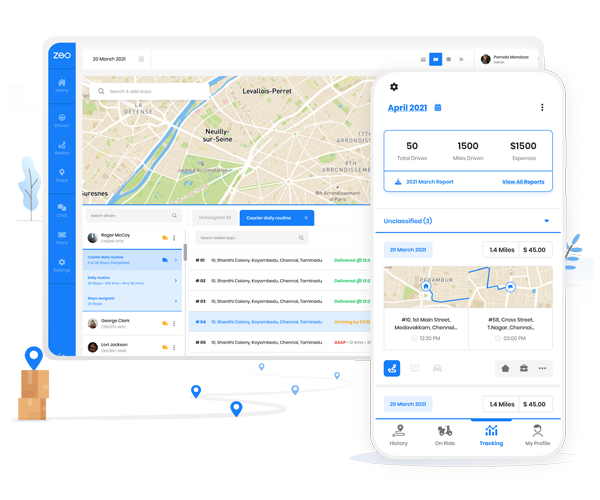
Grow your business effortlessly with Zeo Routes Planner – optimize routes and manage multiple drivers with ease.
increase fuel savings
Save 2 Hours on Deliveries, Everyday!
Optimize routes with our algorithm, reducing travel time and costs efficiently.
Get Started for Free