


Updated on: October 21, 2026
TL;DR: The right route planner for healthcare fleet management is one that combines real-time tracking, capacity-based routing, and proof of delivery to keep medical deliveries on schedule. As of 2026, healthcare logistics teams face rising delivery volumes and tighter time windows, making manual scheduling increasingly unreliable. Route optimization tools like Zeo Route Planner address this with AI-powered route optimization and time window constraints, helping healthcare fleet teams save 2+ hours daily.
Picture this: a bustling healthcare fleet rushing against time, delivering critical supplies and services. Every moment counts, and efficiency is paramount. Today, choosing the right route planner software for healthcare fleet management is the key to success. The task at hand involves ensuring that medical supplies reach their destinations promptly, healthcare personnel respond swiftly to emergencies, and the heartbeat of the healthcare system remains steady and uninterrupted.
What is Route Planning for Fleets?
Route planning is the strategic process of determining the most optimal paths for vehicles to reach their destinations. Effective route planning becomes a game-changer in healthcare, where time is often a matter of life and death. According to the U.S. Bureau of Transportation Statistics, inefficient routing and congestion remain among the top contributors to delivery delays across commercial fleets, underscoring why healthcare operations in particular cannot afford guesswork in scheduling.
Why is Using a Route Planning Tool Crucial for Healthcare Fleets?
Using a route planning tool is crucial for healthcare fleets for many reasons that directly impact the efficiency and effectiveness of their operations. Let’s delve into each aspect:
- Vehicle Management
Healthcare fleets constantly move, delivering medical supplies, equipment, and personnel to various locations. A route planning tool allows for real-time tracking and management of these vehicles. Fleet managers can monitor the exact location of each vehicle, ensuring they are on the right path and making timely deliveries. - Fuel Management
Fuel costs constitute a significant portion of a fleet’s expenses. Route planning tools help healthcare fleets optimize their routes to minimize fuel consumption. By identifying the most fuel-efficient paths, these tools contribute to cost savings and reduce the environmental impact of the fleet’s operations. The U.S. Environmental Protection Agency notes that reducing unnecessary idling and mileage through better route planning is one of the most effective ways fleets can lower fuel consumption and emissions. - Asset Management
Healthcare fleets often carry valuable assets, including medical equipment and supplies. A route planning tool enhances asset management by providing real-time visibility into the location and condition of these assets. This prevents loss or theft and securely ensures critical medical supplies reach their destination. - Route Optimization
Time is of the essence in healthcare, and optimized routes translate to quicker deliveries. A good route planning tool evaluates weather conditions and delivery priorities to identify the most efficient routes. This saves time and allows healthcare fleets to respond promptly to emergencies. - Disposal and Resale
As healthcare vehicles age, their resale value becomes a significant consideration. Route planning tools contribute to the longevity of vehicles by optimizing routes and minimizing wear and tear. This, in turn, maximizes the resale potential of the fleet’s assets, providing a more sustainable and cost-effective approach. - Route Analytics
Data-driven decision-making is essential for continuous improvement. Route planning tools generate valuable analytics that offer the fleet’s performance insights. Fleet managers can analyze trends, identify areas for improvement, and make informed decisions to enhance overall operational efficiency.
Learn more: Navigating the Market Challenges: The Odyssey of New Local Online Businesses
What Healthcare Fleets Should Look for Beyond Basic Routing
As of 2026, healthcare logistics have grown more complex, with fleets managing everything from lab sample pickups to home healthcare visits and pharmacy deliveries on tighter time windows than ever. A route planner built for this environment needs to go beyond simple point-to-point navigation. Here are a few capabilities that matter most:
- Time Window Constraints
Medical deliveries often come with strict appointment windows, whether it’s a scheduled home healthcare visit or a time-sensitive lab sample pickup. A route planner with time window constraints ensures drivers arrive within the required window instead of defaulting to the fastest possible path regardless of timing. - Priority Stops
Not every delivery carries equal urgency. The ability to flag stops as ASAP versus Normal priority allows dispatchers to make sure emergency supply runs take precedence over routine restocking, without manually reshuffling the entire day’s schedule. - Skill-Based Driver Assignment
Some healthcare deliveries require drivers with specific certifications or experience handling sensitive materials. Skill-based assignment matches the right driver to the right stop automatically, reducing the back-and-forth of manual dispatching. - Proof of Delivery and Documentation
Healthcare deliveries often need a documented trail. Photo capture, digital signature collection, and delivery notes give fleet managers a verifiable record of what was delivered, when, and to whom, which is valuable for internal audits and dispute resolution. - Dynamic Route Adjustments
Healthcare logistics rarely go exactly as planned. The ability to adjust routes mid-shift, whether due to an urgent add-on stop or a last-minute cancellation, keeps the fleet responsive without starting the day’s plan from scratch.
Top 3 Route Planners for Healthcare Fleet Management
- Zeo Route Planner for Fleets
Zeo Route Planner for Fleets is a versatile solution for streamlining delivery operations and fleet management. It offers best-in-class features at an affordable price, making it a boon for small to medium-sized businesses. The no-code platform allows you to assign stops and drivers seamlessly. It integrates easily with other third-party tools, including Shopify, WooCommerce, and Zapier. And to top it all, customer support is the best part of Zeo, serving 1.5M+ users as of 2026.
- Schedule routes in advance
- Round-the-clock live support
- Detailed reports and analytics
- In-depth management of fleets and vehicle capacity
- Customizable messaging
- Proof of delivery
- Seamless integrations
Pricing: $35 per driver per month.
- OptimoRoute
OptimoRoute is another great tool for route optimization and fleet management. It offers all the bells and whistles, like optimized routes, trip reports, easy integrations, and more. However, they have a limit on the number of orders per month. The intermediate plan allows for 1000 orders only. Regardless, it is an excellent option in a sea of similar tools.- Route analytics
- Live tracking
- Proof of delivery
- Efficient routing
- Feedback option for customers
Pricing: $44.10 per driver per month.
- Route4me
Route4me is a route planning platform with many features designed to improve fleet management and delivery efficiency. It is a flexible tool that can be used by enterprises of any size. Route4me uses powerful route optimization algorithms to provide drivers with the most efficient routes.

- Simple user interface
- Real-time delivery insights
- Live location
- Proof of delivery
- Easy integrations
Pricing: $349 for 10 users per month.
Read more: Exploring Efficient Routes: Your Guide to AI-Powered Optimization

increase fuel savings
Hassle Free Deliveries & Pickups!
Optimize routes with our algorithm, reducing travel time and costs efficiently.
Get Started for Free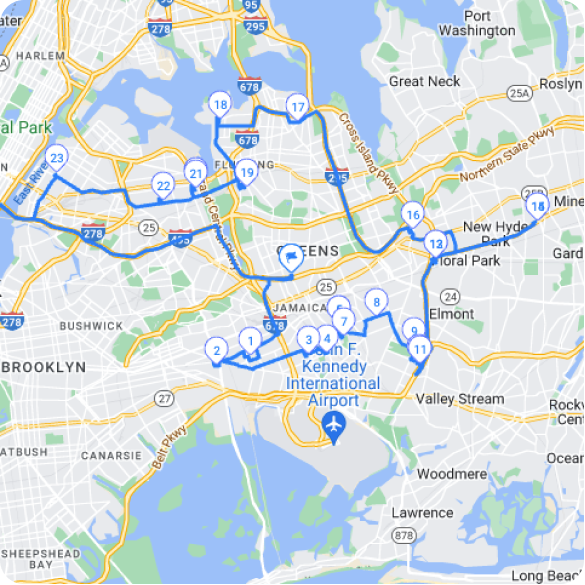
Charting a Course to Success with Zeo!
In summary, the intricate dance of healthcare fleet management demands more than just logistical finesse – it necessitates a strategic ally in the form of a route planning tool. We’ve explored the crucial facets that make this digital guide indispensable, from efficient vehicle management and optimization to fuel and asset management, and each element contributes to the seamless operation of healthcare fleets.
As the curtains draw close, it’s clear that not all route planners are created equal. Zeo Route Planner emerges as the beacon of excellence among the top contenders. Its user-friendly interface, robust features, and comprehensive approach to healthcare fleet management set it apart.
Book a free demo to let Zeo be your guiding star.
Frequently Asked Questions
How does route optimization reduce delivery delays in healthcare logistics?
Route optimization reduces delays by calculating the most efficient sequence of stops based on traffic, distance, and time windows rather than relying on a driver’s manual judgment. This is especially important in healthcare, where a delayed lab sample or medication delivery can directly affect patient outcomes. Tools that factor in real-time conditions help fleets stay on schedule even when daily routes shift unexpectedly.
What qualifies as a medical courier vehicle under DOT regulations?
Medical courier vehicles are generally classified under standard commercial vehicle regulations unless they are transporting hazardous materials or operating above certain weight thresholds, in which case additional Federal Motor Carrier Safety Administration rules may apply. Fleet operators should check specific state and federal guidelines, since requirements can vary based on vehicle size, cargo type, and operating radius.
How can healthcare fleets track deliveries in real time?
Healthcare fleets track deliveries in real time using GPS-enabled route planning software that shares live vehicle location with dispatchers and recipients. Zeo Route Planner offers live GPS tracking and a branded tracking page, giving healthcare facilities visibility into exact arrival times without needing to call drivers directly. This visibility is particularly useful for coordinating time-sensitive deliveries like specimen pickups or equipment drop-offs.
What’s the difference between route planning and route optimization?
Route planning refers to mapping out the stops and general sequence a vehicle will follow, while route optimization uses algorithms to find the most efficient version of that route based on variables like traffic, time windows, and vehicle capacity. In practice, route planning answers “where do we need to go,” and optimization answers “what’s the fastest, most cost-effective way to get there.” Most modern fleet software, including Zeo, combines both into a single automated process.
How do healthcare fleets document proof of delivery for compliance purposes?
Healthcare fleets typically document proof of delivery through photo capture, digital signatures, and timestamped delivery notes that create a verifiable record for each stop. Zeo Route Planner’s proof of delivery feature lets drivers collect photos and signatures at the point of delivery, which helps facilities maintain accurate records for internal audits and dispute resolution. While this doesn’t replace formal compliance systems, it gives fleet managers a reliable paper trail for every delivery made.
Are you a fleet owner?
Want to manage your drivers and deliveries easily?
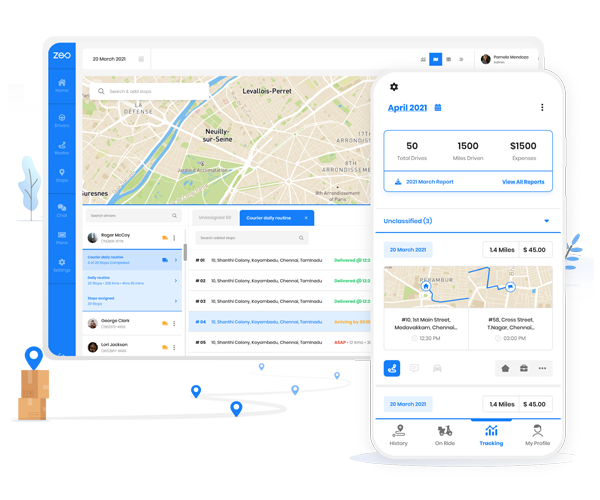
Grow your business effortlessly with Zeo Routes Planner – optimize routes and manage multiple drivers with ease.
increase fuel savings
Hassle Free Deliveries & Pickups!
Optimize routes with our algorithm, reducing travel time and costs efficiently.
Get Started for Free