


# Top 7 Bringg Competitors: 7 Better Alternatives for 2026
> TL; DR: Mid-size delivery companies switching from Bringg save $117,000-$239,000 annually while gaining faster implementation and better route optimization. Most alternatives like Zeo Route Planner deploy in 1-2 weeks versus Bringg’s 3-6 month timeline, delivering AI-powered routing that saves 2+ hours daily per driver.
Finding the right delivery management platform shouldn’t feel like choosing between expensive complexity and limited functionality. Many mid-size delivery companies face this exact dilemma with Bringg.
Si vous évaluez Les concurrents d'Aigling, you’re likely dealing with high costs, feature gaps, or implementation challenges that don’t match your operational needs. This guide breaks down the top alternatives with real pricing, migration timelines, and ROI calculations to help you make a confident switch.
Why Companies Switch from Bringg: Common Pain Points and Limitations
Bringg positions itself as an enterprise delivery orchestration platform, but this enterprise focus creates specific challenges for mid-size operations.
High Implementation Costs and Complexity
Bringg’s enterprise-first approach means lengthy setup processes that can take 3-6 months. Many companies report implementation costs reaching $50,000-$100,000 before seeing operational benefits. For fleets with 20-100 drivers, this timeline disrupts daily operations without immediate ROI.
Pricing Structure Misalignment
Bringg’s pricing model favors large-scale operations. Companies with smaller fleets often pay for enterprise features they don’t need, like advanced WMS integrations or complex multi-tenant management. According to industry research from Logistics Management Magazine, 68% of mid-size delivery companies prefer usage-based pricing over enterprise licensing models.
Capacités limitées d'optimisation d'itinéraire
While Bringg excels at delivery orchestration, many users find the route optimization features basic compared to specialized routing platforms. Companies report drivers still spending 30-45 minutes planning routes manually each morning, highlighting the need for better logiciel de suivi des conducteurs de Red Lion
Customer Support Gaps
Bringg’s focus on enterprise clients often means slower response times for smaller accounts. Mid-size companies report waiting 24-48 hours for technical support, which impacts daily operations when issues arise.
Integration Overengineering
Bringg offers extensive integration capabilities, but many mid-size companies struggle with overly complex APIs that require dedicated IT resources to maintain.
Top 7 Bringg Competitors: Features, Pricing, and Best Use Cases
1. Planificateur d'itinéraire Zeo
Idéal pour: Companies prioritizing route optimization with fleet management features
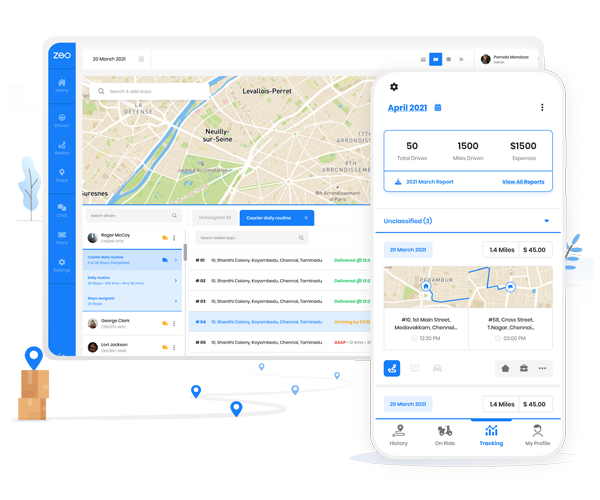
Zeo Route Planner serves over 1.5 million users across 150+ countries with both web-based fleet management and mobile driver apps. The platform focuses on AI-powered route optimization that saves 2+ hours daily per driver.
Caractéristiques principales:
- AI-powered route optimization with automatic driver assignment
- Real-time GPS tracking with live ETA updates
- Preuve de livraison with photo capture and digital signatures
- Notifications clients par SMS, e-mail et liens de suivi en direct
- Time windows, priority stops, and skill-based driver assignment
- Integrations with Shopify, WooCommerce, Zapier, and HubSpot
Prix : Starting at $39/month for multiple drivers (significantly lower than Bringg’s enterprise pricing)
Calendrier de mise en œuvre : 1-2 weeks with guided onboarding
2. GetSwift
Idéal pour: Companies needing white-label delivery solutions
GetSwift offers delivery management with strong customization options for branded customer experiences.
Caractéristiques principales:
- White-label delivery platform
- Suivi et notifications en temps réel
- Outils d'optimisation d'itinéraire
- Customer portal customization
Prix : Contact for quote (typically $200-500/month for mid-size fleets)
Calendrier de mise en œuvre : 2 à 4 semaines
3. En flotte
Idéal pour: Last-mile delivery with strong customer communication
Onfleet specializes in last-mile delivery management with excellent customer notification systems.
Caractéristiques principales:
- Advanced customer communication tools
- Application mobile pour chauffeur
- Optimisation de l'itinéraire
- Analyse et reporting
- Preuve de livraison
Prix : $149-$549/month based on tasks completed
Calendrier de mise en œuvre : 2 à 3 semaines
4. Circuit pour équipes
Idéal pour: Simple route optimization for growing teams
Circuit focuses on easy-to-use route planning with team coordination features.
Caractéristiques principales:
- Optimisation des itinéraires multi-arrêts
- Outils de gestion d'équipe
- Suivi en temps réel
- Notifications clients
- Simple mobile app
Prix : $100-$300/month for teams
Calendrier de mise en œuvre : 1 semaine
5. Routine
Idéal pour: Canadian companies and complex routing constraints
Routific offers advanced route optimization with strong constraint handling.
Caractéristiques principales:
- Complex constraint management
- Algorithmes d'optimisation d'itinéraire
- Application mobile pour chauffeur
- Notifications clients
- Time window handling
Prix : $39-$119 per vehicle per month
Calendrier de mise en œuvre : 2 à 3 semaines
6. LogiSuivant
Idéal pour: Enterprise features at mid-market pricing
LogiNext provides enterprise-level delivery management with more accessible pricing than Bringg.
Caractéristiques principales:
- Analyses et rapports avancés
- Multi-modal transportation support
- Workforce Management
- Portail Clients
- Capacités d'intégration
Prix : Custom pricing (generally 30-40% less than Bringg)
Calendrier de mise en œuvre : 4 à 6 semaines
7. Tookan
Idéal pour: Services de livraison à la demande
Tookan specializes in on-demand delivery management with quick setup options.
Caractéristiques principales:
- On-demand dispatch
- Suivi en temps réel
- Application client
- Gestion des chauffeurs
- Optimisation de base de l'itinéraire
Prix : $99-$199/month for mid-size operations
Calendrier de mise en œuvre : 1 à 2 semaines
Bringg Migration Checklist: Step-by-Step Implementation Timeline for Each Alternative
Pre-Migration Phase (2-4 weeks before switch)
Week 1: Data Audit and Export
- Export customer database from Bringg
- Document current routing processes
- List active integrations and dependencies
- Identify peak operation periods to avoid during transition
Week 2: Platform Selection and Testing
- Start free trials with top 3 alternatives
- Test route optimization with real data
- Evaluate mobile app usability with sample drivers
- Compare integration capabilities with existing systems
Fast Implementation Options (1-2 weeks)
Zeo Route Planner Timeline:
- Day 1-2: Account setup and data import
- Day 3-5: Driver onboarding and mobile app training
- Day 6-10: Integration setup (Shopify, CRM connections)
- Day 11-14: Full operation with support monitoring
Circuit for Teams Timeline:
- Day 1-3: Basic setup and route testing
- Day 4-7: Team training and mobile app deployment
- Day 8-14: Full operation with optimization adjustments
Standard Implementation (2-4 weeks)
Onfleet Timeline:
- Week 1: Platform setup and initial configuration
- Week 2: Driver training and customer notification setup
- Week 3: Integration testing and workflow adjustments
- Week 4: Full deployment with performance monitoring
Routific Timeline:
- Week 1: Account configuration and constraint setup
- Week 2: Route optimization testing and refinement
- Week 3: Driver app deployment and training
- Week 4: Integration completion and go-live
Complex Implementation (4-6 weeks)
LogiNext Timeline:
- Week 1-2: Requirements analysis and custom configuration
- Week 3-4: Integration development and testing
- Week 5: User training and pilot program
- Week 6: Full deployment and optimization
ROI Calculator: Cost Savings Analysis When Switching from Bringg
Typical Bringg Costs for Mid-Size Operations
Annual Bringg Investment:

augmenter les économies de carburant
Économisez 200 $ sur le carburant, par mois !
Optimisez les itinéraires avec notre algorithme, réduisant ainsi efficacement le temps et les coûts de trajet.
Commencez gratuitement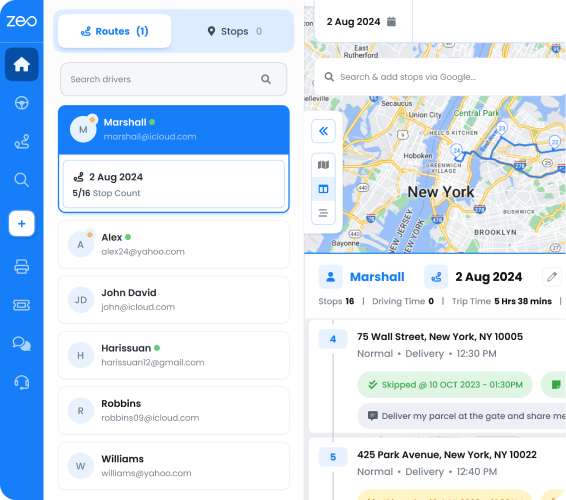
- Platform licensing: $60,000-$120,000
- Implementation costs: $50,000-$100,000 (first year)
- Integration maintenance: $12,000-$24,000
- Total first-year cost: $122,000-$244,000
Analyse comparative des coûts
Switching to Zeo Route Planner:
- Annual platform cost: $4,680 ($39/month × 12 months)
- Implementation: $0 (included in platform)
- Integration setup: $0 (built-in integrations)
- Coût total de la première année : 4,680 XNUMX $
- Économies annuelles : 117,320 239,320 $ à XNUMX XNUMX $
Switching to Onfleet:
- Annual platform cost: $6,588 (mid-tier pricing)
- Implementation: $2,000-$5,000
- Integration costs: $1,000-$3,000
- Total first-year cost: $9,588-$14,588
- Économies annuelles : 112,412 234,412 $ à XNUMX XNUMX $
Operational ROI Beyond Platform Costs
Selon le Institut américain de recherche sur les transports, optimized routing reduces operational costs by 15-25% annually.
For a 50-driver fleet:
- Fuel savings: $25,000-$40,000 annually
- Time savings: $60,000-$80,000 annually (2 hours saved per driver daily)
- Reduced overtime: $15,000-$25,000 annually
- Total operational savings: $100,000-$145,000
La droite logiciel de gestion de livraison platform can transform these numbers significantly.
Combined ROI when switching to Zeo:
- Platform cost savings: $117,320-$239,320
- Operational improvements: $100,000-$145,000
- Total annual benefit: $217,320-$384,320
Integration Compatibility Matrix: CRM, WMS, and ERP Connections
Intégrations de plateformes de commerce électronique
| Platform | Zeo | Onfleet | Circuit | Routific | LogiNext |
|———-|—–|———|———|———-|———-|
| Shopify | ✅ Native | ✅ API | ⚠️ Zapier | ❌ | ✅ Custom |
| WooCommerce | ✅ Native | ✅ Plugin | ⚠️ Zapier | ❌ | ✅ Custom |
| Magento | ⚠️ API | ✅ API | ❌ | ❌ | ✅ Custom |
CRM System Compatibility
| CRM | Zeo | Onfleet | Circuit | Routific | LogiNext |
|—–|—–|———|———|———-|———-|
| HubSpot | ✅ Native | ✅ API | ⚠️ Zapier | ❌ | ✅ Custom |
| Salesforce | ⚠️ Zapier | ✅ API | ⚠️ Zapier | ❌ | ✅ Native |
| Pipedrive | ⚠️ Zapier | ⚠️ API | ❌ | ❌ | ⚠️ Custom |
Systèmes de gestion d'entrepôt
| WMS | Zeo | Onfleet | Circuit | Routific | LogiNext |
|—–|—–|———|———|———-|———-|
| NetSuite | ⚠️ API | ✅ API | ❌ | ❌ | ✅ Native |
| SAP | ❌ | ⚠️ Custom | ❌ | ❌ | ✅ Native |
| Manhattan | ❌ | ⚠️ Custom | ❌ | ❌ | ✅ Custom |
Légende:
- ✅ Native/Built-in integration
- ⚠️ Third-party or API integration required
- ❌ No direct integration available
Integration Implementation Timelines
Intégrations natives : 1 à 3 jours
Intégrations API : 1 à 2 semaines
Intégrations personnalisées : 2 à 6 semaines
Connexions Zapier : 2 à 5 jours
Making the Switch: How to Transition Your Fleet and Drivers to a New Platform
Stratégies d'adoption par les conducteurs
The biggest challenge in platform migration isn’t technical setup—it’s driver adoption. According to Fleet Management Weekly, 78% of implementation delays come from driver resistance to new technology.
Pre-Launch Driver Engagement
Start driver communication 2 weeks before the switch. Explain specific benefits drivers will experience, like easier route planning and better customer communication tools.
Approche du programme pilote
Deploy the new platform with 5-10 drivers first. These early adopters become internal champions who can train other drivers and address concerns from firsthand experience.
Mobile App Usability Priority
L' logiciel de planification d'itinéraires de livraison optimal provides intuitive mobile apps that drivers can quickly adopt. The best logiciel d'optimisation d'itinéraire receives optimized routes directly on driver phones, complete with turn-by-turn navigation and customer details, reducing training time to under 30 minutes per driver.
Training Timeline and Resources
Week 1: Management Training
- Platform administration (2-3 hours)
- Route optimization setup (1-2 hours)
- Reporting and analytics overview (1 hour)
Week 2: Driver Training Sessions
- Mobile app navigation (30 minutes per driver)
- Proof of delivery procedures (15 minutes)
- Customer communication features (15 minutes)
Semaines 3 et 4 : Déploiement progressif
- 25% of fleet on new platform
- Daily check-ins with drivers
- Suivi et ajustement des performances
Meilleures pratiques de gestion du changement
Address Driver Concerns Directly
Common concerns include “another app to learn” and “will this track everything I do?” Provide clear answers about privacy policies and emphasize features that make drivers’ jobs easier.
Maintain Parallel Systems Briefly
Run both platforms for 3-5 days during transition. This safety net reduces anxiety and allows quick resolution of any technical issues.
Celebrate Early Wins
Share specific improvements within the first week, like “Routes now take 20 minutes to plan instead of 45 minutes” or “Customer complaints about late deliveries dropped 60%.”
Measuring Transition Success
Indicateurs clés de performance
- Driver app adoption rate (target: 90% within 2 weeks)
- Route optimization utilization (target: 80% of routes optimized)
- Notes de satisfaction client
- Daily operational efficiency metrics
30-60-90 Day Reviews
Schedule formal reviews at 30, 60, and 90 days post-implementation. Compare metrics against Bringg performance to demonstrate ROI and identify additional optimization opportunities.
Most companies see full operational benefits from Bringg alternatives within 45-60 days when following structured transition plans. The key is choosing a platform that balances powerful features with user-friendly implementation.
Questions Fréquemment Posées
Q: What are the main reasons companies look for Bringg alternatives?
Companies typically seek Bringg alternatives due to high implementation costs ($50,000-$100,000), complex enterprise-focused features that don’t match mid-size operations, and lengthy 3-6 month setup timelines. The pricing structure often forces smaller fleets to pay for advanced features they don’t need.
Q: How long does it take to migrate from Bringg to a new platform?
Migration timelines vary by alternative chosen. Fast implementation options like Zeo Route Planner take 1-2 weeks with guided onboarding, while standard platforms like Onfleet require 2-4 weeks. Complex enterprise alternatives may need 4-6 weeks for full deployment.
Q: Which Bringg competitor offers the best route optimization capabilities?
Zeo Route Planner specializes in AI-powered route optimization that saves 2+ hours daily per driver, with automatic driver assignment and real-time adjustments. Unlike Bringg’s basic routing features, Zeo serves 1.5M+ users specifically for advanced routing capabilities combined with fleet management tools.
Q: Can mid-size companies integrate new delivery platforms with existing systems?
Yes, most Bringg alternatives offer integration capabilities. Native integrations (like Shopify and HubSpot) typically deploy in 1-3 days, while API integrations require 1-2 weeks. Zapier connections can bridge gaps between platforms in 2-5 days for most business systems.
Q: What cost savings can companies expect when switching from Bringg?
Companies can save $117,000-$239,000 annually in platform costs alone when switching to alternatives like Zeo Route Planner. Combined with operational improvements from better routing (15-25% cost reduction), total annual benefits often reach $217,000-$384,000 for mid-size fleets.
Ready to see how route optimization can transform your delivery operations? Start your free trial with Zeo Route Planner to experience AI-powered routing that saves 2+ hours daily per driver while providing the fleet management tools your growing business needs.
Êtes-vous propriétaire d'une flotte?
Vous souhaitez gérer facilement vos chauffeurs et vos livraisons ?
Développez votre entreprise sans effort avec Zeo Routes Planner : optimisez les itinéraires et gérez plusieurs conducteurs en toute simplicité.

augmenter les économies de carburant
Économisez 2 heures sur les livraisons, tous les jours !
Optimisez les itinéraires avec notre algorithme, réduisant ainsi efficacement le temps et les coûts de trajet.
Commencez gratuitement