

Updated on: March 31, 2026
Reading Time: 3 minutes
TL;DR: Streamlining UPS delivery operations requires efficient address scanning and route optimization to reduce manual data entry and optimize delivery sequences. Modern delivery operations save significant time through automated processes, with some teams reporting 2+ hour daily savings. Route optimization tools like Zeo Route Planner address this with bulk address import via image scanning and AI-powered route optimization, helping delivery teams eliminate manual address entry while creating optimal delivery sequences.
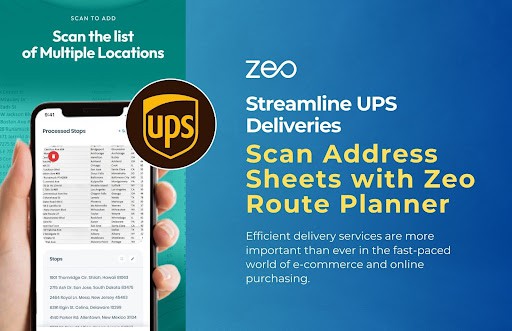
Efficient delivery services are more important than ever in the fast-paced world of e-commerce and online purchasing. UPS (United Parcel Service) is a significant participant in this space, noted for its dependable and punctual delivery. Behind every successful UPS delivery is a complicated process that assures your box arrives at your door in one piece. A critical step in this procedure is scanning printed address sheets, which the Zeo Route Planner makes exceedingly simple and fast.
In this article, we’ll look at UPS’s last-mile delivery procedure and how you can use Zeo Route Planner to streamline scanning printed address sheets for UPS deliveries.
What is UPS Delivery?
UPS (United Parcel Service) is a global package delivery and supply chain management company. UPS delivery refers to the service UPS provides to transport and deliver packages, parcels, and shipments from one location to another.
According to the U.S. Department of Transportation’s 2023 Transportation Statistics Annual Report, package delivery services handle over 21 billion packages annually in the United States alone, with UPS representing a significant portion of this volume. This massive scale requires sophisticated logistics systems and optimized routing to maintain service quality and efficiency.
When you schedule a UPS delivery, you provide information about the sender’s address, recipient’s address, package size, weight, and the desired level of service. UPS then collects the package from the sender, transports it through their network, and delivers it to the recipient within the specified timeframe.
It is a widely used and reliable service for shipping packages locally, nationally, and internationally, serving individual consumers and businesses.
The Last-Mile Delivery Process of UPS
The last-mile delivery process is the final leg of a package’s journey before it reaches the recipient’s doorstep. UPS has mastered this process, ensuring that packages are efficiently delivered while maintaining the highest level of service. Here’s a deeper dive into each step:
- Package Arrival & Sorting: Upon arriving at a local UPS distribution center, packages go through an intricate sorting process. Advanced technology scans barcodes and sorts packages based on their intended destinations. This step ensures that packages are grouped according to their delivery routes, laying the foundation for a well-organized delivery process.
- Driver Assignment: After sorting, packages are assigned to individual delivery drivers. The assignments are strategically made to optimize routes and minimize travel distances, enabling drivers to cover their designated areas effectively.
- Loading & Departure: This step requires careful organization to ensure packages are easily accessible during the route. Once loaded, drivers depart from the distribution center to begin their deliveries.
- Scanning Addresses & Routing: This is where modern route planning technology comes into play. Advanced scanning features allow drivers to easily capture address information from printed sheets. Intelligent algorithms recognize and interpret addresses, linking them to route data for accurate navigation and optimal sequencing.
- Real-Time Tracking: As drivers embark on their routes, both the drivers and the customers can track the progress of the delivery in real-time using advanced route planning applications. This transparency provides peace of mind to customers and helps drivers adjust their routes in case of unexpected events.
- Delivery Confirmation & Returns: When a package is successfully delivered, the recipient’s electronic signature serves as proof of delivery. This digital confirmation streamlines the process and reduces the need for physical paperwork. In missed deliveries, recipients can arrange for redelivery or collect their package from a UPS Access Point.
Why Efficient Address Management Matters for Delivery Operations
Manual address entry represents one of the most time-consuming aspects of delivery operations. Drivers and dispatchers traditionally spend considerable time transcribing addresses from printed sheets, manifests, or customer orders into their routing systems. This manual process introduces multiple challenges:
First, transcription errors occur frequently when manually entering addresses, leading to failed deliveries and customer dissatisfaction. Research from the United States Postal Service Address Management indicates that address errors account for a significant portion of delivery delays and failures.
Second, the time investment in manual data entry reduces the hours available for actual deliveries. For operations handling dozens or hundreds of daily stops, this administrative overhead compounds quickly, impacting overall productivity and profitability.
Third, printed address sheets often contain additional delivery instructions, time windows, or special requirements that must be accurately captured in the routing system. Missing these critical details can result in service failures and require costly return trips.
Read more: Proof of Delivery and its Role in Order Fulfillment
How to Utilize Zeo to Scan Printed Sheets?
Operating the Zeo mobile app is no rocket science. Follow the mentioned steps to scan printed sheets on Zeo and start navigating:
- Go to ‘+Add New Route’ in the Zeo app, and you’ll find three options: Import Excel, Image Upload, and Scan Barcode.
- Select ‘Image Upload.’ A pop-up window will then appear where you may either click a photo or upload it from your phone’s gallery.
- The system will recognize the addresses and client information and the fields will be filled in automatically.
- Use the ‘Scan more’ option to scan additional addresses. Click the ‘ Done ‘ button once all addresses have been scanned and uploaded.
- Fill in the blanks with additional information for each address. You may change the address to a pickup or delivery address and the stop’s priority. At this point, you may add any delivery comments, time slot preferences, and parcel specifics. Once all the details have been successfully changed, click ‘Done adding stops.’
- Choose ‘Create & Optimize New Route,’ navigate as added.’
Advanced Features for Professional Delivery Operations
Modern delivery operations require more than basic address scanning. Professional route optimization platforms provide comprehensive features that address the complex requirements of delivery services:

increase fuel savings
Save 2 Hours on Deliveries, Everyday!
Optimize routes with our algorithm, reducing travel time and costs efficiently.
Get Started for Free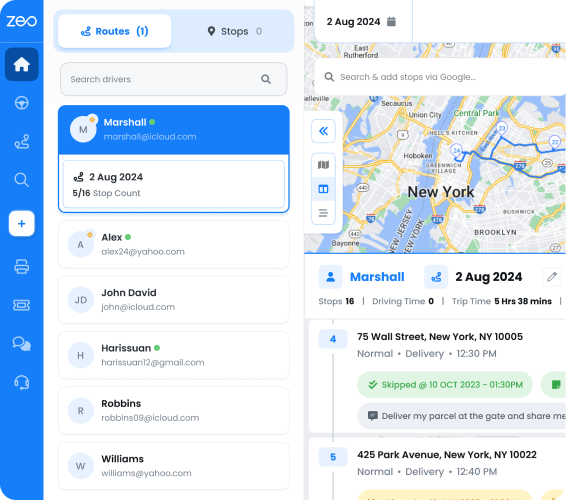
Capacity-Based Routing: Vehicle weight and volume constraints ensure that routes remain practical and legal. This feature prevents overloading vehicles while maximizing delivery efficiency within operational limits.
Time Window Management: Many deliveries require specific time slots or customer availability windows. Advanced systems automatically factor these constraints into route optimization, ensuring appointments are met while maintaining overall efficiency.
Priority Stop Handling: Not all deliveries carry equal urgency. Systems that support ASAP versus normal priority classifications ensure time-sensitive deliveries receive appropriate scheduling while maintaining overall route efficiency.
Driver Skill Matching: Certain deliveries may require specific qualifications, equipment, or experience levels. Skill-based assignment ensures the right driver handles specialized deliveries while optimizing overall team utilization.
Real-Time Adjustments: Delivery conditions change throughout the day due to traffic, weather, customer availability, or vehicle issues. Dynamic route adjustment capabilities allow operations to adapt without completely rebuilding schedules.
Read more: Overnight Safety as a Delivery Driver: Ensuring a Smooth & Secure Shift
Integration Benefits for Streamlined Operations
Successful delivery operations often involve multiple software systems and data sources. Integration capabilities eliminate manual data transfer and reduce errors across the operational workflow:
E-commerce platform connections automatically import order information, eliminating manual order entry and ensuring delivery details remain accurate from purchase to delivery. Popular integrations include major platforms like Shopify and WooCommerce.
CRM system connections maintain customer communication and relationship data, enabling personalized delivery experiences and comprehensive customer service. Integration with platforms like HubSpot ensures delivery teams have complete customer context.
Workflow automation through platforms like Zapier connects delivery operations to thousands of business applications, enabling custom workflows that match specific operational requirements without requiring technical development.
API connectivity allows custom integrations for businesses with specialized systems or unique operational requirements, ensuring route optimization fits seamlessly into existing business processes.
FAQs
- What types of address formats can be scanned from printed sheets?
Modern scanning technology accommodates various address sheet formats, including standard shipping labels, custom manifests, handwritten notes, and printed customer lists. The key is ensuring text remains legible and properly contrasted against the background for accurate recognition. - How accurate is automated address recognition compared to manual entry?
Automated address recognition typically achieves higher accuracy than manual entry by eliminating transcription errors. However, users should always review scanned addresses before finalizing routes to ensure proper interpretation of handwritten text or unusual formatting. - Can route optimization handle mixed delivery types on the same route?
Yes, advanced route optimization supports mixed pickup and delivery stops, priority classifications, time windows, and capacity constraints all within the same route. This flexibility allows complex operational requirements while maintaining overall efficiency. - What devices are compatible with address scanning features?
Address scanning functionality works on most modern smartphones and tablets equipped with cameras. For optimal results, ensure adequate lighting when photographing address sheets and use the latest app version for improved recognition accuracy.
Bottomline
Incorporating advanced scanning and route optimization technology into UPS-style last-mile delivery processes brings a new level of efficiency and accuracy. By simplifying the scanning of printed address sheets and automating route optimization, modern delivery operations can reduce manual errors, minimize administrative time, and enhance overall customer satisfaction. This technology represents how innovative solutions can revolutionize even the most intricate processes, creating better outcomes for delivery professionals and recipients alike. Whether you’re navigating complex delivery schedules or striving for smoother operational efficiency, modern route optimization tools provide the technological foundation to achieve these goals.
To learn more about our offerings, book a free demo today!
Are you a fleet owner?
Want to manage your drivers and deliveries easily?
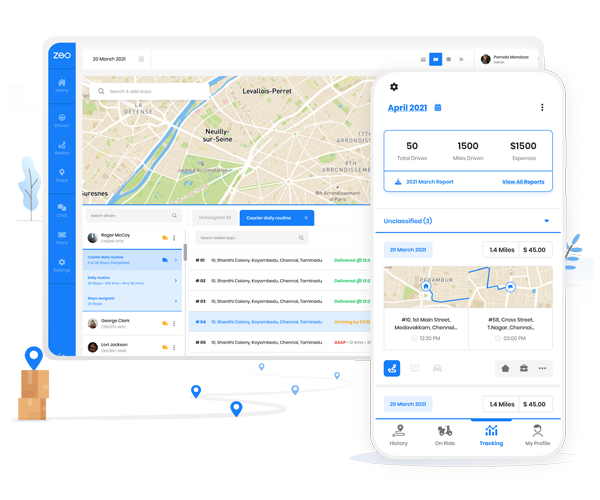
Grow your business effortlessly with Zeo Routes Planner – optimize routes and manage multiple drivers with ease.
increase fuel savings
Save 2 Hours on Deliveries, Everyday!
Optimize routes with our algorithm, reducing travel time and costs efficiently.
Get Started for Free