

Updated on: October 28, 2026
TL;DR: Streamlining delivery management means combining route optimization, real-time tracking, and automated dispatch into one connected workflow instead of handling each step manually. Businesses that adopt route optimization software typically cut planning time significantly and reduce fuel waste from inefficient routing. Route optimization tools like Zeo Route Planner address this with AI-powered route optimization and auto-assignment of stops to drivers, helping delivery teams save 2+ hours daily.
In today’s competitive business environment, managing every logistic chain is crucial for maximum delivery efficiency. Implementing strategies like automated systems can reduce costs, improve delivery speed and accuracy, and reduce costs. Streamlining processes from order management to shipping and customer service can lead to cost reduction and enhanced customer satisfaction.
In this blog post, we will discuss what is delivery management, how to streamline delivery management, the benefits of delivery management, and practical tips to streamline operations, and cut expenses with the help of the best delivery management software.
What is Delivery Management?
Delivery management is the process of coordinating logistics, optimizing routes, and ensuring timely and accurate deliveries of products, which is vital for customer satisfaction, cost-effectiveness, and business success.
A delivery manager is a crucial role in small business delivery services, overseeing processes and interacting with customers. In larger companies, a single fleet manager handles delivery operations, delays, and order completion. This position is essential for businesses to be more effective and organized. A fleet manager streamlines delivery, enabling businesses to scale and deliver on time. Effective delivery management involves multiple components, leading to increased income for the business.
According to the U.S. Bureau of Transportation Statistics, freight volumes and last-mile delivery demand have continued to grow year over year, putting pressure on businesses to find more efficient ways to plan and manage delivery operations without simply adding more vehicles or staff.
Some Benefits of Efficient Delivery Management
Delivery management is crucial for businesses, especially in the era of increased customer expectations. Let’s see some benefits of successful delivery management in your fleet’s operations.
- Customer Satisfaction
Successful delivery management can improve customer satisfaction and loyalty, optimizing routes, and providing accurate estimates. It offers convenient options to meet expectations and ensure a seamless and hassle-free experience. Delivery management software can enhance customer satisfaction by providing real-time tracking information on items, ensuring timely deliveries, and ensuring item location. - Efficiency and Cost Savings
Effective delivery management can significantly reduce costs for businesses. By optimizing routes, minimizing fuel consumption, and reducing delays, leading to increased operational efficiency, improved profitability, and a competitive advantage in the market. The optimal delivery management system can significantly reduce customer complaints. The U.S. Environmental Protection Agency notes that reducing unnecessary idling and mileage through better route planning directly lowers fuel consumption and vehicle emissions, making route efficiency both a cost and sustainability win. - Operational Transparency
Delivery management offers businesses real-time visibility into delivery status and location, enhancing coordination, communication, and problem resolution. This transparency builds trust and loyalty with customers, allowing for proactive updates and problem resolution during unexpected challenges. - Resource Optimization
Efficient delivery management optimizes resources like vehicles, drivers, and fuel, minimizing unnecessary mileage, reducing fuel costs, and maximizing productivity. This can enhance operational efficiency and also contribute to environmental sustainability.
How to Streamline Delivery Management With Zeo
For both small and large businesses, delivery management is a process improvement approach that aims to cut costs by completing more deliveries while maintaining a high level of customer service. To enhance metrics and expand operations, delivery managers should add the right delivery management software to their operations.
Now let’s see how to streamline delivery management with delivery management software, Zeo Route Planner.
-
Route Optimization and Planning
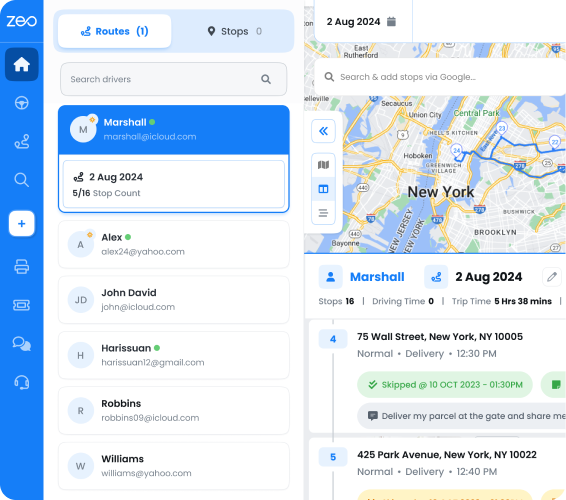
Zeo optimizes routes and last-mile delivery for businesses, offering optimized routes and customer satisfaction. Its advanced algorithm saves fuel, time, and money, enhancing overall business efficiency. Efficient route planning, utilizing data analytics to identify optimal routes and reduce operational costs.
-
Real-time Tracking and Visibility
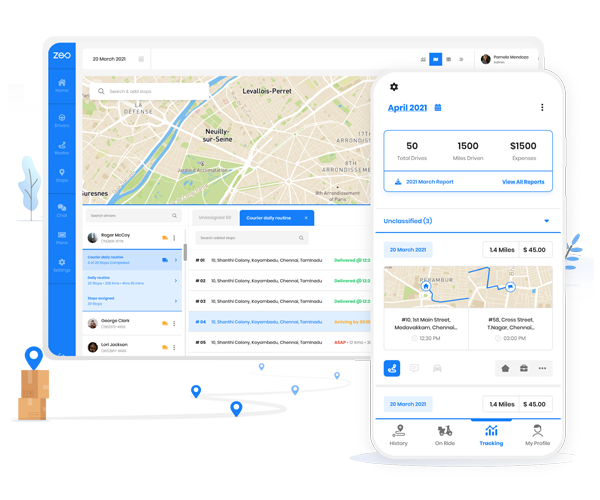
The Live Route Tracking feature of Zeo allows truck drivers to be monitored at any time, providing accurate delivery estimates and last-minute stops. This enhances operational oversight by providing real-time information on their location and expected arrival time at their next destination.
-
Automated Dispatch and Scheduling
Zeo manages transportation operations, including planning, scheduling, and monitoring, as well as assigning drivers and vehicles to specific routes and shipments. Zeo allows tracking of drivers and delivery status to ensure planned delivery. Proactively addressing delays and training dispatch teams and drivers is possible, allowing for efficient problem-solving and a smoother delivery process.
Automating dispatching can enhance efficiency and minimize manual errors by assigning orders to drivers based on proximity to delivery locations, thereby reducing response time and optimizing resource allocation.
-
Route Analytics
Zeo Route Planner’s Route Analytics feature significantly enhances delivery management by providing valuable insights for businesses. Zeo tracks driver performance metrics like deliveries, and time spent, helping identify top performers and areas for improvement. Analytics provide detailed insights into route efficiency, allowing analysis of whether drivers followed the planned route or deviated, affecting delivery times and fuel consumption.
Handling Schedule Changes Without Disrupting Operations
One of the biggest challenges in delivery management isn’t building the initial plan — it’s adapting when things change. A driver calls in sick, a customer requests a different delivery day, or a route needs to pause temporarily for a holiday or inventory count. Businesses that rely on rigid, manually built schedules often end up rebuilding entire routes from scratch every time something shifts.
Zeo’s scheduled and recurring routes come with flexibility built in. Blackout Dates let managers pause a scheduled route for a specific day without deleting the whole plan, which is useful for holidays or temporary closures. Day Plan functionality allows different drivers to be assigned to specific days within the same recurring route, so a Monday driver and a Friday driver can both work off one schedule. For one-off changes, Date Override lets a manager swap the assigned driver for a single day without touching the rest of the recurring route. Together, these features reduce the administrative overhead of maintaining weekly or monthly delivery schedules.
Building Routes Faster From Existing Data
Delivery managers often spend unnecessary time re-entering addresses that are used over and over again — regular customers, recurring drop-off points, or common supplier stops. Zeo’s Favorites feature stores these frequently used stops so they don’t need to be manually re-added each time a new route is built.

increase fuel savings
Hassle Free Deliveries & Pickups!
Optimize routes with our algorithm, reducing travel time and costs efficiently.
Get Started for Free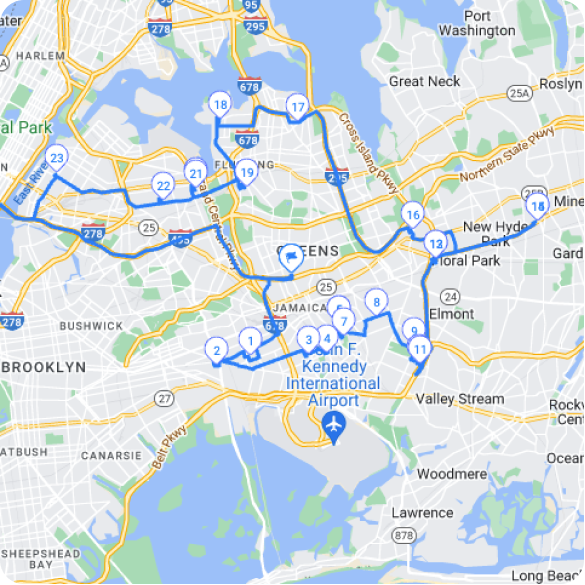
Stops can be uploaded into Favorites in bulk directly from a spreadsheet, turning a list of addresses into a reusable set that’s ready whenever it’s needed. From there, Quick Route Creation from Favorites converts a saved list into a ready-to-go route instantly, cutting out the manual stop-by-stop entry process. Zeo also supports adding stops from multiple sources in one route — spreadsheets, images, Favorites, or Google Search — which matters for businesses juggling data from different systems or teams.
For businesses with specific routing requirements, Zeo’s Avoid Params let managers exclude highways, tunnels, trunks, bridges, fords, or ferries from generated routes, which is useful for larger vehicles or drivers who need to steer clear of certain road types. Navigate as Added preserves a manually set stop order when a manager wants a specific sequence to stick rather than being automatically re-optimized. For businesses coordinating pickups and deliveries, Pickup–Delivery Linking automatically pairs related stops and sequences them correctly, reducing the risk of a delivery being attempted before its matching pickup is complete.
Conclusion
Efficient delivery management is crucial for modern businesses as it directly impacts customer experience and profitability. Integrating technology and automation can enhance the process, improve visibility, enable order tracking, and boost customer satisfaction.
If you want to boost your delivery management game, Zeo delivery management software uses location intelligence to give effective route planning insights.
Book a free demo with Zeo, and our team of professionals will contact you.
Frequently Asked Questions
What does a delivery management system actually include?
A delivery management system typically covers route planning, driver dispatch, real-time tracking, and proof of delivery in one connected workflow. Most systems also include customer communication tools like SMS or email notifications so recipients know when to expect their delivery. The goal is to replace manual scheduling and spreadsheet-based tracking with a single source of truth for the entire delivery process.
How many stops can one driver realistically handle in a day?
The number of stops a driver can handle depends on delivery density, time windows, and average service time per stop, but urban routes with tight clustering often allow 25-40 stops per shift, while rural or long-distance routes may only support 10-15. Factors like vehicle capacity, traffic patterns, and mandated break times under FMCSA hours-of-service rules also directly affect daily stop counts for commercial drivers. Businesses should track actual completion data over several weeks before setting fixed daily quotas.
What’s the difference between route optimization and route planning?
Route planning is the general process of deciding which stops a driver will make and in what order, while route optimization uses algorithms to calculate the most efficient sequence based on distance, time windows, and vehicle capacity. Zeo’s AI-powered route optimization automatically factors in these constraints and reassigns stops across drivers, saving teams 2+ hours daily compared to manually sequencing routes. Route planning can be done with a simple list, but optimization requires software that can process multiple variables simultaneously.
How can small businesses reduce delivery costs without hiring more drivers?
Small businesses can reduce delivery costs by tightening route sequencing, reducing backtracking, and grouping deliveries by geographic proximity instead of order received time. Capacity-based routing also helps ensure each vehicle is loaded efficiently rather than running partially empty trips. Many businesses find that better route planning alone recovers enough drive time to add extra stops per shift without needing additional staff or vehicles.
Why is real-time tracking important for customer satisfaction?
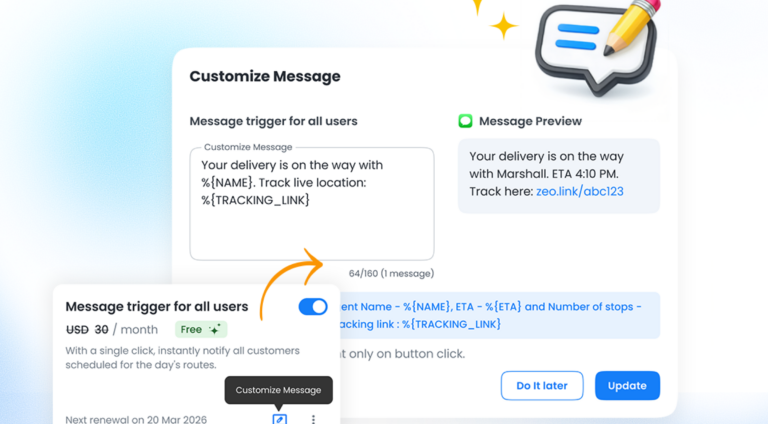
Real-time tracking reduces the volume of “where is my delivery” calls and gives customers accurate expectations about arrival times, which directly improves satisfaction scores. Zeo’s live GPS tracking and live ETA updates let customers follow their delivery through a branded tracking link, cutting down on manual status-check communication between dispatch and drivers. This transparency also helps businesses proactively flag delays before a customer has to ask about them.
Are you a fleet owner?
Want to manage your drivers and deliveries easily?
Grow your business effortlessly with Zeo Routes Planner – optimize routes and manage multiple drivers with ease.
increase fuel savings
Save 2 Hours on Deliveries, Everyday!
Optimize routes with our algorithm, reducing travel time and costs efficiently.
Get Started for Free