


Updated on: November 18, 2026
TL;DR: Strategic route planning software maximizes workforce efficiency by automating route sequencing, driver assignment, and real-time tracking so field teams spend less time on the road and more time completing jobs. Businesses using optimized routing report faster job completion, lower fuel costs, and improved on-time performance. Route optimization tools like Zeo Route Planner address this with AI-powered route optimization and capacity-based routing, helping logistics and field service teams save 2+ hours daily.
Efficient workforce management is the cornerstone of business success, driving productivity, customer satisfaction, and profitability. However, many businesses face challenges in optimizing their mobile workforce’s routes, leading to inefficiencies and missed opportunities. Strategic route planning software offers a solution to this challenge by revolutionizing how businesses manage their field workers, delivery drivers, and service technicians. By harnessing the power of strategic route planning software, businesses can significantly enhance workforce efficiency and productivity, paving the way for accelerated growth and success.
Role of Strategic Route Planning Software
Strategic route planning software revolutionizes how businesses manage their mobile workforce across various industries. From logistics and transportation to field services and fleet management, businesses in diverse sectors rely on strategic route planning software to optimize routes and streamline operations. For instance, a logistics company can use route planning software to optimize delivery routes, reduce fuel costs, and improve delivery times. Similarly, a field service organization can use the same software to schedule service calls efficiently, minimize travel time, and maximize technician productivity. The versatility of strategic route planning software makes it indispensable for businesses seeking to maximize workforce efficiency and drive growth.
This need is only growing. According to the U.S. Bureau of Labor Statistics, employment of delivery drivers and driver/sales workers is projected to grow in the coming years as e-commerce and on-demand delivery expand, putting added pressure on businesses to do more with the same number of vehicles and workers. At the same time, the Federal Highway Administration reports that vehicle miles traveled on U.S. roads continue to climb year over year, which means more congestion and more unpredictable travel times for any business that depends on the road network. Strategic route planning software directly addresses both pressures by making every mile and every work hour count.
Benefits of Strategic Route Planning Software for Workforce Efficiency
Businesses can leverage route planning software like Zeo to enhance workforce efficiency. There are plenty of other benefits that a robust route optimization platform has to offer:
- Time-Saving
Efficient route planning saves valuable time by optimizing routes and minimizing travel distances. This allows drivers and field workers to focus on their tasks and complete more jobs in less time. Businesses can achieve higher job completion rates, faster response times, and increased revenue by leveraging strategic route planning software. With Zeo’s intuitive route optimization features, businesses can leverage route optimization for significant time savings and productivity gains.
- Cost Reduction
Optimizing routes helps businesses reduce fuel costs, vehicle wear and tear, and labor expenses. By minimizing route deviations and avoiding traffic congestion, businesses can lower operational costs and improve bottom-line performance. Zeo’s route optimization algorithms and driver management features enable businesses to optimize driver schedules, minimize travel distances, and reduce operational expenses. This cost-saving benefit enables businesses to allocate resources more efficiently and invest in growth initiatives.
- Improved Customer Experience
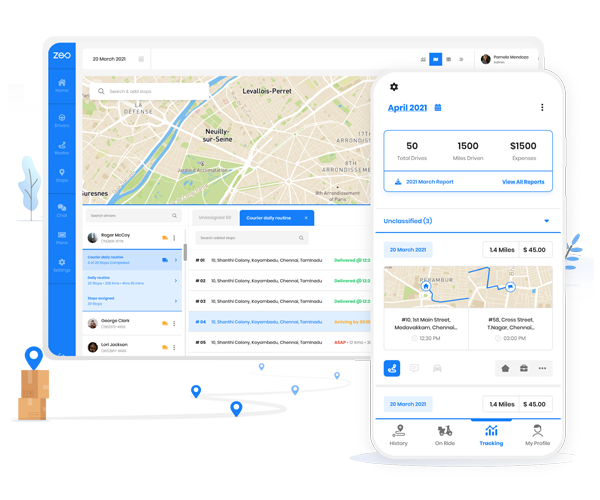
Timely service delivery enhances the overall customer experience and fosters loyalty. By providing accurate arrival time and reducing wait time, businesses can exceed customer expectations and generate positive word-of-mouth referrals. Zeo’s real-time tracking and monitoring capabilities enable businesses to provide customers with accurate updates on their service status. This helps in ensuring superior service delivery and customer satisfaction.
- Enhanced Productivity
Optimized routes enable field workers to complete tasks promptly and efficiently. By minimizing travel time and eliminating inefficiencies, businesses can achieve higher levels of productivity and job completion rates. Zeo’s mobile route planner empowers field workers to access optimized routes on their smartphones or tablets, enabling them to navigate efficiently and complete tasks promptly. This enhanced productivity translates into increased revenue and profitability for businesses.
- Real-time Visibility
Real-time tracking and monitoring provide businesses with visibility into their mobile workforce, enabling them to track driver locations, monitor route progress, and respond to unexpected events promptly. This real-time visibility allows businesses to make informed decisions, adjust routes in real time, and ensure optimal resource allocation. Zeo’s real-time tracking features enable businesses to enhance operational efficiency, minimize delays, and deliver superior service to customers.
- Improved Resource Allocation
Effective resource allocation maximizes efficiency and minimizes costs. By optimizing resource allocation based on factors such as vehicle capacity and route efficiency, businesses can minimize idle time and maximize productivity. Zeo’s capacity planning features enable businesses to optimize resource allocation, ensuring that the right resources are deployed to the right locations at the right times. This improved resource allocation enables businesses to maximize workforce efficiency and achieve their operational goals.
- Data-driven Decision Making
Analyzing route data and performance metrics enables businesses to make data-driven decisions and identify opportunities for improvement. By leveraging Zeo’s advanced analytics capabilities, businesses can analyze route data, identify trends, and uncover opportunities for optimization. This data-driven approach empowers businesses to optimize routes, streamline operations, and achieve their strategic objectives with confidence.
Planning for Scheduling Complexity in a Growing Workforce
As a mobile workforce grows, the scheduling puzzle becomes more complex. Businesses often juggle recurring service visits, one-off urgent jobs, and seasonal spikes in demand, all while trying to keep every driver’s day realistic and fair. This is where modern scheduling capabilities matter most. Scheduled and recurring routes allow businesses to set up a week’s or month’s worth of visits in advance, while still having the flexibility to pause a specific route temporarily using blackout dates without deleting the entire schedule, which is useful for holidays, inventory counts, or planned facility closures.
Within a single recurring route, workforce needs can also shift day to day. A day plan lets managers assign different drivers or agents to specific days of a scheduled route, which is helpful when staffing rotates across a week. For one-off disruptions, such as a driver calling in sick, a date override swaps the assigned agent for a single day without touching the rest of the recurring schedule. Together, these capabilities give operations teams the structure of a fixed plan with the flexibility to adapt when real life gets in the way.
Reducing Setup Time Before Routes Even Begin
Workforce efficiency starts before a single mile is driven. Many businesses lose time every morning manually re-entering the same stops, addresses, or client sites into their planning tool. Favorites addresses this by letting teams save frequently used stops, and a bulk upload option makes it possible to import an entire spreadsheet of addresses directly into a Favorites list for reuse. From there, quick route creation from Favorites turns a saved list into a ready-to-go route in moments, cutting out repetitive data entry for recurring service areas or regular customer stops.
Flexibility in how stops get added matters too, since not every business works from a single data source. Multi-source stop upload allows stops to be added from spreadsheets, images, Favorites, or even a Google Search, so dispatchers aren’t forced to reformat data just to build a route. For businesses that already have a preferred stop sequence, such as a technician who knows the most efficient path through their territory, navigate as added preserves that manual order instead of automatically re-optimizing it.
Matching Routes to Real-World Driving Constraints
Not all roads are equal, and workforce efficiency also depends on avoiding routes that create delays, safety concerns, or vehicle restrictions. Avoid params let businesses exclude highways, tunnels, trunks, bridges, fords, and ferries from generated routes, which is particularly useful for larger vehicles or drivers unfamiliar with certain road types. This kind of routing control reduces the chance of a driver getting stuck on a route that technically looks shorter on a map but is impractical in practice.

increase fuel savings
Save $200 on fuel, Monthly!
Optimize routes with our algorithm, reducing travel time and costs efficiently.
Get Started for Free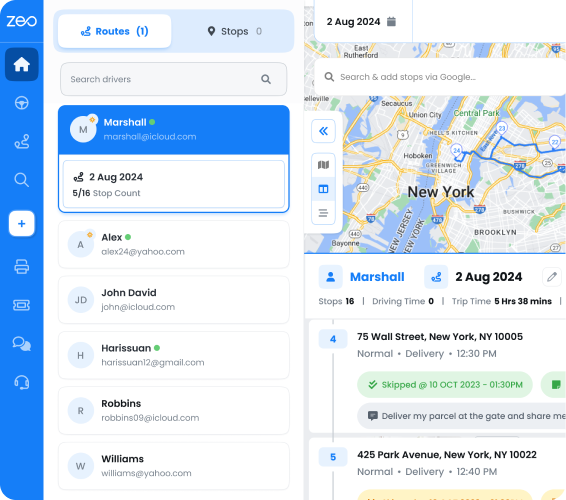
For businesses that handle both pickups and deliveries in the same operation, such as courier services or route-based field technicians retrieving equipment, pickup–delivery linking automatically pairs related stops and sequences them correctly so a pickup always happens before its matching delivery. This removes a common source of manual route-building errors and keeps linked jobs properly ordered without extra planning effort from dispatchers.
Conclusion
Strategic route planning software is a game-changer for businesses looking to maximize workforce efficiency and drive growth. By leveraging Zeo’s powerful features and capabilities, businesses can save time, reduce costs, enhance the customer experience, and improve productivity. With real-time visibility, improved resource allocation, and data-driven decision-making, businesses can optimize their operations, increase profitability, and stay ahead of the competition.
Connect with Zeo experts and schedule a free demo today to unlock the full potential of your workforce and take your business to new heights of success.
Frequently Asked Questions
How do businesses measure workforce efficiency in route-based operations?
Workforce efficiency in route-based operations is typically measured through metrics like stops completed per hour, on-time arrival rates, miles driven per job, and idle or wait time between stops. Tracking these metrics over time helps managers spot bottlenecks, such as drivers spending too long in traffic or too much idle time between appointments. Route analytics and reporting tools make it easier to track these metrics consistently across an entire team rather than relying on manual logs.
What causes inefficient routing in a mobile workforce?
Inefficient routing usually stems from manual scheduling, outdated addresses, poor sequencing of stops, and a lack of real-time visibility into driver locations. When routes are planned by hand or in spreadsheets, it’s easy to overlook traffic patterns, time windows, or vehicle capacity, which leads to wasted miles and missed appointments. Businesses that rely on static, pre-planned routes without the ability to adjust mid-shift also struggle when unexpected delays or urgent jobs arise.
How can small businesses start optimizing routes without a large budget?
Small businesses can start by consolidating their stop lists, grouping jobs by geographic proximity, and setting realistic time windows before investing in any software. Many route planning platforms, including Zeo Route Planner, offer bulk address import from Excel, CSV, or Google Sheets, which lets a small team digitize their existing routes in minutes rather than building a system from scratch. This low-friction entry point allows smaller operations to test route optimization before committing to a larger rollout.
What role does driver scheduling play in overall operational efficiency?
Driver scheduling directly affects fuel costs, overtime expenses, and customer satisfaction, since poorly matched schedules often lead to late arrivals or underused vehicle capacity. Aligning work hours, break times, and skill-based assignments with actual job requirements helps ensure the right driver is handling the right job at the right time. The Federal Motor Carrier Safety Administration’s hours-of-service regulations also shape scheduling decisions for commercial drivers, making compliant, efficient scheduling a legal as well as operational priority.
How does real-time tracking improve accountability in field service teams?
Real-time tracking gives managers visibility into where every driver or technician is throughout the day, which reduces disputes over arrival times and job durations. Zeo Route Planner’s live GPS tracking paired with proof of delivery, including photo capture and digital signatures, creates a verifiable record of when and how each job was completed. This combination of location data and documented proof helps resolve customer disputes quickly and builds a reliable performance history for each team member.
Are you a fleet owner?
Want to manage your drivers and deliveries easily?
Grow your business effortlessly with Zeo Routes Planner – optimize routes and manage multiple drivers with ease.
increase fuel savings
Save $200 on fuel, Monthly!
Optimize routes with our algorithm, reducing travel time and costs efficiently.
Get Started for Free