

Updated on: March 20, 2026
Reading Time: 3 minutes
TL;DR: Image scanning technology converts printed delivery addresses into digital format instantly, eliminating manual data entry for route planning. This optical character recognition (OCR) feature can reduce route setup time from hours to minutes. Route optimization tools like Zeo Route Planner address this with bulk address import capabilities, helping delivery teams save 2+ hours daily.
You are a delivery driver who needs to make hundreds of deliveries every day. However, adding to your woes is the fact that before starting with the deliveries you have to spend hours manually adding the stops in your route planner.
What if we told you that we can make your life easy?
The in-app image scanning feature of Zeo Route Planner is a godsend for delivery drivers. It saves you the hassle of adding the stops manually from the printed manifest or parcels. You also don’t need to use separate apps for OCR and route planning.
Hop on a quick 30-minute demo call to learn how Zeo can easily create the best routes for your business!
What is image scanning/OCR?
OCR stands for Optical Character Recognition. It is a technology that scans the image of a text and converts it into machine-readable text format which can also be edited. It eliminates the need to type text from an image. According to the U.S. Bureau of Labor Statistics, delivery drivers spend significant time on administrative tasks, making OCR technology increasingly valuable for operational efficiency.
How is image scanning of delivery addresses beneficial?
OCR is more efficient and mistake-free
When you get a manifest from the fleet manager with multiple delivery addresses it is tedious to type all the addresses and customer details in a route planner. It can take you a couple of hours to do it depending on the number of deliveries. Manually typing the addresses can also lead to errors and you will end up reaching the wrong address. Scanning the manifest using image scanning saves you time as well as ensures that the addresses and customer details are captured accurately.
It can read any language
You need not worry even if the delivery addresses on shipping packages are in your local language. The OCR feature can detect any language. Modern OCR systems support over 100 languages, making them ideal for businesses operating in diverse markets.
It can read any format or sequence of fields
The image scanning feature can correctly identify the customer’s name, address, zip code and phone number irrespective of the sequence of details. On scanning the image, the fields get populated automatically.
It can read any font and handwritten text
OCR can read the text in any font even if it is handwritten given that the text in the image should be legible.
Add multiple addresses in one go
You’ll have to add the addresses one by one if you try to do it manually. Capturing or uploading an image of the addresses enables you to upload all the addresses in one go
Technology Behind Modern OCR Systems
Today’s OCR technology has evolved significantly from early systems that could only read specific fonts. Modern solutions use machine learning algorithms to recognize text patterns, improving accuracy rates to over 95% for printed text and 85% for handwritten text under optimal conditions. The National Institute of Standards and Technology has established benchmarks showing that OCR systems perform best with high-contrast images and clear text formatting.
The integration of artificial intelligence has made OCR systems more adaptable to various document formats and layouts. These systems can now distinguish between different types of information on a single page, automatically categorizing data into appropriate fields like addresses, phone numbers, and customer names.

increase fuel savings
Hassle Free Deliveries & Pickups!
Optimize routes with our algorithm, reducing travel time and costs efficiently.
Get Started for Free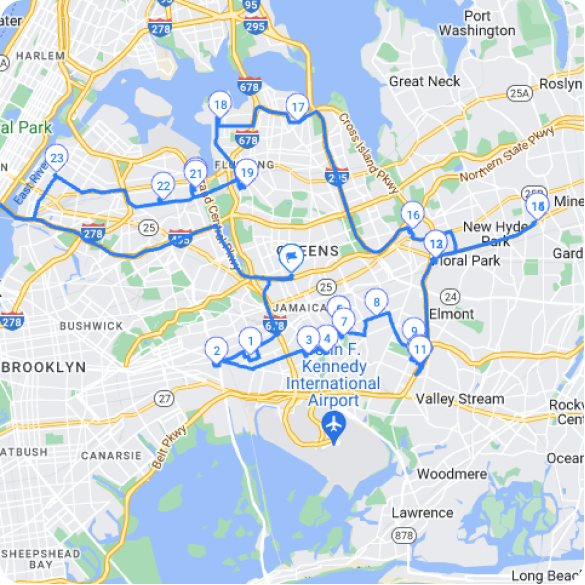
Impact on Delivery Operations
For delivery businesses, the time savings from OCR technology translate directly into operational benefits. Companies report reducing route planning time by up to 75% when switching from manual entry to image scanning methods. This efficiency gain allows drivers to start their routes earlier and complete more deliveries per shift.
The accuracy improvements also reduce costly mistakes. Wrong addresses lead to failed deliveries, customer complaints, and additional fuel costs for return trips. OCR technology minimizes these human errors by eliminating the transcription process entirely.
Steps for using the image scanning feature of Zeo Route Planner:
- Step 1: In the Zeo app, go to ‘+Add New Route’ and you’ll see 3 options – Import Excel, Image Upload and Scan Barcode.
- Step 2: Click on the ‘Image Upload’ option. You will see a pop-up with 2 options. You can either click a picture or upload it from the gallery of your mobile phone.
- Step 3: Zeo will detect the addresses and customer details. The fields will get populated automatically and you can cross-check them for accuracy.
- Step 4: Scan more addresses using the ‘Scan more’ option. Once all the addresses are scanned and added, click on ‘Done’.
- Step 5: Add further details to each address. You can update the address as a pickup or a delivery address along with the priority of the stop. Any delivery notes, time slot preference and parcel details can also be added at this stage. Click on ‘Done adding stops’ once all the details are correctly updated.
- Step 6: Click on ‘Create & Optimize New Route’ or ‘Don’t optimize, navigate as added’ as per your preference.
Sign up for a free trial of Zeo Route Planner now!
Wrapping Up
As a delivery driver, you want to make the best use of your time. When you have multiple deliveries to make, features like image scanning in your route planner app help you get started in no time and increase your earning potential. At Zeo, we want to give you all the support you need to be a star delivery driver!
Frequently Asked Questions
How accurate is OCR technology for reading delivery addresses?
Modern OCR systems achieve 95%+ accuracy for printed text and 85%+ for clear handwritten text. The accuracy depends on image quality, lighting conditions, and text clarity, with high-contrast images producing the best results.
Can image scanning work with different document formats and layouts?
Yes, advanced OCR technology can read various document formats regardless of field sequence or layout. The system automatically identifies and categorizes information like names, addresses, phone numbers, and zip codes from manifests, shipping labels, or delivery lists.
Does OCR technology work with handwritten addresses?
OCR can process handwritten text, though accuracy rates are lower than printed text. Clear, legible handwriting typically yields 80-85% accuracy, while messy handwriting may require manual verification of scanned results.
What file formats does image scanning support for address import?
Most OCR systems support common image formats including JPEG, PNG, PDF, and TIFF. Mobile apps typically allow both camera capture and gallery uploads, while desktop versions may support additional formats like BMP and GIF.
How much time can image scanning save compared to manual address entry?
Delivery teams using image scanning report saving 2-3 hours daily on route setup compared to manual entry. With Zeo Route Planner’s bulk address import and AI-powered route optimization used by 1.5M+ users across 150+ countries, businesses can process entire manifests in minutes rather than hours.
Are you a fleet owner?
Want to manage your drivers and deliveries easily?
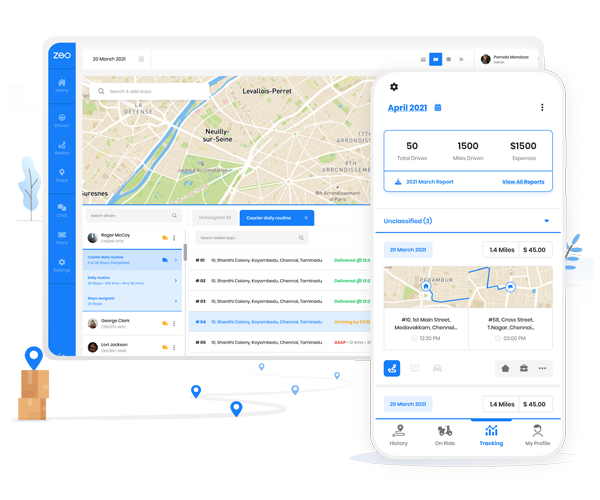
Grow your business effortlessly with Zeo Routes Planner – optimize routes and manage multiple drivers with ease.

increase fuel savings
Save $200 on fuel, Monthly!
Optimize routes with our algorithm, reducing travel time and costs efficiently.
Get Started for Free