

Updated on: March 29, 2026
Reading Time: 3 minutes
TL;DR: Route planning creates basic delivery sequences, while route optimization uses advanced algorithms to maximize efficiency and minimize costs across your entire fleet. Studies show optimized routes can reduce fuel consumption by up to 25% and increase delivery capacity by 30%. Route optimization tools like Zeo Route Planner address this with AI-powered route optimization and dynamic route adjustments, helping logistics teams save 2+ hours daily.
Mastering the art of route management is critical in the complicated and interrelated world of logistics, where efficiency can make or destroy a corporation. Route planning and route optimization are two essential ideas in this domain. While they may appear identical at first, they serve diverse functions and have varying degrees of effect on your operations.
In this detailed blog article, we’ll explore the complexities of route planning and route optimization, exploring their benefits, highlighting their distinctions, and answering some frequently asked concerns.
Let’s begin.
What is Route Planning?
Route planning is the foundational process of charting a course for your delivery vehicles or service personnel. At its core, it involves mapping out a sequence of stops and determining the order in which they should be visited. This can be done manually, semi-automatically, or with the assistance of basic software. The primary goal of route planning is to establish a basic framework for your logistics operations, considering factors such as distance, traffic conditions, and time constraints.
In essence, route planning serves as the initial blueprint for your deliveries or service routes, providing a starting point from which you can work. However, it often lacks the sophistication required to achieve optimal efficiency.
What is Route Optimization?
Route optimization, on the other hand, is the next level of logistics management. It represents the art and science of fine-tuning your delivery routes to maximize efficiency and productivity. Route optimization leverages advanced algorithms and software solutions to analyze many variables and make real-time adjustments. The primary objective here is to get from point A to point B in the most cost-effective, time-efficient, and environmentally friendly manner possible.
Modern route optimization systems consider multiple variables simultaneously, including vehicle capacity constraints, driver skill requirements, time windows for deliveries, and priority levels for different stops. According to the U.S. Department of Transportation, freight shipments are valued at nearly $20 trillion annually, making optimization critical for economic efficiency.
What are the Advantages of Route Optimization
Route optimization is a powerful logistics and transportation management idea offering numerous advantages for businesses of all sizes and industries. Here are some of the key advantages of route optimization:
- Increased Efficiency: One of the most apparent advantages of route optimization is the significant boost in efficiency. By identifying the shortest and quickest paths to destinations, it minimizes travel time, which, in turn, reduces fuel consumption and emissions.
- Better Productivity: When routes are optimized, your drivers or service personnel can complete more stops or tasks in less time. This translates into higher output, increased revenue potential, and a happier, more motivated workforce.
- Flexibility: The beauty of route optimization software lies in its adaptability. It can respond to unforseen circumstances like traffic congestion, road closures, or last-minute orders by dynamically adjusting routes. This flexibility ensures that your operations run smoothly even in the face of disruptions.
- Cost Savings: Reduced fuel consumption, lower maintenance costs, and greater labor efficiency contribute to significant cost savings. Route optimization is a practical way to cut operational expenses without compromising service quality.
- Customer Satisfaction: Faster and more reliable deliveries are the keys to customer satisfaction. Meeting delivery promises and offering shorter delivery windows can set you apart from competitors and build long-lasting customer relationships.
- Environmental Impact Reduction: According to the Environmental Protection Agency, transportation accounts for approximately 29% of total greenhouse gas emissions in the United States. Optimized routes directly contribute to reducing this environmental footprint by minimizing unnecessary miles driven.
- Scalability: As your business grows, route optimization becomes even more valuable. Managing 50 or 500 stops manually becomes virtually impossible, but optimization software handles increased complexity seamlessly.
Read more: 9 Best Customer Retention Strategies for Delivery Businesses
How Technology Transforms Route Management
The evolution from basic route planning to advanced optimization represents a technological leap that fundamentally changes how businesses operate. Modern optimization platforms integrate real-time data feeds, machine learning algorithms, and predictive analytics to create routes that adapt throughout the day.
Key technological advancements include:
- Real-time Traffic Integration: Systems now pull live traffic data to avoid congestion and road closures automatically
- Predictive Analytics: Historical data helps predict delivery times more accurately and identify potential bottlenecks
- Mobile Integration: Drivers receive updated routes directly on their mobile devices with seamless navigation app connectivity
- Customer Communication: Automated notifications keep customers informed with accurate ETAs and tracking capabilities
Route Planning vs. Route Optimization
Let’s take a more detailed look at the differences between route planning and route optimization with a comprehensive breakdown:

increase fuel savings
Hassle Free Deliveries & Pickups!
Optimize routes with our algorithm, reducing travel time and costs efficiently.
Get Started for Free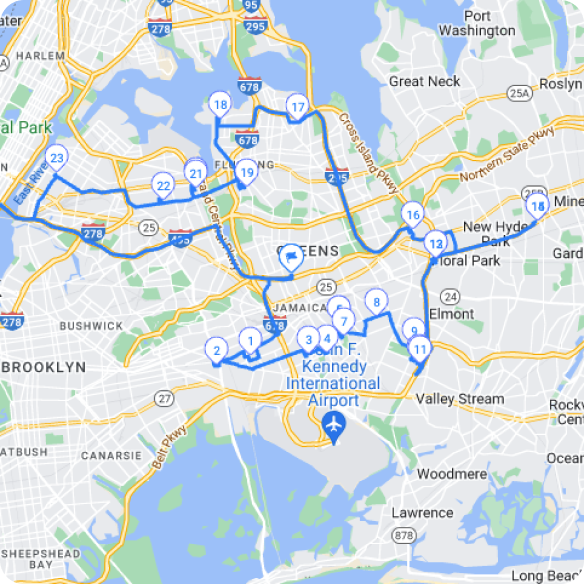
| Aspect | Route Planning | Route Optimization |
| Process | Manual or semi-automated | Automated, algorithm-based |
| Complexity | Basic | Advanced |
| Focus | Establishing a basic framework | Fine-tuning for optimal efficiency |
| Real-time adjustments | Limited | Dynamic and adaptive |
| Optimization potential | Limited cost savings | Significant cost savings |
| Adaptability | Limited to planned routes | Flexibility in changing conditions |
| Data utilization | Basic location data | Multiple data sources and constraints |
| Customer visibility | Limited tracking capabilities | Real-time updates and notifications |
Industry Applications and Use Cases
Route optimization proves valuable across numerous industries, each with unique requirements and constraints. Delivery services benefit from capacity-based routing and time window management, while service industries like pressure washing operations use optimized routing to maximize daily appointments and reduce travel time between jobs.
Field service companies particularly benefit from skill-based driver assignment, ensuring the right technician reaches each job site. For businesses requiring compliance documentation, integrated proof of delivery features with photo capture and digital signatures streamline operations while maintaining necessary records.
Government agencies and municipal services have also recognized the value, with comprehensive route optimization solutions delivering measurable ROI through reduced fuel costs and improved service delivery times.
FAQs
- How much time can route optimization typically save compared to manual planning?
Route optimization typically saves 20-40% in planning time and 15-30% in actual drive time compared to manual methods. The time savings increase exponentially with fleet size and route complexity, as manual planning becomes increasingly inefficient for larger operations. - What is the main difference between route optimization and route planning?
The primary distinction lies in the level of automation and sophistication. Route planning is often a manual or semi-automated process that creates a basic routing framework. In contrast, route optimization is an advanced, automated process that continuously fine-tunes routes in real time for maximum efficiency and cost savings. - How does route optimization software save business costs?
Route optimization software saves costs by minimizing fuel consumption, reducing maintenance expenses, and optimizing labor hours. It accomplishes this by selecting the most efficient routes for each delivery, considering factors like traffic conditions, vehicle capacity, and delivery windows. - Can small businesses benefit from route optimization, or is it only for large fleets?
Small businesses often see the highest percentage improvements from route optimization. Even with just 2-3 vehicles, optimization can eliminate wasted miles, improve customer service through better time estimates, and reduce fuel costs. The return on investment is typically faster for smaller operations due to lower software costs relative to immediate savings.
Read more: How to Choose the Right Delivery Management Software?
Making the Transition from Planning to Optimization
For businesses currently using manual route planning, the transition to optimization requires careful consideration of current processes, team capabilities, and growth objectives. Start by identifying pain points in your current system—excessive drive times, missed delivery windows, or customer complaints about late arrivals.
The most successful transitions involve gradual implementation, beginning with core optimization features like automated stop sequencing and basic capacity constraints. As teams become comfortable with the technology, advanced features like real-time tracking, customer notifications, and dynamic rerouting can be added.
Training plays a crucial role in successful adoption. Drivers and dispatchers need to understand how optimization algorithms work and how to interpret the recommendations. Most importantly, they should understand that optimization enhances their expertise rather than replacing it.
Seamlessly Execute Delivery Operations with Zeo
While route planning is a fundamental step in logistics, route optimization is the key to unlocking significant cost savings, productivity gains, and customer satisfaction. Embracing the latest technology and software solutions in this field can give your business a competitive edge in the ever-evolving world of logistics.
For businesses ready to move beyond basic planning, modern optimization platforms offer comprehensive solutions that address every aspect of route management. From initial route creation through final delivery confirmation, integrated systems provide the tools needed to compete in today’s demanding marketplace.
Whether you’re managing a small local delivery service or overseeing complex multi-location operations, choosing the right optimization platform can transform your logistics operations and deliver measurable results from day one.
Book a free demo to learn more!
Are you a fleet owner?
Want to manage your drivers and deliveries easily?
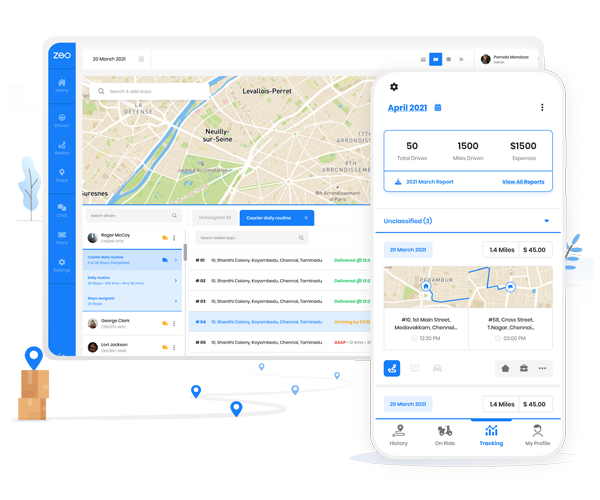
Grow your business effortlessly with Zeo Routes Planner – optimize routes and manage multiple drivers with ease.
increase fuel savings
Hassle Free Deliveries & Pickups!
Optimize routes with our algorithm, reducing travel time and costs efficiently.
Get Started for Free