

Updated on: October 16, 2026
Reading Time: 4 minutes
TL;DR: Yes, you can maintain your preferred delivery order without route optimization by using manual stop sequencing features. Many businesses need to prioritize specific deliveries based on urgency, customer type, or operational requirements rather than pure efficiency. Route optimization tools like Zeo Route Planner address this with priority stops and “navigate as added” functionality, helping delivery teams save 2+ hours daily while maintaining control over stop order.
Zeo Route Planner offers you the fastest optimized route for your deliveries. But are you someone who needs to prioritize deliveries and doesn’t need an optimized route? Well, Zeo Route Planner offers you the solution to this as well.
Hi, Welcome to Zeo Route Planner where we help you to make the shortest route with multiple stops in seconds. We understand that some deliveries are urgent and don’t requires optimization. The deliveries have to be performed in a specific order so that you meet all the priorities.
Zeo Fleet Planner offers you the ability to navigate multiple stops in such a way that you decide the order of the stops and the deliveries can be done easily.
Why Manual Route Sequencing Matters for Some Businesses
While route optimization saves time and fuel for most delivery operations, certain scenarios require manual control over stop sequences. Federal transportation guidelines recognize that delivery operations must balance efficiency with operational requirements.
Priority-based routing becomes essential when dealing with time-sensitive medical deliveries, VIP customers, or contractual service level agreements. Some businesses also need to coordinate with customer availability windows that don’t align with geographical optimization patterns.
As of 2026, delivery businesses are increasingly running hybrid models that combine algorithmic efficiency with human judgment. This shift reflects a broader industry trend where customer experience metrics carry as much operational weight as fuel savings or mileage reduction. According to the Bureau of Labor Statistics, delivery and driver-sales roles continue to grow, which means more businesses are refining how they sequence stops to retain customer trust alongside efficiency gains.
Benefits of Maintaining Your Preferred Delivery Order
- Customer Commitment Fulfillment: Honor specific delivery time promises made to high-value clients
- Operational Flexibility: Adapt to last-minute customer requests and schedule changes
- Priority Management: Ensure ASAP deliveries reach customers first, regardless of location
- Driver Familiarity: Allow experienced drivers to follow routes they know work best in specific areas
Manual sequencing works particularly well for mobile service businesses where customer availability takes precedence over distance optimization.
Let’s have a look at How you can use Zeo Route Planner in the best way:
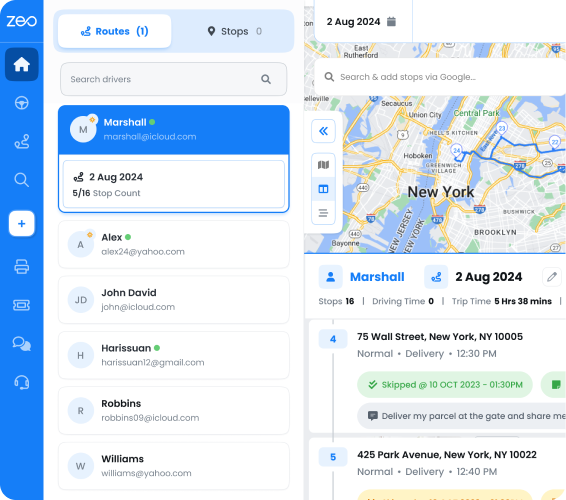
- Create a Route First: Login to your Zeo Account and tap on Create Route. Start adding your stops by searching and importing the list, whether from a spreadsheet, Favorites, an image, or a Google Search result.
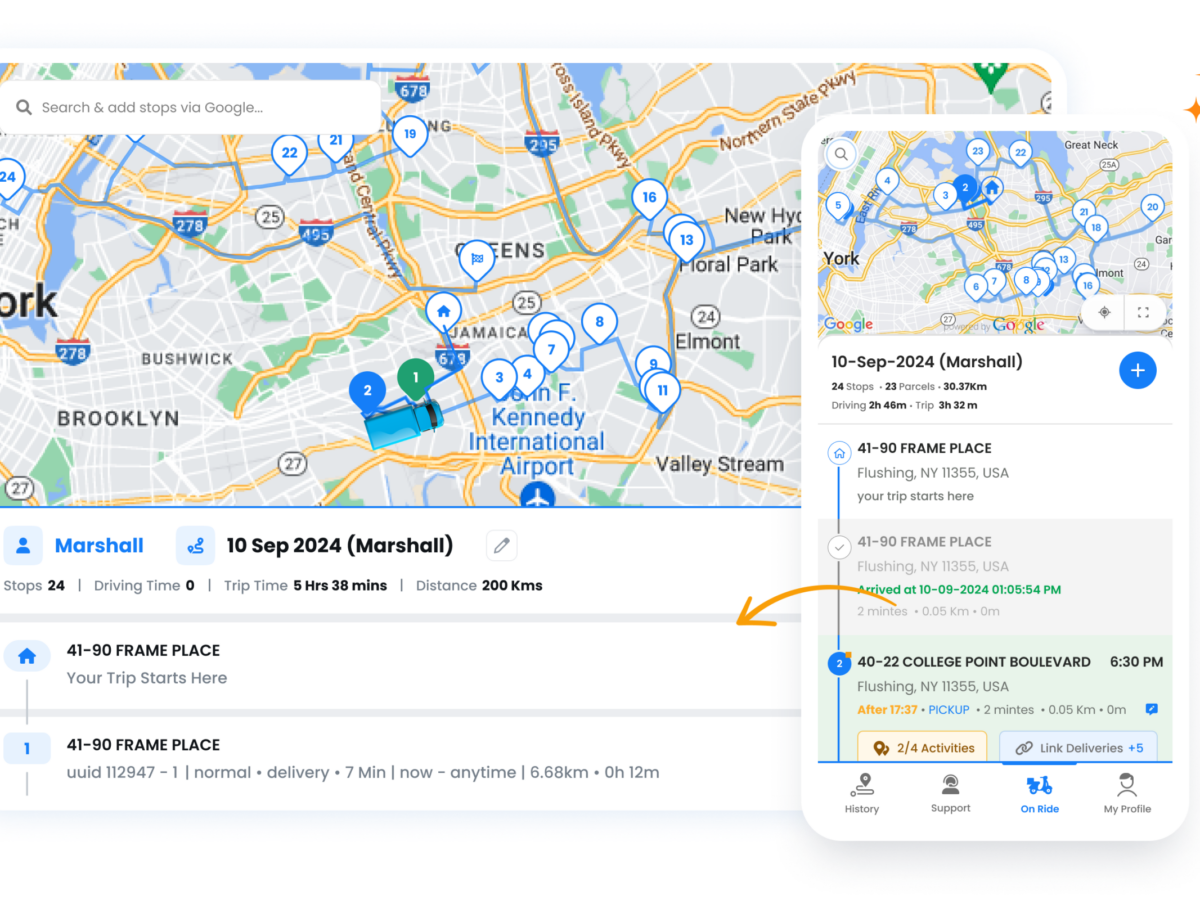
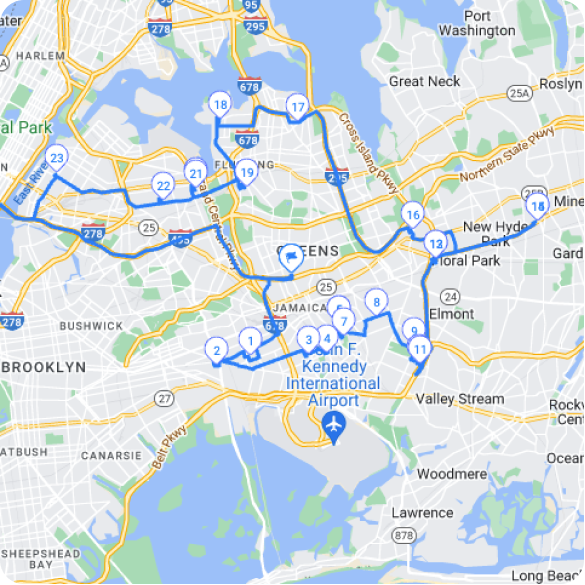
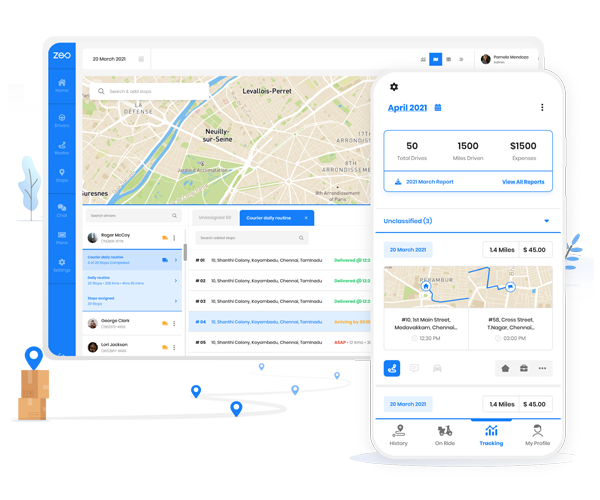
- Navigate as added: Click on Navigate as added button after adding your stops. This will show you the route according to the order you have used while adding stops, without the system automatically re-optimizing your sequence.
- Track and Chat with the drivers: You have successfully assigned stops to your drivers. Now you can track all the drivers from the dashboard in real time and chat with them directly through the in-app messaging.
When to Choose Manual Sequencing vs. Route Optimization
The decision between manual sequencing and automated optimization depends on your business priorities. Bureau of Transportation Statistics data shows that delivery operations prioritizing customer satisfaction over pure efficiency often achieve higher revenue per mile.
Consider manual sequencing when:
- Specific customers have contracted delivery time windows
- Your drivers have established relationships with customers along familiar routes
- Deliveries involve temperature-sensitive or fragile items requiring careful timing
- You’re coordinating with other service providers at the same locations
Route optimization works better for high-volume operations where fuel cost reduction and time savings outweigh individual customer preferences.
Planning Routes Around Recurring Schedules and Exceptions
Businesses that run the same routes week after week often need more flexibility than a single “manual vs. optimized” choice allows. Scheduled and recurring routes let you set up a delivery pattern once and reuse it, while still adjusting for day-to-day realities. For example, if a driver is unavailable for a single day, a date override lets you swap in a replacement agent for just that day without disturbing the rest of the scheduled route. If an entire week or holiday period needs to be paused, blackout dates let you temporarily suspend a route without deleting the schedule you’ve already built.
For operations with different drivers covering different days, day plans allow you to assign distinct agents to specific days within the same recurring route. This is especially useful for businesses balancing manual sequencing needs with staffing changes, since it keeps your preferred stop order intact while adapting who actually drives it.
Optimize routes with our algorithm, reducing travel time and costs efficiently.
increase fuel savings
Hassle Free Deliveries & Pickups!
Handling Paired Stops and Route Restrictions
Manual sequencing gets more complex when deliveries involve linked pickup and delivery pairs, such as courier services or furniture delivery with item retrieval. Pickup-delivery linking automatically pairs related stops and sequences them correctly, so you don’t have to manually track which pickup belongs to which drop-off when building your route order.
Some businesses also need to avoid specific road types regardless of whether they’re using manual or optimized routing. Avoid params let you exclude highways, tunnels, trunks, bridges, fords, and ferries from a route, which matters for drivers in larger vehicles or those navigating areas with load restrictions. Combining this with manual stop order gives you control over both the sequence and the roads used to get there.
Combining Manual Control with Smart Features
Even when maintaining your preferred stop order, modern route planning tools provide valuable operational benefits. Real-time tracking helps customers stay informed about delivery progress, while proof of delivery features including photo capture, digital signatures, and delivery notes ensure service completion documentation.
For businesses serving multiple market segments, consider using hybrid approaches where high-priority customers receive manual sequencing while standard deliveries benefit from optimization algorithms. Building a reusable Favorites list of frequent stops also speeds up this process, since you can convert a saved list into a ready-to-go route instantly instead of re-entering addresses each time.
It is now easier to navigate in the order you want. Remember that, if you get stuck anywhere you can contact our world-class support team or Schedule a demo with them. You can also opt for a 7 Days Free Trial where you can explore our all premium features.
Frequently Asked Questions
Can I manually reorder stops after importing a delivery list?
Yes, most route planning software allows you to drag and drop stops to reorder them manually after import. This gives you complete control over the sequence while still benefiting from navigation guidance and customer notifications throughout the delivery process.
What’s the difference between priority stops and manual route sequencing?
Priority stops are flagged as “ASAP” within an optimized route algorithm, while manual sequencing lets you control the exact order of all stops. Priority stops work well when you have a few urgent deliveries mixed with regular ones, whereas manual sequencing is better when you need complete control over the entire route order.
How much time does manual route sequencing typically add compared to optimization?
Manual sequencing can add 15-30% more drive time compared to fully optimized routes, depending on stop density and geographical spread. As of 2026, businesses using this approach often report higher customer satisfaction scores and fewer missed delivery appointments, which can offset the additional travel time through improved retention rates.
Do delivery tracking features work the same way with manual route sequences?
Yes, customer tracking features like live ETA updates and delivery notifications work identically regardless of whether your route is optimized or manually sequenced. Real-time GPS tracking and customer communication tools operate the same way whether stops follow geographical optimization or your preferred order.
Can I use scheduled routes while still keeping manual control over stop order?
Yes, scheduled and recurring routes can be built using a manual stop order, and that order stays intact every time the route repeats. If you need a one-off change, such as a different driver for a single day, a date override handles that without rebuilding the whole route, and blackout dates let you pause the schedule entirely during holidays or slow periods.
What happens if a stop has both a pickup and a delivery component?
Route planning tools with pickup-delivery linking automatically detect related pickup and delivery stops and sequence them so the pickup always happens before its matching delivery. This removes the manual work of tracking pairs yourself, even within a custom-ordered route.
Are you a fleet owner?
Want to manage your drivers and deliveries easily?
Grow your business effortlessly with Zeo Routes Planner – optimize routes and manage multiple drivers with ease.

increase fuel savings
Save $200 on fuel, Monthly!
Optimize routes with our algorithm, reducing travel time and costs efficiently.
Get Started for Free