

Updated on: March 19, 2026
Reading Time: 3 minutes
TL;DR: Route optimization APIs enable businesses to integrate intelligent routing directly into their existing systems, saving development time while cutting operational costs. Studies show that automated route planning can reduce fuel costs by 10-15% while improving delivery efficiency. Route optimization tools like Zeo Route Planner address this with API integration capabilities, helping logistics teams save 2+ hours daily.
You could be an online store selling t-shirts, a retail store providing home deliveries, or a laundry business providing pick-up and drop services – in all these cases you would be dealing with a fleet of drivers to make last-mile deliveries.
While you were just starting out, it may have been easier to plan the delivery routes manually. But as the scale of your business grew, it would’ve become complex to plan the routes. With numerous orders coming in every day, it would be difficult to assign them to drivers while keeping the cost of deliveries in control.
That’s why you should take the advantage of route optimization API for seamless delivery management.
What is route optimization?
Route optimization means creating the most-efficient route to fulfill orders or client service requests. It is important to note that it doesn’t necessarily mean planning the shortest route but planning a route that would be most cost-effective and time-saving.
According to the U.S. Department of Transportation, freight transportation accounts for a significant portion of vehicle emissions, making efficient routing crucial for both cost savings and environmental impact reduction.
How route optimization API helps your business?
-
Helps in controlling costs
2 teams that save time the most with the help of route optimization are your planning team and your delivery drivers. As route optimization API helps you plan a route within seconds, it saves the precious time of your planning team. This time can be utilized towards income-generating activities of the business.
Even the deliveries can be made at a quicker pace with route optimization API. The route is planned to ensure the best possible usage of time on the road. Hence, the drivers are also able to make more deliveries in a day.
-
Improves efficiency
It helps you make the best use of available resources. It ensures optimum utilization of your fleet’s capacity and driver time so that you don’t have to add more resources unless really required. Research from the Bureau of Transportation Statistics shows that transportation efficiency improvements can significantly impact overall business profitability.
-
Improves customer satisfaction
By ensuring that the deliveries reach your customers faster, route optimization API helps in keeping your customers happy and satisfied. It also ensures that customers receive their orders in their preferred time slots which reduces the chances of missed deliveries. Customers’ expectation of having visibility into the progress of their delivery is also met by providing the tracking link. Happy customers mean happy days for your business.
Read more: Improve Customer Service Using Zeo’s Route Planner
Key Advantages of API-First Route Optimization
API-first solutions offer distinct advantages over standalone software platforms. They provide seamless integration capabilities that allow businesses to maintain their existing workflows while adding powerful optimization features. This approach eliminates data silos and reduces the need for manual data entry across multiple systems.
Additionally, APIs enable real-time data synchronization between your core business systems and route optimization tools. When orders are placed, customer information updated, or delivery preferences changed, these updates flow automatically through your integrated systems, ensuring your routes are always based on the most current information available.
What are the benefits of using a route optimization API?
-
Integrate within your system
A route optimization API can be easily integrated into your enterprise systems and enhance its capabilities. It eliminates the need to operate a separate portal for route planning and smoothens the workflow.
-
Low development cost and time
It would take you significantly more time and money if you were to build in-house route optimization software from scratch vs taking advantage of an API. API can help you get things up & running quickly.
-
Flexibility to build a customized solution
With APIs, you can build a software that best serves your business requirements. If you purchase an API, you can also add to it by building some features in-house or by using various APIs.
Schedule a call with our team to understand how Zeo’s route optimization API can be the perfect solution for your business!
Scaling Route Optimization Across Business Growth
As businesses expand, their routing needs become increasingly complex. What starts as simple point-to-point deliveries evolves into multi-stop routes with varying priorities, time windows, and vehicle constraints. API-based solutions excel in these scenarios because they can handle increased complexity without requiring a complete system overhaul.
Modern route optimization APIs can process thousands of stops across multiple vehicles while considering factors like driver skills, vehicle capacities, and customer preferences. This scalability ensures that your routing solution grows with your business rather than becoming a bottleneck.

increase fuel savings
Hassle Free Deliveries & Pickups!
Optimize routes with our algorithm, reducing travel time and costs efficiently.
Get Started for Free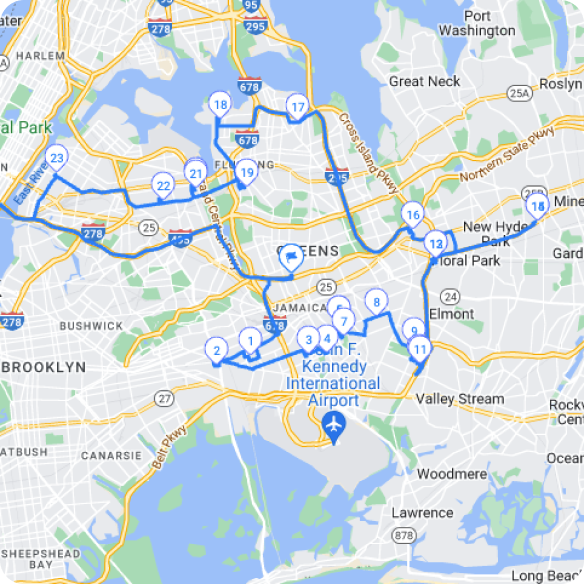
For businesses managing specialized services, understanding industry-specific routing approaches can be valuable. Check out our guide on Best Delivery Route Planner Software for Small Fleets 2026 for insights into fleet-specific optimization strategies.
Features offered by Zeo’s API:
-
Create & update driver profiles
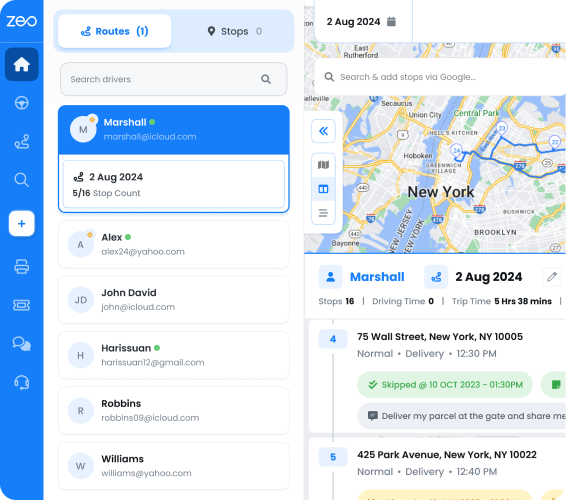
You can create driver profiles with the driver’s name, address, email id and contact number and allocate a password to the profile. The same profile can also be updated at a later stage if need be.
-
Create stops with additional parameters
Create stops by adding the address or by adding the latitude and longitude coordinates of the stop. Add additional parameters like delivery notes, stop priority (normal/asap), stop type (pickup/delivery), stop duration, delivery time window, customer details and parcel count.
-
Create routes
Create a route with a start address and end location address or by using the coordinates of the start and end locations. Add the stops between the start and end locations and easily assign the route to a driver.
-
Optimize routes
Optimize for the most efficient route. The API will take into account all the variables provided for each stop and provide an optimized route for your drivers.
-
Access saved routes (store owner routes)
If certain routes are used regularly you can save them and access them anytime via the store owner routes API. It saves you the hassle of creating the same routes again and again.
-
Create pickup-linked delivery routes
If a route involves picking up a package from one address and delivering it to another address on the same route, you can link both addresses as pickup-linked deliveries. The route will then be optimized accordingly.
-
Webhooks/notifications
Notifications can be sent to the system via the webhooks API whenever the driver starts a route or marks the delivery status of a stop as success/failed.
Implementation Best Practices for Route Optimization APIs
When implementing a route optimization API, start with a pilot program focusing on your most frequent routes. This approach allows you to validate the integration, test performance under real-world conditions, and train your team without disrupting entire operations.
Ensure your API solution supports the specific constraints your business faces. Whether it’s vehicle weight limits, driver work hour restrictions, or customer time window requirements, your chosen API should handle these parameters seamlessly. Additionally, consider how the API handles dynamic changes – the ability to adjust routes in real-time when new orders arrive or cancellations occur can significantly impact operational efficiency.
Government organizations have seen substantial savings through strategic route optimization. Learn more about proven approaches in our Government Route Optimization Case Study: $2.7M in Proven Savings.
Zeo offers affordable solutions for enterprises with its route optimization API. It can be quickly integrated with your systems within 24-48 hours at much lower costs. It has all the features to fit any business as per its needs. It is easily scalable as you can add up to 2000 stops per route.
Take the first step of getting on a quick call with our team right away!
Frequently Asked Questions
How long does it typically take to integrate a route optimization API?
Most route optimization APIs can be integrated within 24-48 hours for basic functionality, though complex implementations may take 1-2 weeks. The integration timeline depends on your existing system architecture and the specific features you need to implement.
What data security measures should I look for in a route optimization API?
Look for APIs that offer encryption in transit and at rest, compliance with industry standards like SOC 2, and secure authentication protocols. Your customer data and route information should be protected through enterprise-grade security measures and regular security audits.
Can route optimization APIs handle real-time changes to delivery schedules?
Yes, modern route optimization APIs support dynamic route adjustments for real-time changes like new orders, cancellations, or traffic conditions. This flexibility ensures optimal routes even when circumstances change during the delivery day.
How much can businesses typically save using route optimization APIs?
Businesses commonly see 15-25% reduction in fuel costs and significant time savings through automated route planning. Route optimization tools with API integration, like Zeo Route Planner, help businesses across 150+ countries save 2+ hours daily on route planning tasks.
What’s the difference between building route optimization in-house versus using an API?
Building in-house route optimization requires substantial development resources, ongoing maintenance, and expertise in complex algorithms, often taking 6-12 months. APIs provide immediate access to proven optimization technology at a fraction of the cost and development time.
Are you a fleet owner?
Want to manage your drivers and deliveries easily?
Grow your business effortlessly with Zeo Routes Planner – optimize routes and manage multiple drivers with ease.
increase fuel savings
Save 2 Hours on Deliveries, Everyday!
Optimize routes with our algorithm, reducing travel time and costs efficiently.
Get Started for Free