



Updated on: May 6, 2026
Reading Time: 4 minutes
TL;DR: Estimated Time of Departure (ETD) indicates when a vehicle leaves its starting point, while Estimated Time of Arrival (ETA) shows when it will reach the destination. Live tracking technology eliminates guesswork by providing real-time updates that keep both timestamps accurate throughout the delivery journey. Route optimization tools like Zeo Route Planner address this with real-time GPS tracking and live ETA updates, helping logistics teams save 2+ hours daily.
The two T’s are crucial in logistics – Timing and Transparency. Customers expect to know the exact time when their package is out for delivery and when it will be at their doorstep. Any discrepancies in this process, and you risk losing customer trust and inviting bad reviews, losing repeat business.
To maintain transparency in the delivery process, efficient communication of Estimated Time of Arrival and Estimated Time of Departure become vital. It would not be wise to consider ETA and ETD just as a timestamp. When planned and communicated properly, ETA and ETD become key for efficiency, transparency, customer satisfaction, and business growth.
However, many businesses fall short of providing accurate ETA and ETD due to the lack of live route tracking mechanism. How does it help in improving ETA and ETD accuracy?
Let’s find out.
What is ETA and ETD?
If your business requires delivery, dispatching, or appointments, ETA and ETD become important metrics to track.
- What is the Estimated Time of Arrival (ETA)?
ETA, as the term suggests, depicts the time when the vehicle, package, or service person is expected to arrive at your stop. Customers actively track ETAs to understand the exact time when they will receive their deliveries or service visits. - What is the Estimated Time of Departure (ETD)?
ETD, as the term suggests, depicts the time when the vehicle, package, or service person is expected to leave the source location. This location can be a warehouse for a delivery vehicle, a courier starting their route, or a technician heading to your stop from the previous appointment.
What is the Difference Between ETA and ETD
ETA and ETD are the two sides of the same coin. However, understanding their difference is important to optimize your delivery processes and customer communication.
- What Do ETA and ETD Represent
ETA and ETD represent two distinct moments of the same journey – one represents the start, and the other communicates the end. While ETD conveys when the journey of your delivery will start, ETA tells you when it will end and you will receive your delivery package. - How Do They Impact Operational Efficiency
A delayed or missed ETA frustrates customers as they feel wronged and lose trust in your service. While a delayed or missed ETD leads to internal scheduling problems and operational bottlenecks. In some instances, one missed ETD can cause other deliveries to be pushed back, tossing the entire planning out of the window. - How Does One Affect the Other
ETA is a customer-facing update and ETD mainly influences the internal fleet coordination and planning. However, ETA is completely dependent on ETD. A delay in ETD will easily translate into delayed ETAs. If your ETDs are inconsistent, your ETAs become unreliable. - Customer Expectations vs. Internal Workflow
Customers are mostly concerned with ETA, as they want to know exactly when their order or service will arrive. However, for logistics teams, ETD is just as critical, as it dictates how efficiently resources are being utilized.
How Live Route Tracking Enhances ETA and ETD Accuracy
Traditional tracking methods leave businesses guessing. Without Live Route Tracking, you only know when a vehicle was supposed to leave or arrive, not when it actually did. That’s where real-time technology makes all the difference.
- Eliminating Guesswork with Real-Time Adjustments
Static schedules rely on assumptions, but real-world logistics don’t work that way. Live Route Tracking ensures that ETDs and ETAs are updated in real time so businesses always have accurate information.For instance, if a vehicle departs late, the system can instantly recalculate ETA and notify the relevant stakeholders. This prevents last-minute surprises and allows managers to make immediate adjustments, such as reassigning deliveries or updating customers proactively. According to the U.S. Department of Transportation, efficient freight movement contributes significantly to economic productivity, making accurate timing predictions crucial for business success.
- Smoother Fleet Operations and Efficient Resource Utilization
Fleet managers need complete visibility into vehicle departures and arrivals to optimize resource allocation. With Live Route Tracking, they can ensure that vehicles depart on time, reducing unnecessary idle time and improving overall fleet productivity.For example, if one driver is running late for departure, the system can automatically alert the manager, who can then reassign stops or modify schedules to keep the operation running smoothly. Over time, this kind of proactive management leads to higher on-time performance rates and better cost efficiency.
- Improved Customer Satisfaction with Transparent ETA Updates
Customers don’t want vague delivery windows. They want precise, real-time ETAs that reflect actual conditions. Live Route Tracking ensures that businesses provide accurate, continuously updated ETA information, building trust and reducing customer inquiries about order status.When a business can confidently provide accurate ETA updates, it enhances the overall customer experience, leading to higher satisfaction rates, fewer complaints, and stronger brand loyalty. Research from the Bureau of Labor Statistics shows that delivery efficiency continues to be a key factor in customer retention across multiple industries.
- Data-Driven Insights for Smarter Decision-Making
Having a historical record of ETDs and ETAs allows businesses to analyze performance trends and identify areas for improvement. Live Route Tracking provides businesses with valuable insights on average departure delays, common arrival discrepancies, and fleet performance over time.
increase fuel savings
Save $200 on fuel, Monthly!
Optimize routes with our algorithm, reducing travel time and costs efficiently.
Get Started for Free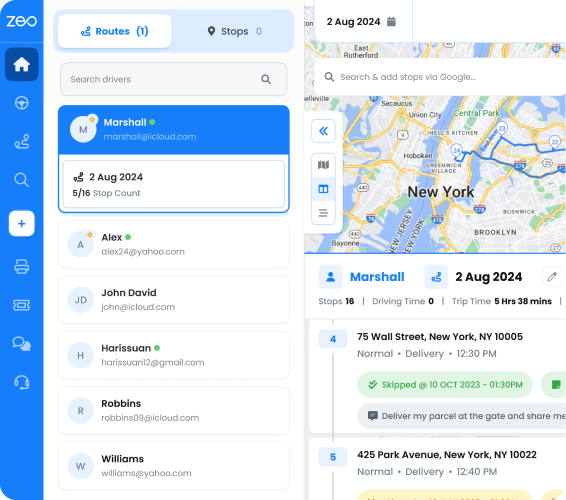
This data can be used to fine-tune operations, improve dispatch strategies, and enhance overall efficiency, helping businesses stay competitive and cost-effective in an industry where every minute counts.
Industry-Specific ETA and ETD Challenges
Different industries face unique timing challenges that affect both ETD and ETA accuracy. Understanding these specific pain points helps businesses implement targeted solutions.
Service-based businesses like cable installation companies deal with appointment windows that customers block out entire days for. When ETD delays cascade into late ETAs, it disrupts customer schedules and creates costly reschedule scenarios. Similarly, time-sensitive deliveries such as flower deliveries require precise timing coordination, where a delayed ETD can mean the difference between a successful celebration and a disappointed customer.
Field sales teams face another layer of complexity, where ETD accuracy affects the entire day’s productivity. A delayed departure from the first appointment creates a domino effect that impacts every subsequent meeting’s ETA, potentially damaging client relationships and reducing overall sales effectiveness.
Technology Solutions for ETA and ETD Management
Modern route optimization platforms address timing accuracy through multiple technological approaches. GPS integration provides real-time location data, while machine learning algorithms analyze historical traffic patterns to predict more accurate departure and arrival times. These systems also incorporate external factors like weather conditions and traffic incidents to continuously refine ETA calculations throughout the journey.
Advanced platforms integrate customer communication tools that automatically send updates when ETAs change, reducing the manual workload on dispatchers and customer service teams. This automation ensures customers receive timely information while allowing internal teams to focus on operational optimization rather than constant status updates.
Conclusion
For businesses that rely on deliveries, dispatching, or scheduled appointments, managing ETA and ETD is non-negotiable. The difference between an accurate ETA and a missed delivery window can be the difference between a loyal customer and a lost one.
This is where Zeo Route Planner’s Live Route Tracking makes a real impact. With Zeo Route Planner, businesses no longer have to rely on estimates that are outdated or inaccurate. Real-time tracking ensures ETDs are met, ETAs are precise, and operations run smoothly.
If you want to eliminate inefficiencies, reduce delays, and take control of your fleet’s ETAs and ETDs, it’s time to switch to Zeo. Book a demo today and experience the future of route optimization.
Frequently Asked Questions
How do traffic conditions affect ETA and ETD planning?
Traffic conditions directly impact both departure timing and arrival predictions by creating unpredictable delays throughout the route. Real-time traffic monitoring helps adjust ETAs dynamically, but businesses should build buffer time into their ETD schedules to account for congestion patterns. Historical traffic data can also inform better departure time planning for consistently congested routes.
What happens when a driver departs late from their starting location?
A delayed ETD creates a cascade effect that pushes back every subsequent stop’s ETA, potentially disrupting customer appointments and delivery windows throughout the entire route. Fleet managers must quickly communicate these delays to affected customers and may need to reschedule stops or redistribute deliveries to other drivers. This is why accurate departure tracking is just as critical as arrival monitoring.
How accurate should ETA estimates be for customer satisfaction?
Industry best practices suggest ETA accuracy within a 15-30 minute window for most delivery and service businesses, with tighter windows for premium services. The key is consistent accuracy rather than perfect precision – customers prefer realistic estimates that hold true over optimistic timelines that frequently change. Regular communication about any ETA changes also maintains customer trust even when delays occur.
Can route optimization software improve both ETA and ETD accuracy?
Advanced route optimization platforms significantly improve timing accuracy by analyzing traffic patterns, optimizing stop sequences, and providing real-time tracking capabilities. Zeo Route Planner’s AI-powered route optimization and live GPS tracking help businesses maintain accurate ETD schedules and deliver precise ETA updates to customers. This comprehensive approach addresses timing challenges from departure planning through final delivery confirmation.
What’s the biggest mistake businesses make with ETA communication?
The most common error is providing static ETA estimates at the beginning of the day without updating them as conditions change throughout the route. Customers receive an initial time estimate but then don’t hear updates when traffic, weather, or other delays affect the actual arrival time. Modern tracking systems solve this by automatically sending updated ETAs as routes progress, keeping customers informed without requiring manual intervention from dispatchers.
Are you a fleet owner?
Want to manage your drivers and deliveries easily?
Grow your business effortlessly with Zeo Routes Planner – optimize routes and manage multiple drivers with ease.
increase fuel savings
Save $200 on fuel, Monthly!
Optimize routes with our algorithm, reducing travel time and costs efficiently.
Get Started for Free