


Updated on: April 11, 2026
Reading Time: 4 minutes
TL;DR: You can increase payload capacity by reducing curb weight, improving packaging, adding trailers, and batching orders efficiently. However, route optimization provides the biggest impact by maximizing your entire fleet’s delivery capacity through better planning. Route optimization tools like Zeo Route Planner address this with capacity-based routing and auto-assignment features, helping delivery teams save 2+ hours daily.
Every business wants to make the best use of its resources. If your business requires making deliveries, then the cost of last-mile deliveries can form a major percentage of your total costs. So, to control the costs you want to get the maximum out of your delivery vehicle’s payload capacity. In this blog, we’ll help you learn:
- What is payload capacity?
- How to calculate payload capacity?
- Why is it important to adhere to payload capacity?
- Ways to increase payload capacity?
- How to use route optimization to increase delivery capacity?
What is payload capacity?
Payload refers to the total weight a vehicle can carry including the weight of the drivers, passengers, fuel, and cargo.
Payload capacity refers to the maximum weight of the cargo that a vehicle can safely carry and transport over a distance. You can usually find the payload capacity mentioned in the owner’s manual of your delivery vehicle. It would be expressed either in tonnes (t) or pounds (lb).
How to calculate payload capacity?
In order to calculate the payload capacity of your delivery vehicle, you need to be aware of Gross Vehicle Weight Rating (GVWR) and curb weight.
Payload Capacity = Gross Vehicle Weight Rating (GVWR) – Curb Weight
Gross Vehicle Weight Rating (GVWR) is the maximum weight the vehicle can support. It takes into consideration the weight of the vehicle frame and wheels. It includes the weight of accessories, fuel, passengers, and cargo.
Curb weight refers to the weight of the vehicle itself including everything from seats to mirrors to the fluids required for its functioning. It also includes the weight of the passengers riding in the vehicle.
When you subtract the curb weight from the gross vehicle weight rating you get payload capacity.
Why is it important to adhere to payload capacity?
Overloading the vehicle beyond its payload capacity can be extremely risky. Here’s why it’s important to remain within the payload capacity:
- Safety concerns
While the vehicle may still be able to move even if you exceed the payload capacity, however, it can be unsafe for the vehicle as well as the driver. The vehicle may take more time to accelerate and come to a complete stop. It can even slide when taking a turn especially when the weather is bad. - Regulatory compliance
It is illegal in many states and countries to exceed the payload capacity and can attract hefty fines. According to the Federal Motor Carrier Safety Administration, overweight violations remain a significant factor in commercial vehicle accidents and regulatory enforcement. - Vehicle wear & tear
Overloading the vehicle puts more strain on all the parts of the vehicle, especially the engine. It will cause wear & tear to the vehicle at a much faster rate. You may have to get the vehicle serviced and repaired early. You will also have to bear the repair costs yourself as vehicle damage due to overloading is not covered under vehicle insurance.
Ways to increase payload capacity?
When we say that payload capacity can be increased, it may not necessarily mean actually increasing the capacity but it can also mean making modifications to better utilize the existing capacity.
- Improve packaging
Packing takes up a lot of space in the vehicle. To efficiently utilize the payload capacity, you can analyze the packaging and switch to lighter or smaller packaging. You can also customize the packaging to make it a better fit for your delivery vehicles. You’ll be able to load more packages onto the vehicle, however, you need to ensure that you stay within the payload capacity. - Reduce curb weight
You can remove any additional seats or accessories from the vehicle which won’t impact the vehicle’s functioning or performance. You need to ensure that removing anything won’t hamper the safety of the vehicle or the driver. Also, consider the laws and regulations before making any modifications to the vehicle. The amount of weight that gets reduced from the curb weight can be utilized toward payload capacity. - Add a tow
If you cannot directly increase the payload capacity of the vehicle, you can load more cargo by adding a tow or a trailer to the vehicle. However, doing so frequently can impact the life of the vehicle in the long run. - Batch the orders
Another way to make efficient use of the payload capacity is to batch the orders. You can batch the orders by customer or by drop location or by delivery date and time. This will help in the optimum utilization of the payload capacity without actually increasing it.
Use route optimization to increase delivery capacity
While using the methods mentioned above may not lead to a significant increase in the actual payload capacity of the vehicle, you can use route optimization to enhance your delivery capacity.

increase fuel savings
Hassle Free Deliveries & Pickups!
Optimize routes with our algorithm, reducing travel time and costs efficiently.
Get Started for Free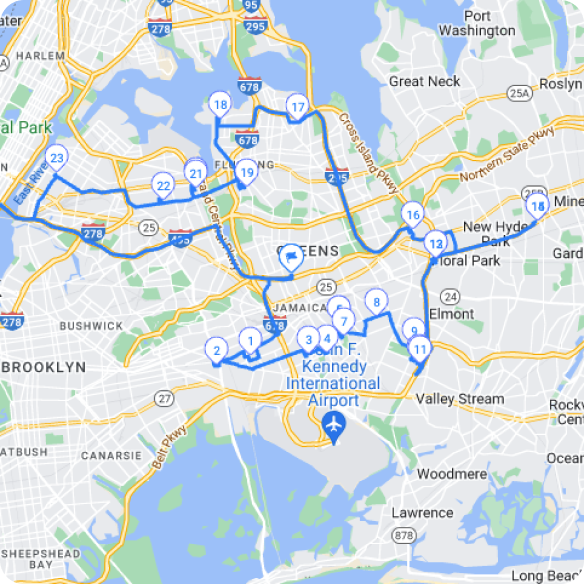
Route optimization means creating the most efficient delivery route which will not only save you time but also save you money. It helps you make deliveries at a faster rate.
Read more: How Route Optimization Software Helps You Save Money?
Manual route optimization can get complicated and time-consuming. It can be highly inefficient and inaccurate if you are dealing with a large volume of orders. Research from the U.S. Department of Transportation shows that optimized routing can reduce fuel consumption and delivery times by up to 25%. It is recommended to use route optimization software to better plan your routes.
Book a quick demo call to learn how Zeo can optimize routes for better efficiency!
- Plan efficient routes
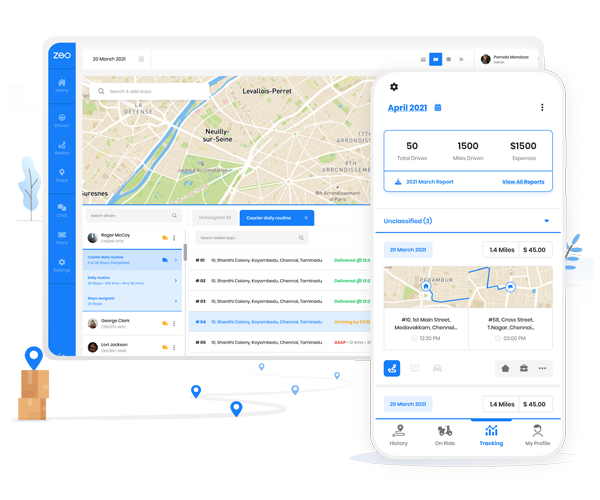
Route optimization software enables you to plan the best route considering constraints like driver availability, delivery time window, stop priority, and stop duration. You can plan the routes within seconds and the drivers spend more time actually making the deliveries than on the road.
Read more: 5 Ways To Optimize Delivery Routes For Better Efficiency
- Takes vehicle capacity into consideration
While updating the stop details you can provide information regarding the number of parcels to be delivered at the stop along with their total weight and volume. When planning the route, the software takes into account the parcel information and payload capacity of each vehicle in your fleet to ensure maximum utilization of the capacity. - Make more deliveries in lesser time
As your fleet follows the optimized route, the drivers can make deliveries faster and use the time saved to make more deliveries in a day.
Frequently Asked Questions
What happens if I exceed my vehicle’s payload capacity?
Exceeding payload capacity creates serious safety risks including longer stopping distances, reduced steering control, and increased rollover risk. You’ll also face legal penalties as overweight violations can result in fines ranging from hundreds to thousands of dollars depending on your location.
How do I find the GVWR and curb weight for my delivery vehicle?
GVWR is typically listed on a sticker inside the driver’s door frame or in your owner’s manual. Curb weight can be found in the vehicle specifications section of your manual or by weighing your empty vehicle at a truck scale.
Can I modify my vehicle to increase its payload capacity?
Vehicle payload capacity is determined by the manufacturer’s engineering specifications and cannot be safely increased through modifications. Instead, focus on optimizing how you use existing capacity through better packaging and load planning.
What’s the difference between payload capacity and towing capacity?
Payload capacity refers to weight carried inside or on the vehicle bed, while towing capacity is the maximum weight your vehicle can pull behind it. These are separate ratings, and using both simultaneously reduces each capacity proportionally.
How can route optimization software help with capacity planning?
Route optimization software like Zeo automatically considers vehicle weight and volume limits when assigning stops to drivers, ensuring maximum capacity utilization without overloading. This capacity-based routing helps delivery operations serve more customers efficiently while staying within legal weight limits.
Conclusion
In conclusion, you can increase the payload capacity of your delivery vehicles using the alternative that suits you best. However, to efficiently utilize your fleet’s delivery capacity it is important to use route optimization. Investing in route optimization software has long-term benefits for your business in terms of saving costs and driving revenue.
Sign up for a free trial of Zeo Route Planner right away!
Are you a fleet owner?
Want to manage your drivers and deliveries easily?
Grow your business effortlessly with Zeo Routes Planner – optimize routes and manage multiple drivers with ease.
increase fuel savings
Hassle Free Deliveries & Pickups!
Optimize routes with our algorithm, reducing travel time and costs efficiently.
Get Started for Free