



# Multi Stop Moving Route Optimization: Cut Move Times 25-40%
> TL; DR: Multi-stop moving route optimization reduces complex move times by 25-40% through strategic sequencing that balances load logic, time windows, and geographic efficiency. Poor routing adds 1.5-3 hours to typical corporate relocations due to backtracking and inefficient pickup sequences. AI-powered route optimization tools like Zeo Route Planner address this with capacity-based routing and dynamic adjustments, helping moving companies save 2+ hours daily on complex multi-stop operations.
Multi-stop moves are among the most complex routing challenges in the moving industry. Whether you’re relocating a corporate office across multiple buildings or handling apartment complex moves, coordinating pickup and delivery sequences can make or break your profitability.
Poor route planning doesn’t just waste fuel. It extends billable hours, frustrates customers paying by the hour, and puts your crews under unnecessary stress. The solution lies in strategic multi stop moving route optimization that accounts for every variable affecting your moves.
Why Multi-Stop Moves Are Route Planning Nightmares (And Cost You Money)
Traditional moving companies lose significant money on multi-stop moves due to inefficient routing. Consider a typical corporate relocation involving pickup from three office locations and delivery to two new sites.
Manual planning often results in backtracking. Your crew picks up from Location A, drives to Location C, then realizes they need to return to Location B – which was on the way to Location C. This adds 45-60 minutes of billable time that customers notice and remember.
The Hidden Costs Stack Up Quickly
Secondo il American Moving & Storage Association, labor costs represent 60-70% of moving company expenses. Every inefficient route decision multiplies across your entire fleet.
Time windows create additional complexity. The executive suite must be packed first but delivered last. The server room requires a 2-hour pickup window but only a 30-minute delivery slot. Ground floor locations need different crew sizes than multi-story pickups.
Load sequencing becomes critical when items from multiple pickup points share the same truck. Fragile items from Location A can’t be buried under heavy furniture from Location B. Your route must account for loading logic, not just geographic proximity.
Customer Satisfaction Takes a Direct Hit
Customers paying hourly rates scrutinize every move your crew makes. Inefficient routing looks like inexperience or poor planning. When a 6-hour estimate becomes an 8-hour job due to routing mistakes, customer trust erodes rapidly.
Complete ROI Calculator: Real Cost Savings from Multi-Stop Moving Optimization
Understanding the financial impact helps justify investment in proper route optimization tools. Here’s how to calculate your potential savings from improved multi stop moving route optimization.
Step 1: Calculate Current Route Inefficiency
Track three metrics for your multi-stop moves over one month:
- Actual completion time vs. estimated time
- Total miles driven vs. optimal distance
- Customer complaints related to extended move times
Most moving companies find 15-25% inefficiency in their current multi-stop routing. A move estimated at 6 hours actually takes 7.5 hours due to poor sequencing and backtracking.
Step 2: Quantify Labor Cost Impact
If your average crew costs $120 per hour (including wages, benefits, and vehicle costs), that extra 1.5 hours costs $180 per move. Multiply by your monthly multi-stop move volume to see the total impact.
A company handling 40 multi-stop moves monthly loses $7,200 in unnecessary labor costs – that’s $86,400 annually. Implementing ottimizzazione del percorso aziendale strategies can significantly reduce these losses.
Step 3: Factor in Fuel and Vehicle Wear
Secondo il Dipartimento dei trasporti, commercial vehicles average 6-8 miles per gallon. Inefficient routing typically adds 20-30 extra miles per multi-stop move.
At current fuel prices plus vehicle maintenance costs of approximately $0.65 per mile, each move wastes $13-20 in direct vehicle expenses.
Step 4: Calculate Customer Retention Impact
The moving industry averages a 15-20% customer loss rate annually. Companies with consistently efficient multi-stop moves retain customers at higher rates, leading to more referrals and repeat business.
If optimization reduces your customer loss rate by just 5%, the lifetime value improvement can exceed $50,000 annually for mid-sized moving companies.
The Multi-Stop Moving Route Optimization Playbook: Key Variables and Constraints
Successful multi stop moving route optimization requires balancing multiple constraints simultaneously. Understanding these variables helps you implement systematic improvements.
Geographic Sequencing with Load Logic
Start with the pickup location requiring the heaviest items or largest furniture pieces. These items need to go in the truck first, regardless of geographic convenience.
Map your pickup sequence to minimize total driving time while respecting load requirements. Items picked up last should be delivered first whenever possible.
Gestione della finestra temporale
Document all time constraints before route planning begins. Business locations may require pickup during off-hours. Residential customers often have narrow delivery windows due to work schedules.
Build buffer time between stops. A 15-minute delay at stop two shouldn’t cascade into problems at stops three through six. Plan 20-30% buffer time for complex multi-stop moves.
Crew Size and Equipment Requirements
Different stops may require different crew configurations. A piano at Location A needs three movers. Standard furniture at Location B only requires two. Your route must account for crew availability and specialty equipment needs.
Document equipment requirements during the initial estimate. Dollies, straps, and protective materials needed at each location affect both routing and timing.
Priority and Fragility Considerations
High-value or fragile items require special handling that affects route sequencing. Electronics picked up from one location can’t sit in a hot truck for hours while you complete other pickups.
Create priority classifications for different item types. Artwork, antiques, and electronics get highest priority for quick pickup-to-delivery turnaround.
Advanced Moving Route Strategies: Handling Load Capacity, Time Windows, and Last-Minute Changes
Professional moving companies need strategies that handle real-world complications. These advanced approaches separate efficient operators from companies that struggle with complex moves.
Dynamic Load Balancing Across Multiple Trucks
When moves exceed single-truck capacity, optimize across your entire fleet. Zeo Route Planner’s capacity-based routing handles vehicle weight and volume limits while maintaining logical pickup sequences.
Assign priority items to your most reliable truck and crew. Lower-priority items can use secondary vehicles with more flexible timing.
Managing Customer-Driven Schedule Changes
Multi-stop moves face frequent schedule changes. A pickup location becomes unavailable. A delivery window shifts by two hours. Your routing system must adapt quickly.
Build contingency routes during initial planning. Identify alternative sequences that work if your primary plan fails. This preparation prevents crews from making inefficient decisions in the field. Following migliori pratiche di ottimizzazione del percorso helps maintain efficiency even when plans change.
Coordination Between Multiple Crews
Large moves may require multiple crews working different portions of the pickup/delivery sequence. Coordination becomes critical to prevent delays and ensure proper item handling.
Use real-time tracking to monitor crew progress across all stops. When Crew A finishes early at Location 1, they can support Crew B at Location 2 rather than waiting at the delivery site.

aumentare il risparmio di carburante
Risparmia 2 ore sulle consegne, tutti i giorni!
Ottimizza i percorsi con il nostro algoritmo, riducendo i tempi e i costi di viaggio in modo efficiente.
Inizia gratuitamente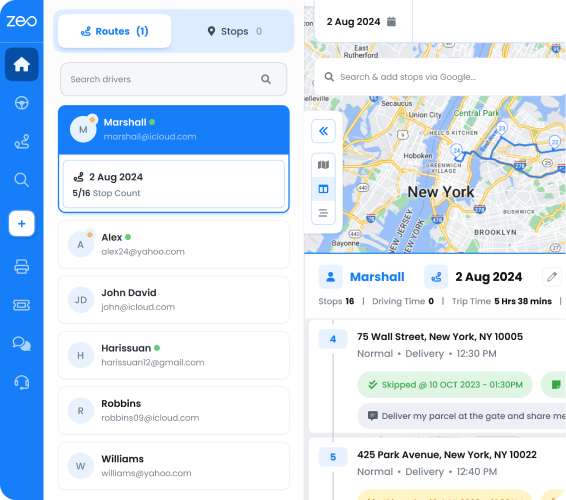
Weather and Traffic Contingencies
External factors can derail even perfect routes. Heavy rain makes loading/unloading slower. Traffic accidents block key routes between pickup locations.
Monitor conditions continuously and adjust routes proactively. Zeo’s dynamic route adjustments help crews adapt mid-shift without calling dispatch for new directions.
Driver Execution: Mobile Tools That Make Complex Moving Routes Work in Reality
Even perfect route optimization fails without proper driver execution tools. Your moving crews need mobile solutions that make complex multi-stop sequences manageable in the field.
Turn-by-Turn Navigation for Multi-Stop Sequences
Moving crews receive optimized routes directly on their phones via the Zeo mobile app, complete with turn-by-turn navigation between all pickup and delivery locations. This eliminates confusion about stop sequencing and reduces time spent studying paper directions.
The app automatically advances to the next stop when crews complete deliveries, maintaining the optimized sequence even when individual stops take longer or shorter than expected.
Real-Time Status Updates and Communication
Crew leaders use the mobile app to update job status at each location – pickup complete, en route to delivery, delivery in progress. This keeps dispatch and customers informed without requiring phone calls.
When delays occur or customer requests changes, crews communicate instantly with dispatch through in-app messaging. Dispatch can adjust remaining stops without disrupting the overall route efficiency. Advanced software di localizzazione dei conducenti provides fleet managers with complete visibility into crew locations and progress.
Digital Documentation and Proof of Service
At each stop, crews capture photos of items being loaded or delivered, collect digital signatures, and add notes about any issues or special handling requirements. This documentation protects your company and provides customers with delivery confirmation.
. prova di consegna system works offline, so crews can document everything even in areas with poor cell coverage. Data syncs automatically when connectivity returns.
Integrazione della comunicazione con il cliente
Customers receive automatic notifications when crews are en route to each location, with live ETA updates based on actual progress. This reduces customer anxiety and prevents calls asking about arrival times.
The branded tracking page shows customers exactly where their move stands in the multi-stop sequence, building confidence in your professionalism and organization.
Implementation Guide: Choosing Multi-Stop Route Optimization for Your Moving Business
Selecting the right route optimization solution requires evaluating your specific multi-stop moving challenges and operational requirements.
Assess Your Current Multi-Stop Volume and Complexity
Companies handling fewer than 10 multi-stop moves monthly may manage with manual planning. However, businesses with 15+ complex moves need automated solutions to maintain efficiency and profitability.
Document your current planning time per multi-stop move. Manual planning typically requires 30-45 minutes per complex move. Automated optimization reduces this to 5-10 minutes while producing better routes.
Integrazione con le operazioni esistenti
Your route optimization solution must work with current estimating and scheduling systems. Look for platforms offering API integration or import capabilities for existing customer data.
Zeo integrates with popular business tools through Zapier, connecting to over 1,000 applications including CRM systems, scheduling software, and customer communication platforms. Understanding ottimizzazione del percorso multi-stop capabilities helps evaluate which features matter most for your operations.
Staff Training and Adoption Requirements
Choose solutions that minimize learning curves for dispatch staff and moving crews. Complex software requiring extensive training delays implementation and reduces adoption rates.
The most successful implementations provide intuitive interfaces for both office planning and field execution. Crews should be navigating optimized routes within days, not weeks.
Scalabilità per operazioni in crescita
Select platforms that grow with your business. A solution working for 5 trucks should handle 25 trucks without requiring a complete system change.
Consider your expansion plans over the next 2-3 years. Route optimization becomes more valuable as fleet size increases, but switching platforms disrupts operations.
Cost-Benefit Analysis Timeline
Most moving companies see positive ROI from route optimization within 3-6 months. Calculate your potential savings using the ROI framework outlined earlier, then compare against solution costs.
Factor in soft benefits like improved customer satisfaction and reduced driver stress. These advantages compound over time, creating additional value beyond direct cost savings.
Domande frequenti
Q: How much time can proper multi-stop moving route optimization save on complex moves?
Professional moving companies typically save 25-40% on total move times through optimized routing. This translates to 1.5-3 hours saved on average multi-stop moves, reducing both labor costs and customer frustration with extended timelines.
Q: What factors make multi-stop moving routes more complex than single-location moves?
Multi-stop moves require coordinating load sequencing (heavy items first), time windows at different locations, crew size variations, and equipment needs across multiple sites. Geographic proximity becomes secondary to logical pickup and delivery order based on item fragility and accessibility.
Q: Which route optimization software works best for moving companies handling multi-stop relocations?
Zeo Route Planner’s capacity-based routing handles vehicle weight and volume limits while maintaining logical pickup sequences, helping moving companies save 2+ hours daily on complex multi-stop moves through AI-powered optimization and real-time adjustments.
Q: How do time windows affect multi-stop moving route efficiency?
Time windows create cascading delays when not properly managed. A 15-minute delay at one location can disrupt the entire sequence. Successful multi-stop routing builds 20-30% buffer time and prioritizes stops with the strictest time constraints first.
Q: What’s the biggest mistake moving companies make with multi-stop route planning?
Planning routes based purely on geographic proximity rather than load logic. Items that need to go in the truck first (heavy furniture) should be picked up first, regardless of location convenience. This prevents costly backtracking and reloading scenarios.
Inizia la tua prova gratuita
Ready to see how multi stop moving route optimization can reduce your move times by 25-40%? Zeo Route Planner’s AI-powered optimization handles all the variables affecting your complex moves – from load sequencing to time windows to last-minute changes.
Start your free trial today to experience how proper route optimization transforms your multi-stop moving operations and improves both efficiency and customer satisfaction.
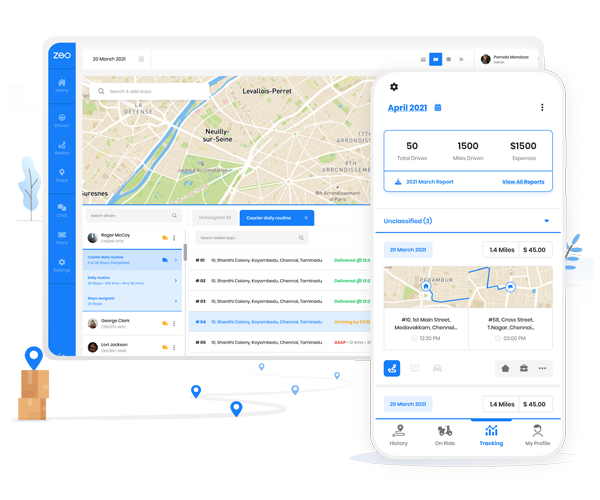
Sei proprietario di una flotta?
Vuoi gestire facilmente i tuoi autisti e le tue consegne?
Fai crescere la tua attività senza sforzi con Zeo Routes Planner: ottimizza i percorsi e gestisci più conducenti con facilità.

aumentare il risparmio di carburante
Risparmia $ 200 sul carburante, mensilmente!
Ottimizza i percorsi con il nostro algoritmo, riducendo i tempi e i costi di viaggio in modo efficiente.
Inizia gratuitamente