


# Casestudy over routeoptimalisatie voor de overheid: concrete ROI-resultaten
Kort samengevat: Gemeentelijke instanties die routeoptimalisatie toepassen , behalen 20-30% efficiëntiewinst en een jaarlijkse besparing van $150-$500 door lagere brandstofkosten, minder overuren en een efficiënter wagenpark. Deze implementaties leveren doorgaans binnen 60-90 dagen een meetbaar rendement op investering (ROI). Routeoptimalisatieplatforms zoals Zeo Route Planner leveren deze resultaten dankzij AI-gestuurde routeplanning, waardoor overheidsvoertuigen dagelijks meer dan 2 uur per voertuig besparen.
Overheidswagenparkbeheerders staan onder enorme druk om aan te tonen dat elke technologische investering meetbare waarde oplevert voor de belastingbetaler. Routeoptimalisatie klinkt veelbelovend, maar budgetcommissies willen harde cijfers zien, geen beloftes van leveranciers.
Deze casestudy over routeoptimalisatie voor de overheid presenteert concrete implementatiegegevens van vijf gemeentelijke instanties. U ziet daadwerkelijke ROI-cijfers, implementatietijdlijnen en succesvolle strategieën voor budgetgoedkeuring.
Waarom overheidsinstanties routeoptimalisatie nodig hebben: druk van de belastingbetaler en efficiëntie-eisen
Overheidsvoertuigen kosten de belastingbetaler aanzienlijke bedragen. Volgens de Government Fleet Association bedragen de brandstof- en onderhoudskosten van gemeentelijke wagenparken gemiddeld $5,200 per voertuig per jaar.
Burgers eisen verantwoording. Elke inefficiënt gereden route betekent minder geld voor essentiële diensten. Openbare werken die uren verspillen aan slecht geplande routes, worden geconfronteerd met bezuinigingen en publieke kritiek.
Het voldoen aan wet- en regelgeving voegt nog een extra laag complexiteit toe. Federale voorschriften vereisen gedetailleerde documentatie van voertuiggebruik, onderhoudsschema's en rapportage over de milieueffecten. Handmatige registratiesystemen creëren hiaten in de naleving en brengen auditrisico's met zich mee.
Routeoptimalisatie pakt deze uitdagingen direct aan. Digitale routeplanning biedt de documentatie en transparantie die overheidsinstanties vereisen, terwijl het tegelijkertijd meetbare efficiëntiewinsten oplevert.
Casestudy 1: Gemeentelijke dienst Openbare Werken bespaart jaarlijks $180 op wagenparkbeheer
De afdeling Openbare Werken van de stad Riverside beheert 45 voertuigen voor afvalinzameling, straatonderhoud en reparatie van nutsvoorzieningen. Vóór de routeoptimalisatie besteedden chauffeurs dagelijks 3.2 uur aan inefficiënte routes en overbodige stops.
De implementatie begon in januari 2026 met een proefprogramma van 30 dagen. De afdeling testte routeoptimalisatiesoftware met 12 voertuigen in drie servicegebieden. De resultaten lieten direct verbeteringen zien in de route-efficiëntie en de tevredenheid van de chauffeurs.
Resultaten van het eerste jaar:
- 28% minder reistijd per dag (van 3.2 uur naar 2.3 uur per route)
- Jaarlijkse besparing van $180,000 door lager brandstofverbruik en minder overuren.
- 35% verbetering in de responstijden van serviceaanvragen
- 89% van de chauffeurs heeft binnen 60 dagen een adoptiepercentage behaald.
De afdeling hield tijdens de implementatie gedetailleerde gegevens bij. De brandstofkosten daalden van $42,000 per maand naar $31,500. De overurenkosten daalden met $8,200 per maand dankzij een efficiëntere routeafhandeling.
De AI-gestuurde optimalisatie-engine van Zeo Route Planner leverde deze resultaten op door automatisch haltes te plannen op basis van verkeerspatronen, voertuigcapaciteit en prioriteiten. De realtime GPS-tracking leverde de vereiste documentatie voor federale rapportage.
De klanttevredenheid is meetbaar verbeterd. De responstijd op serviceaanvragen daalde van gemiddeld 4.2 uur naar 2.7 uur. Het aantal klachten van burgers nam met 41% af gedurende het eerste implementatiejaar.
Casestudie 2: Samenwerking tussen verschillende afdelingen reduceert het wagenpark met 23%.
Mecklenburg County heeft de routeplanning gecentraliseerd over vier afdelingen: nutsvoorzieningen, handhaving van regelgeving, sociale diensten en parkonderhoud. Het doel was om het wagenpark te verkleinen met behoud van het serviceniveau.
Vóór de samenvoeging opereerde elke afdeling onafhankelijk. Voertuigen van verschillende afdelingen bedienden vaak dezelfde wijken op verschillende dagen, wat leidde tot een inefficiënte toewijzing van middelen.
Implementatiestrategie:
- Fase 1: Optimalisatie per afdeling (maanden 1-3)
- Fase 2: Coördinatie van routes tussen verschillende afdelingen (maanden 4-6)
- Fase 3: Vlootconsolidatie en programma voor het delen van voertuigen (maanden 7-12)
Het district implementeerde een uniform softwarepakket voor wagenparkbeheer dat coördinatie tussen verschillende afdelingen mogelijk maakte. Medewerkers van verschillende afdelingen gebruiken dezelfde mobiele app om geoptimaliseerde routes van hun respectievelijke meldkamers te ontvangen. Deze gestandaardiseerde aanpak maakte het delen van middelen mogelijk tijdens noodsituaties en piekperioden.
Resultaten na 12 maanden:
- Het wagenpark is verkleind van 78 naar 60 voertuigen (een reductie van 23%).
- Besparing van $340,000 door het niet aanschaffen van voertuigen en het niet betalen van autoverzekeringen.
- 31% verbetering in de efficiëntie van de geografische dekking
- 94% van de medewerkers is tevreden met het nieuwe routesysteem.
Het gedeelde mobiele platform bleek cruciaal voor het succes. Medewerkers van de sociale dienst konden tijdelijk bijspringen bij inspecties van de bouwvoorschriften tijdens personeelstekorten. Parkonderhoudsteams ondersteunden nutsbedrijven tijdens stormschade zonder dat daarvoor aparte routeringssystemen of trainingen nodig waren.
Volgens de International City/County Management Association kan gecoördineerd wagenparkbeheer de operationele kosten jaarlijks met 15-25% verlagen. Mecklenburg County heeft deze doelstellingen overtroffen door systematische implementatie van routeoptimalisatie.
Overheidsbeveiligings- en compliancekader: voldoen aan de FISMA- en gegevensbeschermingsvereisten
Overheidsinstanties moeten voldoen aan de eisen van de Federal Information Security Management Act (FISMA) voor alle technologie die gevoelige gegevens verwerkt. Routeoptimalisatiesystemen verwerken voertuiglocaties, personeelsinformatie en serviceaanvragen van burgers.
Belangrijkste nalevingsvereisten:
- Gegevensversleuteling tijdens verzending en opslag
- Op rollen gebaseerde toegangscontrole voor gevoelige informatie
- Auditlogboeken voor alle systeemactiviteiten
- Regelmatige beveiligingsbeoordelingen en penetratietests
Moderne routeoptimalisatieplatforms voldoen aan deze eisen dankzij een bedrijfsbrede beveiligingsinfrastructuur. Cloudgebaseerde systemen bieden voor de meeste gemeentelijke budgetten een betere beveiliging dan oplossingen op locatie.
Privacybescherming gaat verder dan de federale vereisten. Burgers verwachten dat locatiegegevens en informatie over serviceaanvragen vertrouwelijk blijven. Routeoptimalisatiesystemen moeten transparantie bieden over het gebruik van gegevens en tegelijkertijd de privacy van individuen beschermen.
Het naleven van regelgeving wordt eenvoudiger met digitale routeregistratie. Geautomatiseerde kilometerregistratie levert de gedetailleerde gegevens die nodig zijn voor federale audits en budgetbesprekingen.
Resultaten vanaf jaar 2: Langetermijnprestatiegegevens van 5 overheidsimplementaties
Langetermijngegevens tonen aan of routeoptimalisatie blijvende waarde oplevert of juist afneemt. Vijf gemeentelijke instanties leverden prestatiegegevens over een periode van meer dan 24 maanden voor deze analyse.
Duurzame prestatiemaatstaven:

brandstofbesparing verhogen
Bespaar elke dag 2 uur op bezorgingen!
Optimaliseer routes met ons algoritme, waardoor reistijd en kosten efficiënt worden verminderd.
Begin gratis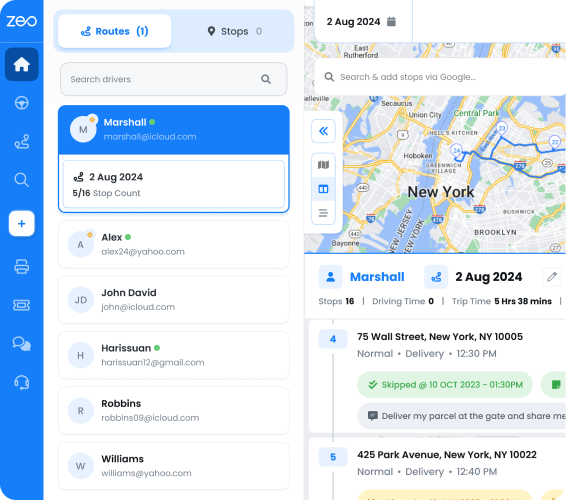
- Gemiddelde efficiëntieverbetering van 24% gehandhaafd gedurende het tweede jaar.
- Het rendement op de investering (ROI) steeg van 285% (jaar één) naar 340% (jaar twee).
- Het personeelsverloop daalde met 18% in afdelingen die routeoptimalisatie toepassen.
- De tevredenheidsscores van de burgers zijn gedurende 24 maanden gestaag verbeterd.
Het tweede jaar levert vaak extra voordelen op die niet bij de eerste implementaties zijn gemeten. De stress voor de chauffeur neemt af dankzij voorspelbare, efficiënte routes. De onderhoudskosten dalen doordat voertuigen minder slijtage ondervinden door geoptimaliseerde rijpatronen.
De mogelijkheden voor noodhulp worden aanzienlijk verbeterd. Routeoptimalisatiesystemen maken snelle inzet mogelijk tijdens natuurrampen, infrastructuurstoringen en incidenten met betrekking tot de openbare veiligheid. Realtime coördinatie voorkomt dubbele interventies en zorgt voor een alomvattende dekking.
De routeanalyse van Zeo identificeert prestatietrends die handmatige tracking over het hoofd ziet. Wagenparkbeheerders ontvangen gedetailleerde rapporten die laten zien welke routes consequent de geschatte reistijd overschrijden, waardoor proactieve aanpassingen mogelijk zijn voordat de efficiëntie afneemt.
Budgetplanning wordt nauwkeuriger met meer dan 24 maanden aan routeoptimalisatiegegevens. Organisaties kunnen met vertrouwen brandstofkosten, onderhoudsschema's en personeelsbehoeften voorspellen op basis van geverifieerde prestatiepatronen.
Het ministerie van Transport meldt dat overheidsvoertuigen die routeoptimalisatie toepassen, 20-30% beter presteren op het gebied van preventief onderhoud. Geoptimaliseerde routes verminderen de belasting van voertuigen en maken een voorspelbaardere onderhoudsplanning mogelijk.
Toolkit voor budgetgoedkeuring: ROI-metrics en subsidieaanvraagsjablonen voor routeoptimalisatieprojecten
Begrotingscommissies keuren investeringen in technologie goed die aantoonbaar financieel rendement opleveren en risico's beperken. Voorstellen voor routeoptimalisatie vereisen specifieke meetbare criteria en implementatietermijnen.
Essentiële ROI-berekeningen:
- Huidige brandstofkosten per voertuig per maand
- Gemiddeld aantal overuren toegeschreven aan inefficiënte routeplanning
- Voertuigonderhoudskosten gerelateerd aan overmatig kilometrage
- De tijd die medewerkers besteden aan handmatige routeplanning.
Presenteer de implementatie als een gefaseerde aanpak in plaats van een afdelingsbrede uitrol. Pilotprogramma's bieden een bewijs van het concept en minimaliseren tegelijkertijd het financiële risico. Begin met 10-15 voertuigen om basisgegevens vast te stellen.
Er bestaan federale subsidiemogelijkheden voor de modernisering van overheidstechnologie. De Infrastructure Investment and Jobs Act bevat bepalingen voor het verbeteren van de efficiëntie van wagenparken. Routeoptimalisatie komt in aanmerking als subsidiabele technologie voor veel subsidieprogramma's.
Onderdelen van een subsidieaanvraag:
- Basismetingen van de efficiëntie en verbeteringsdoelstellingen
- Verwachte milieueffecten van een lager brandstofverbruik
- Verbetering van de openbare dienstverlening door snellere reactietijden
- Kostenbesparingen op lange termijn die de waarde voor de belastingbetaler ten goede komen
Zeo Route Planner biedt overheidsinstanties die zich bezighouden met routeoptimalisatie gedetailleerde ROI-calculators en documentatie ter ondersteuning van subsidieaanvragen en begrotingsvoorstellen. De bewezen staat van dienst van het platform met meer dan 1.5 miljoen gebruikers in meer dan 150 landen toont de betrouwbaarheid ervan aan.
De implementatieondersteuning omvat hulpmiddelen voor verandermanagement in overheidsomgevingen. Trainingsmateriaal, sjablonen voor medewerkerscommunicatie en tools voor prestatiebewaking zorgen voor een succesvolle implementatie binnen gemeentelijke afdelingen.
Succes vereist meetbare resultaten die relevant zijn voor begrotingscommissies. Richt u op besparingen voor de belastingbetaler, verbetering van de dienstverlening en naleving van de regelgeving, in plaats van op technische kenmerken. Presenteer routeoptimalisatie als essentiële infrastructuur voor moderne overheidsactiviteiten.
Veelgestelde Vragen / FAQ
V: Welk rendement op investering (ROI) kunnen overheidsinstanties verwachten van routeoptimalisatiesoftware?
Overheidsinstanties zien doorgaans binnen het eerste jaar een efficiëntieverbetering van 20-30%, wat neerkomt op een jaarlijkse besparing van $150,000-$300,000 voor middelgrote wagenparken. De AI-gestuurde optimalisatie van Zeo Route Planner heeft gemeenten geholpen om dagelijks meer dan 2 uur per voertuig te besparen, waarbij sommige instanties een gecombineerde besparing van meer dan $500 rapporteren.
V: Hoe lang duurt het om routeoptimalisatie te implementeren in overheidsvoertuigen?
De meeste overheidsimplementaties volgen een gefaseerde aanpak van 3-6 maanden, beginnend met een pilotprogramma van 30 dagen voor 10-15 voertuigen. De volledige uitrol binnen een afdeling is doorgaans binnen 90 dagen afgerond, waarbij de acceptatiegraad onder medewerkers 85-90% bedraagt als er sprake is van een goed verandermanagementsysteem.
V: Aan welke compliance-eisen moeten door de overheid beheerde routeoptimalisatiesystemen voldoen?
Overheidssystemen voor routeoptimalisatie moeten voldoen aan de FISMA-beveiligingsvereisten, waaronder gegevensversleuteling, op rollen gebaseerde toegangscontrole en audit trails. Het systeem moet ook geautomatiseerde rapportage bieden voor federale audits en gedetailleerde gegevens over voertuiggebruik bijhouden voor transparantie en verantwoording.
V: Kan routeoptimalisatie in meerdere overheidsdepartementen worden toegepast?
Ja, coördinatie tussen verschillende afdelingen kan de omvang van het wagenpark met 20-25% verminderen, terwijl het serviceniveau behouden blijft. Het uniforme platform van Zeo stelt verschillende afdelingen in staat om voertuigen te delen en routes te coördineren tijdens noodsituaties of piekperioden, waardoor de efficiëntie van de middelen binnen de gehele gemeentelijke organisatie wordt gemaximaliseerd.
V: Welke meetgegevens moeten overheidsinstanties bijhouden om het succes van routeoptimalisatie te meten?
Belangrijke prestatie-indicatoren zijn onder meer lagere brandstofkosten, besparing op overuren, responstijden van de dienstverlening, klanttevredenheid en onderhoudskosten van voertuigen. Overheidsinstanties moeten ook milieu-impactstatistieken bijhouden, zoals CO2-reductie en de efficiëntie van de documentatie met betrekking tot naleving van regelgeving, om de algehele waarde voor de belastingbetaler aan te tonen.
Bent u klaar om uw budgetvoorstel voor routeoptimalisatie op te stellen? Vraag een demonstratie aan over naleving van overheidsvoorschriften en een ROI-calculator om de meetbare waarde voor de belastingbetaler aan te tonen door middel van efficiënte vlootoperaties.
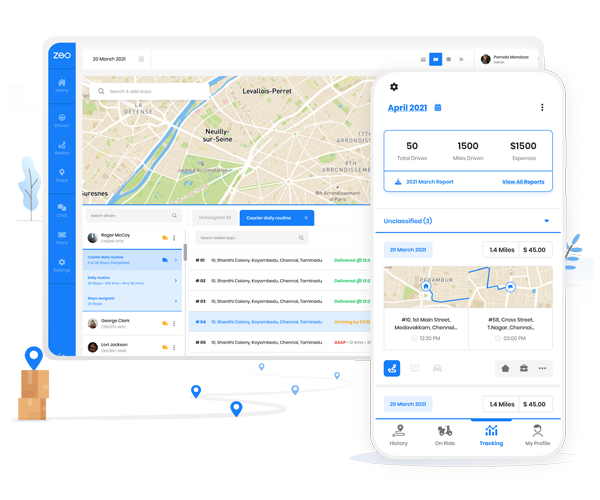
Bent u wagenparkeigenaar?
Wilt u uw chauffeurs en leveringen eenvoudig beheren?
Laat uw bedrijf moeiteloos groeien met Zeo Routes Planner: optimaliseer routes en beheer eenvoudig meerdere chauffeurs.
brandstofbesparing verhogen
Bespaar elke dag 2 uur op bezorgingen!
Optimaliseer routes met ons algoritme, waardoor reistijd en kosten efficiënt worden verminderd.
Begin gratis