
2026年如何優化雙人配送路線

2026年如何優化雙人配送路線

閱讀時間: 7 分鐘學習如何優化雙人配送重物的路線。簡化司機協調,平衡工作量,並將配送時間縮短 25%。
2026年05月08日 如何優化雙人配送路線(專題報導,Zeo路線規劃器)
閱讀時間: 7 分鐘

# How to Optimize Two Person Delivery Routes in 2026

> TL; DR: Optimizing two-person delivery routes requires coordinated driver pairing, balanced workloads, and real-time communication systems that handle dual-driver complexity. Companies that master how to optimize two person delivery routes achieve 25% time savings through proper team coordination and route planning. Zeo Route Planner addresses this with skill-based driver assignment and synchronized route updates, helping delivery teams save 2+ hours daily.

Managing two-person delivery teams for heavy items like furniture, appliances, and medical equipment is one of the most complex logistics challenges you’ll face. While single-driver routes require careful planning, coordinating dual-driver teams multiplies the complexity exponentially.

The good news? Companies that master how to optimize two person delivery routes see average time savings of 25% while eliminating the daily coordination headaches that drain operations managers. This guide shows you exactly how to transform chaotic dual-driver logistics into a streamlined system.

The Hidden Complexity of Two-Person Delivery Route Planning

Two-person delivery route planning involves variables that don’t exist in single-driver operations. You’re not just optimizing stops and distances – you’re coordinating human partnerships, equipment requirements, and synchronized schedules.

The mathematical complexity alone is staggering. Where a 10-stop single-driver route has roughly 3.6 million possible combinations, a 10-stop two-person route with driver pairing considerations jumps to over 50 million possibilities when you factor in team compatibility and workload distribution.

根據 勞工統計局, delivery operations with heavy items average 15-20% longer delivery windows than standard packages, primarily due to coordination delays between team members. These delays compound throughout the day, creating a ripple effect that impacts customer satisfaction and operational costs.

Consider this real scenario: A furniture delivery company assigns Team A to deliver a sectional sofa at 2 PM, but Driver 1 gets delayed at the previous stop while Driver 2 arrives on time. The customer isn’t home when Driver 2 arrives alone, requiring a reschedule that costs the company $150 in lost productivity and customer service calls.

The three biggest hidden costs in unoptimized two-person routes are driver downtime (waiting for partners), failed delivery attempts due to incomplete teams, and overtime expenses from poorly balanced workloads.

Driver Pairing and Team Coordination: Getting the Right People in the Right Places

Effective driver pairing goes beyond random assignment. The best-performing delivery teams share compatible work styles, physical capabilities, and communication patterns that directly impact delivery efficiency.

Start by creating driver profiles that include lifting capacity, experience with specific equipment types, customer service strengths, and preferred communication styles. A driver experienced with medical equipment installations shouldn’t be randomly paired with someone who specializes in furniture assembly.

Geographic familiarity between team members also matters significantly. Drivers who both know the delivery area navigate more efficiently and make better real-time decisions about traffic and parking. When possible, pair drivers who regularly work the same territories.

Consider skill-based pairing for specialized deliveries. Appliance installations require different expertise than furniture assembly. Medical equipment delivery demands specific certifications and patient interaction skills. Match these requirements during the initial assignment phase, not after problems arise.

一個全面的 路線優化指南 helps establish these pairing strategies systematically. Zeo Route Planner addresses driver pairing through its skill-based assignment feature, which automatically matches drivers with complementary abilities and assigns them to appropriate delivery types. This eliminates the guesswork in team formation while ensuring every delivery team has the right mix of capabilities.

Communication compatibility between drivers reduces delivery time by an average of 12 minutes per stop, according to delivery industry research. Some drivers work well with detailed verbal coordination, while others prefer visual cues and minimal talking. Understanding these preferences prevents miscommunication that leads to delays.

Workload Balancing: Ensuring Fair Task Distribution Between Team Members

Unbalanced workloads between delivery partners create resentment, fatigue, and safety risks that impact your entire operation. The stronger or more experienced driver often carries disproportionate physical and mental load, leading to burnout and higher turnover.

Physical workload balancing starts with honest assessment of each driver’s capabilities. Don’t assume all drivers can handle the same lifting requirements. Create clear guidelines about weight limits, and rotate the “lead” driver role so the same person isn’t making all customer-facing decisions.

Task rotation prevents the same driver from always handling the heaviest items or most complex customer interactions. Switch responsibilities between drivers throughout the day – one handles customer communication in the morning while the other takes the afternoon shift.

Time-based balancing ensures both drivers spend equal time on driving, loading, and customer interaction. Track these metrics weekly to identify imbalances before they become problems. The Department of Transportation’s Hours of Service regulations apply differently to team drivers, and balanced workloads help maintain compliance.

Consider delivery complexity when assigning stops. A third-floor apartment furniture delivery requires different physical demands than a ground-floor appliance installation. Distribute challenging deliveries evenly between team members over the course of a week.

Equipment responsibility should also rotate. The same driver shouldn’t always handle dollies, straps, and tools. Cross-training ensures both team members can handle any situation and prevents workflow interruption if one driver is unavailable.

Time and Safety Considerations for Heavy Item Deliveries

Heavy item deliveries require significantly longer stop times than standard packages, and safety considerations add additional time requirements that must be built into route planning. 職業安全與健康管理局指南 for safe lifting and team coordination aren’t suggestions – they’re requirements that smart operations managers build into delivery schedules.

Factor 45-60 minutes per heavy item delivery instead of the 15-20 minutes typical for standard packages. This includes unloading time, safety setup, team coordination, customer interaction, and proper securing of items during transport. Underestimating these timeframes creates rushed deliveries and safety incidents.

Safety briefings between team members should happen before each stop. Discuss lifting techniques, positioning, customer space limitations, and potential hazards. These 2-minute conversations prevent injuries that cost thousands in workers’ compensation and lost productivity.

Weather conditions impact heavy item delivery times more severely than standard deliveries. Rain, snow, and extreme temperatures require additional safety measures and protective equipment. Build weather buffers into schedules during relevant seasons in your area.

Delivery window communication with customers becomes critical for heavy items. Unlike package delivery where slight delays are acceptable, customers often arrange time off work or childcare for furniture and appliance deliveries. Accurate time estimates and proactive communication prevent frustrated customers and failed deliveries.

Vehicle preparation time increases with heavy items. Proper loading, securing, and equipment arrangement takes longer but prevents damage and safety issues during transport. Allocate 10-15 additional minutes between stops for vehicle preparation when routes include multiple heavy items.

Real-Time Communication and Route Adjustments for Delivery Teams

Two-person delivery teams face unique communication challenges that single drivers don’t encounter. Coordination between partners, communication with dispatch, and customer updates require systems that work seamlessly across multiple people and vehicles.

Your fleet managers need real-time visibility into both drivers’ locations and status to make informed routing decisions. When one team encounters delays, dispatchers must quickly assess impact on subsequent stops and communicate changes to customers before problems compound.

How to Optimize Two Person Delivery Routes in 2026, Zeo Route Planner
增加燃油節省

無憂送貨和取貨!

使用我們的演算法優化路線,有效減少旅行時間和成本。

免費入門
How to Optimize Two Person Delivery Routes in 2026, Zeo Route Planner

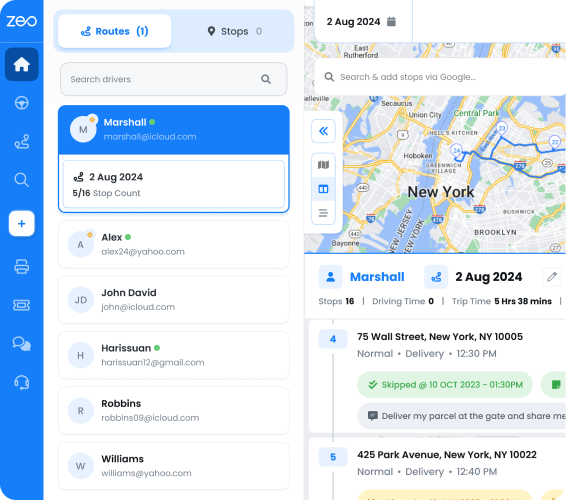
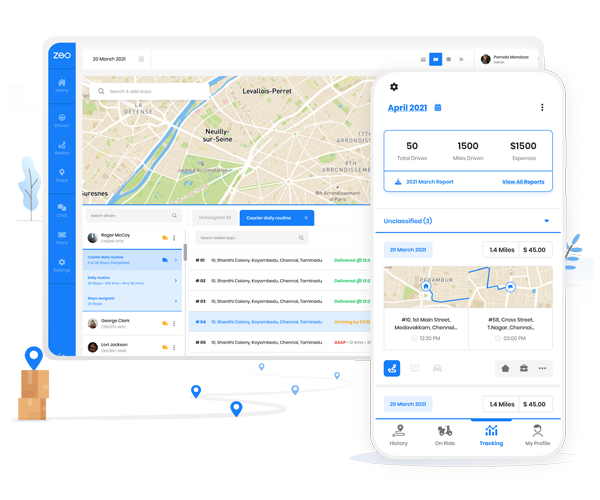
Fleet management platforms designed for team coordination provide this visibility through centralized dashboards. Zeo Route Planner’s fleet management platform provides this coordination through its web interface where managers plan and assign routes to driver teams. The mobile app ensures both drivers receive synchronized route updates and can communicate with dispatch and each other throughout the delivery day. 駕駛追蹤軟體 shows both team members’ locations, while real-time GPS tracking and live ETA updates automatically inform customers of accurate arrival times.

Mid-route adjustments become more complex with two-person teams because changes affect twice as many people. When traffic delays one stop, the system must recalculate arrival times for subsequent customers and coordinate communication to both drivers simultaneously.

Emergency situations require clear escalation procedures. When one driver gets injured or a vehicle breaks down, the remaining driver needs immediate support and clear instructions. Pre-planned protocols prevent confusion and minimize customer impact during unexpected situations.

Customer communication coordination ensures customers receive consistent information from both team members. Designate one driver as the primary customer contact per stop while ensuring both team members have access to delivery notes, special instructions, and customer preferences.

The in-app chat feature enables seamless coordination between drivers and managers without disrupting navigation or delivery activities. This eliminates radio chatter and provides written records of important delivery information.

Measuring Success: KPIs and ROI Metrics for Two-Person Route Optimization

Tracking the right metrics reveals whether your two-person delivery optimization efforts actually improve operations. Focus on metrics that capture the unique aspects of dual-driver coordination rather than just adapting single-driver measurements.

Team efficiency metrics should measure stops completed per team per day, average delivery time per stop, and customer satisfaction scores specific to two-person deliveries. Compare these against your baseline performance before implementing optimization changes.

Cost per delivery for two-person teams includes driver wages, vehicle costs, fuel, and equipment amortization. Track this monthly to identify trends and optimization opportunities. Effective route optimization typically reduces cost per delivery by 15-25% within 90 days.

Driver retention rates for two-person teams often differ from single-driver operations. Happy team partnerships reduce turnover, while poor pairings increase it. Track retention specifically for drivers in team roles versus individual routes.

Customer metrics include on-time delivery percentage, first-attempt success rate, and customer complaints related to team coordination issues. These metrics directly reflect the quality of your pairing and routing decisions.

Safety metrics become more critical with heavy item delivery teams. Track lifting-related incidents, vehicle damage during loading/unloading, and workers’ compensation claims. Proper route optimization should reduce these incidents through better time allocation and reduced rush situations.

AI路線優化 platforms provide detailed analytics for measuring these improvements. Zeo Route Planner’s analytics dashboard tracks miles driven, time saved, and route efficiency improvements, showing measurable ROI from optimized two-person routing while improving delivery completion rates.

Revenue per team per day reflects the ultimate business impact of optimization efforts. Teams that complete more deliveries in less time with higher customer satisfaction generate more revenue while reducing operational costs.

常見問題(FAQ)

Q: How long should I allow for each two-person delivery stop?

Allow 45-60 minutes per heavy item delivery instead of the standard 15-20 minutes for regular packages. This includes unloading, safety setup, team coordination, customer interaction, and proper item securing. Underestimating timeframes creates rushed deliveries and safety incidents.

Q: What’s the best way to pair drivers for two-person delivery teams?

Create driver profiles including lifting capacity, equipment experience, customer service strengths, and communication styles. Pair drivers with complementary skills and similar geographic familiarity. Zeo Route Planner’s skill-based assignment feature automatically matches drivers with complementary abilities for optimal team formation.

Q: How do I prevent workload imbalances between delivery partners?

Rotate responsibilities throughout the day so the same driver doesn’t always handle the heaviest items or customer interactions. Track time spent on driving, loading, and customer communication weekly. Switch lead driver roles and equipment responsibilities to ensure equal distribution of physical and mental workload.

Q: What safety considerations are unique to two-person heavy item deliveries?

OSHA lifting guidelines require team coordination and safety briefings before each stop. Weather conditions impact heavy deliveries more severely, requiring additional protective equipment and time buffers. Vehicle preparation time increases by 10-15 minutes between stops for proper loading and securing.

Q: How do I measure the success of two-person route optimization?

Track team-specific metrics like stops completed per team per day, cost per delivery including dual wages, and customer satisfaction for two-person deliveries. Monitor driver retention rates for team roles versus individual routes. Effective optimization typically reduces cost per delivery by 15-25% within 90 days while improving on-time performance.

Transform Your Two-Person Delivery Operations Today

Optimizing two-person delivery routes requires specialized tools designed for team coordination complexity. Manual planning simply can’t handle the variables involved in driver pairing, workload balancing, and real-time team communication at scale.

The companies achieving 25% time savings and elimination of coordination headaches use purpose-built route optimization platforms that understand dual-driver logistics. These improvements translate directly to reduced operational costs, higher customer satisfaction, and better driver retention.

Ready to see how proper route optimization transforms your heavy item delivery operations? 配送管理軟體 designed for team coordination can eliminate these challenges. Start your free trial of Zeo Route Planner to experience how intelligent driver pairing, balanced workload distribution, and seamless team communication can eliminate your coordination challenges while boosting delivery efficiency.


評價此貼文:

😡 0😐 0😊 0❤️ 0
在這篇文章中
增加燃油節省

每天節省 2 小時的送貨時間!

使用我們的演算法優化路線,有效減少旅行時間和成本。

免費入門
加入我們的通訊

在您的收件匣中獲取我們的最新更新、專家文章、指南等!

    訂閱即表示您同意接收來自 Zeo 和我們的電子郵件 如何得知我們? .

    澤奧問卷

    頻繁

    解答疑問(Questions):

    了解更多

    如何透過輸入和搜尋來新增停靠站? 在綫

    請依照以下步驟透過輸入和搜尋來新增停靠點:

    • 造訪 遊樂場頁面。 您會在左上角找到一個搜尋框。
    • 輸入您想要的站點,它會在您輸入時顯示搜尋結果。
    • 選擇搜尋結果之一將停靠點新增至未指派的停靠點清單。

    如何從 Excel 檔案批次匯入停靠點? 在綫

    請依照下列步驟使用 Excel 檔案批次新增停靠點:

    • 造訪 遊樂場頁面.
    • 在右上角您將看到匯入圖示。 按下該圖標,將開啟一個模式。
    • 如果您已經有 Excel 文件,請按下「透過平面文件停止上傳」按鈕,將會開啟一個新視窗。
    • 如果您沒有現有文件,您可以下載範例文件並相應地輸入所有數據,然後上傳。
    • 在新視窗中,上傳文件並匹配標題並確認映射。
    • 查看您確認的資料並新增停靠點。

    如何從影像匯入停靠點? 電話

    請依照以下步驟透過上傳圖像批次新增停靠點:

    • 造訪 Zeo Route Planner 應用程式並開啟「騎乘」頁面。
    • 底部欄左側有 3 個圖示。 按圖像圖示。
    • 如果您已經有圖像,請從圖庫中選擇,如果沒有,請拍攝一張照片。
    • 調整所選影像的裁切並按裁切。
    • Zeo 將自動偵測影像中的位址。 按完成,然後儲存並優化以建立路線。

    如何使用緯度和經度添加停靠點? 電話

    如果您有地址的緯度和經度,請按照以下步驟新增停靠點:

    • 造訪 Zeo Route Planner 應用程式並開啟「騎乘」頁面。
    • 您會看到一個 圖示. 按該圖示並按新路線。
    • 如果您已經有 Excel 文件,請按下「透過平面文件停止上傳」按鈕,將會開啟一個新視窗。
    • 在搜尋欄下方,選擇「按緯度經度」選項,然後在搜尋欄中輸入緯度和經度。
    • 您將在搜尋中看到結果,選擇其中之一。
    • 根據您的需求選擇其他選項,然後點擊「完成新增網站」。

    如何使用二維碼新增停靠點? 電話

    請依照以下步驟新增停止使用二維碼:

    • 造訪 Zeo Route Planner 應用程式並開啟「騎乘」頁面。
    • 您會看到一個 圖示. 按該圖示並按新路線。
    • 底部欄左側有 3 個圖示。 按二維碼圖示。
    • 它將打開 QR 碼掃描器。 您可以掃描普通二維碼以及聯邦快遞二維碼,它會自動偵測位址。
    • 使用任何其他選項將停靠點新增至路線。

    如何刪除停靠站? 電話

    請依照以下步驟刪除停靠點:

    • 造訪 Zeo Route Planner 應用程式並開啟「騎乘」頁面。
    • 您會看到一個 圖示. 按該圖示並按新路線。
    • 使用任何方法添加一些停靠點並點擊“儲存並優化”。
    • 從您擁有的停靠點清單中,請長按要刪除的任何停靠點。
    • 它將打開窗口,要求您選擇要刪除的停靠點。 點擊刪除按鈕,它將從您的路線中刪除停靠點。

    Xlork 是一個以開發者為中心的資料導入平台。它允許您將 CSV、Excel 和 Google Sheets 匯入功能嵌入到任何應用程式中,並支援 AI 驅動。 列映射和模式驗證探索免費內容 開發者工具 例如 JSON 轉 CSV 轉換器和調色板產生器。無需再從頭開始建立導入流程—只需直接導入即可。 Xlork SDK, 免費註冊並在幾分鐘內交付乾淨的數據。