



# Optimaliseer de routes van schade-experts: complete handleiding om de responstijden met 40% te verkorten
Kort samengevat: Leren hoe je de routes van schade-experts optimaliseert , kan de reistijd met 30-40% verkorten en teams helpen om 2-3 extra claims per schade-expert per dag te verwerken. Schade-experts verspillen 40% van hun dag aan inefficiënt rijden tussen schadelocaties, wat leidt tot vertragingen en het niet halen van SLA-deadlines. Routeoptimalisatieplatforms zoals Zeo Route Planner lossen dit op met AI-gestuurde dynamische routeplanning en op vaardigheden gebaseerde toewijzing, waardoor verzekeringsteams dagelijks meer dan 2 uur per schade-expert besparen.
Volgens het Insurance Information Institute besteden schade-experts in het veld bijna 40% van hun werkdag aan het rijden tussen schadelocaties . Voor operationeel managers die grote teams van schade-experts aansturen, vertaalt dit zich in enorme verborgen kosten en vertragingen bij de afhandeling van claims.
Slechte routeplanning leidt niet alleen tot brandstof- en tijdverspilling. Het creëert een kettingreactie van problemen die uw winstgevendheid en klantrelaties schaden, juist wanneer mensen u het hardst nodig hebben. Inzicht in hoe u de routes van schade-experts effectief kunt optimaliseren, kan zowel de operationele efficiëntie als de klanttevredenheid aanzienlijk verbeteren.
De verborgen kosten van inefficiënte routes voor schade-experts: waarom handmatige planning mislukt
Handmatige routeplanning creëert een domino-effect van operationele problemen dat de meeste verzekeringsmaatschappijen onderschatten.
Reistijd neemt een groot deel van de productieve uren in beslag.
Een gemiddelde schade-expert behandelt 8 tot 12 claims per dag in een gebied van meer dan 50 kilometer. Zonder geoptimaliseerde routes besteden ze 3 tot 4 uur aan autorijden in plaats van claims te inspecteren en klanten te helpen.
Dit betekent dat u gekwalificeerde professionals betaalt om in de file te staan, terwijl ze zich zouden moeten bezighouden met het beoordelen van schade aan eigendommen of het afhandelen van dringende claims.
Het niet halen van SLA-deadlines leidt tot sancties.
Verzekeringsvoorschriften schrijven specifieke reactietijden voor verschillende soorten schadeclaims voor. Bij spoedclaims is vaak een reactie op dezelfde dag vereist, terwijl bij standaard schadeclaims doorgaans binnen 24-48 uur contact moet worden opgenomen.
Wanneer schade-experts door een slechte routeplanning van het ene naar het andere gebied moeten, missen ze deze deadlines. Te late reacties leiden tot sancties van de toezichthouder en schaden de klantrelatie in toch al stressvolle situaties.
Noodclaims verstoren complete planningen.
Hier is een veelvoorkomend scenario: uw schade-expert begint de dag met 10 geplande inspecties van panden in de stad. Om 2 uur komt er een spoedmelding binnen over een auto-ongeluk die onmiddellijke actie vereist.
Bij handmatige planning zorgt het invoegen van deze noodstop voor chaos. De schadebehandelaar stelt dan alle resterende afspraken uit of rijdt omslachtige routes om de dringende claim af te handelen.
Territoriale overlapping leidt tot verspilling van hulpbronnen.
Meerdere schade-experts doorkruisen vaak dezelfde gebieden op dezelfde dag, omdat planners geen goed overzicht hebben van de optimale dekking van het werkgebied. Deze overlapping verdubbelt de reistijd en zorgt voor onnodige slijtage aan de voertuigen.
Routeoptimalisatie voor schade-experts: unieke uitdagingen en oplossingen
Het optimaliseren van de routeplanning voor afstellingen verschilt aanzienlijk van standaard leveringsoptimalisatie. Inzicht in deze unieke vereisten helpt u bij het kiezen van de juiste oplossing.
De complexiteit en duur van de claims variëren.
In tegenstelling tot uniforme leveringspunten, variëren de tijdsduur van afspraken met schade-experts enorm. Een simpele aanrijding met een auto kan 30 minuten duren, terwijl een complexe schadebeoordeling van een pand 2 tot 3 uur in beslag kan nemen.
Uw routeplanningssysteem moet rekening houden met deze variabele afspraakduur om realistische schema's te maken die geen opeenstapeling van vertragingen gedurende de dag veroorzaken.
Vereisten voor op vaardigheden gebaseerde opdrachten
Niet alle schade-experts behandelen elk type schadeclaim. Schadeclaims bij bedrijfspanden vereisen andere expertise dan schadeclaims bij auto-ongelukken. Sommige experts zijn gespecialiseerd in stormschade, terwijl anderen zich richten op aansprakelijkheidszaken.
Effectieve routeoptimalisatie moet bij het toewijzen van claims rekening houden met de specialisaties van de schadebehandelaars, en niet alleen met de geografische nabijheid.
Tijdsgebonden prioriteitsniveaus
Verzekeringsclaims worden op basis van verschillende prioriteitsniveaus afgehandeld. Spoedclaims (zoals waterschade of schade door een ongeval) vereisen onmiddellijke afhandeling. Standaardclaims kunnen binnen de normale termijnen worden ingepland.
Uw routeplanningsoplossing moet onderscheid kunnen maken tussen deze prioriteitsniveaus en routes dynamisch aanpassen wanneer er urgente claims ontstaan.
Beschikbaarheidsperiodes voor klanten
Verzekeringnemers zijn niet altijd beschikbaar voor schade-inspecties. Velen werken tijdens kantooruren en kunnen schade-experts alleen 's ochtends vroeg of 's avonds laat ontvangen.
Volgens het onderzoek van JD Power naar klanttevredenheid bij schadeclaims heeft flexibele planning een aanzienlijke invloed op de klanttevredenheid. Uw routeplanning moet rekening houden met deze beperkingen en tegelijkertijd efficiënt blijven.
Essentiële functies voor software voor routeplanning voor schade-experts
De juiste software voor routeoptimalisatie verhoogt de productiviteit van schadebehandelaars door middel van specifieke functionaliteiten die zijn ontworpen voor schadeafhandeling.
Dynamische routeaanpassingen voor noodclaims
Wanneer er midden op de dag urgente claims binnenkomen, moet uw systeem automatisch de routes voor de betrokken schade-experts herberekenen. Dit betekent dat de noodstop moet worden toegevoegd, terwijl de verstoring van de overige afspraken tot een minimum wordt beperkt.
Zeo Route Planner voert realtime, dynamische routeaanpassingen uit, waardoor dispatchers urgente claims kunnen toevoegen zonder handmatige herplanning. De AI-optimalisatie vindt automatisch het meest efficiënte invoegpunt en werkt de route van de schadebehandelaar direct bij.
Automatische toewijzing op basis van vaardigheden
Uw platform moet claims automatisch koppelen aan gekwalificeerde schade-experts op basis van expertise, locatie en huidige werklast. Dit voorkomt dat claims verkeerd worden toegewezen, wat leidt tot vertragingen en kwaliteitsproblemen.
Stel profielen in voor schade-experts met specialisaties (auto, onroerend goed, bedrijfspanden, stormschade) en laat het systeem de schade-expertise intelligent toewijzen op basis van schadetypes en dekkingsgebied.
Tijdvensterbeheer
Schade-experts moeten flexibel zijn om rekening te houden met de planning van klanten en tegelijkertijd de route-efficiëntie te behouden. Zoek naar systemen die routes optimaliseren op basis van de beschikbaarheid van klanten, zonder onnodig lange reistijden te creëren.
Het platform moet ook rekening houden met realistische afspraakduur op basis van de complexiteit van de claim, om onrealistische planning die tot constante vertragingen leidt te voorkomen.
Realtimecommunicatie en updates
Schade-experts in het veld hebben direct contact met de meldkamer nodig voor statusupdates, aanvullende details over de schadeclaim en routeaanpassingen. Klanten hebben ook nauwkeurige aankomstmeldingen nodig, met name bij spoedclaims.
De chauffeursvolgsoftware van Zeo biedt realtime GPS-tracking met live updates van de verwachte aankomsttijd (ETA). Klanten worden automatisch via sms of e-mail op de hoogte gesteld wanneer schade-experts onderweg zijn. Deze transparantie verbetert de klanttevredenheid tijdens stressvolle schadesituaties en houdt de planning op de hoogte van de voortgang ter plaatse.
Bewijs van dienstverlening
De afhandeling van schadeclaims vereist een grondige documentatie voor naleving van de regelgeving en fraudepreventie. Uw routingoplossing moet naadloos integreren met het verzamelen van bewijsmateriaal.
Digitale handtekeningen, fotodocumentatie en gedetailleerde notities helpen schade-experts bij het bijhouden van correcte schadedossiers en het stroomlijnen van het inspectieproces. De leveringsbewijsfuncties van Zeo maken uitgebreide documentatie direct in de mobiele app mogelijk.
Hoe bereken je het rendement op je investering (ROI) van geoptimaliseerde schadeherstelroutes?
Het meten van de ROI van routeoptimalisatie helpt bij het rechtvaardigen van investeringen in technologie en het volgen van prestatieverbeteringen in de loop van de tijd.
Berekening van de directe kostenbesparingen
Begin met uw huidige statistieken over de inzet van schade-experts. Houd de gemiddelde dagelijkse rijtijd, het aantal afgelegde kilometers en het aantal afgehandelde claims per schade-expert bij voordat u optimalisatie implementeert.
Hier volgt een voorbeeld van een berekening voor een team van 25 schade-experts:
- Huidig gemiddelde: 3.5 uur reistijd per schade-expert per dag.
- Optimalisatiedoel: 30% reductie (2.5 uur reistijd)
- Tijdsbesparing: 1 uur per schade-expert per dag = 25 uur in totaal
- Bij een gemiddeld uurtarief van $35: een dagelijkse besparing van $875 = een jaarlijkse besparing van $227,500.
Tel de brandstofbesparing (doorgaans 20-30% minder) en de lagere onderhoudskosten van het voertuig erbij op voor een complete berekening van de directe besparingen.
Impact op productiviteit en omzet
Een kortere reistijd betekent dat er dagelijks meer schadeclaims verwerkt kunnen worden. Als optimalisatie ervoor zorgt dat elke schadebehandelaar 2-3 extra claims per dag afhandelt, bereken dan de impact op de omzet op basis van uw gemiddelde claimverwerkingskosten.

brandstofbesparing verhogen
Bespaar elke dag 2 uur op bezorgingen!
Optimaliseer routes met ons algoritme, waardoor reistijd en kosten efficiënt worden verminderd.
Begin gratis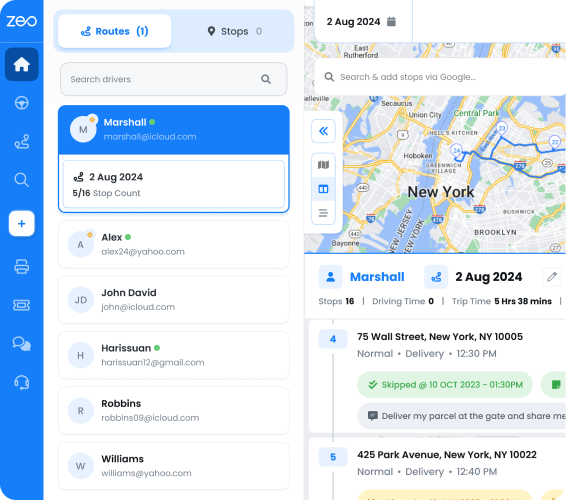
Houd rekening met verbeterde nalevingspercentages van SLA's. Het voldoen aan de responstijdvereisten voorkomt boetes van de toezichthouder en zorgt voor klantbehoud, wat beide een meetbare financiële waarde heeft.
Verbeteringen in klanttevredenheid
Uit onderzoek van de Insurance Research Council is gebleken dat de klanttevredenheid bij schadeafhandeling rechtstreeks samenhangt met het behoud van verzekerden. Snellere reactietijden en accurate aankomstmeldingen verbeteren deze scores meetbaar.
Meet de resultaten van tevredenheidsonderzoeken vóór en na de implementatie van routeoptimalisatie. Zelfs kleine verbeteringen in tevredenheidsscores leiden op de lange termijn tot een aanzienlijke klantretentie.
Implementatiekosten van technologie
Neem de kosten voor softwareabonnementen, trainingstijd en eventuele integratiekosten mee in uw ROI-berekening. De meeste softwareplatformen voor wagenparkbeheer laten binnen 3-6 maanden een positieve ROI zien voor teams van 10 of meer schade-experts.
De AI-gestuurde optimalisatie van Zeo Route Planner bespaart doorgaans meer dan 2 uur per dag per schade-expert, wat al vanaf de eerste maand van implementatie een meetbaar rendement oplevert.
Mobielgerichte routeoptimalisatie voor schade-experts in het veld
Moderne schade-experts hebben behoefte aan mobielvriendelijke tools die naadloos in het veld werken, en niet aan logge desktopsystemen die niet geschikt zijn voor gebruik in de praktijk.
Routebezorging en navigatie
Schade-experts moeten geoptimaliseerde routes rechtstreeks op hun mobiele apparaten ontvangen, inclusief geïntegreerde stapsgewijze navigatie. Het systeem moet samenwerken met hun favoriete navigatie-app (Google Maps, Waze of Apple Maps) in plaats van dat ze nieuwe interfaces moeten leren.
Realtime route-updates worden automatisch naar mobiele apparaten verzonden wanneer centralisten noodclaims toevoegen of schema's wijzigen. Dit voorkomt verwarring en zorgt ervoor dat schadebehandelaars altijd over actuele informatie beschikken.
Toegang tot claiminformatie
Mobiele route-apps moeten uitgebreide schadegegevens voor elke stop weergeven, inclusief contactgegevens van de verzekeringnemer, schadenummers, schadeomschrijvingen en eventuele speciale instructies.
Deze informatie moet offline toegankelijk zijn, omdat schade-experts vaak werken in gebieden met slechte mobiele dekking. De app moet updates synchroniseren zodra de verbinding hersteld is.
Documentatie- en communicatietools
Schade-experts in het veld hebben mobiele tools nodig om foto's te maken, handtekeningen te verzamelen en inspectieverslagen direct in de routeplanner-app vast te leggen. Dit stroomlijnt de documentatie en zorgt voor een correcte afhandeling van schadeclaims.
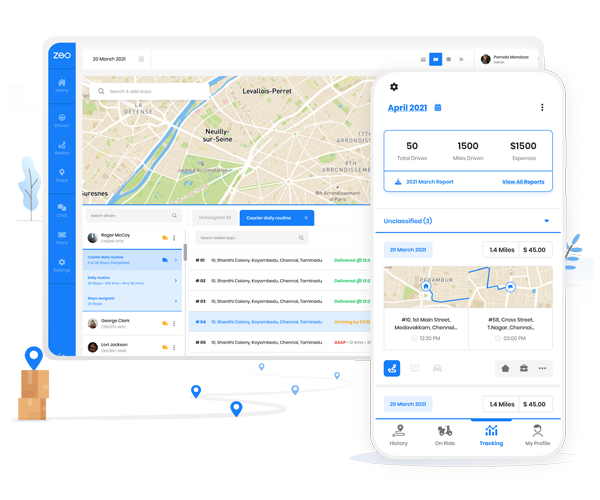
Bij de mobile-first aanpak gebruiken schade-experts de Zeo mobiele app om route-updates te ontvangen, naar schadelocaties te navigeren, foto's en handtekeningen vast te leggen voor schadedocumentatie en realtime statusinformatie door te geven aan de dispatchers via functies voor buitendienstbeheer.
Statusupdates en voortgangsregistratie
Automatische statusupdates houden de dispatchers op de hoogte van de voortgang in het veld zonder dat ze constant hoeven in te checken. Het systeem moet bijhouden wanneer schade-experts bij schadegevallen aankomen, inspecties voltooien en naar de volgende locatie vertrekken.
Deze transparantie helpt planners de verwachtingen van klanten te managen en potentiële vertragingen te signaleren voordat deze de dienstverlening beïnvloeden.
Beste werkwijzen voor meerdaagse routeplanning en integratie van noodhulpdiensten
Verzekeringsactiviteiten vereisen zowel strategische planning voor routinematige schadeclaims als tactische flexibiliteit voor noodsituaties.
Wekelijkse gebiedsplanning
Plan de werkgebieden van de schade-experts wekelijks in op basis van de schadedichtheid, de geografische dekkingsvereisten en de individuele specialisaties. Deze strategische aanpak helpt de werkdruk in evenwicht te brengen en zorgt voor voldoende dekking in uw servicegebied.
Houd rekening met seizoensgebonden factoren zoals stormpatronen, toename van het reisverkeer tijdens vakantieperioden of bouwprojecten die van invloed kunnen zijn op de verkeerspatronen en het aantal schadeclaims in specifieke gebieden.
Dagelijkse routeoptimalisatie binnen een strategisch kader
Terwijl de wekelijkse gebiedsindeling behouden blijft, worden de dagelijkse routes geoptimaliseerd op basis van nieuwe claims, klantbeschikbaarheid en prioriteitswijzigingen. Deze hybride aanpak zorgt voor stabiliteit en maximaliseert tegelijkertijd de dagelijkse efficiëntie.
Begin elke dag met routeoptimalisatie waarbij rekening wordt gehouden met 's nachts ingediende schadeclaims, prioriteitsverhogingen en eventuele schemawijzigingen ten opzichte van de activiteiten van de vorige dag.
Integratie van noodresponsprotocollen
Ontwikkel duidelijke protocollen voor de afhandeling van spoedeisende claims die zich voordoen tijdens normale werkzaamheden. Bepaal welke schade-experts noodoproepen kunnen afhandelen op basis van locatie, expertise en huidige beschikbaarheid.
Uw routeplanningssysteem moet in geval van nood direct een nieuwe routeberekening mogelijk maken, waarbij automatisch de dichtstbijzijnde gekwalificeerde schade-expert wordt gevonden en diens planning met minimale verstoring wordt bijgewerkt.
Back-updekking en flexibiliteit
Plan flexibiliteit in in de dagelijkse planning voor onverwachte situaties. Dit kan betekenen dat je 85-90% van de capaciteit inplant in plaats van elke minuut vol te plannen, zodat er ruimte overblijft voor dringende claims en onverwachte vertragingen.
Train schade-experts waar mogelijk in meerdere soorten claims. Dit biedt meer mogelijkheden voor spoedopdrachten en vermindert knelpunten wanneer specialisten niet beschikbaar zijn.
Prestatiebewaking en continue verbetering
Houd wekelijks belangrijke statistieken bij: gemiddelde responstijden per schadegeval, klanttevredenheidsscores, bezettingsgraad van schade-experts en efficiëntie van de gebiedsdekking. Gebruik deze gegevens om uw routeplanningsstrategieën in de loop van de tijd te verfijnen.
Regelmatige functioneringsgesprekken helpen bij het identificeren van schadebehandelaars die mogelijk extra training nodig hebben, gebieden waarvan de grenzen moeten worden aangepast, of processen die verder kunnen worden gestroomlijnd.
Veelgestelde Vragen / FAQ
V: Hoeveel procent van de werkdag van een schade-expert wordt besteed aan het rijden tussen verschillende schadegevallen?
Volgens branchegegevens besteden schade-experts in het veld ongeveer 40% van hun werkdag aan het rijden tussen schadelocaties. Dit komt neer op 3-4 uur per dag voor experts die 8-12 schades behandelen in gebieden die zich over meer dan 50 kilometer uitstrekken.
V: Hoe beïnvloedt een slechte routeplanning de reactietijd bij schadeclaims?
Slechte routeplanning zorgt ervoor dat schade-experts de wettelijke SLA-deadlines missen. Deze deadlines vereisen vaak een reactie op dezelfde dag bij noodgevallen en contact binnen 24-48 uur bij standaard schadeclaims. Te late reacties leiden tot boetes en schaden de klantrelatie in stressvolle situaties.
V: Kan routeoptimalisatiesoftware noodclaims afhandelen die midden op de dag ontstaan?
Ja, moderne routeoptimalisatieplatforms zoals Zeo Route Planner bieden dynamische routeaanpassingen die routes automatisch herberekenen wanneer er urgente claims ontstaan. Hierdoor wordt het meest efficiënte invoegpunt gevonden zonder handmatige herplanning, terwijl de bestaande afsprakenplanning behouden blijft.
V: Welke functies moeten verzekeringsmaatschappijen zoeken in software voor het doorsturen van schade-experts?
Essentiële functies zijn onder meer het toewijzen van schade-experts op basis van vaardigheden aan de juiste schadetypes, tijdvensterbeheer voor klantbeschikbaarheid, realtime communicatietools en bewijsdocumentatie met foto's en digitale handtekeningen voor naleving van de regelgeving.
V: Hoe berekent u het rendement op investering (ROI) van geoptimaliseerde schade-expertroutes?
Bereken de directe besparingen door de huidige vermindering van de reistijd (doorgaans 30%) te volgen, te vermenigvuldigen met de uurkosten, de brandstofbesparing (20-30% reductie) erbij op te tellen en rekening te houden met de productiviteitswinst die voortvloeit uit het verwerken van 2-3 extra claims per schadebehandelaar per dag.
Een efficiënte routeplanning voor schade-experts verbetert zowel de operationele kosten als de klanttevredenheid tijdens kritieke schadegevallen. De combinatie van strategische gebiedsplanning en tactische routeoptimalisatie helpt verzekeringsmaatschappijen klanten sneller van dienst te zijn en tegelijkertijd de productiviteit van de schade-experts te maximaliseren.
Klaar om uw schade-expertiseprocessen te transformeren? Start een gratis proefperiode en ontdek hoe Zeo uw routes voor schade-experts kan optimaliseren en de reactietijden bij claims kan verbeteren.
Bent u wagenparkeigenaar?
Wilt u uw chauffeurs en leveringen eenvoudig beheren?
Laat uw bedrijf moeiteloos groeien met Zeo Routes Planner: optimaliseer routes en beheer eenvoudig meerdere chauffeurs.

brandstofbesparing verhogen
Bespaar maandelijks $ 200 op brandstof!
Optimaliseer routes met ons algoritme, waardoor reistijd en kosten efficiënt worden verminderd.
Begin gratis