



# Septic Truck Routing Software Guide: Cut Travel Time 30%
> TL; DR : Septic truck routing software reduces travel time by 30% through AI-powered optimization that coordinates disposal site visits with customer routes. Manual route planning wastes 40% more drive time and creates compliance documentation gaps. Advanced routing solutions like Zeo Route Planner address these challenges with capacity-based routing and real-time GPS tracking, helping septic service teams save 2+ hours daily.
Running a septic service business feels like playing Tetris with time windows, disposal sites, and emergency calls. You’re juggling residential pump-outs, commercial maintenance, and unexpected overflows while your trucks zigzag across town burning fuel and losing money.
The problem isn’t your drivers or your equipment. It’s the manual route planning that turns every day into chaos. Modern septic truck routing software changes this completely, reducing travel time by 30% while streamlining compliance tracking and disposal logistics.
Why Traditional Septic Route Planning Fails (and Costs You Money)
Your dispatcher prints out addresses at 6 AM, hands them to drivers, and hopes for the best. This approach worked when you had two trucks. With five or more, it’s bleeding profits.
The Hidden Costs of Manual Routing
Every inefficient route costs you in multiple ways. Your trucks spend 40% more time driving between jobs instead of generating revenue. According to the 환경 보호국, the average septic pumping job takes 45 minutes, but poor routing adds another 20-30 minutes of drive time between stops.
Emergency calls destroy your carefully planned schedule. When a residential customer has a backup, you send the nearest available truck – except you don’t actually know which truck is nearest. Your driver spends 45 minutes driving to a job that another truck could have reached in 15 minutes.
Disposal Site Coordination Nightmare
Septic trucks can’t just drive from job to job like delivery vehicles. Each truck must coordinate with waste disposal facilities, which have their own operating hours and capacity limits. Manual planning means trucks often drive past disposal sites only to backtrack later when tanks are full.
Your drivers make judgment calls about when to empty tanks, sometimes cutting routes short to hit disposal sites before closing time. Other times, they start the next day with partially full tanks, reducing capacity for the day’s work.
Compliance Documentation Gaps
The 교통학과 requires detailed records for waste transportation. Manual systems rely on paper logs that drivers fill out between jobs. Missing signatures, incomplete timestamps, and illegible handwriting create compliance risks during inspections.
When customers dispute service dates or quality, you’re digging through paper receipts and handwritten notes. Proving service completion becomes a time-consuming investigation instead of a simple database lookup.
Essential Features Every Septic Truck Routing Software Must Have
Not all routing software understands the unique requirements of septic services. Standard delivery routing misses critical features that septic companies need daily.
Multi-Stop Optimization with Disposal Constraints
Your routing software must handle the reality of septic operations: trucks fill up and need emptying. The system should automatically factor in disposal site locations, operating hours, and your truck’s capacity when building routes.
Quality software calculates when each truck will reach capacity based on job types. A 1,500-gallon residential pump-out affects routing differently than a 500-gallon maintenance call. The system adjusts remaining stops accordingly.
Emergency Call Integration
Septic emergencies can’t wait for tomorrow’s route. Your software needs real-time driver locations and instant route recalculation capabilities. When a backup emergency comes in, the system should identify the closest available truck and automatically adjust both drivers’ routes.
The best systems maintain separate emergency response protocols while protecting scheduled customers from excessive delays. They calculate arrival time impacts and suggest which scheduled stops to reschedule if necessary.
시간 창 관리
Residential customers often specify narrow availability windows. Commercial accounts may require service before or after business hours. Your routing software must respect these constraints while optimizing drive time.
Advanced systems flag potential conflicts early. If a customer requests service between 2-4 PM but your optimized route has you across town at 2 PM, the software highlights this impossibility during route planning, not when your driver arrives late.
서비스 증명 서류
디지털 배달 증명 eliminates paperwork headaches and compliance gaps. Your system should capture photos, digital signatures, and detailed service notes at each stop. GPS timestamps provide automatic location and time verification.
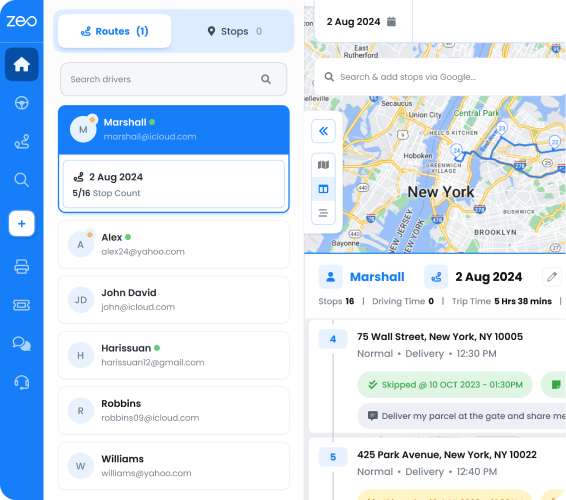
Zeo Route Planner solves this by combining photo capture, digital signatures, and GPS timestamps into a single proof of delivery system that drivers access directly on their mobile devices. The documentation automatically syncs to your office systems for immediate access during customer inquiries or compliance audits.
Fleet Communication Tools
Your dispatcher needs real-time visibility into truck locations, job progress, and estimated arrival times. Drivers need instant communication channels for questions or updates without phone tag.
현대 운전자 추적 소프트웨어 provides live GPS tracking with automatic customer notifications. When your driver finishes the previous job early, customers receive updated arrival times automatically, improving satisfaction and reducing office phone calls.
ROI Calculator: How Much Can Septic Routing Software Save Your Business?
Let’s calculate real numbers based on typical septic service operations. These savings compound daily across your entire fleet.
Time Savings Analysis
A five-truck operation typically saves 2-3 hours daily per truck through optimized routing. At $75 per hour for truck and driver costs, that’s $150-225 daily savings per truck, or $750-1,125 across your fleet.
Over a year, those savings total $195,000-292,500 for five trucks. The largest septic service companies report even higher savings as fleet size increases and optimization algorithms have more routes to perfect. Following proven 경로 최적화 모범 사례 amplifies these results further.
연료비 절감
Septic trucks average 6-8 miles per gallon. Reducing daily driving by 30% saves approximately 15-25 miles per truck daily. With diesel at $3.50 per gallon, each truck saves $7-12 daily in fuel costs.
For five trucks, annual fuel savings range from $12,775-21,900. These savings increase as fuel prices rise and become more significant for companies running larger, less fuel-efficient trucks.
Customer Capacity Increase
Optimized routing creates capacity for additional customers without adding trucks. If better routing allows each truck to complete one additional job weekly, that’s 260 extra jobs annually per truck.
At $300 average revenue per septic pumping, each truck generates an extra $78,000 annually. Five trucks could add $390,000 in revenue capacity through routing optimization alone.
규정 준수 비용 회피
Department of Transportation violations for inadequate record-keeping can cost thousands in fines plus legal fees. Digital documentation systems eliminate these risks while reducing administrative time.
The average DOT fine for logbook violations ranges from $1,000-11,000 depending on severity. Avoiding even one violation pays for routing software for years.
Multi-Depot Optimization: Managing Pumping Routes and Disposal Facilities
Septic companies operate differently than standard delivery businesses. Your trucks start at your facility, visit multiple customer sites, periodically empty at disposal facilities, and return home. This multi-depot challenge requires specialized optimization.
Disposal Site Integration
Your routing software must treat disposal sites as mandatory stops, not optional destinations. The system should maintain current information about each facility: operating hours, capacity limits, accepted waste types, and processing fees.
Advanced systems monitor disposal site status in real-time. When your preferred facility reaches capacity or closes unexpectedly, the software automatically reroutes trucks to alternative sites while minimizing additional drive time.
Capacity-Based Route Building
Standard routing software optimizes for time or distance. Septic routing must optimize for tank capacity, disposal opportunities, and service requirements simultaneously. A truck with a 3,000-gallon capacity might handle six residential pump-outs before requiring disposal site access.
The system should calculate cumulative waste volume as it builds routes. When projected volume approaches truck capacity, it automatically schedules disposal site visits at optimal points in the route.
Cross-Docking Coordination
Some septic companies use smaller trucks for restricted access areas and transfer waste to larger trucks for disposal runs. Your routing software should coordinate these transfers, optimizing both collection routes and disposal logistics.
Zeo Route Planner handles this complexity through its capacity-based routing engine that factors in vehicle weight and volume limits, automatically scheduling disposal visits when trucks approach capacity while maintaining optimized customer service routes.
지리적 구역 관리
Dividing your service area into geographic zones reduces cross-town driving and improves customer service predictability. Your routing software should respect zone boundaries while allowing flexibility for emergencies or special circumstances.
Smart zoning considers disposal site locations, not just customer density. A zone might extend farther in one direction to include convenient disposal access, reducing overall travel time even with slightly longer customer routes.
Compliance and Safety Integration for Septic Waste Transportation
The Department of Transportation, Environmental Protection Agency, and state regulators impose strict requirements on waste transportation. Your routing software should support compliance, not complicate it.
DOT Record-Keeping Requirements
Commercial septic trucks fall under DOT regulations requiring detailed logs of routes, timing, and waste handling. Paper logs create compliance risks through illegible entries, missing information, and lost documentation.
Digital systems automatically capture required data points: departure times, arrival times, waste volumes, and disposal locations. GPS integration provides objective location verification that satisfies regulatory requirements.
보관 사슬 문서
Waste transportation requires clear documentation from collection through disposal. Your system should track waste origin, volume estimates, transportation route, and final disposal location with timestamps and driver verification.
Advanced systems generate automatic chain of custody reports for regulatory compliance. When inspectors request documentation, you provide comprehensive digital records instead of hunting through paper files.
Driver Hours and Safety Compliance
DOT hours-of-service regulations limit driver time behind the wheel. Your routing software should monitor driver hours and prevent route assignments that would violate federal limits.
The system should flag potential violations during route planning and suggest adjustments before drivers start their day. Real-time monitoring alerts dispatchers when drivers approach regulatory limits.

위험물 운송 고려 사항
Some septic waste requires hazmat transportation protocols. Your routing software should flag these requirements and ensure properly certified drivers handle appropriate routes.
Digital systems maintain driver certification records and automatically assign hazmat loads to qualified drivers. They also generate required placarding and documentation for regulated waste transportation.
Zeo Route Planner supports compliance through its photo capture and digital signature features, allowing drivers to document proper waste handling procedures and disposal site acceptance while maintaining GPS-verified location records for regulatory reporting.
Comparing Top Septic Truck Routing Software Solutions
The routing software market offers dozens of options, but few understand septic service requirements. Here’s how to evaluate solutions for your specific needs.
Core Routing Capabilities
Every system claims AI-powered optimization, but optimization quality varies dramatically. Test systems with your actual customer data, including disposal site constraints and emergency scenarios.
The best systems handle complex scenarios smoothly: What happens when your preferred disposal site closes unexpectedly? How does the system balance emergency calls against scheduled maintenance? Can it optimize routes for multiple truck types with different capacities?
산업별 기능
Generic routing software treats every stop equally. Septic-focused solutions understand that pump-out jobs differ from maintenance calls and factor service time variations into route optimization.
Look for systems that handle septic-specific requirements: tank capacity tracking, disposal site integration, waste volume estimation, and compliance documentation. These features separate industry-focused solutions from generic alternatives.
통합 및 호환성
Your routing software should integrate with existing business systems: accounting software, customer management systems, and dispatch tools. Standalone systems create data silos and duplicate entry requirements.
Modern solutions offer API connections and pre-built integrations with popular business software. They sync customer data, service history, and billing information automatically, eliminating manual data entry.
확장 성 및 성능
Choose software that grows with your business. A solution that works for five trucks should handle 20 trucks without performance degradation or major system changes.
클라우드 기반 차량 관리 소프트웨어 typically offers better scalability than desktop software. They handle increased data volumes and user counts automatically while providing better reliability and automatic updates.
실제 성능 예
Mountain View Septic Service in Colorado operates 12 trucks across a 50-mile service radius. Before implementing routing software, their drivers averaged 6.2 jobs daily with 180 miles of driving per truck.
After switching to optimized routing, they increased to 8.1 jobs daily while reducing average driving to 125 miles per truck. The 30% efficiency improvement allowed them to serve 30% more customers without adding trucks, generating an additional $340,000 annual revenue.
비용 구조 분석
Routing software pricing varies from $30-200 monthly per truck depending on features and service levels. Calculate total cost of ownership including setup fees, training costs, and ongoing support.
Compare subscription costs against potential savings from improved efficiency. Most septic companies find that routing software pays for itself within 60-90 days through reduced fuel costs and increased job capacity alone.
Zeo Route Planner serves over 1.5 million users across 150+ countries with transparent per-vehicle pricing that includes all core features: AI-powered optimization, real-time tracking, proof of service collection, and customer notifications without hidden fees or usage limits.
Implementation Guide: Getting Your Septic Routing System Running
Rolling out routing software across your fleet requires careful planning. Poor implementation wastes money and frustrates drivers who resist new technology.
Phase 1: Data Preparation and System Setup
Start by organizing your customer database with accurate addresses, service history, and special requirements. Clean data produces better optimization results and smoother system launch.
Import disposal site information including addresses, operating hours, capacity limits, and fee structures. The system needs this data to build realistic routes that account for disposal requirements.
Set up your fleet information: truck capacities, driver assignments, operating territories, and service capabilities. Accurate fleet data ensures the system makes appropriate job assignments.
Phase 2: Driver Training and Buy-In
Introduce routing software as a tool that makes drivers’ jobs easier, not management surveillance. Emphasize benefits: less driving, fewer phone calls for directions, automatic customer notifications, and simplified paperwork.
Provide hands-on training with actual routes and scenarios. Let drivers practice with the mobile app using familiar customers and locations. Address concerns about technology learning curves with patient, practical instruction.
Start with your most tech-comfortable drivers as system ambassadors. Their success stories convince skeptical drivers that the system works and improves their daily experience.
Phase 3: Pilot Testing with Limited Routes
Begin with one or two trucks running optimized routes while others continue manual planning. This parallel approach lets you refine system settings without disrupting entire operations.
Monitor results closely: Are optimized routes actually faster? Do customers receive better service? Are drivers completing more jobs per day? Use real data to fine-tune optimization parameters.
Compare pilot results against manual routes using the same drivers and similar customer mix. Document improvements in drive time, job completion rates, and customer satisfaction scores.
Phase 4: Full Fleet Rollout
Expand routing software across your entire fleet once pilot testing proves successful. Maintain support systems for drivers adjusting to new processes.
Monitor system performance during the transition period. Watch for optimization opportunities as the system learns your operation patterns and customer requirements.
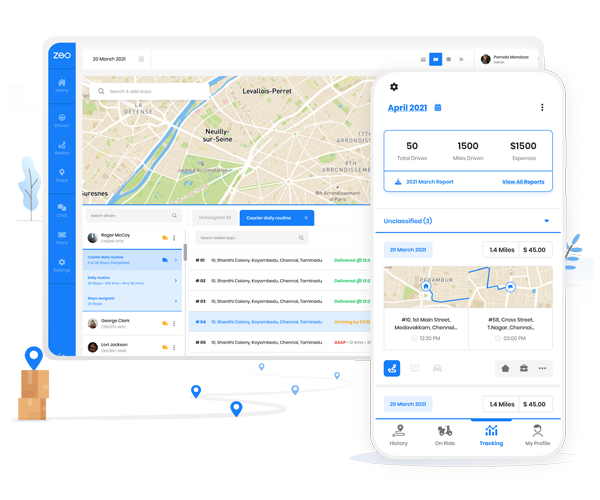
While fleet managers use Zeo’s web platform to plan optimal routes considering disposal sites and compliance requirements, septic truck drivers receive their optimized routes directly on the mobile app, complete with customer details, special instructions, and easy proof of service collection.
Phase 5: Optimization and Advanced Features
After basic routing becomes routine, explore advanced features: automated customer notifications, predictive maintenance scheduling, and performance analytics.
Use system data to identify business improvement opportunities. Which routes consistently run over time? Which customers create scheduling challenges? What disposal sites offer the best efficiency?
Regular system optimization maintains peak performance as your business grows and customer patterns change. Schedule monthly reviews of routing efficiency and system utilization.
구현 과정에서 흔히 발생하는 함정을 피하는 방법
Don’t rush system deployment. Inadequate training creates frustrated drivers and poor adoption rates. Allow sufficient time for learning and adjustment.
Avoid over-customizing initially. Start with standard optimization settings and adjust based on real performance data rather than theoretical preferences.
Don’t ignore driver feedback. They understand practical routing challenges that office-based managers might miss. Their insights improve system configuration and adoption success.
자주 묻는 질문
Q: How much does septic truck routing software typically cost per vehicle?
Most septic truck routing software ranges from $30-200 monthly per vehicle, depending on features and service levels. Calculate total cost of ownership including setup fees and training, but most septic companies find the software pays for itself within 60-90 days through reduced fuel costs and increased job capacity.
Q: What’s the biggest challenge with manual septic route planning?
The biggest challenge is coordinating disposal site visits with customer routes, as septic trucks must empty at waste facilities with specific operating hours and capacity limits. Manual planning often results in trucks driving past disposal sites only to backtrack later, wasting 40% more time on unnecessary driving between jobs.
Q: Can routing software handle septic emergencies and last-minute calls?
Advanced septic truck routing software like Zeo Route Planner provides real-time GPS tracking and instant route recalculation capabilities, automatically identifying the closest available truck when emergencies arise. The system adjusts both drivers’ routes while calculating arrival time impacts for scheduled customers.
Q: What compliance documentation is required for septic waste transportation?
The Department of Transportation requires detailed records including departure times, arrival times, waste volumes, disposal locations, and chain of custody documentation. Digital systems eliminate compliance risks by automatically capturing required data points with GPS verification that satisfies regulatory requirements.
Q: How much fuel can optimized routing save for septic trucks?
Septic trucks averaging 6-8 miles per gallon can save 15-25 miles per truck daily through 30% route optimization. At $3.50 per gallon diesel, this translates to $7-12 daily fuel savings per truck, or $12,775-21,900 annually for a five-truck operation.
Transform Your Septic Service Operations Today
Septic truck routing software transforms chaotic daily scheduling into optimized, profitable operations. The 30% reduction in travel time, streamlined disposal logistics, and automated compliance tracking deliver measurable ROI within months.
Your competition is already optimizing their routes while you’re still playing scheduling Tetris with paper maps and phone calls. Every day you delay implementation costs money in wasted fuel, missed opportunities, and frustrated customers.
Start your free trial of Zeo Route Planner and see how septic companies are saving 2+ hours daily while improving customer satisfaction. Join over 1.5 million users who’ve discovered that smart routing software pays for itself while making operations simpler, not more complicated.
당신은 차량 소유자입니까?
드라이버와 배송을 쉽게 관리하고 싶으신가요?
Zeo Routes Planner로 손쉽게 사업을 성장시키세요. 경로를 최적화하고 여러 운전자를 손쉽게 관리하세요.