


# Hoe optimaliseer je routes voor buitendienstmedewerkers in de telecommunicatie?
TL;DR: Routeoptimalisatie voor telecomonderhoud vereist dynamische systemen die gepland onderhoud in evenwicht brengen met noodhulp , rekening houdend met beperkingen op het gebied van vaardigheden en materieel. Geavanceerde routeplanning verlaagt de operationele kosten van telecombedrijven met 20-35% door snellere noodhulp en minder herhaalde ritten van servicewagens. Routeoptimalisatietools zoals Zeo Route Planner pakken dit aan met AI-gestuurde optimalisatie en op vaardigheden gebaseerde chauffeursplanning, waardoor telecomteams dagelijks meer dan 2 uur besparen.
Telecomonderhoudsbedrijven staan voor een unieke uitdaging: het vinden van een balans tussen gepland onderhoud en noodreparaties bij netwerkstoringen, terwijl tegelijkertijd gespecialiseerde apparatuur en de vaardigheden van technici in uitgestrekte servicegebieden moeten worden beheerd. Om de routes van telecomonderhoudsbedrijven effectief te optimaliseren, is het belangrijk te begrijpen dat slechte routekeuzes niet alleen brandstof verspillen, maar ook leiden tot vertraagde reparaties, meerdere servicebezoeken en netwerkuitval die miljoenen kost.
De verborgen kosten van inefficiënte telecomroutering reiken veel verder dan alleen voertuigkosten. Elke extra gereden kilometer betekent langere storingen bij klanten, hogere overuren en gefrustreerde technici die noodoproepen moeten afhandelen naast geplande installaties.
De verborgen kosten van slechte routeplanning voor telecommunicatie (waarom elke extra kilometer telt)
Telecommunicatiewerkzaamheden in het veld brengen aanzienlijk meer risico's met zich mee dan reguliere serviceroutes. Wanneer een zendmast uitvalt, heeft elke minuut vertraging gevolgen voor duizenden klanten en leidt dit tot meetbaar omzetverlies.
Een gemiddeld telecombedrijf met 25 buitendiensttechnici verliest maandelijks $47,000 door inefficiënte routering, volgens de prioriteitsnormen voor telecommunicatiediensten . Dit verlies is op te delen in drie belangrijke kostenposten die operationeel managers nauwlettend in de gaten houden.
Vermenigvuldiging van netwerkuitval
Slechte routering verandert storingen van 2 uur in rampen van 4 uur. Een glasvezelbreuk die 5,000 zakelijke klanten treft, kost ongeveer $ 12,000 per uur aan verloren inkomsten en boetes. Wanneer technici te laat komen door vertragingen in de routering, verdubbelen of verdrievoudigen deze kosten.
Vrachtwagenrolvermenigvuldiging
Volgens brancheonderzoek vereist 23% van de serviceaanvragen in de telecomsector een vervolgbezoek vanwege ontbrekende apparatuur of ongeschikte technici. Slechte routeplanning verergert dit probleem doordat technici zonder de juiste onderdelen of expertise naar de eerste klant worden gestuurd, wat gegarandeerd leidt tot dure vervolgbezoeken.
Vertragingen bij noodhulp
Telecombedrijven worden geconfronteerd met strenge SLA-vereisten met boeteclausules die gemiddeld $500 tot $2,000 per gemiste responstijd bedragen. Wanneer noodoproepen slecht geplande routes verstoren, hebben technici moeite om kritieke storingen binnen de contractueel vastgelegde termijnen te verhelpen.
De gevolgen zijn onder andere merkbaar in klanttevredenheid, het moreel van de monteurs en de kosten voor overuren. Teams die dagelijks meer dan drie uur in voertuigen doorbrengen, melden een 34% hoger personeelsverloop, wat leidt tot extra wervings- en opleidingskosten. Effectieve kilometerregistratie helpt deze verborgen kosten in kaart te brengen.
Uitdagingen op het gebied van routering specifiek voor de telecommunicatie: apparatuur, vaardigheden en noodhulp
De complexiteit van telecomroutering komt voort uit drie onderling verbonden variabelen die standaard routeoptimalisatietools moeilijk tegelijkertijd kunnen verwerken.
Apparatuurafhankelijkheden
Voor reparaties aan glasvezelkabels is lasapparatuur nodig die meer dan 50 kilogram weegt. Onderhoud aan zendmasten vereist gespecialiseerde klimuitrusting en RF-testapparatuur. Reparaties aan ondergrondse kabels vereisen graafgereedschap en lokalisatieapparatuur.
Elk type apparatuur bepaalt welke technici specifieke oproepen kunnen afhandelen. Routeplanners moeten bij het toewijzen van werkorders rekening houden met de voertuigcapaciteit, de beschikbaarheid van apparatuur en de voorbereidingstijd.
Op vaardigheden gebaseerde beperkingen
Telecommunicatiewerkzaamheden omvatten meerdere specialisaties: glasvezeltechnici, RF-ingenieurs, koperspecialisten en noodhulpteams. Een glasvezelbreuk kan niet worden toegewezen aan een koperspecialist, ongeacht de geografische nabijheid.
Op vaardigheden gebaseerde routering wordt complexer wanneer rekening wordt gehouden met certificeringsniveaus. Alleen gecertificeerde klimmers mogen zendmasten hoger dan 100 meter onderhouden. Alleen erkende RF-technici mogen uitzendapparatuur aanpassen.
Patronen van noodonderbrekingen
Netwerkstoringen houden zich niet aan geplande routes. Wanneer een graafmachine om 2 uur een belangrijke glasvezelkabel doorsnijdt, moeten mogelijk drie technici direct elders worden ingezet, waardoor zorgvuldig geplande onderhoudsschema's in de war raken.
Traditionele routeplanningssystemen bezwijken onder deze dynamische eisen. Statische routes die om 6 uur 's ochtends worden gepland, zijn tegen de middag alweer achterhaald wanneer noodoproepen de helft van het personeel omleiden.
Optimaliseer de routes van telecomveldservicemedewerkers: slimme oplossingen voor gemengde werkbelastingen
Effectieve routering van telecommunicatie vereist dynamische systemen die een evenwicht vinden tussen gepland onderhoud en noodhulp, rekening houdend met beperkingen op het gebied van vaardigheden en apparatuur.
Prioriteitsgebaseerde routestructuren
Structureer routes rond drie prioriteitsniveaus: noodgevallen (netwerkstoringen), urgent (dienstverstoringen) en onderhoud (preventief werk). Noodoproepen activeren automatisch een herberekening van de routes voor de getroffen technici.
Zeo Route Planner lost dit op door middel van prioriteitsstops en dynamische routeaanpassingen. Bij noodoproepen kunnen centralisten direct de dichtstbijzijnde gekwalificeerde technicus toewijzen en tegelijkertijd hun geplande werk automatisch herverdelen over andere teamleden.
Vaardigheden en uitrusting op elkaar afstemmen
Koppel de vaardigheden van technici aan de vereiste certificeringen en beschikbare apparatuur. Stel routeringsregels op die glasvezelreparaties alleen toewijzen aan technici met een fusiecertificaat en lasapparatuur.
Dit voorkomt het kostbare scenario waarbij technici op de werklocatie aankomen en het werk niet kunnen voltooien vanwege ontbrekende vaardigheden of gereedschap. Validatie voorafgaand aan de werkzaamheden vermindert het aantal herhaalde ritten met 31%, volgens onderzoek in de telecomsector.
Optimalisatie van geografische zones
Deel de servicegebieden in logische zones in op basis van infrastructuurtypen en specialisaties van technici. Wijs glasvezelspecialisten toe aan gebieden met een hoge glasvezeldichtheid en mobiele technici aan regio's met veel zendmasten.
Zonegebaseerde routeplanning verkort de gemiddelde reistijd en zorgt ervoor dat de juiste expertise aansluit bij de lokale infrastructuurbehoeften. Technici raken vertrouwd met hun zone, waardoor de diagnosesnelheid en het percentage succesvolle reparaties bij het eerste bezoek verbeteren. Routeoptimalisatiesoftware maakt deze geografische specialisatie mogelijk.
ROI-calculator: Het meten van de impact van routeoptimalisatie in telecomactiviteiten
Bij de berekening van het rendement op investering (ROI) voor optimalisatie van telecomroutes moeten naast de traditionele kostenbesparingen ook verbeteringen in de netwerkbeschikbaarheid en de naleving van service level agreements (SLA's) worden meegenomen.
Directe kostenbesparingen (maandelijks)
- Brandstofbesparing (20-35%): $3,200-5,600 voor een wagenpark met 25 monteurs
- Vermindering van overuren (15-25%): $8,400-14,000 per maand
- Vermindering van het aantal vrachtwagenritten (25-40%): $12,000-19,200 per maand
- Totale directe besparingen: $23,600-38,800 per maand
Verbeteringen in de beschikbaarheid van het netwerk
Snellere noodreacties verkorten de gemiddelde uitvalduur van 3.2 uur naar 1.8 uur. Voor telecombedrijven die zakelijke klanten bedienen, voorkomt deze verbetering maandelijks $142,000 aan kosten voor downtime en boetes voor schending van serviceovereenkomsten.
Voordelen van naleving van SLA's
Het nakomen van SLA's voor noodhulp voorkomt boetes van gemiddeld $ 1,200 per gemiste afspraak. Bedrijven halen doorgaans 12 tot 18 SLA's per maand niet vanwege vertragingen in de routeplanning, wat neerkomt op $ 14,400 tot $ 21,600 aan vermijdbare boetes.
Jaarlijkse ROI-berekening
Totale maandelijkse uitkering: $180,000-198,400
Jaarlijkse uitkeringen: $2,160,000-2,380,800
Investering in routeoptimalisatie: $180,000 (software + implementatie)
Rendement op investering (ROI) in het eerste jaar: 1,100-1,220%
Bij deze berekeningen worden immateriële voordelen zoals hogere tevredenheid van technici, klantbehoud en verbeteringen in de naleving van wet- en regelgeving buiten beschouwing gelaten.
Geavanceerde telecommunicatieroutering: op vaardigheden gebaseerde dispatching en afhankelijkheid van apparatuur
Geavanceerde routeringssystemen voor telecommunicatie moeten tegelijkertijd rekening houden met geografische, vaardigheids-, apparatuur- en tijdsbeperkingen, en tegelijkertijd flexibel blijven voor noodonderbrekingen.
Optimalisatie met meerdere beperkingen
Implementeer routeplanningsalgoritmes die rekening houden met de locatie van de technicus, zijn of haar vaardigheidscertificaten, voertuiguitrusting en huidige werkdruk. Dit voorkomt dat opdrachten die geografisch gezien optimaal lijken, toch mislukken vanwege ontbrekende expertise.

brandstofbesparing verhogen
Bespaar elke dag 2 uur op bezorgingen!
Optimaliseer routes met ons algoritme, waardoor reistijd en kosten efficiënt worden verminderd.
Begin gratis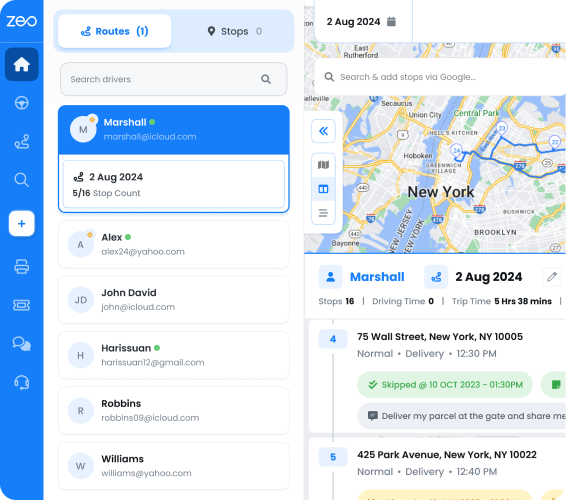
De op vaardigheden gebaseerde chauffeursopdrachtfunctie van Zeo stelt planners in staat om technici met specifieke certificeringen (glasvezellassen, torenbeklimmen, RF-certificering) te labelen en ze automatisch te koppelen aan de juiste werkorders.
Integratie van apparatuurinventaris
Routeplanning voor glasvezelverbindingen met realtime tracking van apparatuur. Bij het plannen van routes voor glasvezelreparaties moet het systeem de beschikbaarheid van fusielassers controleren voordat werkzaamheden worden toegewezen.
Houd de locatie van apparatuur bij in voertuigen en magazijnen. Als een technicus niet over de benodigde apparatuur beschikt in zijn voertuig, wijs de melding dan opnieuw toe of leid hem eerst via een apparatuurdepot.
Werklast balanceren
Verdeel complexe taken over het team om knelpunten in de vaardigheden te voorkomen. Als er bijvoorbeeld maar drie technici aan de toren werken, spreid het onderhoud dan over meerdere dagen in plaats van het te concentreren.
Houd de werklast van individuele technici in de gaten, zowel wat betreft complexiteit als reistijd. Een technicus die drie complexe installaties uitvoert, zou kortere routes moeten krijgen dan iemand die routineonderhoud verricht.
Realtime aanpassing
Ontwikkel routeringssystemen die automatisch herberekenen wanneer er zich noodsituaties voordoen. Wanneer een grote storing meerdere technici vereist, moet het systeem direct de beste herverdelingsstrategie bepalen.
Terwijl centralisten routes optimaliseren via het webplatform, ontvangen technici in het veld hun opdrachten via de Zeo mobiele app, met realtime updates wanneer noodoproepen routeaanpassingen vereisen.
Integratiestrategie: Routeoptimalisatie koppelen aan personeelsmanagement in de telecommunicatiesector
Routeoptimalisatie levert maximale waarde op wanneer deze wordt geïntegreerd met bestaande systemen voor personeelsbeheer en werkorders in de telecomsector.
Integratie van het werkordersysteem
Koppel routeoptimalisatie rechtstreeks aan werkorderbeheersystemen. Wanneer nieuwe serviceaanvragen in het systeem binnenkomen, moeten deze automatisch de routeplanningssoftware aanvullen met locatie, prioriteit, vereiste vaardigheden en benodigde apparatuur.
Zeo integreert met platforms voor personeelsbeheer via API-verbindingen en Zapier, waardoor automatische import van werkorders en statusupdates mogelijk is zonder handmatige gegevensinvoer.
Realtime statusupdates
Implementeer een bidirectionele gegevensstroom tussen routeplannings- en personeelsbeheersystemen. Wanneer technici werkzaamheden voltooien of vertraging oplopen, moet deze informatie de routeberekeningen voor andere teamleden onmiddellijk bijwerken.
Inzicht in resourceallocatie
Geef centralisten realtime inzicht in de locaties van technici, lopende opdrachten en geschatte voltooiingstijden. Dit maakt een weloverwogen besluitvorming mogelijk bij binnenkomende noodoproepen.
Dashboards moeten de status van de technici, de voortgang van de route en de beschikbare capaciteit voor spoedopdrachten weergeven. Kleurgecodeerde kaarten helpen de dispatchers snel de meest geschikte technicus voor urgente oproepen te vinden. Een uitgebreid chauffeursbeheersysteem ondersteunt deze zichtbaarheidsvereisten.
Historische prestatieanalyse
Volg de prestatiecijfers van de routeplanning in de loop van de tijd om verbeterpunten te identificeren. Analyseer patronen in responstijden bij noodgevallen, het percentage succesvolle reparaties bij het eerste bezoek en de route-efficiëntie in verschillende regio's en technici-teams.
De maandelijkse rapportage moet de nalevingspercentages van de serviceovereenkomsten (SLA's), de gemiddelde responstijden en de kosten per servicegesprek bevatten om het rendement op investering (ROI) aan te tonen en optimalisatiemogelijkheden te identificeren.
Noodprotocollen: Dynamische routering bij netwerkuitval
Netwerkstoringen vereisen gespecialiseerde routeringsprotocollen die prioriteit geven aan snelle respons en tegelijkertijd de verstoring van geplande werkzaamheden minimaliseren, conform de noodresponseisen die zijn vastgesteld door brancheorganisaties.
Geautomatiseerde nooddetectie
Integreer netwerkmonitoringsystemen met routeringsplatformen om automatisch storingen te detecteren en noodprotocollen te activeren. Wanneer kritieke infrastructuur uitvalt, moet het systeem onmiddellijk de getroffen klanten identificeren en de juiste technici sturen.
Cascaderende hertoewijzingslogica
Ontwikkel algoritmes die op intelligente wijze geplande werkzaamheden herverdelen wanneer technici noodoproepen ontvangen. In plaats van geplande afspraken simpelweg te annuleren, moet het systeem deze herverdelen over beschikbare teamleden met minimale impact op de klant.
Management van het noodhulpteam
Wijs specifieke technici aan als noodhulpverleners tijdens perioden met een verhoogd risico. Deze technici hebben een minder zware werkdruk, waardoor ze snel kunnen worden ingezet bij kritieke stroomstoringen.
Integratie van klantcommunicatie
Automatisch klanten op de hoogte stellen wanneer noodoproepen geplande afspraken vertragen. Nieuwe aankomsttijden en opties voor het verzetten van de afspraak doorgeven op basis van de beschikbaarheid van de toegewezen technicus.
Het klantnotificatiesysteem van Zeo verstuurt automatisch sms- en e-mailupdates wanneer routes wijzigen, waardoor klanten op de hoogte blijven zonder tussenkomst van de dispatcher. Realtime GPS-tracking maakt nauwkeurige communicatie met klanten mogelijk tijdens noodherindelingen.
Noodprotocollen moeten escalatieprocedures bevatten voor het geval meerdere gelijktijdige storingen de beschikbare capaciteit van technici overschrijden. Vooraf gedefinieerde relaties met aannemers en overeenkomsten voor wederzijdse hulp maken een snelle opschaling van middelen mogelijk tijdens grote calamiteiten.
De meest effectieve noodhulpsystemen combineren snelheid met efficiëntie. Hoewel het snel bereiken van storingen van cruciaal belang blijft, zorgt slimme routeplanning ervoor dat noodhulp geen onnodige vertragingen voor andere klanten veroorzaakt en de operationele kosten niet verhoogt.
Veelgestelde Vragen / FAQ
V: Wat zijn de belangrijkste uitdagingen bij het routeren van buitendienstmedewerkers in de telecommunicatiesector?
Telecomroutering kent drie cruciale uitdagingen: afhankelijkheid van apparatuur (voor glasvezelreparaties is lasapparatuur nodig), vaardigheidseisen (alleen gecertificeerde klimmers mogen masten hoger dan 100 meter onderhouden) en noodonderbrekingen die de planning verstoren. Deze factoren maken telecomroutering aanzienlijk complexer dan standaard serviceroutes.
V: Hoeveel kunnen telecombedrijven besparen met routeoptimalisatie?
Een gemiddeld telecombedrijf met 25 buitendiensttechnici verliest maandelijks $47,000 door inefficiënte routeplanning. De AI-gestuurde routeoptimalisatie van Zeo Route Planner helpt telecombedrijven de kosten met 20-35% te verlagen door dynamische routeaanpassingen en op vaardigheden gebaseerde toewijzing van technici.
V: Hoe handelt u noodoproepen af die geplande telecommunicatieroutes verstoren?
Effectieve noodroutering vereist geautomatiseerde herverdelingssystemen die direct de dichtstbijzijnde gekwalificeerde technicus kunnen identificeren en hun geplande werkzaamheden kunnen herverdelen over andere teamleden. Prioriteitsgebaseerde routeringsstructuren scheiden nood-, urgente en onderhoudswerkzaamheden om verstoringen te minimaliseren.
V: Welke op vaardigheden gebaseerde routeringsfuncties zijn essentieel voor telecommunicatieactiviteiten?
Telecomrouteringssystemen moeten de certificeringen van technici (glasvezellassen, klimmen in masten, RF-licenties) afstemmen op de specifieke functie-eisen. Alleen technici met een fusiecertificaat mogen glasvezelreparaties uitvoeren en alleen erkende klimmers mogen onderhoud aan zendmasten uitvoeren, om kostbare herhaalde bezoeken van monteurs te voorkomen.
V: Hoe meet je het rendement op investering (ROI) van routeoptimalisatie in de telecommunicatie?
ROI-berekeningen moeten rekening houden met verbeteringen in de beschikbaarheid van het netwerk, winst in de naleving van SLA's en directe kostenbesparingen. Een snellere noodrespons kan de gemiddelde duur van een uitval verkorten van 3.2 uur naar 1.8 uur, waardoor telecombedrijven die zakelijke diensten leveren maandelijks $142,000 aan kosten en boetes voor downtime besparen.
Klaar om uw telecomactiviteiten in het veld te transformeren met intelligente routeoptimalisatie? Start uw gratis proefperiode en ontdek hoe Zeo uw telecomkosten met 20-35% kan verlagen door middel van intelligente routeoptimalisatie.

Bent u wagenparkeigenaar?
Wilt u uw chauffeurs en leveringen eenvoudig beheren?
Laat uw bedrijf moeiteloos groeien met Zeo Routes Planner: optimaliseer routes en beheer eenvoudig meerdere chauffeurs.
brandstofbesparing verhogen
Bespaar elke dag 2 uur op bezorgingen!
Optimaliseer routes met ons algoritme, waardoor reistijd en kosten efficiënt worden verminderd.
Begin gratis