

# How to Optimize Mobile Detailing Routes for Maximum Efficiency
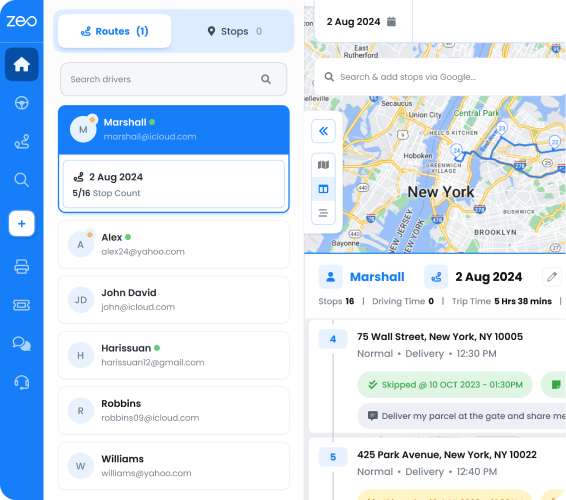
> TL; DR : Mobile detailing businesses can save 2+ hours daily by implementing AI-powered route optimization that considers time windows, traffic patterns, and service requirements. Poor route planning wastes 30-40% of a technician’s workday and costs over $2,000 annually per vehicle in unnecessary fuel expenses. Route optimization tools like Zeo Route Planner address this with intelligent algorithms that automatically sequence appointments and provide real-time traffic adjustments, helping mobile detailing teams serve 20-30% more customers daily.
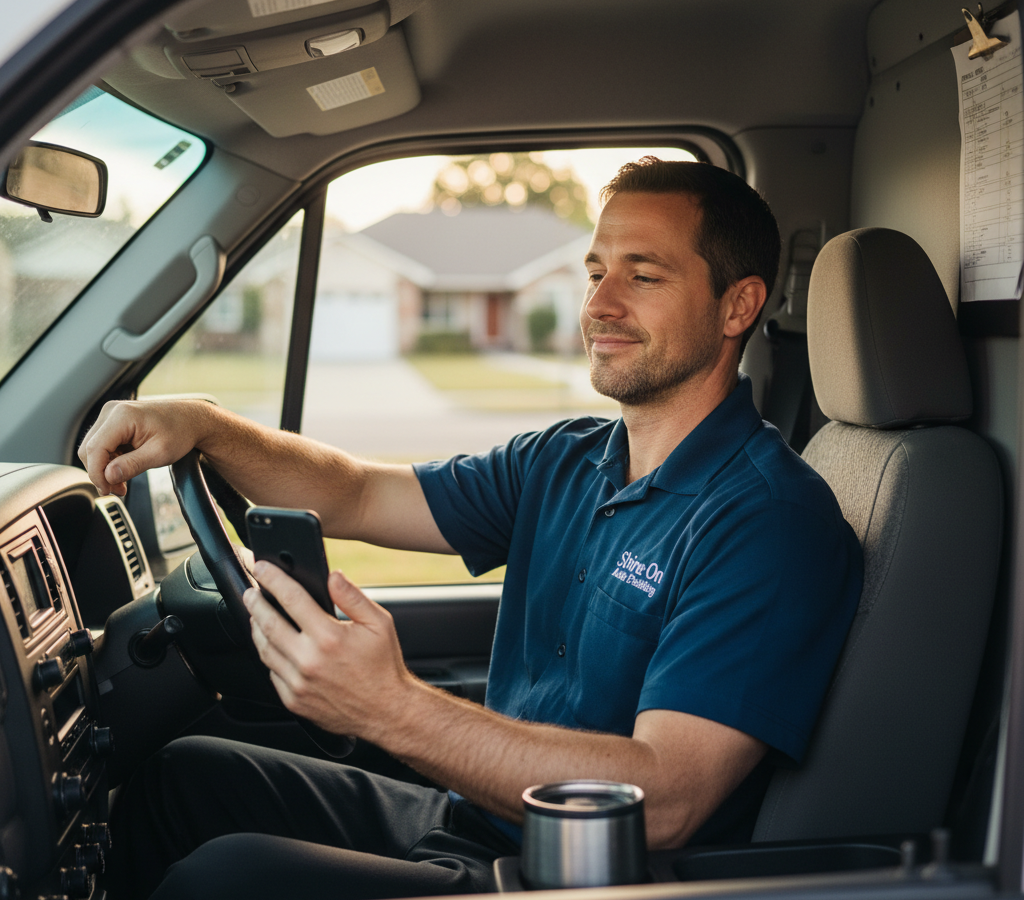
Mobile detailing businesses face a unique challenge that traditional auto shops don’t: every service requires travel time. When learning how to optimize mobile detailing routes, your technicians spend precious hours driving between appointments instead of generating revenue. Poor route planning is the silent profit killer that keeps mobile detailing companies from scaling past a handful of technicians.
The difference between a struggling mobile detailing operation and a thriving one often comes down to how well they optimize their routes. Companies that master route optimization serve 20-30% more customers daily while cutting fuel costs significantly.
The Hidden Costs of Poor Route Planning in Mobile Detailing
Most mobile detailing owners underestimate how much inefficient routing costs their business. When technicians zigzag across town or sit in traffic between appointments, those costs add up fast.
Consider a typical scenario: Your technician finishes a detail in the north side of town at 11 AM. Their next appointment is on the south side at 1 PM, but rush hour traffic turns a 20-minute drive into 45 minutes. That’s 25 minutes of lost time, plus extra fuel costs and vehicle wear.
Multiply this across multiple technicians and appointments daily. According to Federal Highway Administration traffic data, poorly planned routes waste 30-40% of a mobile service technician’s workday. For a technician who could complete 5-6 details with optimal routing, poor planning limits them to just 3-4 services.
The fuel costs alone tell the story. A mobile detailing van averaging 15 MPG that drives an extra 30 miles daily due to poor routing burns an additional 2 gallons of fuel. At current gas prices, that’s over $2,000 annually per vehicle in unnecessary fuel costs.
But the real cost is opportunity cost. Every hour spent driving inefficient routes is an hour not spent serving customers. If your average service generates $100 in revenue and takes 2 hours, losing one appointment per technician per day costs $25,000 annually in lost revenue for a single-technician operation.
Customer satisfaction suffers too. Late arrivals due to traffic or poor routing damage your reputation. Modern customers expect accurate arrival times and real-time updates. When your technicians are stuck in traffic because of poor route planning, you can’t deliver on these expectations.
How to Optimize Mobile Detailing Routes: TSP Algorithms and Distance Matrix Calculations
Understanding the basics of route optimization helps you make better routing decisions. The core challenge mobile detailing faces is called the Traveling Salesman Problem (TSP): finding the shortest route that visits all customer locations exactly once.
Traditional TSP algorithms work for simple scenarios, but mobile detailing requires more sophisticated approaches. You’re not just minimizing distance—you need to consider time windows, service durations, traffic patterns, and technician capabilities.
Distance matrix calculations form the foundation of effective route optimization. Instead of using simple point-to-point distances, modern systems calculate actual drive times between every pair of locations. This accounts for road networks, traffic patterns, and driving restrictions.
Time windows add another layer of complexity. Unlike delivery services with flexible schedules, mobile detailing often works with specific customer availability. Mrs. Johnson needs her car detailed between 2-4 PM because she works from home those hours. Mr. Smith requires service before 10 AM because he leaves for business trips.
Capacity constraints matter too. A full detail service requires different equipment than a basic wash. Some locations need special accommodations—apartment complexes might require advance notification, while commercial accounts may have specific access requirements.
AI 기반 경로 최적화 handles these complexities through sophisticated algorithms that consider all these factors simultaneously. Advanced 경로 최적화 소프트웨어 processes time windows, service requirements, and traffic data to create routes that save significant time compared to manual planning.
The algorithm also accounts for technician-specific factors. If John specializes in paint correction and Sarah excels at interior detailing, the system assigns appropriate jobs while maintaining efficient routing.
Real-time traffic integration ensures routes adapt to current conditions. What looks optimal at 7 AM might be terrible by 2 PM due to construction or accidents. Modern optimization systems continuously update route suggestions based on live traffic data.
Real-Time Route Adjustments: Handling Cancellations, Traffic, and Same-Day Bookings
Mobile detailing operates in a dynamic environment where last-minute changes are common. A customer cancels due to unexpected rain. Traffic accidents cause major delays. A high-value client needs same-day service. Your routing system must adapt quickly to these changes.
Cancellations create immediate optimization opportunities. When a 2 PM appointment cancels, you don’t just remove it from the schedule—you recalculate the entire remaining route. Maybe this opens up time for a same-day booking, or allows serving a customer who requested an earlier time slot.
Same-day bookings require intelligent insertion algorithms. The system evaluates where the new appointment fits best without disrupting existing commitments. It considers drive times, service requirements, and time windows to find the optimal insertion point.
Traffic disruptions demand dynamic re-routing. When accidents or construction cause delays, the system should automatically suggest alternative sequences or routes. 실시간 GPS 추적 provides precise location data, enabling accurate recalculations based on actual positions.
Weather creates unique challenges for mobile detailing. Rain cancellations often cluster together, creating sudden gaps in schedules. Smart routing systems help fill these gaps by identifying customers who want service moved up, or by consolidating remaining appointments into more efficient patterns.
Priority handling becomes crucial during disruptions. VIP customers or high-value commercial accounts might take precedence when rescheduling becomes necessary. The system should flag these priorities and protect important appointments while optimizing around them.
Communication plays a vital role in managing changes. When routes shift, customers need updated arrival times. Automated notifications keep customers informed without burdening your office staff. Professional systems send SMS and email updates with live tracking links, so customers stay informed of any changes.
Your technicians receive updated routes directly on their mobile devices, complete with turn-by-turn navigation and customer details. This ensures everyone stays coordinated when schedules change mid-day.
Advanced Territory Management: Multi-Day Planning and Service Area Optimization
Successful mobile detailing companies think beyond daily routes to optimize territories over longer periods. Multi-day planning ensures efficient coverage while building customer relationships through consistent service areas.
Territory design impacts both efficiency and service quality. Instead of treating each day independently, assign technicians to specific geographic zones. This builds familiarity with local roads, customer preferences, and optimal timing for different areas.
Consider natural geographic boundaries when designing territories. Major highways, rivers, or city districts create logical divisions. This prevents technicians from crossing busy areas unnecessarily and helps customers remember which technician typically serves them.
Population density affects territory size. Urban areas with many customers support smaller territories, while suburban or rural regions need larger coverage zones. Balance territory sizes to ensure each technician has adequate work while maintaining reasonable drive times.
Recurring customer management becomes easier with consistent territories. When the same technician serves specific areas, they develop relationships with regular customers. They learn property access details, customer preferences, and optimal arrival times.
Demand forecasting helps adjust territories seasonally. Summer months might see higher demand in residential areas, while winter commercial contracts become more important. Flexible territory boundaries accommodate these shifts.
Multi-day optimization considers appointment spacing to avoid oversaturating areas. Instead of serving all customers in one neighborhood the same day, spread appointments across the week. This provides better availability windows and allows for emergency insertions.
Balancing workloads across territories prevents technician burnout and ensures consistent service quality. Monitor metrics like appointments per day, drive time percentages, and revenue per territory to identify imbalances requiring adjustment.
The key is building territories that feel natural to both technicians and customers while maximizing operational efficiency. Regular analysis and adjustment keep territories optimized as your business grows and customer patterns evolve.
Cost-Benefit Analysis: Calculating ROI from Optimized Mobile Detailing Routes
Understanding the financial impact of route optimization helps justify investment in professional routing systems. The benefits extend beyond obvious fuel savings to include increased capacity, improved customer satisfaction, and reduced operational stress.

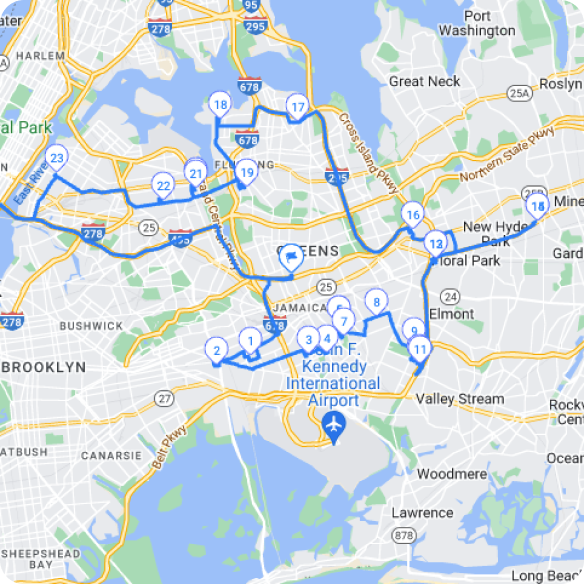
Start with direct cost savings. Calculate current fuel consumption, vehicle maintenance, and time costs. A typical mobile detailing operation running inefficient routes might spend $500 monthly per vehicle on unnecessary fuel. Add maintenance costs from excess mileage—approximately $0.15 per mile in additional wear according to Bureau of Labor Statistics vehicle maintenance data.
Time savings generate the biggest returns. If optimization reduces daily drive time by 90 minutes per technician, that’s 7.5 hours weekly of additional productive capacity. At $60 average hourly revenue, each technician generates an additional $450 weekly, or $23,400 annually.
Customer capacity increases directly boost revenue. Serving one additional customer daily per technician adds substantial income. With average service values around $100, that’s $26,000 additional annual revenue per technician. Even half that improvement pays for routing software many times over.
Labor efficiency improvements reduce stress and turnover. Technicians prefer predictable routes over constant driving chaos. Lower turnover saves recruitment and training costs while maintaining service quality consistency.
Customer satisfaction metrics improve with reliable scheduling and communication. According to research from 고객 서비스 전문가, retaining existing customers costs 5-7 times less than acquiring new ones. Better routing supports retention through consistent, reliable service, making 고객 유지 전략 더 효과적인.
Competitive advantages emerge from superior operations. Companies with optimized routing can offer better pricing, more flexible scheduling, or faster service than competitors still using manual methods. This positioning supports premium pricing and market share growth.
Technology costs are minimal compared to benefits. Professional route optimization typically costs $30-50 monthly per vehicle, while generating thousands in additional value. The payback period usually measures in weeks, not months.
Consider scaling benefits too. Manual routing becomes impossible beyond 3-4 technicians, but optimized systems easily handle dozens of vehicles. This removes growth constraints that limit many mobile detailing companies.
Track metrics to verify ROI: appointments completed daily, fuel costs per appointment, customer retention rates, and technician productivity. These measurements prove optimization value and guide further improvements.
Integration Strategies: Connecting Route Planning with Booking Systems and Customer Communication
Modern mobile detailing operations require seamless integration between scheduling, routing, and communication systems. Customers expect smooth experiences from booking through service completion, which demands coordinated technology systems.
Booking system integration eliminates double data entry and scheduling conflicts. When customers book appointments online, that information should automatically flow into your routing system. This prevents errors and ensures optimal route calculations from the moment appointments are confirmed.
CRM integration provides technicians with complete customer context. Previous service history, customer preferences, property access notes, and payment information should be available during route planning and service delivery. Professional platforms integrate with CRM systems to maintain comprehensive customer records alongside routing data.
E-commerce platforms require special attention for mobile detailing companies selling packages or subscriptions. Automated integrations import appointment requirements, ensuring purchased services get scheduled and routed efficiently.
Automated customer communication reduces administrative burden while improving service quality. Confirmation messages, reminder notifications, arrival updates, and completion confirmations should trigger automatically based on route progress. This keeps customers informed without manual effort.
Real-time tracking capabilities let customers monitor technician progress, similar to food delivery apps. Sharing live location updates and accurate ETAs builds confidence and reduces service anxiety. Customers appreciate knowing exactly when service will arrive.
Payment integration streamlines transaction processing. Whether handling cash, cards, or digital payments, route systems should capture payment status and integrate with accounting software. This ensures accurate revenue tracking and reduces billing disputes.
Photo documentation and digital signatures prove service completion while protecting against disputes. Route systems should capture, store, and link this 배달 증명 to specific appointments and customer records. Advanced features include photo capture and digital signatures that sync automatically with customer records.
Team communication tools keep dispatchers and technicians coordinated throughout service days. In-app messaging, status updates, and emergency notifications ensure smooth operations even when schedules change unexpectedly.
Analytics integration provides insight into route performance, customer satisfaction, and operational efficiency. Connect route data with business intelligence tools to identify improvement opportunities and track key performance indicators.
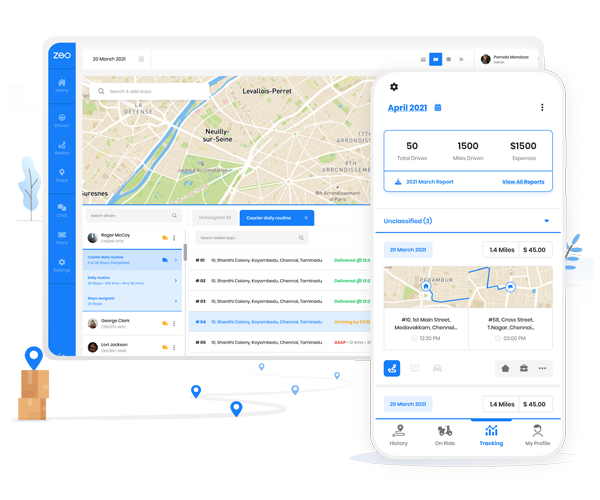
Your technicians receive optimized routes directly on their mobile devices, with turn-by-turn navigation and the ability to update customers with real-time ETAs and collect digital signatures for proof of service completion. This integration ensures seamless operations from initial booking through final payment collection.
The goal is creating unified systems where information flows automatically between functions, reducing manual work while improving customer experiences and operational efficiency.
자주 묻는 질문들 (FAQ)
Q: How much fuel can mobile detailing businesses save with optimized routes?
Mobile detailing operations typically save 20-30% on fuel costs through proper route optimization. A single van driving an extra 30 miles daily due to poor routing burns approximately 2 additional gallons of fuel, costing over $2,000 annually in unnecessary expenses.
Q: What’s the biggest challenge in mobile detailing route planning?
The primary challenge is managing time windows while minimizing drive time between appointments. Unlike fixed-location services, mobile detailing requires balancing customer availability, traffic patterns, service durations, and technician capabilities simultaneously.
Q: How many more customers can a mobile detailer serve with optimized routing?
Properly optimized routes typically allow mobile detailing technicians to serve 20-30% more customers daily. This translates to 1-2 additional appointments per technician per day, significantly boosting revenue potential.
Q: Can route optimization software handle same-day bookings for mobile detailing?
Yes, modern systems like Zeo Route Planner use AI-powered optimization to dynamically insert same-day appointments into existing routes. The system evaluates drive times, service requirements, and time windows to find the optimal insertion point without disrupting existing commitments.
Q: How do weather cancellations affect mobile detailing route efficiency?
Weather-related cancellations create sudden schedule gaps that smart routing systems can optimize. Advanced platforms help fill these gaps by identifying customers requesting earlier service slots or consolidating remaining appointments into more efficient patterns.
Ready to transform your mobile detailing operation? Start your free 7-day trial of Zeo Route Planner to see how much time and fuel you can save on your mobile detailing routes.
당신은 차량 소유자입니까?
드라이버와 배송을 쉽게 관리하고 싶으신가요?
Zeo Routes Planner로 손쉽게 사업을 성장시키세요. 경로를 최적화하고 여러 운전자를 손쉽게 관리하세요.