


# How to Schedule Roll-Off Container Pickups Efficiently
> TL; DR: Efficient roll-off container pickup scheduling requires coordinating multiple variables including container locations, sizes, truck capacity, and customer time windows to maximize daily capacity while reducing fuel costs. Poor scheduling can increase fuel costs by 25-30% and reduce equipment utilization. Route optimization tools like Zeo Route Planner address this with AI-powered optimization and dynamic route adjustments, helping waste management teams save 2+ hours daily.
Managing roll-off container pickups across multiple locations and container sizes presents unique operational challenges. Knowing how to schedule roll-off container pickups efficiently is crucial for waste management companies looking to maximize their daily capacity while reducing fuel costs and driver overtime. The key lies in implementing systems that coordinate multiple variables: container locations, sizes, truck capacity, and customer time windows.
The Hidden Costs of Inefficient Roll-Off Pickup Scheduling
Manual scheduling creates a ripple effect of operational problems that impact your bottom line daily. When dispatchers rely on spreadsheets or whiteboards, they miss opportunities to group nearby pickups and optimize truck capacity.
The most obvious cost is fuel waste. Drivers making multiple trips to the same area because pickups weren’t coordinated can increase fuel costs by 25-30%. A truck that could handle three 10-yard containers in one area instead makes separate trips throughout the day.
Labor inefficiency compounds the problem. According to the Bureau of Labor Statistics, commercial truck drivers average $47,130 annually, making every hour of inefficient routing expensive. Drivers spending extra time on poorly planned routes means fewer pickups per day and higher overtime costs.
Customer satisfaction suffers when pickup windows are missed. Construction sites operate on tight schedules, and delayed container pickups can halt work. This leads to service complaints and potential contract losses.
Equipment utilization drops when trucks aren’t optimized for their capacity. A truck rated for 40,000 pounds making pickups that total 20,000 pounds represents wasted capacity that could have been used for additional revenue-generating pickups.
Hidden administrative costs accumulate through constant schedule changes and customer communication about delays. Dispatchers spend hours daily managing problems that proper scheduling would prevent. Understanding hulladékgazdálkodás best practices helps identify these cost centers before they impact operations.
Implementing Route Optimization Software for Maximum Pickup Efficiency
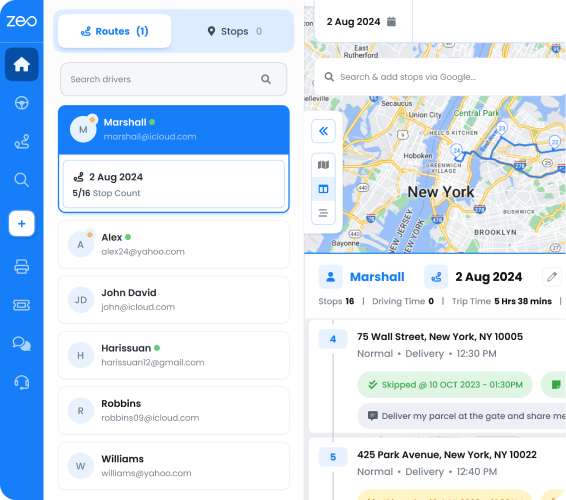
Route optimization software transforms chaotic scheduling into systematic efficiency by calculating the most productive pickup sequences. Modern routing algorithms consider multiple factors simultaneously: container locations, sizes, truck capacities, and traffic patterns.
The software analyzes all scheduled pickups and determines optimal routes that maximize truck capacity utilization. Instead of picking up containers in the order they were scheduled, drivers follow routes that group nearby locations and balance load weights throughout the day.
Zeo Route Planner solves this by using AI-alapú útvonaloptimalizálás that saves 2+ hours daily per driver while increasing pickup capacity by 20-30%. The system automatically assigns pickups to drivers based on truck capacity, container sizes, and geographic clustering.
Container size optimization becomes automatic. The software ensures trucks pick up the right combination of container sizes to maximize payload without exceeding weight limits. A route might combine two 20-yard containers with one 10-yard container to fully utilize truck capacity.
Real-world example: A Dallas-based roll-off company reduced their fleet from 8 trucks to 6 trucks after implementing útvonaloptimalizáló szoftver, while maintaining the same number of daily pickups. The software identified overlapping coverage areas and consolidated routes more efficiently than manual planning allowed.
Time window constraints are factored into route calculations. Construction sites requiring pickups before 3 PM or after 10 AM are automatically scheduled within these windows while maintaining route efficiency.
The software recalculates routes when last-minute pickups are added or canceled. This dynamic adjustment prevents the domino effect of schedule changes that manual systems can’t handle efficiently.
Automated Scheduling Systems: Reducing Manual Coordination Time
Automated scheduling eliminates the time-consuming process of manually coordinating pickups, drivers, and equipment availability. These systems integrate pickup requests, driver schedules, and truck capacities into one coordinated workflow.
Customer pickup requests flow directly into the scheduling system through online portals or phone integration. Instead of dispatchers writing requests on paper and manually adding them to driver schedules, the system automatically slots new pickups into optimal routes.
Driver availability synchronization ensures schedules match actual working hours and break times. The system knows when drivers start, end, and take breaks, preventing impossible schedules that create delays and driver frustration.
Equipment matching happens automatically based on container sizes and locations. The system assigns trucks with appropriate capacity and equipment (like specific hook-lift configurations) to routes requiring those capabilities.
Conflict detection identifies scheduling problems before they become operational issues. If two large containers are scheduled for pickup times that would exceed a driver’s available hours, the system flags this conflict for dispatcher review.
Recurring pickup scheduling automates regular customers without manual entry. Construction projects requiring weekly pickups are automatically scheduled, reducing administrative workload while ensuring consistent service.
Integration with customer management systems prevents double-booking and ensures accurate pickup information flows throughout your operation. When customers change pickup requirements, the automated system updates all relevant schedules simultaneously.
Driver Communication and Real-Time Pickup Status Management
Effective driver communication ensures pickup schedules execute smoothly while providing real-time visibility into route progress. Modern communication systems replace radio calls and phone updates with automated status tracking.
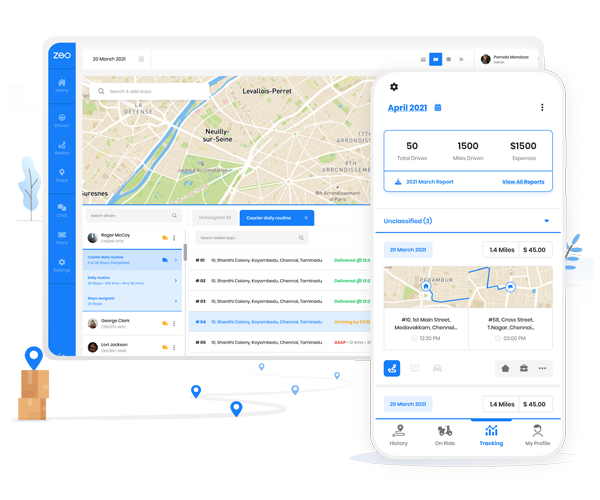
Drivers receive optimized pickup routes directly on their mobile devices through apps like Zeo’s mobile platform, complete with turn-by-turn navigation and container details. This eliminates paper route sheets and provides drivers with real-time traffic updates that manual systems cannot offer.
Real-time pickup status updates keep dispatchers informed of progress without constant phone calls. Drivers mark containers as “picked up” or “delayed” directly in their mobile app, automatically updating central dispatch systems. Implementing illesztőprogram-követő szoftver provides fleet managers with complete visibility into route progress and potential delays.
Customer communication becomes proactive rather than reactive. When drivers are running behind schedule, the system automatically sends updated arrival time notifications to customers, reducing complaint calls to your office.
Problem escalation workflows route issues to the appropriate personnel quickly. If a driver encounters a blocked container or access problem, they can immediately notify dispatch with location details and photos, enabling faster problem resolution.
Proof of pickup documentation happens automatically through mobile apps. Drivers capture photos of picked-up containers and collect digital signatures, creating pickup records without additional paperwork.
End-of-route reporting provides immediate feedback on schedule performance. Dispatchers see which routes finished early, on time, or late, enabling continuous improvement in future scheduling.
Peak Period Planning: Managing High-Demand Construction Seasons
Construction season surges require advanced planning to handle increased pickup volumes without compromising service quality. Peak period management involves capacity planning, staff scheduling, and customer communication strategies.
Historical demand analysis identifies your busy periods and typical volume increases. Most roll-off companies see 40-60% volume increases during spring and summer construction seasons, requiring proactive capacity planning.

növeli az üzemanyag-megtakarítást
Problémamentes kiszállítás és átvétel!
Optimalizálja az útvonalakat algoritmusunkkal, így hatékonyan csökkenti az utazási időt és a költségeket.
Get Started ingyen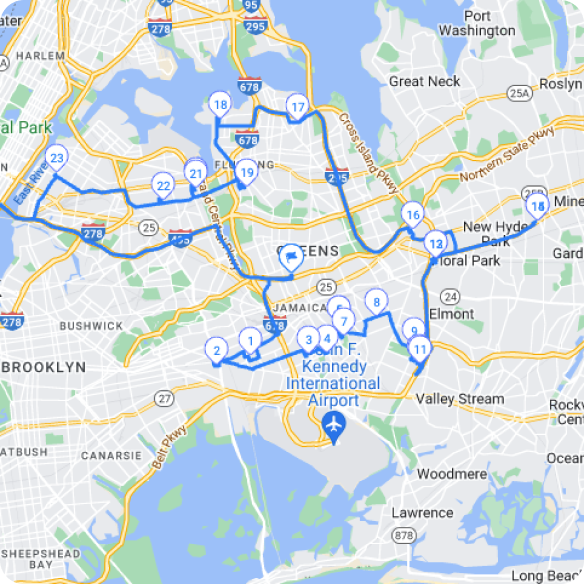
Temporary capacity expansion through equipment rental or contract drivers helps handle peak volumes. Planning these arrangements months in advance ensures availability and better pricing than last-minute additions.
Customer expectation management prevents service complaints during busy periods. Communicating longer lead times and pickup windows during peak season helps customers plan their projects accordingly.
Advanced scheduling during peak periods means booking pickups further in advance and optimizing routes more aggressively. Routes that normally handle 6-8 pickups might be optimized for 10-12 pickups with tighter time coordination.
Staff scheduling adjustments include longer driver hours, weekend service, and additional dispatcher coverage. Peak season staffing plans should be developed and communicated to employees well in advance.
Overflow management procedures define how to handle demand that exceeds capacity. This might include partnerships with other roll-off companies, priority customer policies, or temporary service area restrictions.
Equipment maintenance scheduling becomes critical during peak periods. Regular maintenance should be completed before busy season begins, with emergency repair procedures clearly defined to minimize service disruptions.
Performance Metrics: Tracking KPIs for Pickup Schedule Optimization
Measuring scheduling performance identifies improvement opportunities and validates optimization efforts. Key performance indicators provide objective data about pickup efficiency and customer satisfaction.
Pickups per truck per day measures route efficiency and capacity utilization. Industry benchmarks suggest efficient operations achieve 8-12 pickups per truck daily, depending on service area density and container sizes.
On-time pickup percentage tracks schedule reliability and customer satisfaction. Successful operations maintain 90%+ on-time pickup rates, with iparági kutatás showing this metric directly correlates with customer retention.
Miles per pickup indicates route efficiency and fuel cost management. Optimized routes typically achieve 15-25 miles per pickup, depending on service area geography and customer density.
Driver utilization rates measure how effectively scheduled hours are used for productive work versus travel time. High-performing operations achieve 70-80% utilization, meaning drivers spend most of their time on revenue-generating activities.
Zeo Route Planner provides detailed analytics showing these metrics automatically through comprehensive flottakezelő szoftver, helping operations managers identify trends and improvement opportunities without manual calculations.
Customer complaint rates related to pickup scheduling provide feedback on service quality. Tracking complaints by type (late pickups, missed appointments, communication issues) identifies specific areas needing improvement.
Fuel efficiency metrics track the impact of route optimization on operating costs. Measuring gallons per pickup or miles per gallon by route helps quantify the financial benefits of improved scheduling.
Revenue per truck per day measures the overall effectiveness of scheduling optimization. This metric combines efficiency improvements with capacity utilization to show the bottom-line impact of better pickup coordination.
Weekly and monthly trend analysis identifies patterns in scheduling performance. Seasonal variations, day-of-week differences, and long-term improvements become visible through consistent metric tracking.
Competitive benchmarking against industry standards helps set realistic performance targets and identify best practices. Industry associations often publish operational benchmarks that provide context for your performance metrics.
Gyakran ismételt kérdések
Q: What’s the average number of container pickups a roll-off truck should handle daily?
Efficient roll-off operations typically achieve 8-12 pickups per truck daily, depending on service area density and container sizes. Route optimization can increase this capacity by 20-30% through better geographic clustering and load balancing.
Q: How do you handle last-minute pickup requests without disrupting existing schedules?
Modern route optimization software like Zeo Route Planner uses dynamic route adjustments to accommodate last-minute requests while maintaining schedule efficiency. The system automatically recalculates optimal routes when pickups are added or canceled, preventing the domino effect of manual rescheduling.
Q: What factors should be considered when grouping roll-off container pickups?
Key factors include container sizes and weights, truck capacity limits, geographic proximity, customer time windows, and traffic patterns. Successful grouping maximizes payload utilization while minimizing travel time between stops.
Q: How can roll-off companies reduce fuel costs through better scheduling?
Coordinating pickups in the same geographic area and optimizing routes to avoid backtracking can reduce fuel costs by 25-30%. Zeo Route Planner’s AI-powered optimization helps achieve these savings by automatically clustering nearby pickups and calculating the most efficient sequences.
Q: What’s the best way to communicate pickup delays to construction site customers?
Proactive communication through automated notifications works better than reactive phone calls. Real-time tracking systems can automatically send updated arrival times when delays occur, reducing complaint calls and maintaining customer relationships.
Start your free trial of Zeo Route Planner to see how route optimization can increase your daily pickup capacity by 20-30%.
Ön flottatulajdonos?
Könnyen szeretné kezelni a járművezetőket és a szállításokat?
Fejlessze vállalkozását erőfeszítés nélkül a Zeo Routes Planner segítségével – optimalizálja az útvonalakat és kezeljen könnyedén több járművezetőt.
növeli az üzemanyag-megtakarítást
Takarítson meg 2 órát a kiszállítással, mindennap!
Optimalizálja az útvonalakat algoritmusunkkal, így hatékonyan csökkenti az utazási időt és a költségeket.
Get Started ingyen