



# How to Reduce Cable Technician Drive Time
> TL; DR: Cable companies can reduce technician drive time by 28% through systematic route optimization that combines territory analysis, appointment clustering, and dynamic route adjustments for emergency calls. Industry leaders maintain drive time below 20% of total work hours compared to 35% for underperforming operations. Route optimization platforms like Zeo Route Planner address this with AI-powered route optimization and real-time route adjustments, helping cable service teams save 2+ hours daily.
Cable technicians spend nearly a third of their workday driving between service calls instead of serving customers. This hidden inefficiency drains your labor budget and limits how many customers your team can help each day. Smart operations managers are discovering how to reduce cable technician drive time through data-driven routing strategies that balance scheduled appointments with emergency repairs.
The solution isn’t just better planning—it’s a systematic approach that combines route optimization technology with mobile tools that adapt to real-world service demands.
The Hidden Cost of Cable Technician Drive Time: Why 30% of Your Labor Budget is Wasted on the Road
Your cable technicians likely spend 2-3 hours per day driving between service locations. According to the Bureau of Labor Statistics telecommunications technicians data, telecommunications technicians average 32% of their work time in transit, making drive time one of the largest operational expenses after labor costs.
Here’s what excessive drive time actually costs your operation:
Labor Waste: A technician earning $25 per hour who spends 2.5 hours daily driving represents $15,625 in annual drive time costs per employee. Multiply this across 25 technicians, and you’re looking at nearly $400,000 yearly.
Fuel and Vehicle Costs: The average service vehicle costs $0.67 per mile to operate when factoring fuel, maintenance, and depreciation. Unnecessary driving miles add up fast.
Epekto ng Customer: Poor routing means fewer service appointments per day. If better routing allows each technician to complete one additional service call daily, a 25-person team generates 6,500 extra service visits annually.
The problem compounds during peak service periods when emergency calls disrupt carefully planned routes, forcing technicians to crisscross territories multiple times.
How to Calculate Your Current Drive Time Waste (Plus Industry Benchmarks)
Before optimizing routes, measure your current performance using these key metrics:
Average Daily Drive Time: Track total driving hours per technician daily. Industry leaders maintain drive time below 20% of total work hours, while underperforming operations see 35% or higher.
Miles Per Service Call: Calculate total daily miles divided by completed service calls. Efficient cable operations average 8-12 miles per service call, depending on territory density.
Service Calls Per Day: Top-performing technicians complete 6-8 service calls daily in suburban areas, 8-12 in dense urban zones. Rural technicians typically manage 4-6 calls due to longer distances.
Use this simple formula to identify waste: (Current Drive Hours × Hourly Labor Rate × Work Days × Team Size) = Annual Drive Time Cost. Compare this against industry benchmarks to quantify improvement potential.
Pananaliksik mula sa National Association of Telecommunications Officers shows that cable companies using route optimization reduce drive time by an average of 28%, translating to significant cost savings and improved customer service capacity.
The 5-Step Cable Service Route Optimization Framework
Follow this systematic approach to reduce cable technician drive time across your operation:
Step 1: Territory Analysis and Zoning
Divide your service area into logical zones based on drive time, not just geographic boundaries. Each zone should allow 6-8 service calls without excessive backtracking. Consider factors like traffic patterns, bridge locations, and typical appointment windows.
Step 2: Appointment Clustering
Schedule appointments in geographic clusters rather than chronologically. Group morning appointments in one zone, afternoon calls in adjacent areas. This reduces zigzag driving patterns that waste time and fuel.
Step 3: Route Sequence Optimization
Determine the most efficient stop sequence within each territory. Start with farthest appointments and work toward the depot, or use hub-and-spoke patterns for scattered locations. Zeo Route Planner’s AI-powered route optimization automatically sequences stops to minimize drive time, serving 1.5M+ users in 150+ countries.
Step 4: Time Window Management
Build realistic time windows that account for service complexity and drive time. Allow 15-minute buffers between appointments in dense areas, 30 minutes in rural zones. Avoid scheduling back-to-back appointments across distant territories.
Step 5: Emergency Call Integration
Develop protocols for handling urgent service calls without destroying optimized routes. Assign emergency calls to technicians already working nearby zones rather than the next available person.
Advanced Strategies: Balancing Scheduled Appointments with Emergency Service Calls
Cable operations face unique challenges balancing planned maintenance with urgent service requests. Emergency outages and installation appointments can’t wait, making traditional route optimization more complex.
Dynamic na Pagsasaayos ng Ruta: When emergency calls arise, reassign them to technicians currently working the closest territories. This prevents one technician from driving across town while another works nearby. Modern software sa pag-optimize ng ruta enables real-time route adjustments that maintain efficiency despite changing priorities.
Emergency Response Zones: Designate specific technicians as emergency responders for different territories during peak hours. These technicians handle lighter scheduled loads but can quickly respond to urgent calls within their assigned zones.

dagdagan ang pagtitipid sa gasolina
Makatipid ng 2 Oras sa Paghahatid, Araw-araw!
I-optimize ang mga ruta gamit ang aming algorithm, binabawasan ang oras ng paglalakbay at mga gastos nang mahusay.
Magsimula para sa Libre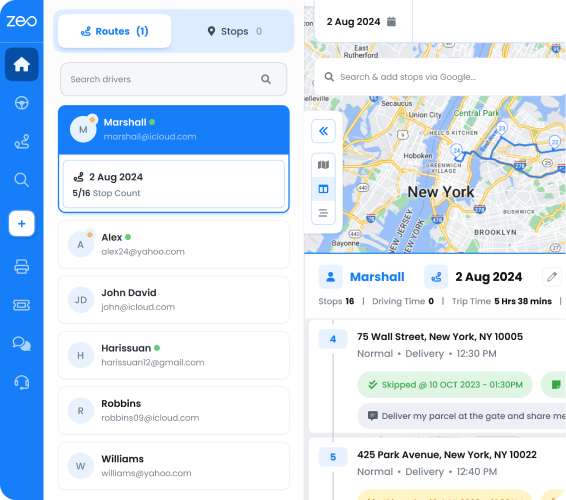
Takdang-Aralin na Nakabatay sa Kasanayan: Match technician expertise with appointment types to reduce return visits. Installation specialists handle new service setups, while maintenance technicians focus on repair calls. This specialization improves first-call resolution rates and eliminates unnecessary follow-up trips.
Zeo Route Planner supports skill-based driver assignment and dynamic route adjustments, allowing dispatchers to balance scheduled work with emergency priorities while maintaining optimized routes for the entire team.
ROI Calculator: Quantifying the Cost Savings from Reduced Drive Time
Calculate your potential savings using these metrics:
Pagtitipid sa Paggawa: Reducing drive time by 30 minutes daily saves $6.25 per technician at $25/hour wages. For 25 technicians working 250 days annually: $39,063 in labor savings.
Pagbawas sa Gastos ng gasolina: Eliminating 20 unnecessary miles daily per technician saves approximately $13.40 in vehicle operating costs. Annual savings for 25 technicians: $83,750.
Additional Service Capacity: If reduced drive time allows one extra service call per technician daily, calculate revenue impact by multiplying additional calls by average service value. For installation calls averaging $150: (1 extra call × 25 technicians × 250 days × $150) = $937,500 additional annual revenue potential.
Epekto sa Kasiyahan ng Customer: Faster response times and more reliable appointment windows improve customer retention. A 5% improvement in customer retention significantly impacts lifetime value calculations.
Ayon sa Federal Communications Commission operational efficiency report, telecommunications companies that invest in operational efficiency see average ROI of 240% within 18 months, primarily through improved service delivery and reduced operational costs. Similar results have been achieved in related fields like HVAC technician drive time pag-optimize.
Implementation Guide: Connecting Route Optimization with Your Cable Management Systems
Successfully reducing cable technician drive time requires seamless integration between route optimization and your existing cable management systems.
Integration Setup: Connect your route optimization platform with scheduling software, customer management systems, and inventory tracking. This ensures technicians receive complete job information including required parts and estimated service time.
Dispatcher Workflow: Your dispatchers use the web-based route optimization platform to create efficient daily routes, considering appointment priorities, technician skills, and territory assignments. Routes automatically account for drive time, service windows, and break schedules.
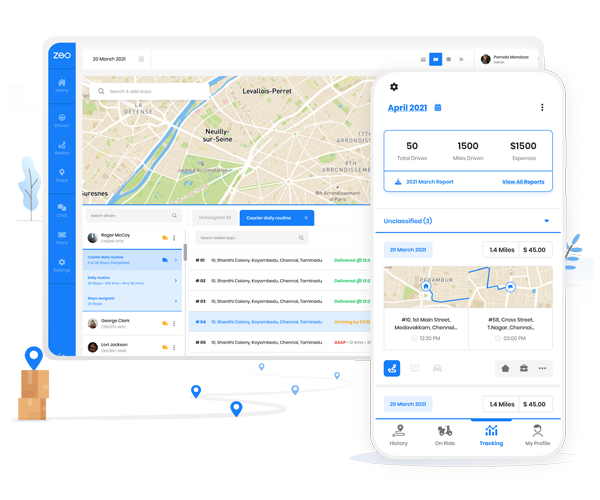
Technician Mobile Access: Field technicians receive optimized routes directly on their phones through the mobile app, complete with turn-by-turn navigation and customer details. When emergency calls arise, dispatchers can instantly update routes and notify the appropriate technician. Zeo’s mobile platform works with multiple navigation apps and provides real-time na pagsubaybay sa GPS for improved coordination.
Pagmamanman ng Pagganap: Track key metrics including average drive time per call, daily service completion rates, and fuel costs per technician. Use this data to continuously refine territory boundaries and routing strategies.
Pagsasanay at Pag-ampon: Provide training on mobile route navigation and emergency call protocols. Emphasize how optimized routing reduces stress by eliminating guesswork about efficient travel routes and daily scheduling. Implementing proven mga estratehiya sa pamamahala ng fleet ensures smooth adoption across your team.
Start implementation with a pilot group of 5-10 technicians to prove ROI before rolling out company-wide. Most cable operations see measurable drive time reduction within the first week of implementation.
Mga Madalas Itanong
Q: What percentage of a cable technician’s day is typically spent driving?
Cable technicians spend approximately 30-35% of their workday driving between service locations, according to industry benchmarks. This translates to 2-3 hours daily of non-revenue generating drive time that directly impacts operational costs and service capacity.
Q: How much money can cable companies save by reducing technician drive time?
A cable company with 25 technicians can save nearly $400,000 annually in labor costs alone by reducing drive time from 2.5 to 2 hours daily. Additional savings come from reduced fuel costs, vehicle maintenance, and the ability to complete more service calls per day.
Q: What’s the most effective way to handle emergency cable service calls without disrupting optimized routes?
The most effective approach is dynamic route adjustment using route optimization software like Zeo Route Planner, which can instantly reassign emergency calls to technicians already working in nearby territories while maintaining optimized routes for the entire team.
Q: How many service calls should a cable technician complete per day?
Top-performing cable technicians typically complete 6-8 service calls daily in suburban areas and 8-12 calls in dense urban zones. Rural technicians usually manage 4-6 calls due to longer travel distances between locations.
Q: What’s the average cost per mile for operating a cable service vehicle?
Cable service vehicles cost approximately $0.67 per mile to operate when factoring in fuel, maintenance, insurance, and depreciation costs. This makes route optimization crucial for controlling operational expenses in cable service operations.
Ready to cut your cable technician drive time and boost service capacity? Start a free trial to see how much drive time your cable technicians can save with optimized routing.
Ikaw ba ay may-ari ng fleet?
Nais na madaling pamahalaan ang iyong mga driver at paghahatid?
Palakihin ang iyong negosyo nang walang kahirap-hirap gamit ang Zeo Routes Planner – i-optimize ang mga ruta at pamahalaan ang maraming driver nang madali.
dagdagan ang pagtitipid sa gasolina
Makatipid ng 2 Oras sa Paghahatid, Araw-araw!
I-optimize ang mga ruta gamit ang aming algorithm, binabawasan ang oras ng paglalakbay at mga gastos nang mahusay.
Magsimula para sa Libre