

# 7 Best Bringg Competitors for Mid-Market Delivery Teams 2026
> TL; DR: Mid-market delivery companies can save 60-80% on operational costs by switching from Bringg’s enterprise platform to right-sized alternatives that focus on core delivery needs. Most Bringg competitors offer the same essential features – AI-powered route optimization, real-time tracking, and proof of delivery – at a fraction of the cost. Solutions like Zeo Route Planner deliver enterprise-grade optimization with same-day implementation, helping delivery teams save 2+ hours daily without the complexity.
Bringg’s enterprise pricing starts at $150+ per driver per month, but many mid-market delivery companies find themselves paying premium prices for features they don’t need. If you’re managing 50-500 drivers and questioning whether Bringg’s complex implementation and high costs match your actual requirements, you’re not alone.
Nach einer 2026 McKinsey study on logistics technology adoption, 68% of mid-market companies reported that enterprise delivery platforms were “overengineered” for their operations. The result? Longer implementation timelines, higher training costs, and monthly bills that don’t reflect real value delivered.
This comprehensive analysis breaks down the top bringg competitors with real cost comparisons, implementation requirements, and feature gaps to help you find the right-sized solution.
Why Companies Look for Bringg Alternatives: Cost vs Value Analysis
The Enterprise Premium Problem
Bringg targets large enterprises with complex multi-channel delivery operations. Their pricing reflects this focus, with implementation fees often reaching $50,000+ and monthly costs scaling rapidly as you add drivers.
For a 100-driver delivery company, Bringg’s total first-year cost typically ranges from $200,000-$300,000. This includes setup fees, training, integrations, and monthly subscriptions. Many companies find that Routenoptimierungssoftware designed for mid-market needs delivers the same operational benefits at a fraction of the cost.
Feature Complexity vs Real Needs
Mid-market companies often struggle with Bringg’s extensive feature set. While enterprise clients need advanced marketplace integrations and white-label solutions, most delivery businesses need three core capabilities:
- Efficient route optimization that saves driver time
- Real-time tracking for customer communication
- Nachweis der Lieferdokumentation
Bringg’s enterprise focus means these core features come bundled with complex modules that require additional training and maintenance.
Realitätscheck zur Umsetzung
Bringg implementations typically take 3-6 months for mid-market companies. This includes:
- 4-8 weeks of technical integration
- 2-4 weeks of driver training across multiple sessions
- 2-3 weeks of testing and refinement
During this period, companies often run parallel systems, increasing operational complexity and costs.
Top 7 Bringg Competitors: Feature-by-Feature Comparison Matrix
1. Zeo-Routenplaner
Am besten geeignet,: Companies needing powerful optimization without enterprise complexity
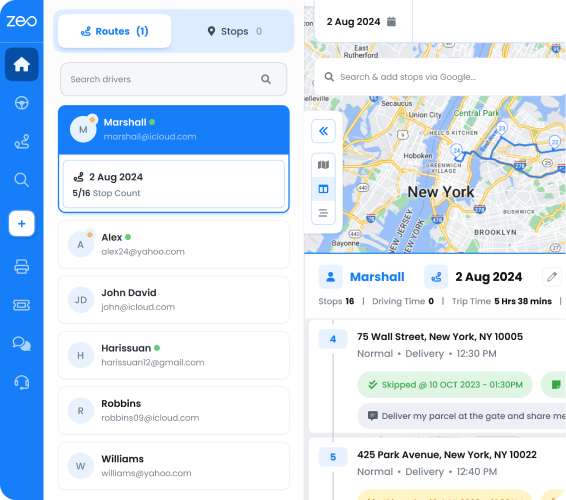
Zeo Route Planner delivers enterprise-grade route optimization through an intuitive platform that requires zero complex setup. Their AI-powered routing saves 2+ hours daily per driver while maintaining the simplicity mid-market teams need.
Wichtige Unterscheidungsmerkmale:
- Route optimization handles 200+ stops with time windows and capacity constraints
- Driver mobile app requires no training – drivers receive optimized routes instantly
- Real-time GPS tracking with customer notifications via SMS and email
- Zustellnachweis mit Fotoaufnahme und digitalen Signaturen
AnzeigenPreise: Starting at $39/month for unlimited drivers
Umsetzung: Same-day setup, drivers productive immediately
2. Route4Me
Am besten geeignet,: Companies with basic routing needs and limited budgets
Route4Me offers fundamental route planning capabilities at competitive pricing. However, their optimization engine struggles with complex constraints like time windows and vehicle capacities.
Einschränkungen:
- Route optimization quality decreases significantly above 50 stops
- Limited real-time tracking capabilities
- Basic proof of delivery features
AnzeigenPreise199 $/Monat für 10 Fahrer
Umsetzung: 1-2 Wochen
3. Flotte
Am besten geeignet,: Last-mile delivery with strong customer communication needs
Onfleet excels at customer notifications and tracking but lacks advanced route optimization. Their pricing model can become expensive for larger fleets.
Stärken:
- Excellent customer communication features
- Übersichtliche, intuitive Benutzeroberfläche
- Gute API-Dokumentation
Einschränkungen:
- Route optimization handles basic scenarios only
- Pricing scales quickly beyond 50 drivers
AnzeigenPreise500 $/Monat für 20 Fahrer
Umsetzung: 2-4 Wochen
4. Rennstrecke für Teams
Am besten geeignet,: Small teams transitioning from manual routing
Circuit offers user-friendly route planning but lacks enterprise features needed by growing companies.
Einschränkungen:
- Maximum 500 stops per route
- Eingeschränkte Berichterstattung und Analyse
- Basic integration capabilities
AnzeigenPreise100 $/Monat für 5 Fahrer
Umsetzung: 1 Woche
5. Workwave Routenmanager
Am besten geeignet,: Field service companies with mixed delivery/service operations
Workwave provides solid routing capabilities with field service features but requires significant technical setup.
Überlegungen:
- Strong optimization engine
- Umfassende Berichterstattung
- Higher implementation complexity
AnzeigenPreise: Custom pricing, typically $80+ per driver
Umsetzung: 4-8 Wochen
6. GetSwift
Am besten geeignet,: Companies needing white-label solutions
GetSwift offers customization options but has faced stability challenges according to user reviews on G2.
AnzeigenPreise: Individuelle Unternehmenspreise
Umsetzung: 6-12 Wochen
7. Routific
Am besten geeignet,: Simple delivery operations with predictable routes
Routific handles basic route optimization well but struggles with complex real-world constraints.
Einschränkungen:
- Limited driver communication features
- Grundlegende Tracking-Funktionen
- Keine erweiterten Analysen
AnzeigenPreise59 $/Monat pro Fahrer
Umsetzung: 1-2 Wochen
ROI Calculator: Real Cost Scenarios Across Different Delivery Volumes
50-Driver Scenario
Bringg Total First-Year Cost: $ 120,000- $ 180,000
- Setup and training: $30,000-$50,000
- Monthly subscription: $7,500/month ($90,000 annually)
Alternative Solutions:
- Zeo Route Planner: $4,680 annually (saves $115,000+)
- Onfleet: $30,000 annually (saves $90,000+)
- Route4Me: $11,940 annually (saves $108,000+)
100-Driver Scenario
Bringg Total First-Year Cost: $ 200,000- $ 300,000
- Setup and training: $50,000-$75,000
- Monthly subscription: $15,000/month ($180,000 annually)
Alternative Solutions:
- Zeo Route Planner: $4,680 annually (saves $195,000+)
- Onfleet: $60,000 annually (saves $140,000+)
- Workwave: $96,000 annually (saves $104,000+)
Versteckte Kostenfaktoren
Beyond subscription fees, consider these often-overlooked expenses:
Schulung und Onboarding:
- Bringg: 40+ hours per driver over multiple sessions
- Zeo Route Planner: Zero training required – drivers use familiar mobile app interface
- Others: 8-20 hours per driver
Integrationsentwicklung:
- Enterprise platforms: $10,000-$50,000 for custom integrations
- Mid-market solutions: Most offer pre-built integrations or simple APIs
Fortlaufende Unterstützung:
- Enterprise: Dedicated support manager ($2,000-$5,000/month)
- Mid-market: Email and chat support included
Implementation Deep-Dive: Migration Timeline and Technical Requirements
Phase 1: Platform Evaluation (Week 1-2)
Technische Bewertung:
- Current system integration points
- Datenexportfunktionen
- Driver device compatibility
Schlüsselfrage:

Kraftstoffeinsparungen erhöhen
Problemlose Lieferungen und Abholungen!
Optimieren Sie Routen mit unserem Algorithmus und reduzieren Sie so effizient Reisezeit und -kosten.
Jetzt kostenlos starten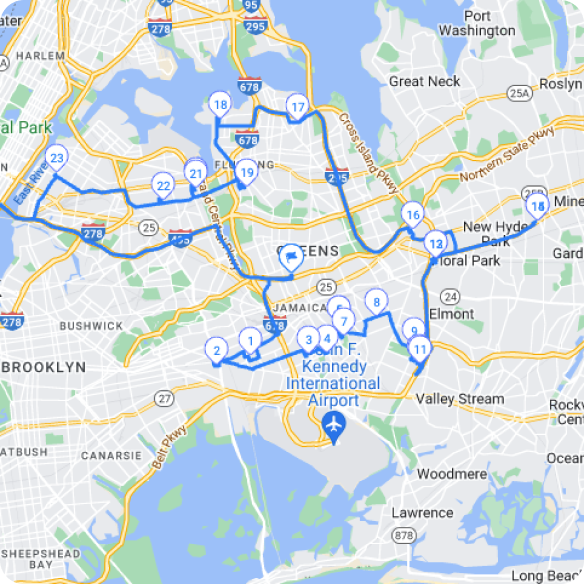
- What customer data needs migration?
- Which integrations are mission-critical?
- How will you handle the transition period?
Phase 2: Setup and Integration (Week 2-4)
Bringg Alternative Approach:
Most Bringg competitors offer significantly faster implementation:
- Zeo-Routenplaner: Import customer data via CSV, Excel, or direct integrations. Drivers download the mobile app and immediately receive optimized routes.
- Flotte: API-based setup typically completed within 2 weeks
- Route4Me: Basic setup possible within days
Kritische Erfolgsfaktoren:
- Start with a pilot group of 5-10 drivers
- Test all customer communication workflows
- Verify proof of delivery processes
Phase 3: Driver Rollout (Week 3-6)
Training Requirements by Platform:
Enterprise Platforms (Bringg, GetSwift):
- Multiple training sessions required
- Complex mobile app interfaces
- 2-4 weeks for full adoption
Lösungen für den Mittelstand:
- Single training session or self-onboarding
- Intuitive mobile interfaces
- 3-5 days for adoption
Effektiv Fahrerverfolgungssoftware should require minimal training while providing comprehensive visibility into fleet operations.
Phase 4: Optimization and Scaling (Week 4-8)
Leistungsüberwachung:
- Route efficiency improvements
- Kennzahlen zur Kundenzufriedenheit
- Driver adoption rates
Nach Angaben der US-Organisation Amerikanisches Verkehrsforschungsinstitut, companies switching from enterprise platforms to right-sized solutions see 23% faster implementation times and 35% lower total cost of ownership over three years.
Best Alternatives by Business Size: From Startups to Enterprise
Startups (1-10 Drivers)
Primäres Bedürfnis: Basic route optimization without upfront costs
Beste Optionen:
- Zeo-Routenplaner: Unlimited drivers for $39/month provides room to grow
- Rennstrecke für Teams: Simple interface, good for very basic needs
- Route4Me: Individual driver pricing works for small teams
Wichtige Überlegung: Choose platforms that won’t require migration as you scale.
Small Companies (10-50 Drivers)
Primäre Bedürfnisse: Efficient routing, customer communication, basic tracking
Beste Optionen:
- Zeo-Routenplaner: Advanced optimization features at startup pricing
- Flotte: Strong customer experience features
- Routific: Solid routing for predictable operations
Wachstumsfaktor: Ensure your chosen platform handles increasing complexity without price jumps.
Mid-Market (50-200 Drivers)
Primäre Bedürfnisse: Advanced optimization, comprehensive tracking, integration capabilities
Beste Optionen:
- Zeo-Routenplaner: Enterprise features with 1.5M+ users across 150+ countries, but simple enough for immediate deployment
- Workwave: Comprehensive feature set for complex operations
- Flotte: Scales well with strong customer communication
Unternehmensbereitschaft: Verify the platform can handle your peak volume and complexity. Flottenmanagement-Software should grow with your operations without requiring costly migrations.
Large Companies (200+ Drivers)
Primäre Bedürfnisse: Custom integrations, advanced analytics, white-label options
Beste Optionen:
- Zeo-Routenplaner: Proven at scale with enterprise integration capabilities
- Workwave: Full enterprise feature set
- Bringg: Consider only if you need their specific enterprise modules
Entscheidungsrahmen: At this scale, total cost of ownership and integration flexibility become critical factors.
Making the Switch: Risk Assessment and Success Factors
Strategien zur Risikominderung
Betriebskontinuität:
- Run parallel systems for 1-2 weeks during transition
- Identify backup drivers who can handle manual routing if needed
- Maintain customer communication during the switch
Umsetzung last mile delivery optimization strategies during the transition helps maintain service quality while reducing operational disruption.
Datensicherheit:
- Verify new platform’s security certifications
- Plan secure data transfer protocols
- Audit customer information handling
Customer Experience:
- Test all customer notification workflows
- Verify tracking link functionality
- Ensure proof of delivery processes work seamlessly
Zu verfolgende Erfolgsmetriken
Immediate Indicators (Week 1-2):
- Driver adoption rate
- Routenabschlusszeiten
- Customer complaint volume
Short-term Gains (Month 1-3):
- Miles driven reduction
- Verbesserung der pünktlichen Lieferung
- Fahrerzufriedenheitswerte
Long-term Value (Month 3-12):
- Total cost savings vs. Bringg
- Kundenbindungsraten
- Steigerung der betrieblichen Effizienz
Häufige Fallstricke bei der Migration
Unzureichende Fahrerausbildung:
Even simple platforms require some orientation. Schedule brief training sessions rather than expecting instant adoption.
Integration Oversights:
Test all customer-facing features thoroughly. A broken tracking link or missing delivery notification can damage customer relationships.
Die Lösung lautet Kapazitätsplanung:
Ensure your new platform handles peak volumes. Test with your highest-volume days, not average loads.
The key to successful migration lies in choosing a platform that matches your actual operational complexity rather than trying to grow into an enterprise solution you don’t need.
Häufig gestellte Fragen
Q: What’s the main difference between enterprise and mid-market delivery management platforms?
Enterprise platforms like Bringg are designed for complex, multi-channel operations with extensive customization needs, typically costing $150+ per driver monthly. Mid-market solutions focus on core delivery functions – route optimization, tracking, and proof of delivery – at significantly lower costs, often under $50 per driver per month.
F: Wie lange dauert die Implementierung einer Bringg-Alternative in der Regel?
Most Bringg competitors offer much faster implementation timelines. While Bringg typically requires 3-6 months for full deployment, solutions like Zeo Route Planner enable same-day setup with drivers becoming productive immediately, and platforms like Onfleet or Route4Me usually take 1-4 weeks for complete implementation.
Q: What are the hidden costs of switching from Bringg to a competitor?
The main hidden costs include driver training time, data migration efforts, and potential integration development. However, most mid-market alternatives actually reduce these costs – Zeo Route Planner requires zero training due to its intuitive mobile interface, while others typically need only 8-20 hours per driver compared to Bringg’s 40+ hours.
Q: Can smaller delivery management platforms handle enterprise-level volume?
Yes, many Bringg competitors successfully serve large-scale operations. The key is choosing platforms with proven scalability – some handle hundreds of drivers and thousands of daily stops while maintaining performance and offering enterprise features like API integrations and advanced analytics.
Q: What’s the average cost savings when switching from Bringg to an alternative?
Companies typically save 60-80% on their delivery management costs when switching from Bringg to right-sized alternatives. For a 100-driver operation, this often translates to $150,000-$250,000 in annual savings, including reduced setup fees, lower monthly subscriptions, and decreased training costs.
Ready to evaluate a Bringg alternative that delivers enterprise-grade optimization without enterprise complexity? Start your free trial with Zeo Route Planner and see how easy route optimization can be – no complex setup required.
Sind Sie Flottenbesitzer?
Möchten Sie Ihre Fahrer und Lieferungen einfach verwalten?
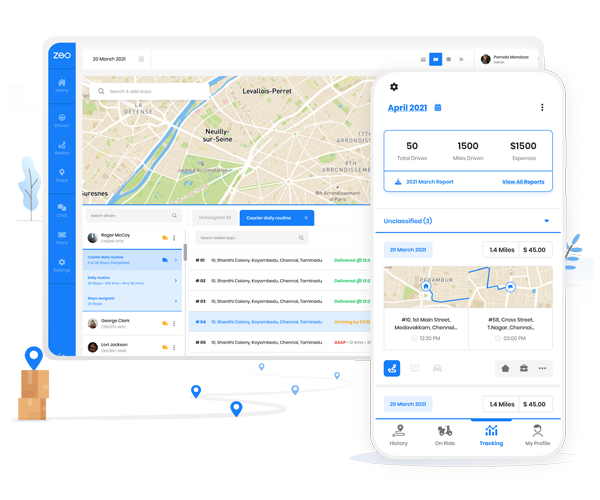
Erweitern Sie Ihr Geschäft mühelos mit dem Zeo Routes Planner – optimieren Sie Routen und verwalten Sie problemlos mehrere Fahrer.

Kraftstoffeinsparungen erhöhen
Sparen Sie monatlich 200 $ bei Kraftstoff!
Optimieren Sie Routen mit unserem Algorithmus und reduzieren Sie so effizient Reisezeit und -kosten.
Jetzt kostenlos starten