

# Hur man optimerar leveransrutter för två personer år 2026
> TL; DR: Att optimera leveransrutter med två personer kräver samordnad förarparning, balanserade arbetsbelastningar och realtidskommunikationssystem som hanterar komplexiteten med två förare. Företag som behärskar hur man optimerar leveransrutter med två personer uppnår 25 % tidsbesparingar genom korrekt teamkoordinering och ruttplanering. Zeo Route Planner åtgärdar detta med kompetensbaserad förartilldelning och synkroniserade ruttuppdateringar, vilket hjälper leveransteam att spara 2+ timmar dagligen.
Att hantera tvåpersoners leveransteam för tunga föremål som möbler, apparater och medicinsk utrustning är en av de mest komplexa logistiska utmaningarna du kommer att möta. Medan rutter med en enda förare kräver noggrann planering, multiplicerar koordineringen av team med två förare komplexiteten exponentiellt.
De goda nyheterna? Företag som behärskar hur man optimerar leveransrutter för två personer ser en genomsnittlig tidsbesparing på 25 % samtidigt som de eliminerar de dagliga koordineringsproblem som dränerar driftchefer. Den här guiden visar exakt hur du förvandlar kaotisk logistik med två förare till ett effektiviserat system.
Den dolda komplexiteten i tvåpersonsplanering av leveransrutter
Ruttplanering för leveranser med två personer involverar variabler som inte finns i ensamstående transporter. Du optimerar inte bara stopp och avstånd – du koordinerar mänskliga partnerskap, utrustningskrav och synkroniserade scheman.
Bara den matematiska komplexiteten är häpnadsväckande. Medan en rutt med 10 stopp och en enda förare har ungefär 3.6 miljoner möjliga kombinationer, hoppar en rutt med 10 stopp och två personer, inklusive förarparningsöverväganden, upp till över 50 miljoner möjligheter när man tar hänsyn till lagkompatibilitet och arbetsbelastningsfördelning.
Enligt Bureau of Labor StatisticsLeveranser av tunga föremål har i genomsnitt 15–20 % längre leveransfönster än vanliga paket, främst på grund av förseningar i samordning mellan teammedlemmar. Dessa förseningar ökar under dagen och skapar en dominoeffekt som påverkar kundnöjdheten och driftskostnaderna.
Tänk dig detta verkliga scenario: Ett möbelleveransföretag ger Team A i uppdrag att leverera en sektionssoffa klockan 2, men Chaufför 1 blir försenad vid föregående hållplats medan Chaufför 2 anländer i tid. Kunden är inte hemma när Chaufför 2 anländer ensam, vilket kräver en ombokning som kostar företaget 150 dollar i förlorad produktivitet och kundtjänstsamtal.
De tre största dolda kostnaderna i ooptimerade tvåpersonsrutter är stilleståndstid för förare (väntan på partners), misslyckade leveransförsök på grund av ofullständiga team och övertidskostnader på grund av dåligt balanserade arbetsbelastningar.
Förarparning och teamkoordinering: Att få rätt personer på rätt plats
Effektiv förarparning går utöver slumpmässig tilldelning. De bäst presterande leveransteamen delar kompatibla arbetsstilar, fysiska förmågor och kommunikationsmönster som direkt påverkar leveranseffektiviteten.
Börja med att skapa förarprofiler som inkluderar lyftkapacitet, erfarenhet av specifika utrustningstyper, kundtjänstens styrkor och föredragna kommunikationsstilar. En förare med erfarenhet av installationer av medicinsk utrustning bör inte slumpmässigt paras ihop med någon som specialiserar sig på möbelmontering.
Geografisk kännedom mellan teammedlemmarna är också av stor betydelse. Förare som båda känner till leveransområdet navigerar mer effektivt och fattar bättre beslut i realtid om trafik och parkering. Para ihop förare som regelbundet arbetar inom samma områden när det är möjligt.
Överväg kompetensbaserad parkoppling för specialiserade leveranser. Installation av apparater kräver annan expertis än möbelmontering. Leverans av medicinsk utrustning kräver specifika certifieringar och färdigheter i patientinteraktion. Matcha dessa krav under den inledande tilldelningsfasen, inte efter att problem uppstått.
En omfattande guide för ruttoptimering hjälper till att systematiskt etablera dessa parningsstrategier. Zeo Route Planner hanterar förarparning genom sin färdighetsbaserade tilldelningsfunktion, som automatiskt matchar förare med kompletterande förmågor och tilldelar dem lämpliga leveranstyper. Detta eliminerar gissningsleken i teambildningen samtidigt som det säkerställer att varje leveransteam har rätt blandning av förmågor.
Kommunikationskompatibilitet mellan förare minskar leveranstiden med i genomsnitt 12 minuter per stopp, enligt forskning inom leveransbranschen. Vissa förare arbetar bra med detaljerad verbal samordning, medan andra föredrar visuella signaler och minimalt prat. Att förstå dessa preferenser förhindrar missförstånd som leder till förseningar.
Arbetsbördabalansering: Säkerställa rättvis arbetsfördelning mellan teammedlemmar
Obalanserade arbetsbelastningar mellan leveranspartners skapar irritation, trötthet och säkerhetsrisker som påverkar hela verksamheten. Den starkare eller mer erfarna föraren bär ofta en oproportionerlig fysisk och mental belastning, vilket leder till utbrändhet och högre personalomsättning.
Att balansera den fysiska arbetsbelastningen börjar med en ärlig bedömning av varje förares förmågor. Anta inte att alla förare kan hantera samma lyftkrav. Skapa tydliga riktlinjer för viktgränser och rotera rollen som "ledande" förare så att samma person inte fattar alla beslut som rör kunden.
Arbetsrotation förhindrar att samma förare alltid hanterar de tyngsta föremålen eller de mest komplexa kundinteraktionerna. Växla ansvaret mellan förarna under dagen – en hanterar kundkommunikationen på morgonen medan den andra tar eftermiddagsskiftet.
Tidsbaserad balansering säkerställer att båda förarna lägger lika mycket tid på körning, lastning och kundinteraktion. Följ dessa mätvärden varje vecka för att identifiera obalanser innan de blir problem. Transportdepartementets öppettider Reglerna gäller olika för teamförare, och balanserade arbetsbelastningar bidrar till att upprätthålla efterlevnaden.
Tänk på leveransens komplexitet när du tilldelar stopp. En möbelleverans på tredje våningen i en lägenhet kräver andra fysiska krav än en installation av vitvaror på bottenvåningen. Fördela utmanande leveranser jämnt mellan teammedlemmarna under en vecka.
Ansvaret för utrustning bör också rotera. Samma förare bör inte alltid hantera vagnar, remmar och verktyg. Korsutbildning säkerställer att båda teammedlemmarna kan hantera alla situationer och förhindrar avbrott i arbetsflödet om en förare inte är tillgänglig.
Tids- och säkerhetsöverväganden vid leverans av tunga varor
Leveranser av tunga varor kräver betydligt längre stopptider än standardpaket, och säkerhetsöverväganden medför ytterligare tidskrav som måste byggas in i ruttplaneringen. OSHA:s riktlinjer För säkra lyft och teamkoordinering är det inte förslag – det är krav som smarta driftchefer bygger in i leveransscheman.
Räkna med 45–60 minuter per leverans av tunga varor istället för de 15–20 minuter som är typiska för standardpaket. Detta inkluderar lossningstid, säkerhetsförberedelser, teamkoordinering, kundinteraktion och korrekt säkring av varor under transport. Att underskatta dessa tidsramar skapar förhastade leveranser och säkerhetsincidenter.
Säkerhetsgenomgångar mellan teammedlemmar bör hållas före varje stopp. Diskutera lyfttekniker, positionering, begränsningar i kundutrymme och potentiella faror. Dessa 2-minuterssamtal förhindrar skador som kostar tusentals kronor i arbetsskadeersättning och förlorad produktivitet.
Väderförhållanden påverkar leveranstiderna för tunga varor mer allvarligt än för standardleveranser. Regn, snö och extrema temperaturer kräver ytterligare säkerhetsåtgärder och skyddsutrustning. Bygg in väderbuffertar i scheman under relevanta årstider i ditt område.
Kommunikation med kunderna under leveransfönster blir avgörande för tunga föremål. Till skillnad från paketleveranser där mindre förseningar är acceptabla, ordnar kunderna ofta ledighet från jobbet eller barnomsorg för leveranser av möbler och vitvaror. Noggranna tidsuppskattningar och proaktiv kommunikation förhindrar frustrerade kunder och misslyckade leveranser.
Tiden för fordonsförberedelse ökar med tunga föremål. Korrekt lastning, säkring och utrustningsarrangemang tar längre tid men förhindrar skador och säkerhetsproblem under transport. Avsätt 10–15 extra minuter mellan stoppen för fordonsförberedelse när rutter inkluderar flera tunga föremål.
Realtidskommunikation och ruttjusteringar för leveransteam
Leveransteam med två personer står inför unika kommunikationsutmaningar som enskilda förare inte stöter på. Samordning mellan partners, kommunikation med avdelningen och kunduppdateringar kräver system som fungerar sömlöst mellan flera personer och fordon.
Era flottchefer behöver realtidsinsikt i både förarnas position och status för att fatta välgrundade beslut om rutt. När ett team stöter på förseningar måste trafikledningarna snabbt bedöma effekterna på efterföljande stopp och kommunicera ändringar till kunderna innan problemen förvärras.

öka bränslebesparingarna
Spara 2 timmar på leveranser, varje dag!
Optimera rutter med vår algoritm, minska restiden och kostnaderna effektivt.
Kom igång gratis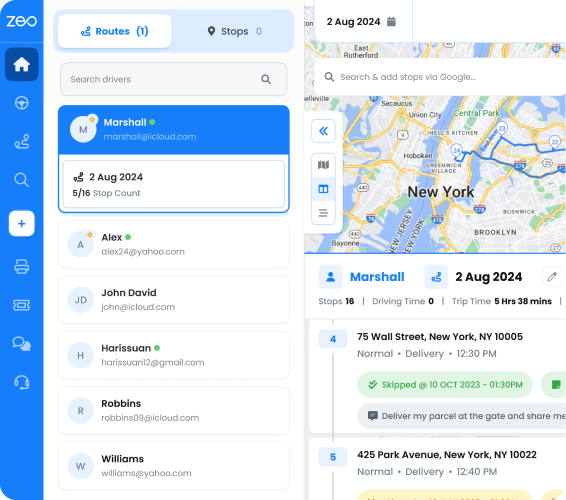
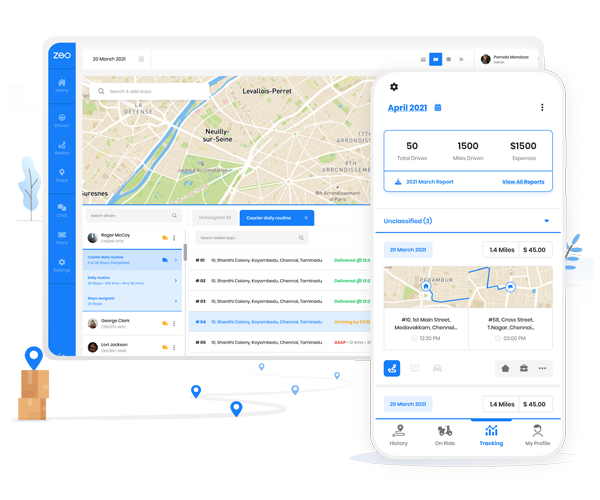
Plattformar för flotthantering designad för teamkoordinering ger denna insyn genom centraliserade dashboards. Zeo Route Planners plattform för flotthantering tillhandahåller denna koordinering via sitt webbgränssnitt där chefer planerar och tilldelar rutter till förarteam. Mobilappen säkerställer att båda förarna får synkroniserade ruttuppdateringar och kan kommunicera med avdelningen och varandra under hela leveransdagen. Programvara för att spåra drivrutiner visar båda teammedlemmarnas positioner, medan GPS-spårning i realtid och uppdateringar av beräknad ankomsttid i realtid automatiskt informerar kunderna om exakta ankomsttider.
Justeringar mitt i rutten blir mer komplexa med tvåmannateam eftersom förändringarna påverkar dubbelt så många människor. När trafiken försenar ett stopp måste systemet beräkna om ankomsttiderna för efterföljande kunder och koordinera kommunikationen till båda förarna samtidigt.
Nödsituationer kräver tydliga eskaleringsprocedurer. När en förare skadas eller ett fordon går sönder behöver den återstående föraren omedelbart stöd och tydliga instruktioner. Förplanerade protokoll förhindrar förvirring och minimerar påverkan på kunderna i oväntade situationer.
Samordning av kundkommunikation säkerställer att kunderna får konsekvent information från båda teammedlemmarna. Utse en förare som primär kundkontakt per stopp samtidigt som båda teammedlemmarna har tillgång till leveranssedlar, specialinstruktioner och kundpreferenser.
Chattfunktionen i appen möjliggör sömlös koordinering mellan förare och chefer utan att störa navigering eller leveransaktiviteter. Detta eliminerar radioprat och ger skriftliga register över viktig leveransinformation.
Mätning av framgång: KPI:er och ROI-mått för ruttoptimering med två personer
Att följa rätt mätvärden avslöjar om era tvåpersoners leveransoptimeringsinsatser faktiskt förbättrar verksamheten. Fokusera på mätvärden som fångar de unika aspekterna av samordning med två förare snarare än att bara anpassa mätvärden för enskilda förare.
Effektivitetsmått för team bör mäta genomförda stopp per team per dag, genomsnittlig leveranstid per stopp och kundnöjdhetspoäng specifikt för leveranser med två personer. Jämför dessa med er baslinjeprestanda innan ni implementerar optimeringsändringar.
Kostnaden per leverans för tvåpersonersteam inkluderar förarlöner, fordonskostnader, bränsle och avskrivningar på utrustning. Följ upp detta varje månad för att identifiera trender och optimeringsmöjligheter. Effektiv ruttoptimering minskar vanligtvis kostnaden per leverans med 15–25 % inom 90 dagar.
Förarretentionen för tvåmannateam skiljer sig ofta från förare i team med en enda förare. Lyckliga teampartnerskap minskar omsättningen, medan dåliga parningar ökar den. Banretention är specifikt för förare i teamroller jämfört med individuella rutter.
Kundstatistik inkluderar leverans i tid, lyckad första försök och kundklagomål relaterade till problem med teamkoordinering. Dessa mätvärden återspeglar direkt kvaliteten på dina beslut om parkoppling och routing.
Säkerhetsmått blir allt viktigare för leveransteam av tunga varor. Spåra lyftrelaterade incidenter, fordonsskador under lastning/lossning och arbetsskadeersättningar. Korrekt ruttoptimering bör minska dessa incidenter genom bättre tidsfördelning och minskade rusningssituationer.
AI-ruttoptimering Plattformarna tillhandahåller detaljerad analys för att mäta dessa förbättringar. Zeo Route Planners analysinstrumentpanel spårar körda mil, sparad tid och förbättringar av rutteffektivitet, vilket visar mätbar ROI från optimerad tvåpersonsrutt samtidigt som leveransernas slutförandegrad förbättras.
Intäkter per team per dag återspeglar den slutliga affärseffekten av optimeringsinsatserna. Team som slutför fler leveranser på kortare tid med högre kundnöjdhet genererar mer intäkter samtidigt som de minskar driftskostnaderna.
Vanliga frågor om partihandel med mat och dryck
F: Hur lång tid bör jag räkna med för varje leveransstopp med två personer?
Räkna med 45–60 minuter per leverans av tunga varor istället för standard 15–20 minuter för vanliga paket. Detta inkluderar lossning, säkerhetsförberedelser, teamkoordinering, kundinteraktion och korrekt säkring av varor. Att underskatta tidsramar skapar förhastade leveranser och säkerhetsincidenter.
F: Hur parar man bäst ihop förare för leveransteam på två personer?
Skapa förarprofiler inklusive lyftkapacitet, utrustningens erfarenhet, kundtjänstens styrkor och kommunikationsstilar. Para ihop förare med kompletterande färdigheter och liknande geografisk erfarenhet. Zeo Route Planners kompetensbaserade tilldelningsfunktion matchar automatiskt förare med kompletterande förmågor för optimal teambildning.
F: Hur förhindrar jag obalanser i arbetsbelastningen mellan leveranspartners?
Rotera ansvarsområdena under dagen så att samma förare inte alltid hanterar de tyngsta föremålen eller kundinteraktionerna. Registrera tiden som läggs på körning, lastning och kundkommunikation varje vecka. Växla mellan huvudförarroller och utrustningsansvar för att säkerställa en jämn fördelning av fysisk och mental arbetsbelastning.
F: Vilka säkerhetsaspekter är unika vid leveranser av tunga föremål med två personer?
OSHA:s lyftriktlinjer kräver teamkoordinering och säkerhetsgenomgångar före varje stopp. Väderförhållandena påverkar tunga leveranser allvarligare, vilket kräver ytterligare skyddsutrustning och tidsbuffertar. Tiden för fordonsförberedelser ökar med 10–15 minuter mellan stopp för korrekt lastning och säkring.
F: Hur mäter jag framgången med ruttoptimering för två personer?
Spåra teamspecifika mätvärden som genomförda stopp per team per dag, kostnad per leverans inklusive dubbla löner och kundnöjdhet för leveranser med två personer. Övervaka förarlojalitet för teamroller jämfört med individuella rutter. Effektiv optimering minskar vanligtvis kostnaden per leverans med 15–25 % inom 90 dagar samtidigt som punktligheten förbättras.
Förvandla din tvåpersonsleveransverksamhet idag
Att optimera leveransrutter med två personer kräver specialiserade verktyg utformade för komplex teamkoordinering. Manuell planering kan helt enkelt inte hantera de variabler som är involverade i förarparning, arbetsbelastningsbalansering och teamkommunikation i realtid i stor skala.
Företagen som uppnår 25 % tidsbesparingar och eliminerar koordineringsproblem använder specialbyggda ruttoptimeringsplattformar som förstår logistik med två förare. Dessa förbättringar leder direkt till minskade driftskostnader, högre kundnöjdhet och bättre förarlojalitet.
Redo att se hur korrekt ruttoptimering förändrar era leveranser av tunga varor? Programvara för leveranshantering utformad för teamkoordinering kan eliminera dessa utmaningar. Börja din kostnadsfria testperiod av Zeo Route Planner för att uppleva hur intelligent förarparning, balanserad arbetsfördelning och sömlös teamkommunikation kan eliminera dina koordineringsutmaningar samtidigt som leveranseffektiviteten ökar.
Är du flottägare?
Vill du enkelt hantera dina förare och leveranser?
Utvidga ditt företag utan ansträngning med Zeo Routes Planner – optimera rutter och hantera flera förare med lätthet.
öka bränslebesparingarna
Spara 2 timmar på leveranser, varje dag!
Optimera rutter med vår algoritm, minska restiden och kostnaderna effektivt.
Kom igång gratis