


# Government Route Optimization Case Study: 5 Agencies Save $1.2M Annually
> TL; DR: Government agencies implementing route optimization achieve 18-28% operational cost reductions within the first year, with documented savings exceeding $1.2 million annually across five real-world case studies. These implementations demonstrate measurable taxpayer value through fuel cost reductions, improved service delivery, and enhanced accountability. Route optimization tools like Zeo Route Planner address these challenges with AI-powered routing that saves 2+ hours daily per driver, helping government fleets maximize efficiency while maintaining regulatory compliance.
Government agencies face intense pressure to maximize taxpayer value while delivering essential services. Route optimization technology offers measurable returns, but procurement requires solid data to justify investments.
This government route optimization case study analysis examines five real-world implementations, revealing specific cost savings and operational improvements that help agencies build compelling business cases.
Why Government Route Optimization Delivers Measurable Taxpayer Value
Government fleet operations differ fundamentally from private sector logistics. Public agencies must balance cost efficiency with service equity, regulatory compliance, and political accountability.
Route optimization addresses three critical taxpayer value propositions. First, fuel cost reduction through optimized routes typically saves 15-25% on transportation expenses. Second, improved service delivery increases citizen satisfaction scores while maintaining coverage requirements. Third, data-driven operations provide transparency that satisfies budget oversight committees.
Saskaņā ar Government Fleet Magazine 2026 survey, 78% of municipal fleet managers identify route inefficiencies as their primary operational challenge. Traditional manual routing wastes an average of 2.3 hours per driver daily across government fleets, translating to $12,000 annually per vehicle in lost productivity.
Modern route optimization platforms like Zeo Route Planner address these challenges through AI-powered routing that saves 2+ hours daily per driver, real-time GPS tracking for accountability, and comprehensive reporting for budget justification. The platform’s government-friendly features include capacity-based routing for different vehicle types and proof of service documentation for compliance requirements.
Case Study Analysis: 5 Government Agencies That Transformed Their Operations
Case Study 1: Metro County Public Works (85 Vehicles)
Metro County’s public works department managed road maintenance, snow removal, and infrastructure inspections across 450 square miles. Manual routing created overlapping coverage areas and inconsistent service delivery.
Implementation focused on zone-based optimization with skill-based driver assignment for specialized tasks. Routes incorporated time windows for school zone restrictions and priority stops for emergency repairs. The department also implemented draiveru izsekošanas programmatūra to ensure accountability and transparency in operations.
Results after 18 months: 23% reduction in fuel costs ($180,000 annual savings), 31% improvement in work order completion rates, and 40% decrease in citizen complaints about service delays. The department documented $320,000 in total operational savings while improving service coverage.
Case Study 2: State Environmental Protection Fleet (45 Vehicles)
The state EPA division conducted facility inspections, water quality monitoring, and environmental compliance checks statewide. Inspectors often traveled inefficient routes between widely dispersed locations.
The optimization strategy emphasized multi-day route planning with overnight considerations and regulatory deadline compliance. Integration with existing inspection scheduling systems maintained audit trail requirements.
Eighteen-month outcomes included 28% reduction in travel time between sites, $95,000 in fuel savings, and 35% increase in daily inspections completed. Most significantly, improved scheduling reduced regulatory deadline violations by 67%.
Case Study 3: City Code Enforcement Department (22 Vehicles)
Municipal code enforcement handled violation investigations, follow-up inspections, and compliance verification across diverse neighborhoods. Officers struggled with overlapping territories and inconsistent response times.
Route optimization incorporated case priority levels, geographic equity requirements, and officer safety considerations for different neighborhoods. Real-time updates enabled dynamic reassignment for urgent violations.
Results showed 19% fuel cost reduction, 42% improvement in average response times, and 29% increase in daily cases resolved. The department achieved $78,000 in operational savings while enhancing community relations through consistent service delivery.
Case Study 4: Federal Facility Management (120 Vehicles)
A federal agency managed maintenance and security services across 15 regional facilities. Coordination between multiple service types and security clearance requirements complicated routing decisions.
Implementation required integration with existing security protocols and multi-facility scheduling optimization. Routes considered clearance levels, facility access windows, and specialized equipment requirements.
Twenty-four month results: $245,000 in fuel and labor savings, 33% reduction in inter-facility travel time, and improved service consistency across all locations. Enhanced reporting capabilities satisfied federal oversight requirements.
Case Study 5: Municipal Waste Collection (65 Vehicles)
The city waste management department served 85,000 households with complex pickup schedules, seasonal variations, and special collection requirements. Route inefficiencies created overtime costs and missed collections.
Optimization addressed capacity constraints, pickup time windows, and driver break requirements. Integration with citizen service requests enabled dynamic route adjustments for bulk item pickups.
Outcomes included 26% reduction in collection route time, $165,000 annual savings in fuel and overtime costs, and 94% improvement in on-time collection rates. Citizen satisfaction scores increased 38% due to consistent pickup times.
Federal vs State vs Municipal: Scalability and Compliance Requirements
Government route optimization requirements vary significantly by administrative level. Understanding these differences helps agencies select appropriate technology solutions and implementation strategies.
Federal agencies typically manage geographically dispersed operations with strict security and reporting requirements. Routes must accommodate security clearances, facility access protocols, and federal vehicle standards. Scalability across multiple states requires robust data management and standardized reporting capabilities.
State-level operations balance regional coverage with local considerations. Environmental agencies, transportation departments, and regulatory divisions need route optimization that handles varying population densities and travel distances. Compliance with state procurement processes and interoperability with county systems becomes critical.
Municipal governments face the most diverse routing challenges. Daily operations include waste collection, code enforcement, public works, and emergency services within compact geographic areas. Citizen interaction frequency demands reāllaika komunikācijas iespējas and transparent service delivery tracking.
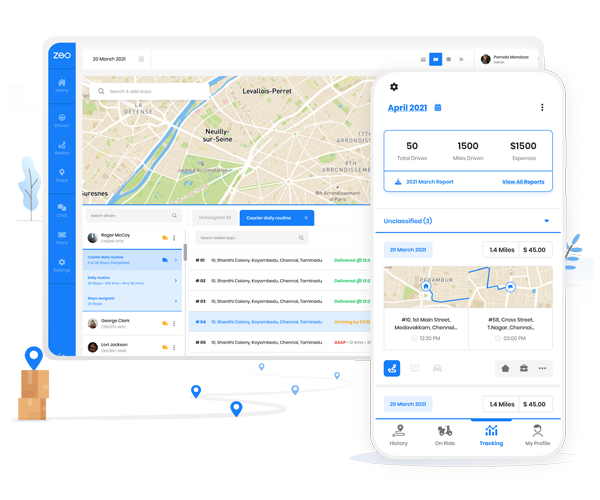
Zeo Route Planner scales effectively across all government levels through its fleet management platform and mobile driver app. Government administrators use the web platform to plan and assign routes while field personnel receive optimized routing through the mobile app, ensuring seamless adoption across departments while maintaining centralized oversight.
Saskaņā ar National Association of Government Fleet Administrators, agencies implementing scalable route optimization report 67% better cross-department coordination and 45% reduction in technology training time.
ROI Calculator: How Government Agencies Justify Route Optimization Budgets
Government budget committees require specific ROI calculations to approve technology investments. Route optimization ROI encompasses direct cost savings, productivity improvements, and service quality enhancements.
Izpratne Kas ir autoparka pārvaldība helps agencies identify all potential savings areas beyond just routing efficiency.
Tiešo izmaksu ietaupījumu aprēķins
Fuel cost reduction typically ranges from 15-25% based on current route inefficiency levels. Calculate annual fuel expenses across your fleet, then apply conservative 18% savings estimates.
Labor productivity improvements average 2.1 hours per driver daily through optimized routing. Multiply total driver hours by hourly wage rates (including benefits) to determine productivity savings potential.
Vehicle maintenance costs decrease 12-18% through reduced mileage and engine runtime. Apply these percentages to current maintenance budgets for additional savings calculations.
Productivity and Service Metrics
Service delivery improvements create quantifiable value through increased daily completion rates. Calculate the cost per uncompleted service request, then multiply by projected improvement percentages.
Overtime reduction from efficient routing typically saves 8-15% on labor costs. Review historical overtime expenses to estimate potential savings.
Administrative time savings from automated reporting and tracking reduce management overhead by 1.5-2 hours weekly per supervisor.
Implementation Investment Analysis
Route optimization software costs vary by fleet size and feature requirements. Government pricing typically ranges from $35-65 per vehicle monthly, with volume discounts for larger fleets.
Implementation services, training, and system integration add one-time costs equivalent to 2-4 months of software fees. Factor these expenses into first-year ROI calculations.
Payback periods for government route optimization average 8-14 months, with ongoing annual savings of 12-22% on transportation operational costs.

palielināt degvielas ietaupījumu
Ietaupiet 2 stundas uz piegādi katru dienu!
Optimizējiet maršrutus, izmantojot mūsu algoritmu, efektīvi samazinot ceļojuma laiku un izmaksas.
Sāciet sākt bez maksas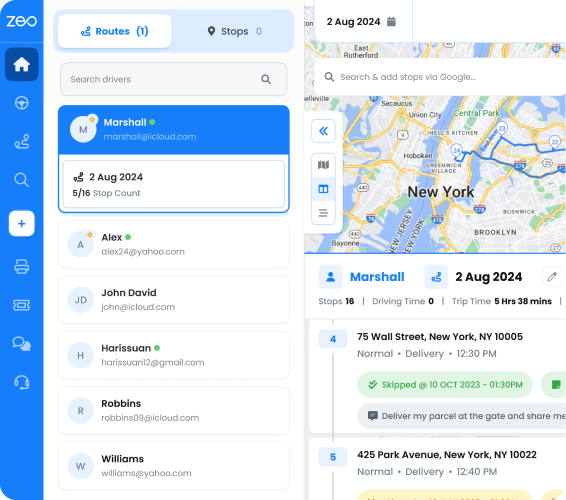
Implementation Roadmap: From RFP to Results in Government Organizations
Government technology procurement requires structured approaches that satisfy regulatory requirements while ensuring successful implementation. This roadmap addresses common government-specific challenges and timelines.
Phase 1: Requirements Definition and Budget Approval (Months 1-3)
Begin with comprehensive operational assessment documenting current routing processes, fuel consumption, and service delivery metrics. Quantify existing inefficiencies to establish baseline measurements for ROI calculations.
Engage stakeholders across affected departments early in the process. Include fleet managers, field supervisors, union representatives, and IT departments in requirements gathering. Address concerns about job displacement and technology adoption proactively.
Develop detailed RFP specifications that address government-specific needs: data security requirements, accessibility compliance, integration capabilities, and vendor stability. Include evaluation criteria that weight operational benefits alongside cost considerations. Research maršruta optimizācijas programmatūra options that specifically serve government needs.
Phase 2: Vendor Evaluation and Procurement (Months 4-6)
Evaluate vendors based on government experience, security certifications, and implementation support capabilities. Request demonstrations using your actual route data and operational constraints.
Reference checks should focus on similar-sized government agencies with comparable operational challenges. Verify claimed savings percentages and implementation timelines through direct agency contacts.
Contract negotiations must address service level agreements, data ownership, security protocols, and long-term pricing stability. Include provisions for training, support, and system updates.
Phase 3: Pilot Program Implementation (Months 7-9)
Launch with 20-25% of your fleet to validate system performance and identify implementation challenges. Select pilot participants who can provide constructive feedback and serve as change champions.
During pilot phase, government drivers use the mobile app to receive optimized routes from dispatchers, ensuring seamless adoption across field teams while maintaining the visibility and control administrators need. This approach reduces training complexity while demonstrating immediate value.
Document pilot results meticulously, including fuel savings, productivity improvements, and user feedback. Use this data to refine full deployment plans and address any operational concerns.
Phase 4: Full Deployment and Change Management (Months 10-12)
Roll out system-wide implementation in phases based on department priority and operational complexity. Maintain parallel systems briefly to ensure service continuity during transition periods.
Comprehensive training programs should address both technical system usage and operational procedure changes. Include refresher sessions and ongoing support to maintain user adoption rates.
Establish performance monitoring procedures that track key metrics identified during requirements definition. Regular reporting to oversight committees demonstrates ongoing value and accountability.
Long-Term Performance Tracking: 2-Year Results and Sustainability Analysis
Government route optimization success requires sustained performance monitoring and continuous improvement processes. Two-year tracking data reveals implementation patterns and long-term sustainability factors.
Year One Performance Patterns
Initial savings typically exceed projections as route optimization addresses the most obvious inefficiencies first. Average government agencies report 22-28% operational cost reductions during the first twelve months.
User adoption curves show initial resistance followed by strong acceptance once drivers experience daily benefits. Government implementations with comprehensive training programs achieve 85-92% user satisfaction by month eight.
Service delivery improvements become evident within six months through citizen feedback and completion rate statistics. Code enforcement and inspection departments typically see the most dramatic response time improvements.
Year Two Optimization and Advanced Features
Mature implementations focus on advanced optimization features and integration expansion. Agencies begin leveraging historical data for seasonal planning and predictive maintenance scheduling.
Cost savings stabilize at 18-24% as initial inefficiencies are addressed. Ongoing value comes from service quality improvements and administrative time savings rather than dramatic cost reductions.
Saskaņā ar Starptautiskā pilsētu/novadu pārvaldības asociācija, government agencies maintaining route optimization systems beyond two years report 67% better budget predictability and 43% improvement in citizen satisfaction scores.
Īstenojot visaptverošu autoparka pārvaldības programmatūra supports long-term performance tracking through detailed route analysis, fuel consumption monitoring, and service delivery metrics that satisfy government accountability requirements.
Sustainability Success Factors
Leadership commitment beyond initial implementation ensures continued system utilization and benefit realization. Agencies with dedicated route optimization coordinators maintain higher performance levels.
Regular system updates and feature adoption prevent technology stagnation. Government agencies should budget 15-20% of initial implementation costs annually for system enhancements and expanded capabilities.
Integration with broader government technology initiatives maximizes investment value. Route optimization data supports fleet replacement planning, service territory analysis, and budget forecasting processes.
Successful government route optimization becomes a foundation for smart city initiatives and data-driven decision making across multiple departments. The transparency and accountability benefits extend far beyond immediate operational savings.
Government agencies ready to achieve similar results should focus on comprehensive planning, stakeholder engagement, and long-term performance monitoring. Route optimization technology delivers measurable taxpayer value when implemented with appropriate government-specific considerations.
Biežāk uzdotie jautājumi
Q: How long does it take for government agencies to see ROI from route optimization?
Most government agencies achieve payback within 8-14 months of implementation, with ongoing annual savings of 12-22% on transportation operational costs. Initial savings often exceed projections as the technology addresses obvious inefficiencies first.
Q: What are the biggest challenges in government route optimization procurement?
Government procurement requires detailed RFP specifications addressing data security, accessibility compliance, integration capabilities, and vendor stability. Agencies must also engage stakeholders early, including fleet managers, union representatives, and IT departments to address concerns about technology adoption.
Q: Can route optimization help government agencies meet regulatory compliance requirements?
Yes, modern route optimization platforms like Zeo Route Planner provide comprehensive reporting for budget justification, proof of service documentation, and audit trail maintenance that satisfy government accountability requirements while improving operational efficiency.
Q: What’s the difference between federal, state, and municipal route optimization needs?
Federal agencies require security clearance accommodations and multi-state scalability. State operations need regional coverage with local considerations. Municipal governments face diverse daily operations including waste collection, code enforcement, and public works within compact areas requiring real-time communication capabilities.
Q: How do government agencies calculate fuel savings from route optimization?
Fuel cost reduction typically ranges from 15-25% based on current inefficiency levels. Agencies should calculate annual fuel expenses across their fleet and apply conservative 18% savings estimates, combined with labor productivity improvements averaging 2.1 hours per driver daily through optimized routing.
Ready to see how your agency can achieve similar results? Schedule a government compliance demo to see how Zeo can help your agency optimize operations while meeting all regulatory and accountability requirements.
Vai esat autoparka īpašnieks?
Vai vēlaties viegli pārvaldīt savus vadītājus un piegādes?
Palieliniet savu biznesu bez piepūles, izmantojot Zeo Routes Planner — optimizējiet maršrutus un viegli pārvaldiet vairākus vadītājus.
palielināt degvielas ietaupījumu
Ietaupiet 2 stundas uz piegādi katru dienu!
Optimizējiet maršrutus, izmantojot mūsu algoritmu, efektīvi samazinot ceļojuma laiku un izmaksas.
Sāciet sākt bez maksas