


# How to Schedule Commercial Window Cleaning Routes Efficiently
> TL; DR: How to schedule commercial window cleaning routes efficiently requires grouping clients by access windows first, then optimizing geography within time constraints while maintaining weather flexibility. Commercial routes face unique challenges with building access restrictions, varying service frequencies (quarterly to weekly), and equipment specialization requirements. Route optimization tools like Zeo Route Planner address this complexity with AI-powered scheduling that considers time windows and crew specializations simultaneously, helping window cleaning teams save 2+ hours daily.
Managing commercial window cleaning routes is like solving a three-dimensional puzzle every week. You’re juggling building access restrictions, varying service frequencies, weather delays, and specialized equipment requirements across multiple crews.
The challenge isn’t just getting your teams to buildings efficiently. It’s coordinating quarterly cleanings with monthly services, managing high-rise equipment logistics, and maintaining contract compliance while weather constantly reshuffles your carefully planned schedule. Understanding how to schedule commercial window cleaning routes efficiently becomes critical for maintaining profitability and customer satisfaction.
Here’s how to transform chaotic commercial window cleaning schedules into profitable, predictable routes that keep your crews productive and your clients satisfied.
Understanding Commercial Window Cleaning Route Complexity
Commercial window cleaning differs significantly from residential routes because of three critical constraints that residential cleaners rarely face.
Building Access Restrictions
Most commercial buildings have strict access windows. Some only allow exterior work during business hours for security reasons. Others restrict high-rise work to weekends to avoid disrupting tenants. Office complexes often require 24-48 hour advance notice for equipment setup.
These restrictions fragment your available scheduling windows. A crew might only have Tuesday-Thursday mornings available at one building, while another building across town restricts work to Friday afternoons.
Service Frequency Variations
Unlike residential routes where most clients want monthly service, commercial contracts span quarterly to weekly frequencies. According to the International Window Cleaning Association, 35% of commercial contracts are quarterly, 40% are monthly, and 25% are bi-weekly or weekly.
This creates scheduling complexity where the same geographic area needs different crews on different weeks. A downtown route might have five buildings needing service this week, but only two buildings needing service next week.
Equipment and Crew Specialization
High-rise buildings require specialized equipment and certified technicians. Low-rise retail typically needs standard equipment and can use any trained crew member.
This specialization constraint means you can’t simply assign any available crew to any building. Your route planning must consider both crew availability and crew capabilities.
Client Categorization and Service Frequency Management
Start route planning by categorizing clients into three operational groups that align with your scheduling reality.
High-Rise Specialists (Quarterly/Monthly)
Group buildings requiring lift equipment, rappelling gear, or specialized high-rise techniques. These typically include office towers, hospitals, and multi-story retail centers.
Schedule these clients in concentrated time blocks. Plan high-rise work for 2-3 consecutive days per route to maximize equipment setup efficiency. A crew setting up lift equipment should clean multiple faces of a building or multiple nearby buildings during that setup.
Standard Commercial (Monthly/Bi-weekly)
This includes low-rise office buildings, retail storefronts, and small commercial complexes using standard ladder and pole techniques. These clients offer the most scheduling flexibility.
Use standard commercial clients as “filler” around your high-rise anchor appointments. They can accommodate schedule changes more easily and typically have fewer access restrictions.
High-Frequency Accounts (Weekly/Bi-weekly)
Restaurants, medical facilities, and retail locations needing frequent service. These clients often have the strictest timing requirements but generate the most predictable revenue.
Schedule high-frequency accounts first, then build monthly and quarterly appointments around these fixed points. Think of weekly clients as your route skeleton that other appointments hang on.
Optimizing Geographic Clusters and Building Access Windows
Effective commercial window cleaning routes require geographic clustering within access window constraints rather than pure geographic efficiency.
Map Access Windows Before Geographic Distance
Create a matrix showing each client’s available service windows. Plot these on a weekly calendar before considering geographic proximity. You might discover that all your downtown high-rises allow weekend access, creating a natural weekend route regardless of their scattered locations during weekdays.
Build Time-Based Clusters
Group clients by available service times first, then optimize geography within those time constraints. A Tuesday morning cluster might include three buildings within a five-mile radius that all allow 8 AM-12 PM access.
This approach often reveals counter-intuitive routing opportunities. Two buildings 20 miles apart might belong in the same route if they’re the only clients available during specific time windows.
Account for Setup and Breakdown Time
High-rise equipment requires 30-60 minutes of setup time per location. Factor this into your clustering decisions. It’s often more efficient to clean a building 15 minutes further away than to spend 45 minutes setting up equipment at a closer location.
Weather delays compound setup time losses. If rain postpones a high-rise job, you’ve lost the entire equipment setup investment for that day.
Weather Contingency Planning and Route Flexibility
Weather disrupts commercial window cleaning more severely than most service industries because safety regulations prohibit exterior work during specific conditions.
Develop Indoor/Outdoor Route Pairs
For every exterior-focused route, prepare a corresponding indoor-only backup route. Many commercial clients need interior window cleaning but schedule it less frequently than exterior work.
When weather cancels exterior work, crews can immediately switch to interior routes rather than losing the entire day. This keeps revenue flowing and maintains crew productivity during weather delays.
Create Weather-Flexible Scheduling
OSHA restricts exterior commercial window cleaning during winds exceeding 25 mph or during precipitation. The National Weather Service reports that 40% of weather delays in service industries occur with less than 24-hour advance warning.
Build 20% scheduling buffer into each week specifically for weather rescheduling. This might mean planning four days of firm appointments with Friday reserved for weather makeup work.
Establish Client Communication Protocols

fergrutsje fuel besparring
Probleemfrije leveringen en opheljen!
Optimalisearje rûtes mei ús algoritme, ferminderje reistiid en kosten effisjint.
Begjin fergees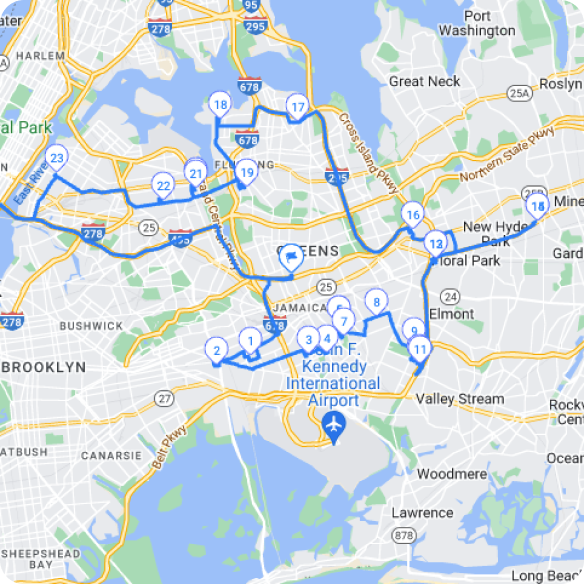
Commercial clients expect professional communication about weather delays. Develop standard communication templates that explain safety regulations and provide specific rescheduling timeframes.
Send weather delay notifications before 7 AM on affected days. Include the specific weather conditions causing delays and your next available service date. This proactive communication maintains client relationships during inevitable weather disruptions.
Technology Solutions for Route Scheduling and Crew Coordination
Rûteoptimalisaasjesoftware transforms commercial window cleaning scheduling from manual puzzle-solving into automated efficiency.
Automated Route Planning With Constraint Management
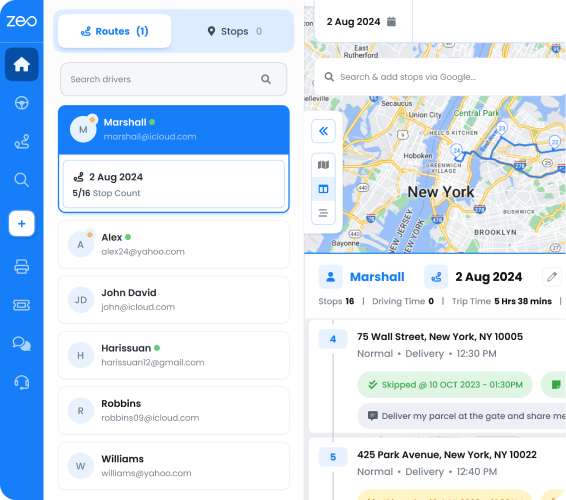
Zeo Route Planner handles the complex constraint juggling that makes commercial window cleaning routes so challenging. The platform’s AI-powered optimization considers time windows, crew specializations, and equipment requirements simultaneously while minimizing drive time between locations.
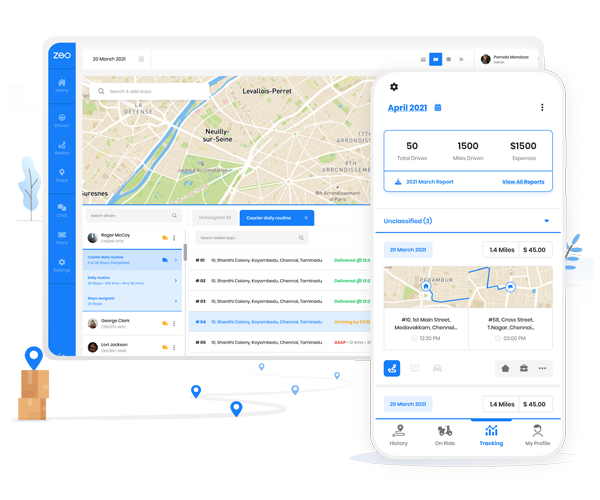
Managers use Zeo’s web platform to plan routes around building access restrictions and service frequencies, while crews receive their daily schedules through the mobile app with real-time updates for weather delays or building access changes.
Kommunikaasje en updates yn realtime
Weather delays require immediate crew coordination across multiple job sites. Zeo’s real-time GPS-tracking and in-app chat let you redirect crews instantly when weather hits specific geographic areas.
When morning rain cancels high-rise work downtown, you can immediately reassign that crew to indoor work across town while keeping other crews on their original exterior routes in unaffected areas.
Client Communication and Documentation
Commercial clients expect professional service documentation. Zeo’s proof of service features let crews capture before/after photos and collect digital signatures, creating service records that maintain contract compliance.
The platform’s customer notification system automatically updates clients about arrival times and service completion, reducing the administrative burden on your office staff.
Scaling Your Route System: From Single Crew to Multi-Territory Operations
Growing from single-crew operations to multi-territory management requires systematic route planning that maintains efficiency across expanding service areas.
Territory-Based Route Development
Divide your service area into territories based on crew capacity rather than geographic boundaries alone. Each territory should contain enough work to keep one crew busy for 4-5 days per week, accounting for weather delays and equipment setup time.
Aim for 15-20 commercial accounts per territory for monthly service crews. Quarterly accounts require 40-60 clients per territory to maintain consistent weekly work volume.
Cross-Territory Backup Systems
Build overlap zones between territories where crews can assist each other during peak demand or weather makeup periods. These zones typically contain standard commercial accounts that don’t require specialized equipment.
When Territory A falls behind due to weather delays, crews from Territory B can handle overlap zone accounts, maintaining service commitments without disrupting specialized high-rise schedules.
Performance Tracking and Route Refinement
Track key metrics that reveal route efficiency problems before they impact profitability. Monitor average drive time between stops, setup time per location, and weather delay frequency by territory.
Routes requiring more than 25% drive time typically need geographic rebalancing. Territories experiencing more than 15% weather delays may need more indoor backup work or different equipment strategies.
Rûte planning software analytics help identify these efficiency gaps by tracking actual drive times and service completion rates across territories, showing which routes need adjustment before profits decline.
Crew Specialization and Equipment Allocation
As you scale, some crews will naturally develop high-rise specialization while others focus on standard commercial work. Plan territory assignments around crew strengths rather than forcing all crews to handle all building types.
High-rise specialist crews can work across multiple territories because their specialized skills justify longer drive times. Standard commercial crews should stay within geographic territories to maximize efficiency. Field service management systems help coordinate these specialized assignments across multiple territories.
Commercial window cleaning route scheduling becomes manageable when you build systems around industry-specific constraints rather than fighting against them. Focus on time windows first, geography second, and maintain weather flexibility throughout your planning process.
Faak Stelde Fragen
Q: What safety regulations affect commercial window cleaning scheduling?
OSHA restricts exterior commercial window cleaning during winds exceeding 25 mph or during precipitation. Building access regulations also require 24-48 hour advance notice for high-rise equipment setup, and many commercial properties restrict work to specific time windows for security and tenant safety reasons.
Q: How do you handle weather delays in commercial window cleaning routes?
Develop indoor/outdoor route pairs so crews can switch to interior cleaning when weather cancels exterior work. Build 20% scheduling buffer into each week specifically for weather makeup work, and establish client communication protocols that send delay notifications before 7 AM with specific rescheduling timeframes.
Q: What’s the difference between residential and commercial window cleaning route planning?
Commercial routes involve building access restrictions, varying service frequencies (quarterly to weekly vs mostly monthly residential), and equipment specialization requirements for high-rise work. Route optimization software like Zeo Route Planner handles these complex constraints while minimizing drive time, helping commercial window cleaning teams save 2+ hours daily on route planning.
Q: How many commercial accounts should each territory contain?
Aim for 15-20 monthly service accounts per territory to keep crews busy 4-5 days per week, accounting for weather delays and equipment setup time. For quarterly accounts, you’ll need 40-60 clients per territory to maintain consistent weekly work volume across all crews.
Q: What technology helps manage complex commercial window cleaning schedules?
Modern route planning systems handle time windows, crew specializations, and equipment requirements simultaneously while optimizing travel time. Zeo Route Planner’s real-time GPS tracking and in-app communication allow managers to instantly redirect crews during weather delays while maintaining professional client notifications and service documentation.
The businesses that scale successfully treat route optimization as an ongoing system rather than a weekly scheduling task. Start your free Zeo Route Planner trial to see how route optimization can streamline your commercial window cleaning schedules and boost crew productivity.
Binne jo in fleeteigner?
Wolle jo jo sjauffeurs en leveringen maklik beheare?
Groei jo bedriuw sûnder muoite mei Zeo Routes Planner - optimalisearje rûtes en beheare meardere sjauffeurs mei gemak.

fergrutsje fuel besparring
Besparje $ 200 op brânstof, alle moannen!
Optimalisearje rûtes mei ús algoritme, ferminderje reistiid en kosten effisjint.
Begjin fergees