



# How to Optimize Telecom Field Service Routes
> TL, DR: Telecom field service route optimization requires dynamic systems that balance planned maintenance with emergency response while managing skill and equipment constraints. Advanced routing reduces telecom operational costs by 20-35% through faster emergency response and reduced truck roll repetition. Route optimization tools like Zeo Route Planner address this with AI-powered optimization and skill-based driver assignment, helping telecom teams save 2+ hours daily.
Telecom field service operations face a unique challenge: balancing planned maintenance work with emergency network outages while managing specialized equipment and technician skills across vast service territories. Learning how to optimize telecom field service routes effectively means understanding that poor routing decisions don’t just waste fuel—they cascade into delayed repairs, multiple truck rolls, and network downtime that costs millions.
The hidden costs of inefficient telecom routing extend far beyond vehicle expenses. Every extra mile driven means longer customer outages, increased overtime costs, and frustrated technicians juggling emergency calls with scheduled installations.
The Hidden Costs of Poor Telecom Route Planning (Why Every Extra Mile Matters)
Telecom field operations carry significantly higher stakes than typical service routes. When a cell tower goes down, every minute of delay affects thousands of customers and generates measurable revenue loss.
The average telecom company with 25 field technicians loses $47,000 monthly to routing inefficiencies according to telecommunications service priority standards. This breaks down into three major cost categories that operations managers track closely.
Network Downtime Multiplication
Poor routing turns 2-hour outages into 4-hour disasters. A fiber cut affecting 5,000 business customers costs approximately $12,000 per hour in lost revenue and penalty fees. When technicians arrive late due to routing delays, these costs double or triple.
Truck Roll Multiplication
Araka ny fikarohana indostrialy, 23% of telecom service calls require return visits due to missing equipment or wrong technician skills. Poor route planning amplifies this problem by sending technicians without proper parts or expertise to initial calls, guaranteating expensive follow-up visits.
Fahatarana amin'ny valinteny maika
Telecom companies face strict SLA requirements with penalty clauses averaging $500-2,000 per missed response time. When emergency calls disrupt poorly planned routes, technicians struggle to reach critical outages within contractual windows.
The ripple effects extend into customer satisfaction scores, technician morale, and overtime expenses. Teams spending 3+ hours daily in vehicles report 34% higher turnover rates, creating additional recruitment and training costs. Effective miles tracking helps quantify these hidden expenses.
Telecom-Specific Routing Challenges: Equipment, Skills, and Emergency Response
Telecom routing complexity stems from three interconnected variables that standard route optimization tools struggle to handle simultaneously.
Equipment Dependencies
Fiber optic repairs require fusion splicing equipment weighing 50+ pounds. Cell tower maintenance needs specialized climbing gear and RF testing equipment. Underground cable repairs demand trenching tools and locating devices.
Each equipment type limits which technicians can handle specific calls. Route planners must consider vehicle capacity, equipment availability, and setup time when assigning work orders.
Skill-Based Constraints
Telecom work spans multiple specializations: fiber technicians, RF engineers, copper specialists, and emergency response teams. A fiber cut cannot be assigned to a copper specialist, regardless of geographic proximity.
Skills-based routing becomes more complex when considering certification levels. Only certified climbers can service cell towers above 100 feet. Only licensed RF engineers can modify broadcast equipment.
Emergency Interruption Patterns
Network outages don’t follow scheduled routes. When a backhoe cuts a major fiber line at 2 PM, three technicians might need immediate reassignment, disrupting carefully planned maintenance schedules.
Traditional routing systems collapse under these dynamic requirements. Static routes planned at 6 AM become obsolete by noon when emergency calls redirect half the workforce.
How to Optimize Telecom Field Service Routes: Smart Solutions for Mixed Workloads
Effective telecom routing requires dynamic systems that balance planned maintenance with emergency response while respecting skill and equipment constraints.
Priority-Based Route Structures
Structure routes around three priority levels: emergency (network outages), urgent (service affecting), and maintenance (preventive work). Emergency calls automatically trigger route recalculation for affected technicians.
Zeo Route Planner handles this through priority stops and dynamic route adjustments. When emergency calls arrive, dispatchers can instantly reassign the nearest qualified technician while automatically redistributing their planned work to other team members.
Skill-Equipment Matching
Map technician skills to required certifications and available equipment. Create routing rules that only assign fiber repairs to fusion-certified technicians with splicing equipment.
This prevents the costly scenario where technicians arrive at job sites unable to complete work due to missing skills or tools. Pre-work validation reduces truck roll repetition by 31% according to telecom industry studies.
Geographic Zone Optimization
Divide service territories into logical zones based on infrastructure types and technician specializations. Assign fiber specialists to areas with high fiber density, and cellular technicians to tower-heavy regions.
Zone-based routing reduces average drive times while ensuring appropriate expertise matches local infrastructure needs. Technicians develop familiarity with their zones, improving diagnostic speed and first-time fix rates. Lozisialy fanatsarana ny lalana enables this geographic specialization approach.
ROI Calculator: Measuring Route Optimization Impact in Telecom Operations
Telecom route optimization ROI calculations must include network uptime improvements and SLA compliance gains alongside traditional cost savings.
Direct Cost Savings (Monthly)
- Fuel reduction (20-35%): $3,200-5,600 for 25-technician fleet
- Overtime reduction (15-25%): $8,400-14,000 monthly
- Truck roll reduction (25-40%): $12,000-19,200 monthly
- Total direct savings: $23,600-38,800 monthly
Network Uptime Improvements
Faster emergency response reduces average outage duration from 3.2 hours to 1.8 hours. For telecom companies serving business customers, this improvement prevents $142,000 monthly in downtime costs and SLA penalties.
SLA Compliance Gains
Meeting emergency response SLAs eliminates penalty fees averaging $1,200 per missed commitment. Companies typically miss 12-18 SLAs monthly due to routing delays, representing $14,400-21,600 in preventable penalties.
Annual ROI Calculation
Total monthly benefits: $180,000-198,400
Annual benefits: $2,160,000-2,380,800
Route optimization investment: $180,000 (software + implementation)
First-year ROI: 1,100-1,220%
These calculations exclude soft benefits like improved technician satisfaction, customer retention, and regulatory compliance improvements.
Advanced Telecom Routing: Skill-Based Dispatch and Equipment Dependencies
Advanced telecom routing systems must simultaneously optimize for geography, skills, equipment, and time constraints while maintaining flexibility for emergency interruptions.
Fanatsarana ny fameperana maro samihafa
Implement routing algorithms that consider technician location, skill certifications, vehicle equipment, and current workload simultaneously. This prevents assignments that look geographically optimal but fail due to missing capabilities.

mampitombo ny fitsitsiana solika
Mitahiry adiny 2 amin'ny fanaterana, isan'andro!
Amboary ny lalana miaraka amin'ny algorithm, mampihena ny fotoana sy ny fandaniana amin'ny fomba mahomby.
Get Started for Free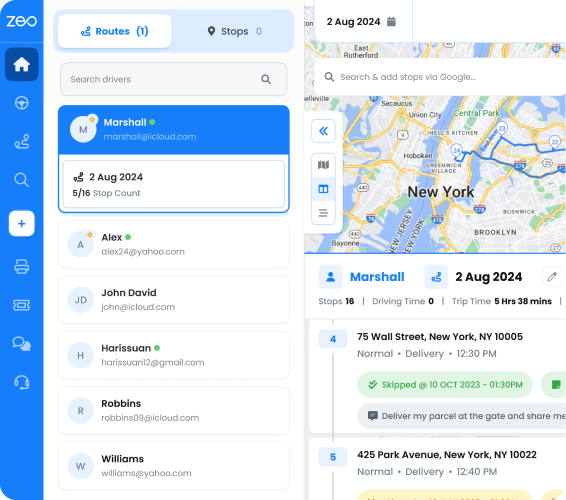
ny Zeo fanendrena mpamily mifototra amin'ny fahaiza-manao feature allows dispatchers to tag technicians with specific certifications (fiber splicing, tower climbing, RF certification) and automatically match them to appropriate work orders.
Equipment Inventory Integration
Link route planning with real-time equipment tracking. When planning fiber repair routes, the system should verify fusion splicer availability before assigning work.
Track equipment location across vehicles and warehouses. If a technician’s vehicle lacks required equipment, either reassign the call or route them through an equipment depot first.
Workload Balancing
Distribute complex jobs across the team to prevent skill bottlenecks. If only three technicians handle tower work, spread tower maintenance across multiple days rather than clustering it.
Monitor individual technician workloads for both complexity and drive time. A technician handling three complex installations should receive shorter routes than someone doing routine maintenance.
Fampifanarahana amin'ny fotoana tena izy
Build routing systems that recalculate automatically when emergencies arise. When a major outage requires multiple technicians, the system should instantly determine the best reassignment strategy.
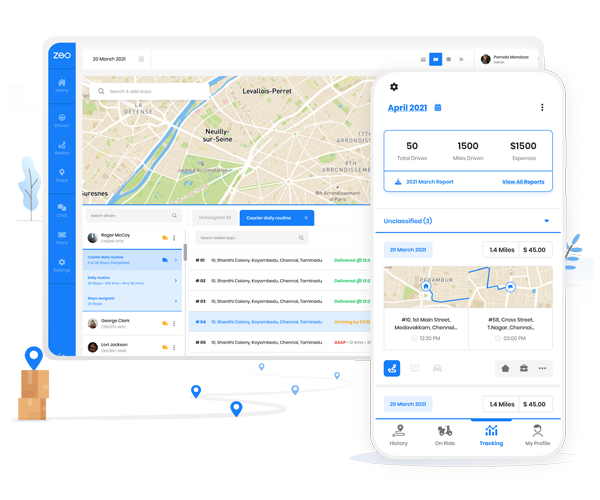
While dispatchers optimize routes from the web platform, field technicians receive their assignments through the Zeo mobile app, with real-time updates when emergency calls require route adjustments.
Integration Strategy: Connecting Route Optimization with Telecom Workforce Management
Route optimization delivers maximum value when integrated with existing telecom workforce management and work order systems.
Work Order System Integration
Connect route optimization directly to work order management systems. When new service requests enter the system, they should automatically populate routing software with location, priority, skill requirements, and equipment needs.
Zeo integrates with workforce management platforms through API connections and Zapier, enabling automatic work order import and status updates without manual data entry.
Fanavaozam-baovao amin'ny fotoana tena izy
Implement bidirectional data flow between routing and workforce management systems. When technicians complete work or encounter delays, this information should immediately update route calculations for other team members.
Resource Allocation Visibility
Provide dispatchers with real-time visibility into technician locations, current assignments, and estimated completion times. This enables intelligent decision-making when new emergency calls arrive.
Dashboard views should show technician status, route progress, and available capacity for emergency assignments. Color-coded maps help dispatchers quickly identify the best technician for urgent calls. A comprehensive rafitra fitantanana mpamily supports these visibility requirements.
Famakafakana ny zava-bita ara-tantara
Track routing performance metrics over time to identify improvement opportunities. Analyze patterns in emergency response times, first-time fix rates, and route efficiency across different territories and technician teams.
Monthly reporting should include SLA compliance rates, average response times, and cost per service call to demonstrate ROI and identify optimization opportunities.
Emergency Response Protocols: Dynamic Routing for Network Outages
Network emergencies require specialized routing protocols that prioritize rapid response while minimizing disruption to scheduled work, following emergency response requirements established by industry associations.
Automated Emergency Detection
Integrate network monitoring systems with routing platforms to automatically detect outages and initiate emergency response protocols. When critical infrastructure fails, the system should immediately identify affected customers and route appropriate technicians.
Cascading Reassignment Logic
Develop algorithms that intelligently reassign planned work when technicians receive emergency calls. Rather than simply canceling scheduled appointments, the system should redistribute them to available team members with minimal customer impact.
Emergency Response Team Management
Designate specific technicians as emergency responders during peak risk periods. These technicians maintain lighter scheduled workloads, enabling rapid deployment to critical outages.
Fampidirana ny fifandraisana amin'ny mpanjifa
Automatically notify affected customers when emergency calls delay scheduled appointments. Provide new arrival estimates and options to reschedule based on reassigned technician availability.
Zeo’s customer notification system sends automated SMS and email updates when routes change, keeping customers informed without requiring dispatcher intervention. Fanaraha-maso GPS amin'ny fotoana tena izy enables accurate customer communications during emergency reassignments.
Emergency routing protocols should include escalation procedures when multiple simultaneous outages exceed available technician capacity. Pre-defined contractor relationships and mutual aid agreements enable rapid resource scaling during major events.
The most effective emergency response systems balance speed with efficiency. While reaching outages quickly remains paramount, smart routing ensures emergency responses don’t create unnecessary delays for other customers or increase overall operational costs.
FAQ - Fanontaniana Fametraky ny Olona Matetika
Q: What are the main challenges in telecom field service routing?
Telecom routing faces three critical challenges: equipment dependencies (fiber repairs need fusion splicing gear), skill-based constraints (only certified climbers can service towers above 100 feet), and emergency interruptions that disrupt planned schedules. These factors make telecom routing significantly more complex than standard service routes.
Q: How much can telecom companies save with route optimization?
The average telecom company with 25 field technicians loses $47,000 monthly to routing inefficiencies. Zeo Route Planner’s AI-powered route optimization helps telecom operations reduce costs by 20-35% through dynamic route adjustments and skill-based technician assignment.
Q: How do you handle emergency calls that disrupt planned telecom routes?
Effective emergency routing requires automated reassignment systems that can instantly identify the nearest qualified technician while redistributing their planned work to other team members. Priority-based routing structures separate emergency, urgent, and maintenance work to minimize disruption.
Q: What skills-based routing features are essential for telecom operations?
Telecom routing systems must match technician certifications (fiber splicing, tower climbing, RF licensing) with specific job requirements. Only fusion-certified technicians should handle fiber repairs, and only licensed climbers can service cell towers, preventing costly truck roll repetitions.
Q: How do you measure ROI from telecom route optimization?
ROI calculations should include network uptime improvements, SLA compliance gains, and direct cost savings. Faster emergency response can reduce average outage duration from 3.2 hours to 1.8 hours, preventing $142,000 monthly in downtime costs and penalties for business-serving telecom companies.
Ready to transform your telecom field operations with intelligent route optimization? Start your free trial to see how Zeo can reduce your telecom operation costs by 20-35% through intelligent route optimization.
Tompon'ny sambo ve ianao?
Te hitantana mora foana ny mpamily sy ny fanaterana anao?
Ampitomboy moramora ny orinasanao miaraka amin'ny Zeo Routes Planner - amboary tsara ny lalana ary mitantana mpamily maro mora foana.
mampitombo ny fitsitsiana solika
Mitahiry adiny 2 amin'ny fanaterana, isan'andro!
Amboary ny lalana miaraka amin'ny algorithm, mampihena ny fotoana sy ny fandaniana amin'ny fomba mahomby.
Get Started for Free